Blowout in Inter-Korean Relations
By experts and staff
- Published
- Scott A. SnyderSenior Fellow for Korea Studies and Director of the Program on U.S.-Korea Policy
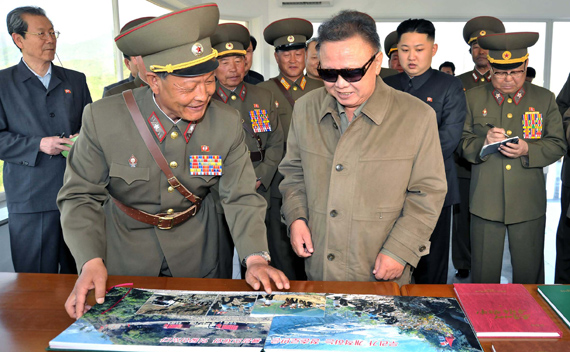
North Korea’s National Defense Commission yesterday released a rare public statement on inter-Korean relations in response to Lee Myung-Bak’s May 9 Berlin speech inviting Kim Jong Il to attend next year’s Nuclear Security Summit. The statement came only days after Kim Jong Il’s return from last week’s visit to China where he met with PRC President Hu Jintao, and it responds to the May 19 revelation by South Korea’s Blue House spokesperson that secret contacts had been made with North Korean counterparts in advance of Lee’s Berlin invitation. The North Korean statement confirmed that the contacts had occurred and that the South Korean side had actually proposed three summit meetings, including meetings in Panmunjom and Pyongyang prior to a meeting at the March 2012 Nuclear Security Summit, but it effectively derails prospects for a stable inter-Korean relationship over the next eighteen months.
The statement concluded with a three-point ultimatum: 1) “Our army and people will no longer deal with the Lee Myung-Bak gang of traitors. 2) We will enter a nationwide, full-scale offensive to put an end to the anti-Republic confrontation maneuvers of the Lee Myung-Bak gang of traitors. 3) Our army and people will take practical actions for the present to deal with the confrontation racket by the gang of traitors.”
The statement, while not surprising, sets the stage for renewed tensions and raises a number of important questions regarding how to manage continued inter-Korean tensions:
South Korea has responded to the North Korean statement thus far by reiterating a desire for dialogue. North Korea’s neighbors have backed the idea that inter-Korean dialogue constitutes the threshold for North Korea to expand its international engagement. But it is the prospect of responding to renewed North Korean provocations and the potential for North Korean miscalculation resulting from its continued isolation that may constitute a greater test for South Korea, North Korea’s neighbors, and the U.S.-ROK alliance.