Clouds Over Camp David Summit
The U.S. and Gulf Arab leaders gathering in Camp David are pursuing divergent courses in the Middle East, with differences over Iran nuclear talks likely to drive them further apart, writes CFR’s Ray Takeyh.
By experts and staff
- Published
 Ray TakeyhCFR ExpertHasib J. Sabbagh Senior Fellow for Middle East Studies
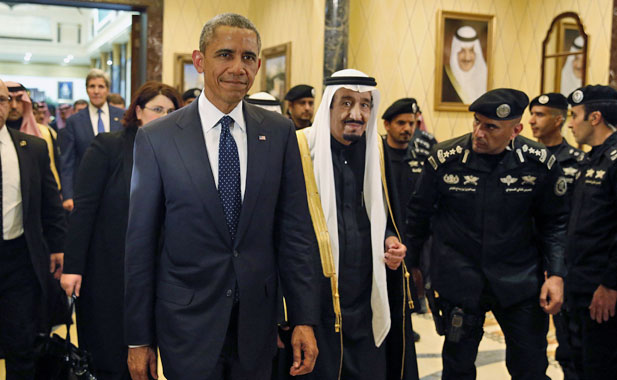
On May 14, President Barack Obama will host at Camp David the leaders of Saudi Arabia, Kuwait, the United Arab Emirates (UAE), Qatar, Oman, and Bahrain. It is a mission to reassure allies concerned about the U.S. commitment to the Gulf region and its determination to forestall an Iranian nuclear bomb. It is also a mission destined to disappoint. The incongruity of objectives between the United States and the Gulf regimes has seldom been greater.
The Arab potentates would like to see the United States disarm and defang Iran, change the balance of power in the Syrian civil war against Bashir al-Assad, and resolve the Israeli-Palestinian conflict. Washington would like to pivot to Asia and leave behind the morass of Middle Eastern politics. It is hard to see how a symbolic gathering can bridge this chasm.