Credible Commitment and the Colombian Peace Plebiscite
By experts and staff
- Published
- Matthew M. TaylorAdjunct Senior Fellow for Latin America Studies
The Colombian peace process began in 2012, and by June 2016, appeared to have reached preliminary agreement on a deal that would result in the cessation of hostilities, ending a war that has killed more than a quarter of a million Colombians. Yet somewhat surprisingly, while the deal was initially celebrated as a milestone, recent polling suggests that a declining share of Colombians would actually support it: 39 percent in August, down from 56 percent in July.
The reasons for opposition are multiple, including belief that some abuses by the FARC are too atrocious to merit amnesty, annoyance at the possibility that FARC representatives may be given congressional seats, fear that state capacity to effectively implement the accords is too weak in previously contested regions of the country, opposition to land restitution programs, and resentment at the possibility that government forces may be judged by the same tribunal that judges FARC members. Domestic political considerations also play a role, including the long-standing feud between President Juan Manuel Santos and his conservative predecessor, Álvaro Uribe; and declining support for Santos, which may drag down support for the deal.
But surely the Santos government was aware of most of these challenges? And why on earth pledge to have the deal ratified by the public, if doing so would subject it to all sorts of criticism and the possibility of defeat? The answer may lie in the three intertwined strategic explanations:
In committing to public ratification of any peace deal, the Santos government added a broad range of voters to the mix of implicit parties to the negotiations, in ways that may increase the legitimacy of the peace, enhance the transparency of the process, and lock in the treaty politically. Santos also scored an important victory in the constitutional court’s decision that the plebiscite should face an up or down vote, rather than a messy set of votes on each point of the agreement.
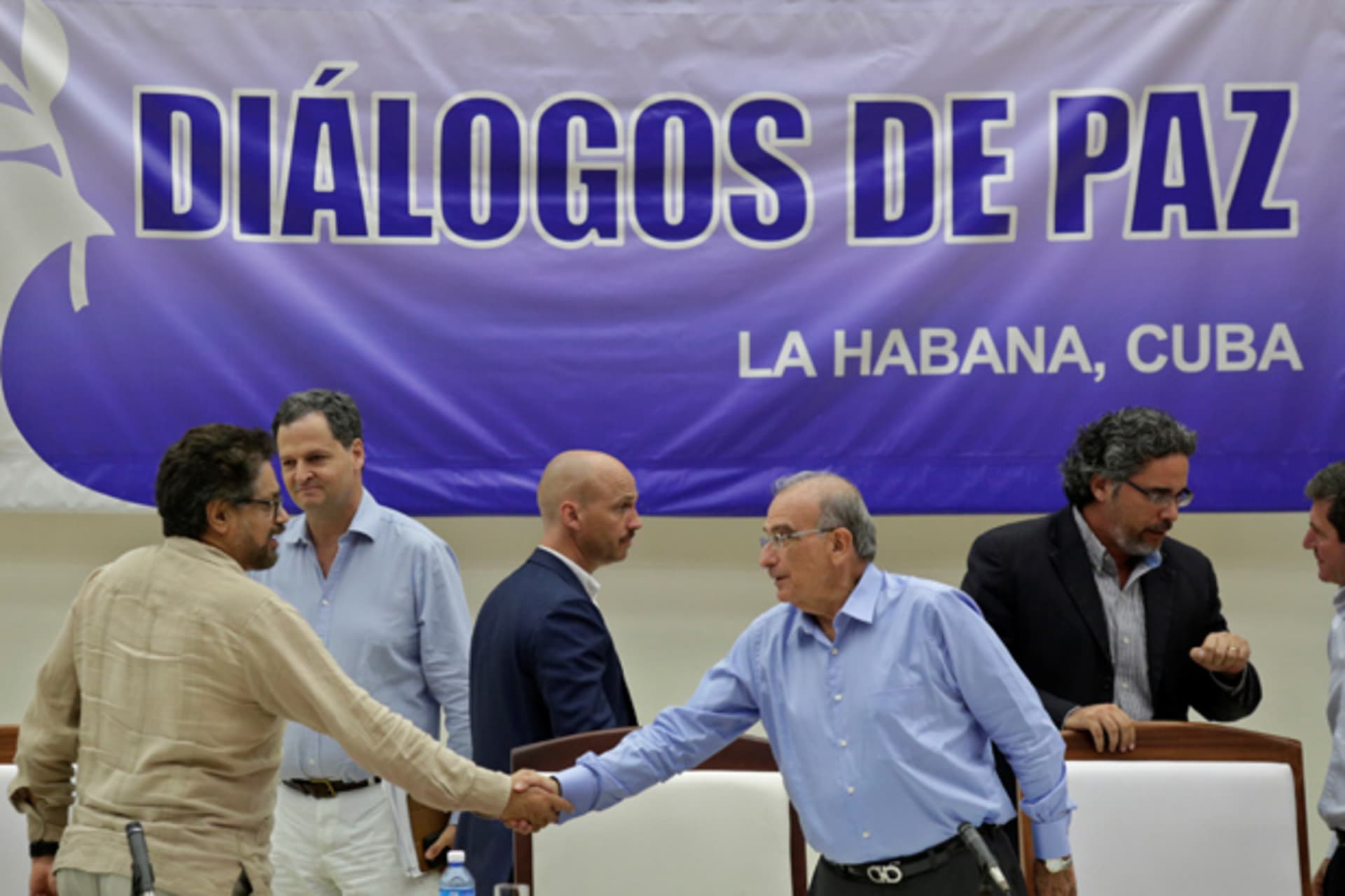
Although it adds to the difficulties of the peace agreement, the fact that the deal was always subject to public ratification may also have provided a strategic advantage to Colombian government negotiators. From the negotiating table in Havana, Colombian negotiators could point south at Uribe and other hardliners, warning their FARC counterparts that there were limits to what they plausibly concede. The prospect of democratic ratification, in other words, may have shrunk the possible range of options the Colombian government could agree to, but by narrowing the negotiating space, it may also have made the government’s commitment to its bargaining position more credible.
Going forward, the most complex challenge will be to finalize the negotiations with the FARC even as the plebiscite campaign is simultaneously underway. Already “Yes” and “No” supporters are locked in rhetorical battle over how to frame the issues in the public eye. The silver lining is that the need to obtain democratic approval may have enabled the Santos government to obtain a better deal from the FARC than might have otherwise been possible. Whether that deal will prove acceptable to voters, of course, is the big question that will dominate Colombian politics for the remainder of the year.