A Gathering Impunity
Geopolitical transformation appears to have induced political license across Africa.
By experts and staff
- Published
 Ebenezer ObadareCFR ExpertDouglas Dillon Senior Fellow for Africa Studies
The just-concluded presidential election in Uganda was every bit as farcical as experts and commentators had feared. For the opposition, the circumstances could not have been more arduous, no thanks to the raft of measures enacted by eighty-one-year-old President Yoweri Museveni, gunning for an unprecedented seventh term of office. Combining a well-timed internet blackout with a full-on assault on independent media, the regime pulled all the stops to ensure that only one outcome was guaranteed.
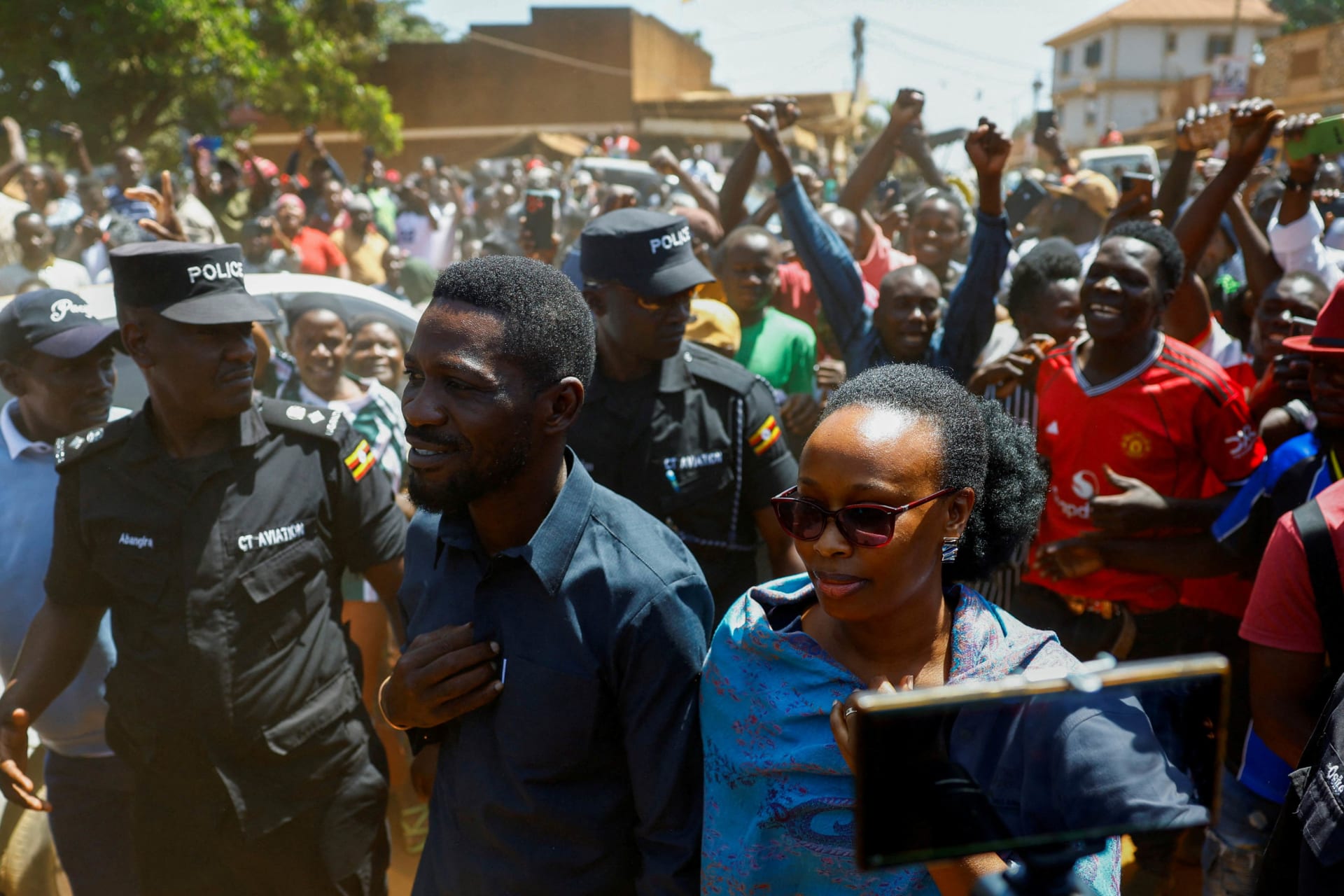
If the reported killing of ten members of the campaign team of a member of parliament for the opposition National Unity Platform (NUP) by security forces during the elections indicated the regime’s desperation to hold on to power, the continued harassment of perceived political enemies in the aftermath, including a premeditated attack on the residence of opposition leader Bobi Wine (real name Robert Kyagulanyi Ssentamu), who has since gone into hiding, signals Mr. Museveni’s determination to take the battle to his adversaries.
If Muhoozi Kainerugaba (the president’s son and, from all indications, next in line) has his way, that battle will be more than figurative. In the days after his father’s tainted victory, Muhoozi, who is also the country’s army chief, posted a series of tweets in which he referred to Bobi Wine as a “baboon,” boasted about having “killed twenty-two NUP terrorists since last week” and prayed that “the twenty-third is Kabobi.” (Kabobi is Wine’s nickname.) For effect, Muhoozi also threatened to “kill on sight all NUP ‘foot soldiers’” “until Mzee (his father President Museveni) says otherwise.” Although he later took down the tweets following public condemnation, Muhoozi has promised to “ban” the opposition leader “from any further participation in the electoral exercises of Uganda” “in the interests of national security and for the good of the commonwealth.”
Muhoozi is no stranger to derogatory tweets, and most definitely no stranger to incitements to murder. (Last February, he had threatened to hang detained veteran opposition leader Kizza Besigye: “Be assured if I do decide to hang Besigye, I will do it in broad daylight. There is no shame in executing a traitor.“) Still, these days, one detects a certain spring in his step, perhaps born of a realization that he has greater freedom to do what he has always done, which is to behave boorishly and signal to the opposition that there is room for only one party and one political tendency in the country. The latest presidential poll was conducted in this newfangled spirit of license; the regime neither attempted to make the contest seem remotely fair, nor did it disguise the fact that it was basically on a mission to force the opposition into submission.
Uganda holds no patent on this ascendant impunity. Africa’s most recent polls (in Cameroon, Côte d’Ivoire, and Tanzania, respectively) were conducted under similar moral auspices: with the incumbent using state resources—and in the case of Tanzania vicious violence—to choke life out of its adversaries as well as put potential challengers on notice.
Two years ago, sensing a veritable shift in the wind, I had gone out on a limb to indicate and celebrate a “democratic momentum” in the region. The source of my optimism was not just the steady accumulation of elections (held in twenty-two countries by the end of that year), a pattern worth celebrating on a continent which had become a byword for their (i.e., elections’) rarity. It was also about more substantive gains, among them the smooth political transition in Botswana, where the Botswana Democratic Party had been in power since the country’s independence from Britain in 1966; not to mention the election of seventy-two-year-old Netumbo Nandi-Ndaitwah as Namibia’s first female president; and the brave push for gender equality amid the devastation of al-Shabaab in Somalia.
Whether this momentum has totally shifted is a matter for debate, but there is enough to give the observer pause about emerging trends across the continent. At any rate, it is safe to say that President Trump’s second coming has caused a significant shift in the political mood. While civil society actors have been left reeling by the dissolution of the U.S. Agency for International Development, the United States’s allies have been confounded by the administration’s unconventional approach to diplomacy, which has created uncertainty in some cases, and mistrust in others.
One group that has undoubtedly profited from the ensuing situation is the political class, especially the incumbent in various countries. Favored on the one hand by the administration’s much-discussed transactionalism and emphasis on face-to-face negotiations; on the other hand, they have interpreted the State Department’s decision to “refrain from commenting on the integrity of elections” and the administration’s resolve to desist from “spreading liberal ideology” as a signal to abandon restraint. While one is not necessarily holding President Trump responsible for the misconduct of African leaders—after all, despotism precedes Trumpism in Africa—it is difficult to deny that the policy preferences of the current White House have given license to the emergence of “a variety of morbid symptoms.” At the very least, Euro-American disarray has provided an unwitting shot in the arm for halfhearted converts to the idea of governance by popular consent.
The current situation, while dire, is not beyond redemption. As I have argued, not only is the administration’s insistence on trade at the expense of aid justified, it is the best thing for Africa in the long run. But delinking trade from “liberal ideology,” apart from being a category error, opens the door to bad faith actors eager to take advantage of the disavowal of liberal ideology to pursue ends that are explicitly antithetical to liberal democracy. If the Trump administration truly desires prosperity for African countries, it cannot long pursue trade without insisting on its inalienable adjunct—liberty under law.
But even that may not be enough.
As an underground journalist during the military era in Nigeria, my colleagues and I spent our days reporting on the evils of the Abacha dictatorship and our nights fantasizing about American intervention. We were not alone in this; part of what held civil society together in moments when all seemed lost was the belief that Washington had our back. Far from the material support for pro-democracy advocacy, which many civil society organizations were all too happy to tap into, what kept us going was the American ideal—a belief in what the United States stood for and its basic responsibility to peoples everywhere seeking to “break the odious yoke of oppression.”
The difference between then and now is not just that the United States is declining to “spread liberal ideology.” The worry is that the United States itself is starting to slide toward illiberalism.
Helping Africans make Africa unsafe for autocracy is imperative, but in order for Washington to do so successfully, it must not neglect to guard itself against the same danger.