Drugs and Thugs: U.S. Running to Stand Still
By experts and staff
- Published
- Stewart M. PatrickJames H. Binger Senior Fellow in Global Governance and Director of the International Institutions and Global Governance Program
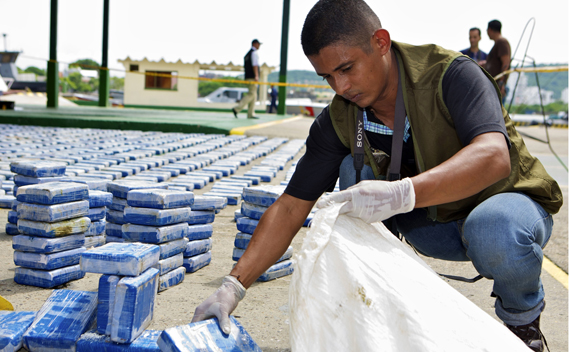
This week the White House released an ambitious Strategy to Combat Transnational Organized Crime. It promises a massive U.S. policy response to a burgeoning global threat, but the Internationalist feels sorry for whoever must implement it. For, President Obama’s cover letter observes—without irony— “this strategy sets out 56 priority actions.”
The strategy reminds me of the Red Queen, who told Alice in Through the Looking Glass, “It takes all the running you can do, to keep in the same place.”
Still, there’s much to applaud in the strategy, beginning with its threat assessment. Transnational organized crime (TOC) has been a prime beneficiary of globalization. Once hierarchical and specialized, TOC groups are increasingly decentralized, able to hopscotch across sovereign jurisdictions and adapt products and supply chains. Their fluid and networked structure allows them to sidestep interdiction efforts and renders traditional law enforcement obsolete.
As the strategy makes clear, TOC is driving a “convergence of transnational threats” that undermine global security and prosperity. From Colombia to Afghanistan to Myanmar, insurgencies increasingly rely on illicit arms and drug revenues for financial support. Criminal syndicates foster corruption to skirt legal structures, weakening fragile states from Guatemala to Guinea-Bissau. (Actually, my latest book Weak Links devotes an entire chapter to the link between TOC and fragile states. While it is more uneven than often presumed, it is certainly a salient challenge.) Criminals and terrorists are appropriating each others’ strategies—and forming alliances. Al-Qaeda and Hezbollah support themselves through narcotics and other illicit commodities, even as WMD proliferators exploit black market routes through the Caucasus. Finally, traffickers engage in cybercrime, money laundering, and intellectual property theft, all of which undermine confidence in the global economic and financial system.
The strategy sets out 56 “priority actions,” grouped into six clusters.
In the end, the most daunting task outlined by the strategy may be interagency coordination within the United States—and among financial institutions, law enforcement agencies, and national security apparatuses across the world. The strategy is an essential step in the battle against TOC, if only because it updates national policy by acknowledging how much the threat has evolved. It might not stymie TOC, but at least we’re running to stand still instead of falling behind.