Is China’s Surplus Really Shrinking?
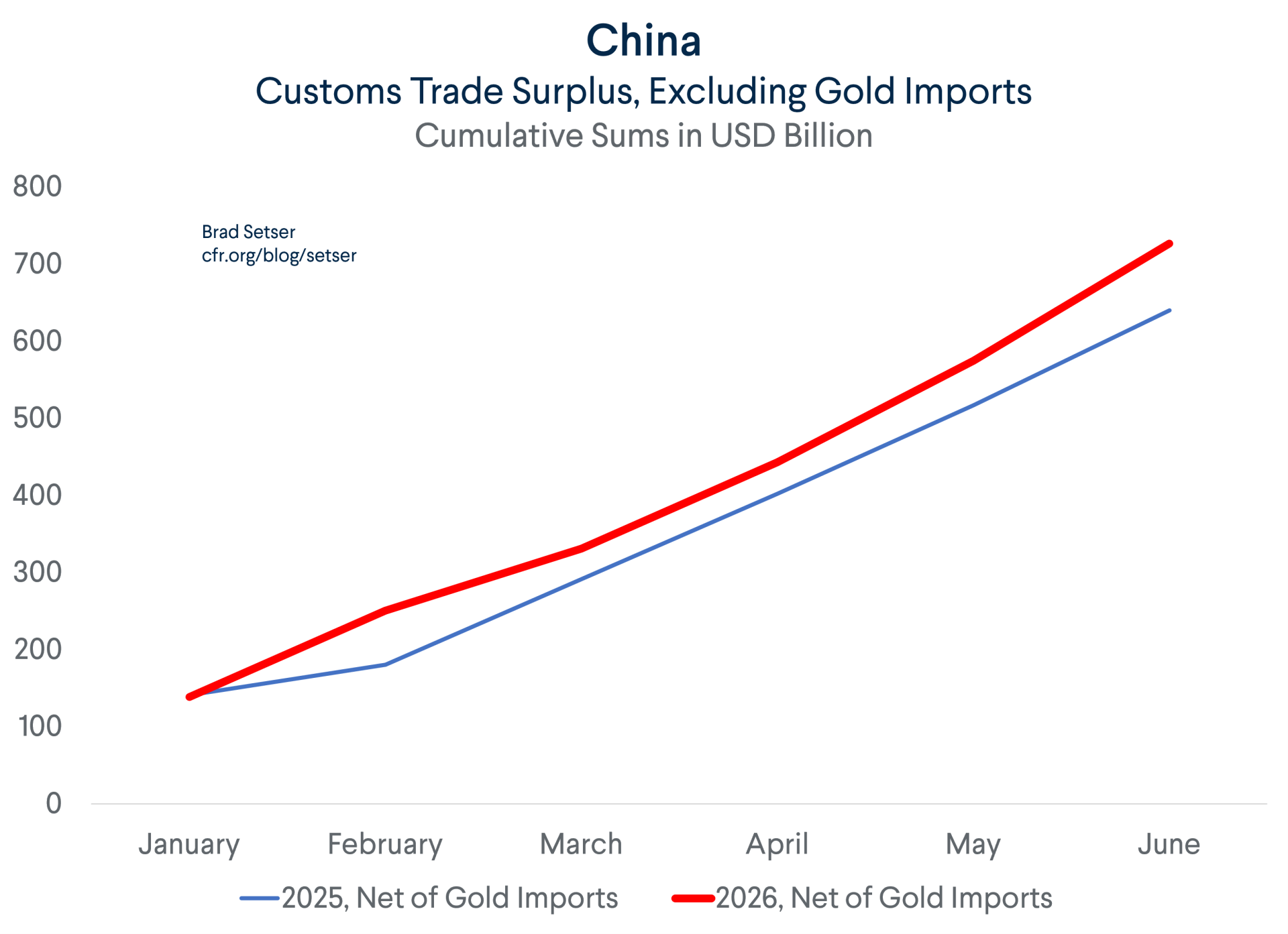
Look past the gold imports, and China’s trade surplus is still climbing.

The Economist is now arguing that China’s trade surplus has peaked.
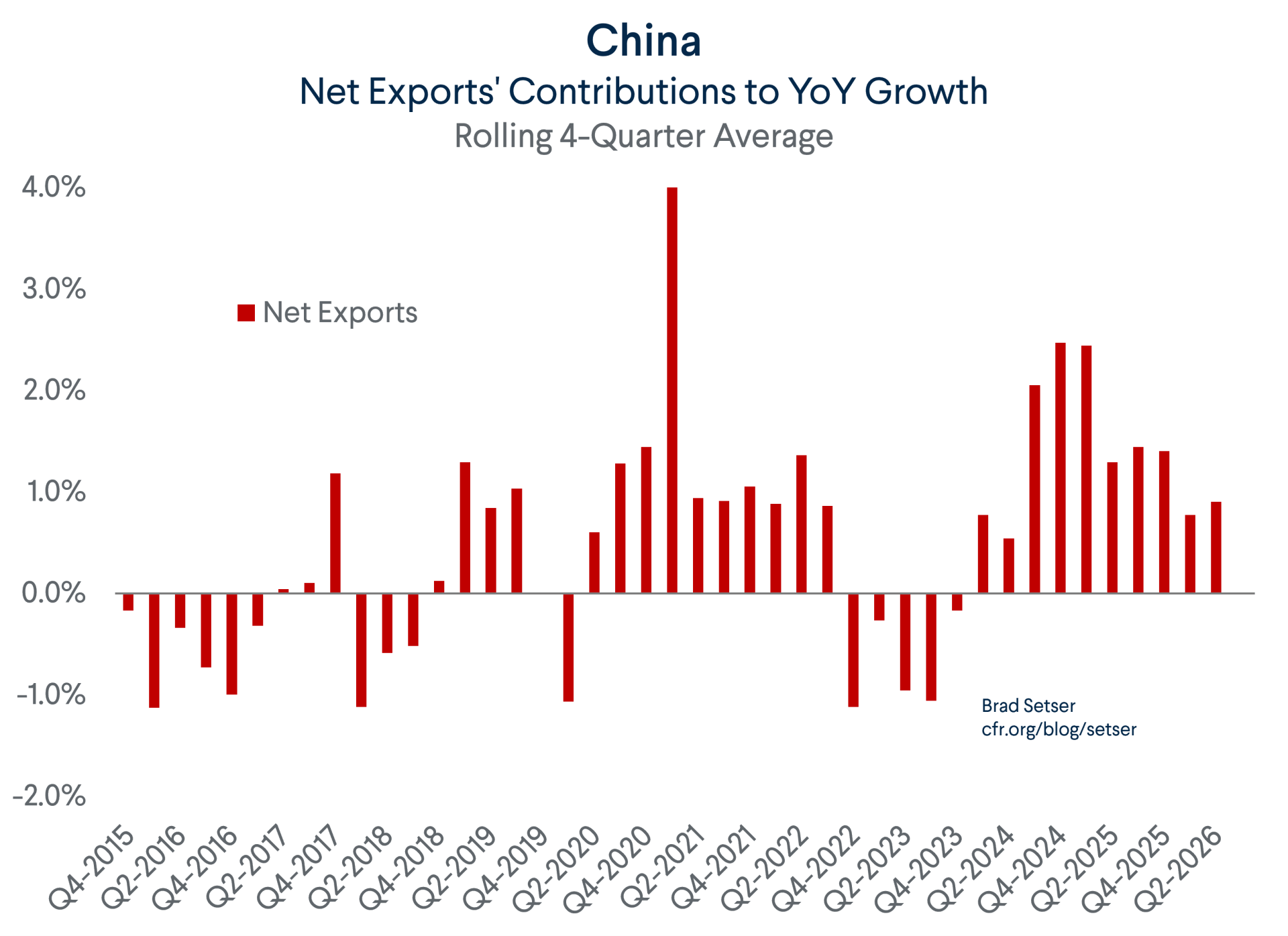
That is a strange argument, as the “real” (price-adjusted) trade surplus is still growing. Net exports have contributed positively to China’s growth in Q1 and Q2.*
But it also isn’t an argument that stands up too much scrutiny. It goes away with a single adjustment.
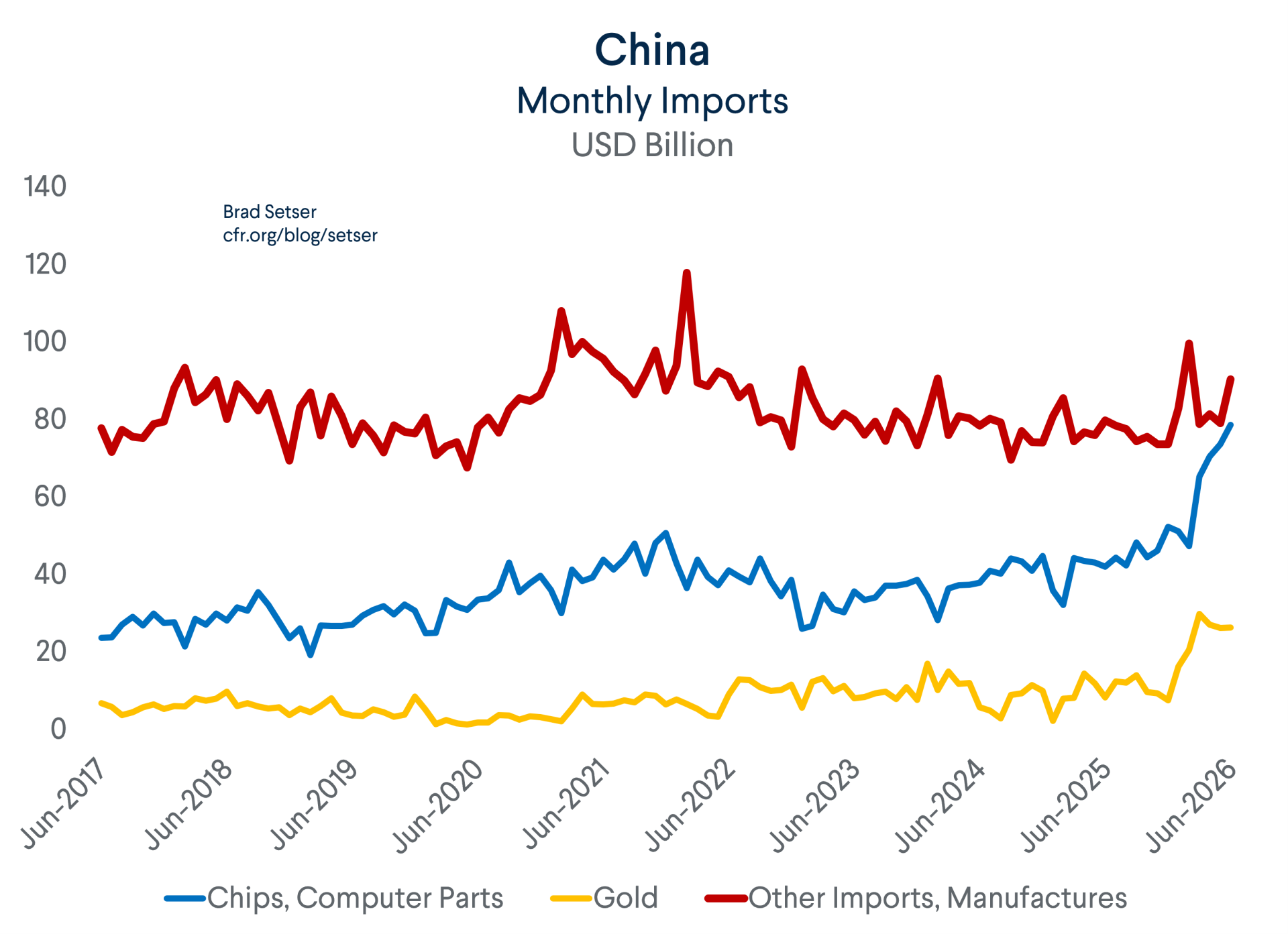
Chip prices are up, and China imports a ton of chips. But that isn’t in fact the needed adjustment. China’s exports of chips are up almost as much as its imports.
China imports a lot of oil but that too isn’t the needed adjustment. The price of oil imports is up but import volumes have famously collapsed; the commodity import bill is up, but only modestly.
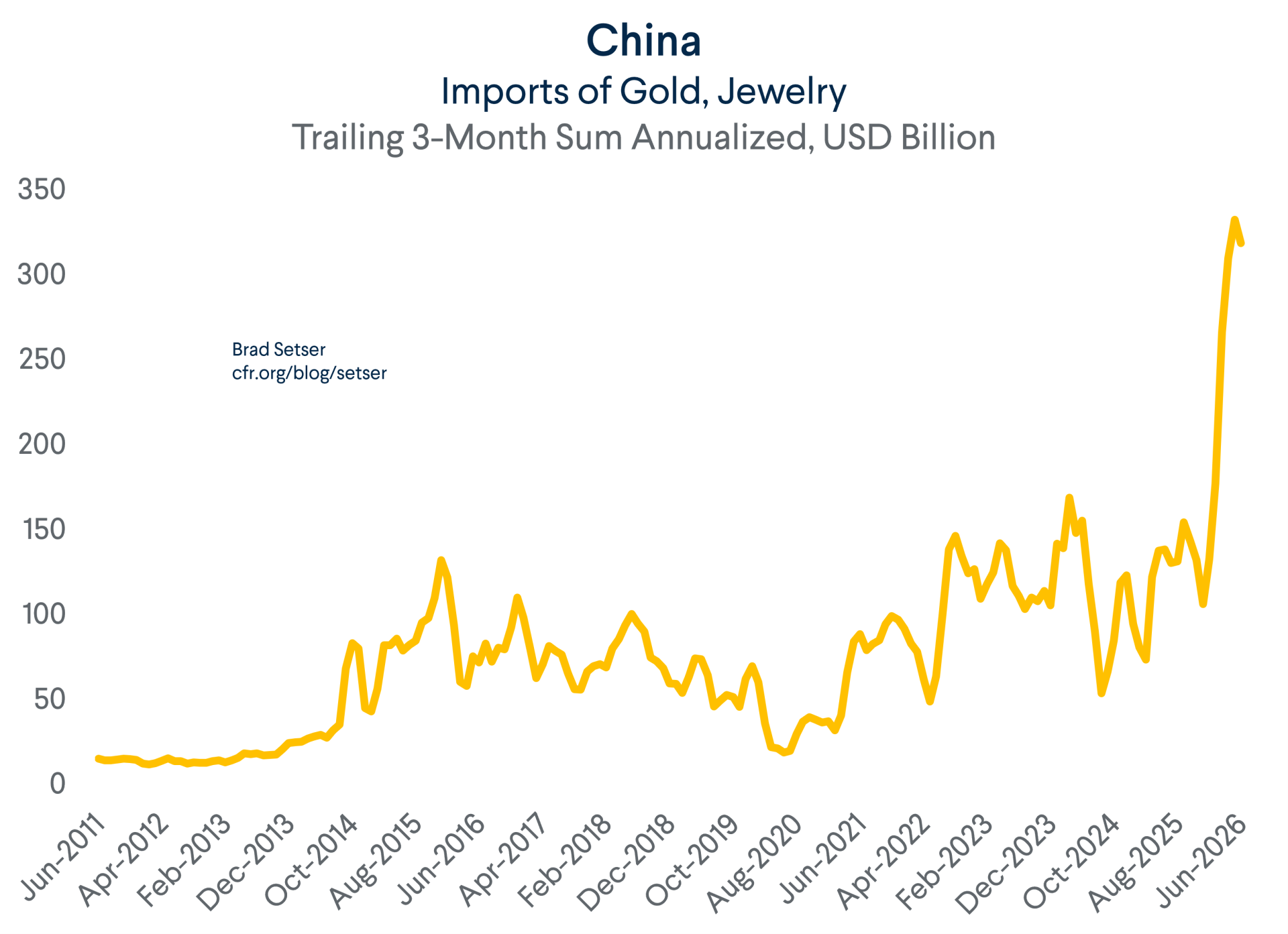
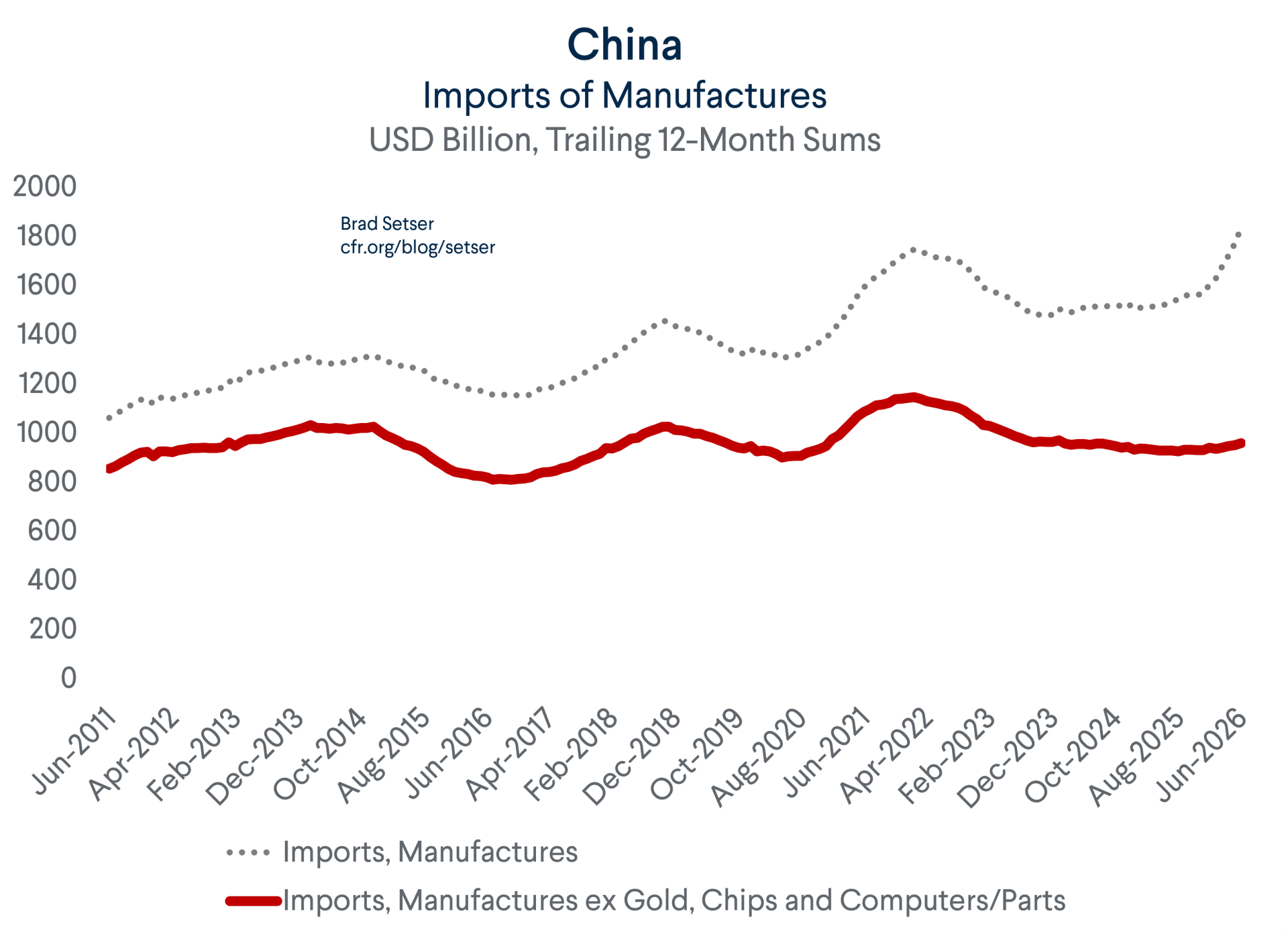
The critical adjustment is to net out imports of gold—year-to-date imports in 2026 are $146 billion, nearly $100 billion above the 2025 H1 total. In Q2, gold imports were an incredible 1.5 pp of GDP.
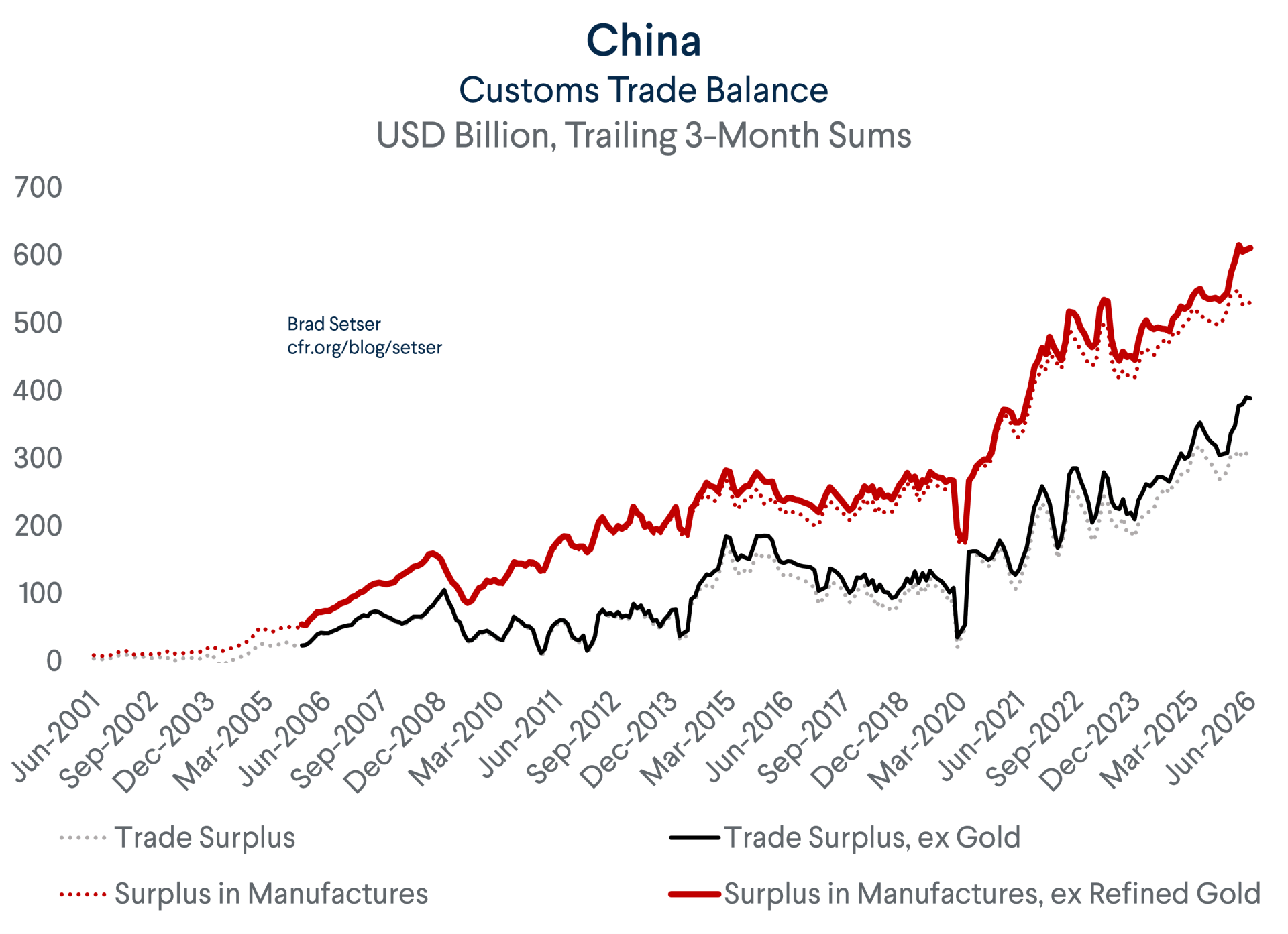
Without that import surge, the overall goods trade surplus would be up by over $80 billion in the first half of 2026.
Yes, there are changes in the commodity balance and the manufacturing balance too. See the “raw” numbers from China’s customs, which haven’t been adjusted for gold.
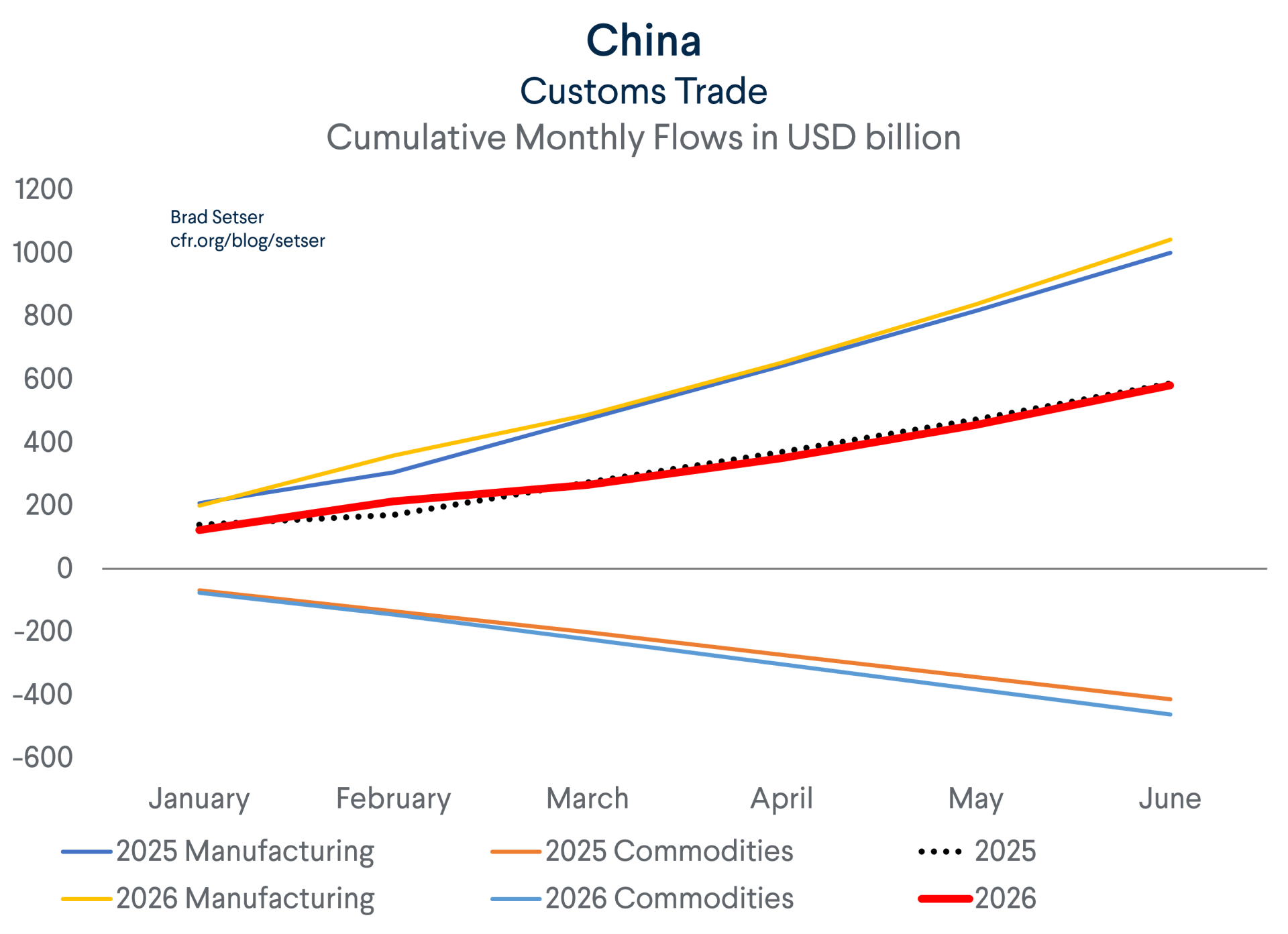
But gold is the critical adjustment to the headline number, not chips or oil (to my surprise to be honest).** The surge in imports, over a period when gold prices are down, has been massive.
Facts are pesky things.
The underlying Chinese surplus is still heading up, just as the underlying U.S. deficit is now expanding (because of “AI”/ data center investment and a big fiscal deficit).***
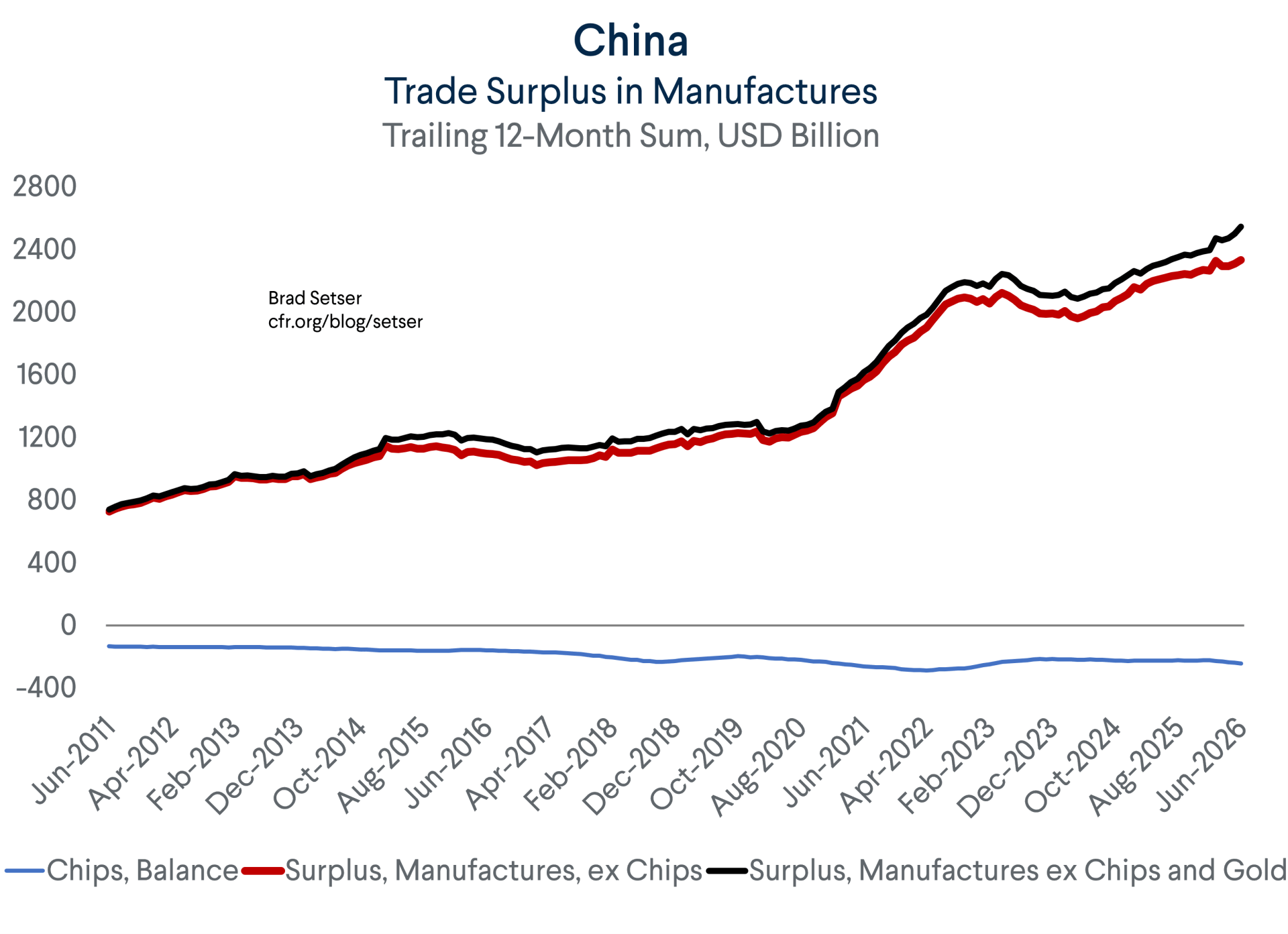
The easiest way to see this is to look at Chinese trade in manufactures excluding chips and excluding gold (refined gold is classified as a manufacture, the commodity is gold rich ores).
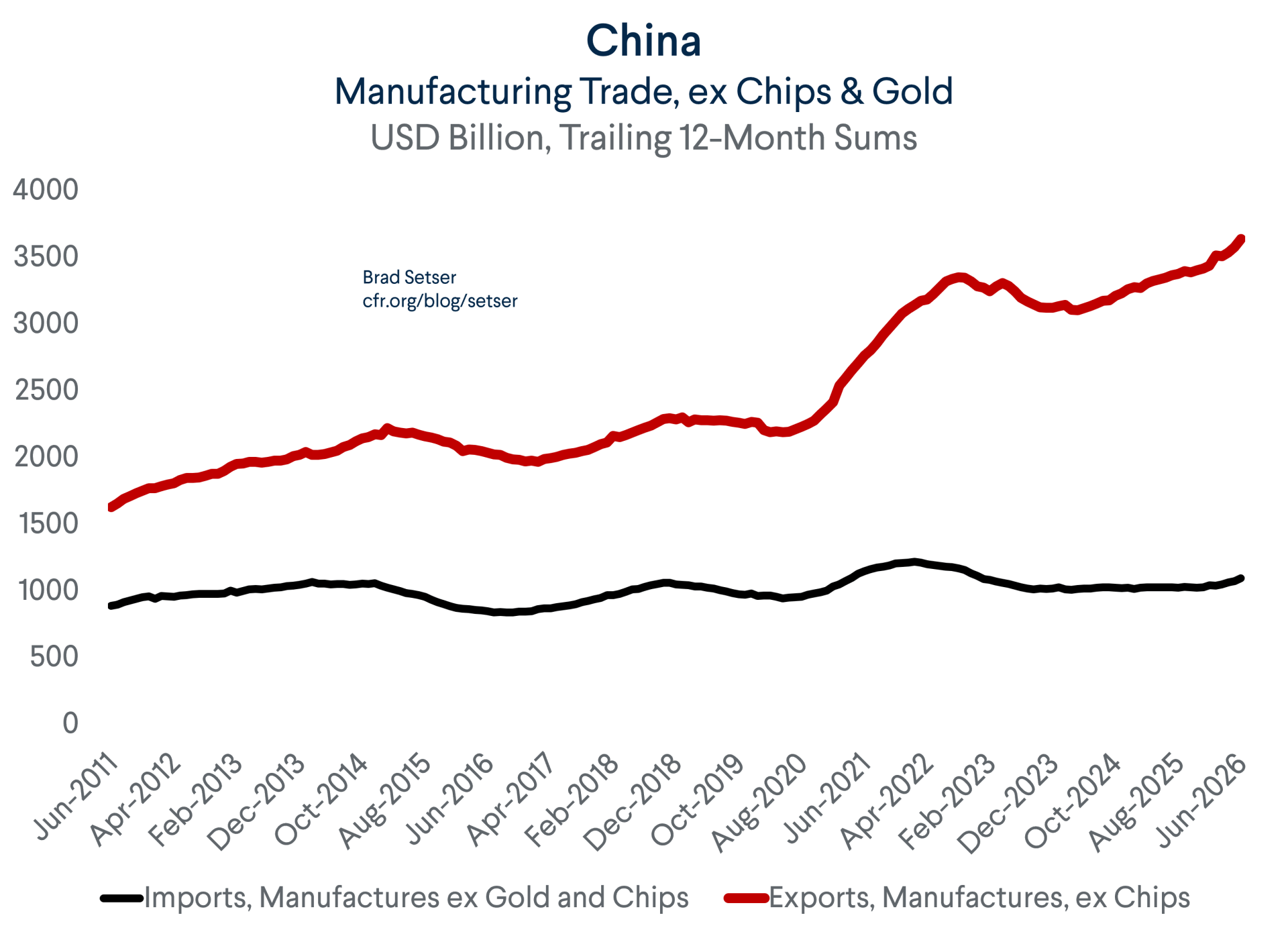
Exports are up. This shouldn’t be a surprise: auto exports are absolutely booming, and imports are still flat.
This isn’t to say that chips aren’t important—China runs a deficit there, and that deficit expanded just a bit.
But the main driver of the increase in China’s reported manufactured imports was the rise in chip prices, which has clearly been huge, and that factor also inflates exports.
And all this is more dramatic when examined in higher frequency numbers. Without the surge in gold imports the overall surplus would have been up significantly in the second quarter even with the (big) rise in chip prices.
There is a secondary point here.
Chinese import and export prices didn’t move much in the first quarter, and then jumped in the second quarter. China’s statistical authorities were slow to recognize the “chip” shock and the broad impact of higher memory chip prices in particular.
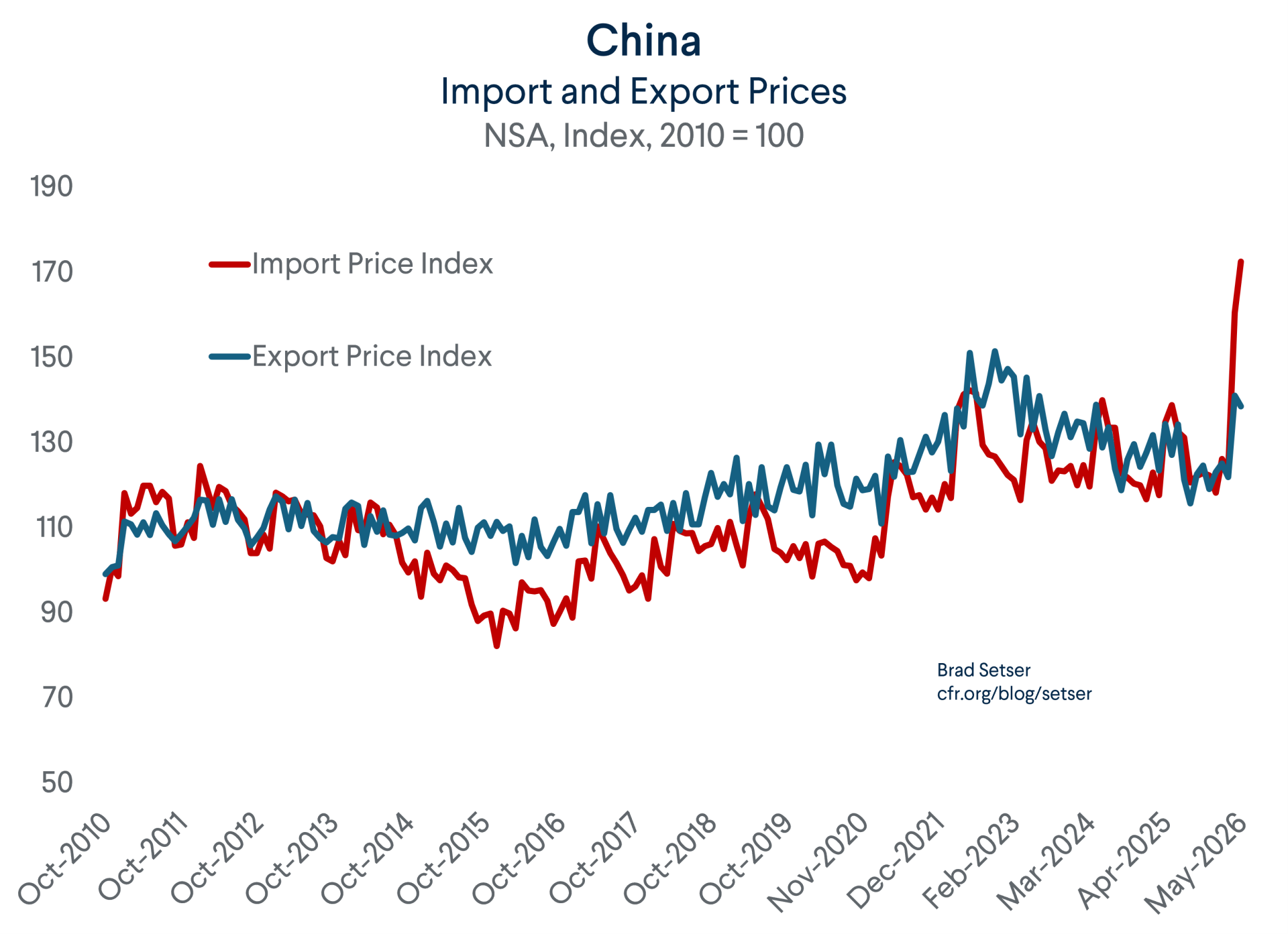
This did end up distorting China’s import and export volume data in the first quarter (if the dollar value of trade rises and import and export prices don’t rise, statistically there is an increase in the volume of trade).
This reduced China’s reported Q1 growth (the net export contribution should have been bigger). And because gold is in the Q2 data in a big way (offsetting the fall in oil imports), true import in Q2 were likely overstated… and that pulled down reported growth a bit as well.
All these adjustments though are complex. The easiest way to see what is happening is just to focus on the manufacturing surplus without gold and chips. It keeps on rising.
In fact, without the 1.5 pp of GDP in gold imports in q2, the goods surplus would be close to 7% of GDP -- an absolutely massive number for an economy as big as China.
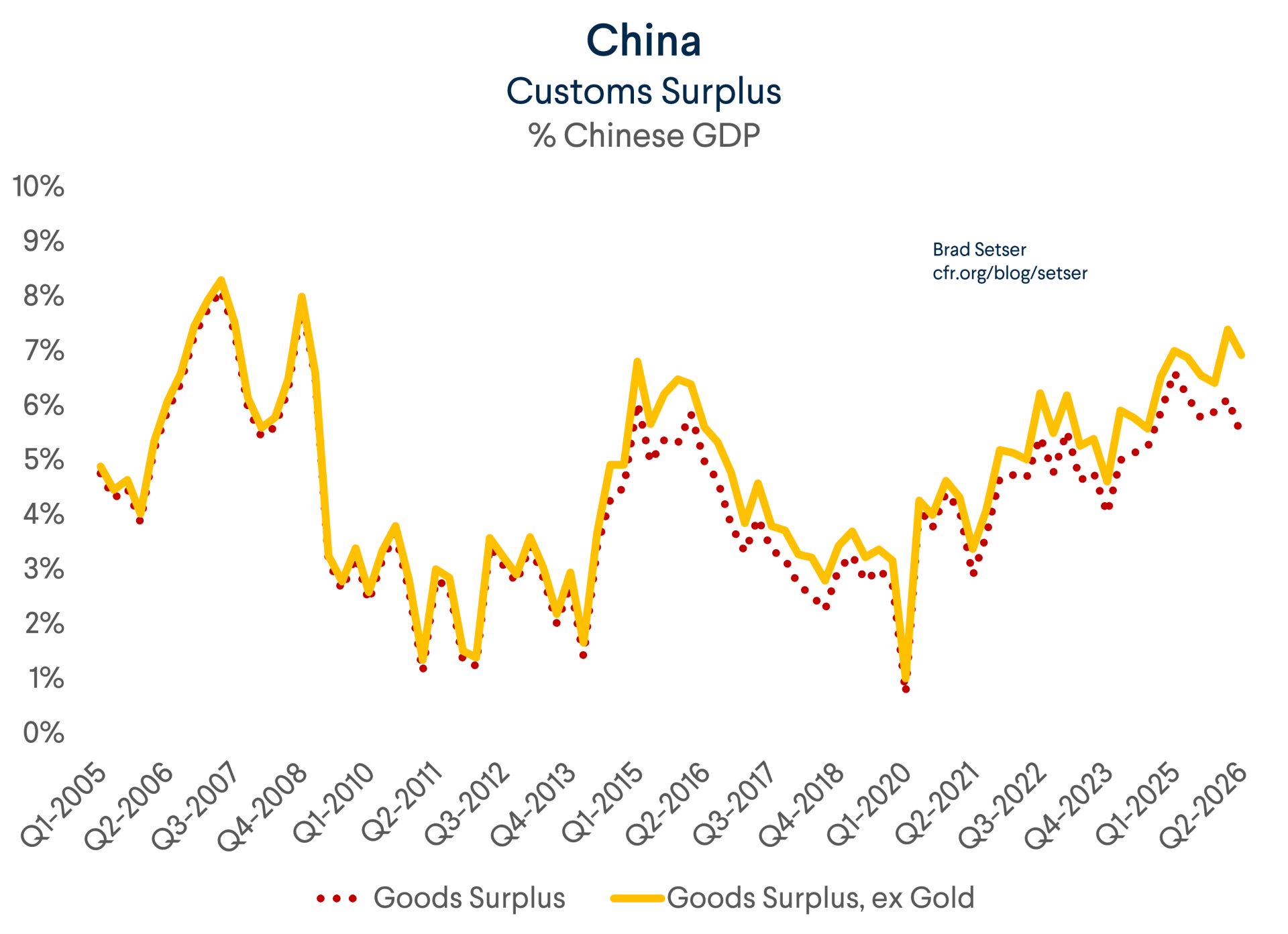
The trend is clear. Too bad the financial press missed it.****
*The NX contribution, which is the change in the “real” trade surplus, was +0.8 pp of GDP in Q1 and +0.9 pp of GDP in Q2.
** The composition of China’s imports has evolved rapidly in the last few months. The chip price surge has had a huge impact. So I was expecting it to have a bigger impact on the “net” than what actually shows up in the numbers. This is a case where rigorous analysis that decomposes both exports and imports is needed.
*** The 2025 U.S. trade data also needs to be gold-adjusted, by the way. The threat of tariffs had a huge impact on the Q1 data, and reversal of the flood of imported gold bars (which are in manufactures…) was a big reason for the relatively low U.S. trade deficit in Q4 and Q1.
**** The rapid increase in auto export volumes, both globally and with respect to Europe, should have given the Economist pause before it embraced the arguments of Adam Wolfe of Absolute Strategy Research. Too many China analysts are trying to obscure what should be obvious: China continues to rely heavily on exports for growth.
This work represents the views solely of the author(s). The Council on Foreign Relations is an independent, nonpartisan membership organization, think tank, and publisher, and takes no institutional positions on matters of policy.