Europe Rearms

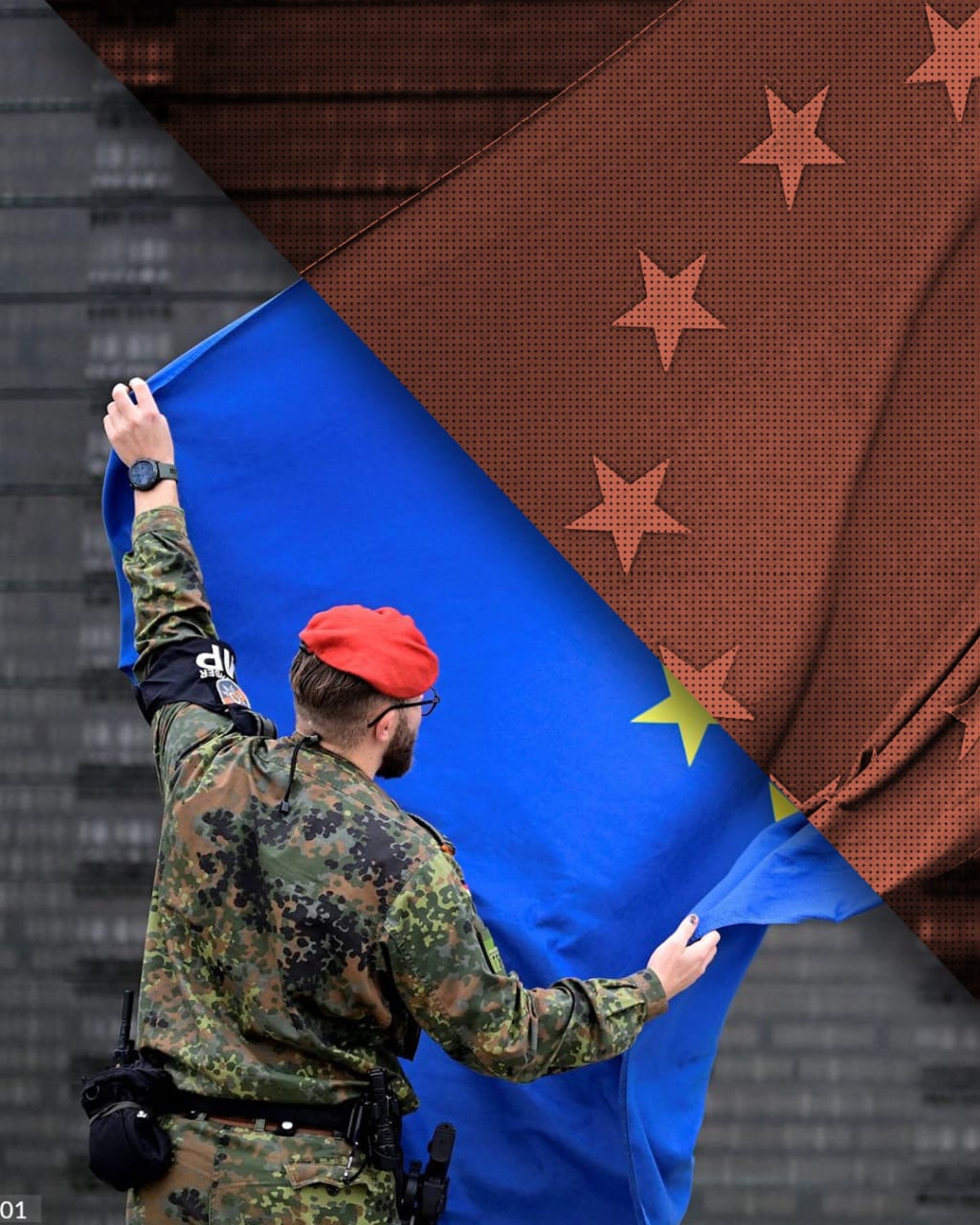
In the current period of transition and disruption, Europe faces two questions, one internal and the other external. First, can it project military, economic, and technological power in an increasingly competitive geopolitical environment? And second, can it remain internally stable, as the United States retreats from the continent, and with an aggressive Russia on its eastern flank?
There is a realistic chance that Europe can protect itself. On the conventional side, the continent has begun a surge in defense spending unseen since the end of the Cold War. In 2025, for the first time since the target was established in 2014, all thirty-two NATO allies are expected to meet or surpass the 2 percent of GDP threshold. Moreover, at the June 2025 Hague summit, allies committed to the even more ambitious target of 3.5 percent of GDP for core defense requirements. Europe does not need to match U.S. military capabilities to deter Russia, as long as the U.S. nuclear umbrella remains intact and Anglo-French nuclear cooperation is strengthened. The latter partnership could take the form of some broader commitment to using those weapons to defend Europe as a whole, as France has indicated it will do. Coupled with the development of the continent’s indigenous conventional and long-range precision strike capabilities, that type of nuclear commitment could assist Europe in deterring Russia, and will also reduce the risk of nuclear proliferation on the continent.
Germany will play an essential role in Europe’s conventional rearmament. Berlin plans to more than double its defense budget to €162 billion ($190 billion) by 2029, reaching the NATO target of 3.5 percent of GDP before the end of the decade—more than the combined defense budgets of France and the United Kingdom today. Europeans by and large welcome this development as a boon to their conventional deterrence ambitions. To assuage fears that Germany will once again dominate Europe, however, Berlin will need to embed its new military capabilities into European structures by procuring weapons jointly with other countries, integrating its forces with those of other countries, and tapping shared European financing to foot the bill.
The greatest threat to Europe’s internal balance of power is the resurgence of far-right parties. The electoral success of Alternative for Germany (AfD) in particular would reawaken fears of a revanchist Germany, undermining joint European defense. Europe’s rearmament trajectory is promising but fragile. Several factors—the rise of far-right movements, delayed U.S. weapons sales to Europe stemming from dwindling stockpiles because of the Iran war, and the risk of European disunity—could erode the gains that have been made before they translate into credible deterrence.
Externally, Europe probably cannot establish itself as a geopolitical player alongside the United States and China. Whereas Europe had global ambitions in the early 2000s and 2010s, the continent is now focused overwhelmingly on its own defense and economic productivity. European capitals have little bandwidth to deal with other regions, particularly the Middle East, and are not eager to do so if engagement brings conflict with the United States. Yet Europe cannot shield itself from global crises and conflicts, as the closure of the Strait of Hormuz and rising energy prices have demonstrated. German Chancellor Friedrich Merz has warned that the economic consequences of the war against Iran could rival those of the COVID-19 pandemic or Russia’s invasion of Ukraine.
This fresh energy crisis has struck a continental economy already weak from a lack of productivity. Former Italian Prime Minister Mario Draghi’s 2024 report on European competitiveness described the moment as an “existential challenge.” Draghi identified a widening innovation gap between the EU and both the United States and China, particularly in advanced technologies, and warned that Europe’s productivity growth has been falling behind for two decades. At the same time, Europe is struggling to respond to China’s industrial overcapacity. Unlike the first China shock of the early 2000s, which primarily affected low-cost consumer goods—and struck the United States in particular—this second wave targets Europe’s core industrial sectors, including automobiles, machinery, and high-tech manufacturing.
Those factors, taken together, mean that Europe, at least for the next decade, will struggle to project power globally. It should be able to deter Russian aggression on its own, but it will lose geoeconomic ground, especially to China. The continent will also be far more inward-looking than in past decades. Europe could, at best, become an island of stability relative to other world regions. At worst, it could become secluded and withdrawn from the global contests over power and influence that will define the coming era, especially on technology and artificial intelligence. A Europe that defends itself at home but loses influence abroad seems the likeliest outcome.
For the United States, a Europe capable of defending itself against Russia but unable to project power beyond its borders is a mixed blessing. It will free up U.S. capabilities elsewhere, but, as the Iran war has shown, a more independent Europe may not always agree with Washington. Meanwhile, limited European power projection and a widening productivity and technology gap will make Europe a weaker ally and leave it more vulnerable to Chinese influence. Ultimately, a Europe that is strong—militarily, economically, and technologically—serves U.S. interests, even if it increasingly acts in its own.
More from the Future of American Strategy >>