Gerrymandering, the Supreme Court, and the 2026 Midterm Elections
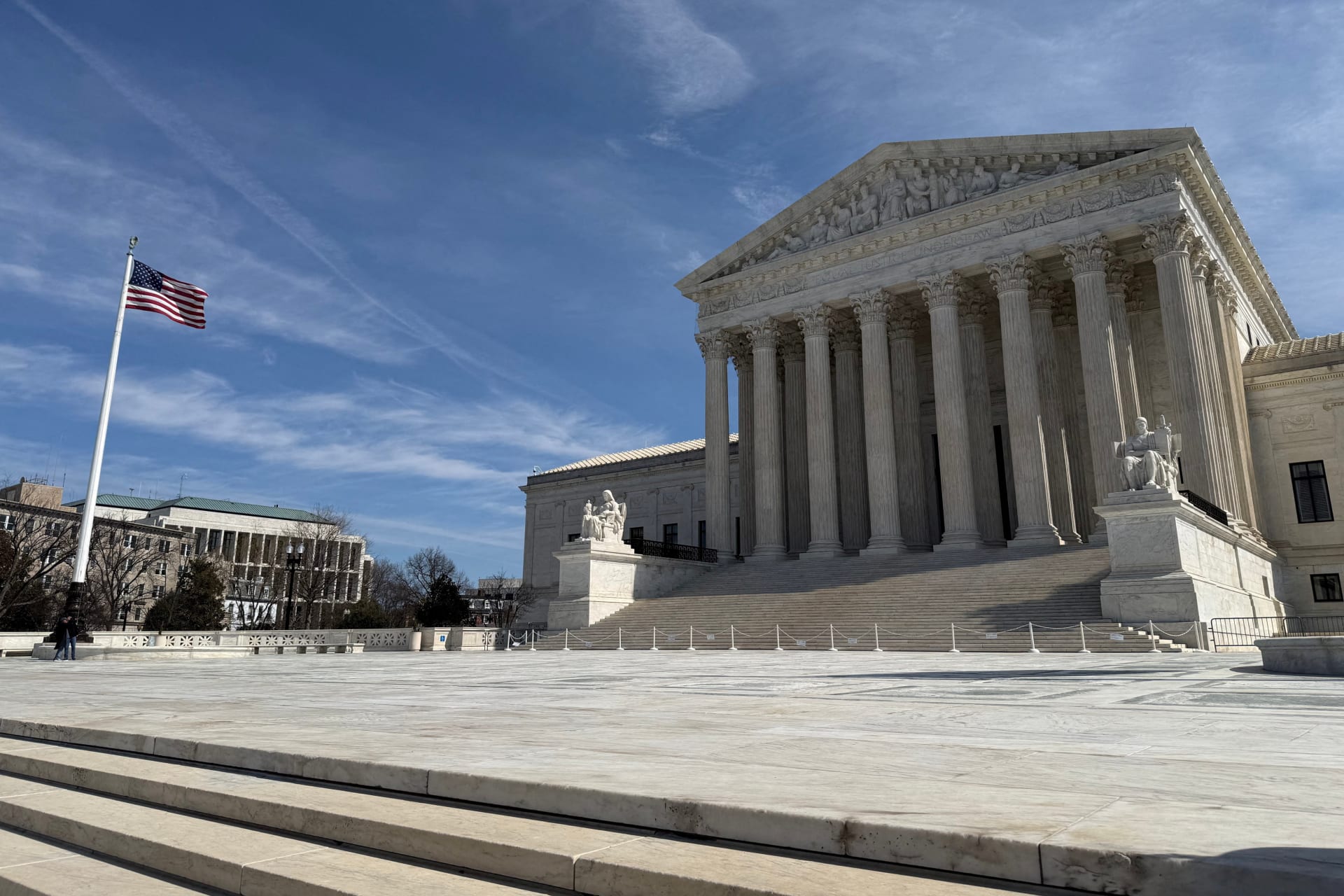
The Supreme Court’s ruling last week in Louisiana v. Callais may help Republicans defy expectations and retain control of the U.S. House of Representatives.
By experts and staff
- Published
 James M. LindsayCFR ExpertMary and David Boies Distinguished Senior Fellow in U.S. Foreign Policy
One of the few “iron laws” of American politics is that the president’s party loses seats in the House of Representatives during the midterm elections. In the forty-two midterm elections held since the two-party system took hold in the late 1850s, the president’s party has lost seats thirty-eight times. That record is why most political junkies have been predicting that Democrats will pick up seats in November and regain control of the House.
The Supreme Court’s 6-3 ruling last week in Louisiana v. Callais has scrambled that thinking.
The Court’s decision involved a challenge to Louisiana’s congressional district map. The Voting Rights Act, which Congress originally passed in 1965 and subsequently amended, bars states from drawing districts in ways that dilute the voting power of non-white voters. To comply with the traditional understanding of Section 2 of the law, Louisiana drew its districts to create so-called majority-minority districts.
The plaintiffs in Louisiana v. Callais argued that Louisiana’s map constituted an unconstitutional racial gerrymander precisely because it created majority-minority districts. The Court agreed in the main. It held that states have great freedom to draw district lines. States can even draw maps to intentionally advantage one political party over another. However, maps that maximize the electoral chances of non-white candidates violate the Constitution’s equal-protection clause. Under this narrowed interpretation of the Voting Rights Act, a state runs afoul of Section 2 only if it “intentionally drew its districts to afford minority voters less opportunity because of their race.”
Republicans hailed the Court’s ruling for embracing a color-blind approach to redistricting. Democrats criticized the ruling for enabling states to diminish the political power of non-white voters.
The Court’s decision in Louisiana v. Callais comes amidst a recent spurt of mid-decade redistricting, a practice that is legal under federal law though rarely seen in the United States for more than a century. President Donald Trump has sought to increase Republicans’ chances of holding onto the House by pushing red states to redraw their congressional maps. Democrats in California, Virginia, and elsewhere have responded in kind.
Until the Supreme Court’s ruling last week, neither Republicans nor Democrats had gained a clear advantage from their revised maps. Projected seat gains in some states roughly offset projected seat losses in other states.
Now, all bets are off. Immediately after the Court handed down its decision, Louisiana’s Republican Governor Jeff Landry suspended the state’s May 16 primary so that the district maps can be redrawn. Landry took that step even though absentee voting for the primary had already begun. Alabama, South Carolina, and Tennessee are among the red states that might follow Louisiana’s lead.
The long-term effect of Louisiana v. Callais will be to heighten political partisanship and polarization in the United States. Many states do not have laws barring them from drawing district lines for political gain, so they will be free to wring out the maximum political advantage in their congressional maps. Meanwhile, the states that do have limitations, which are mainly blue states, will likely shed those constraints. California and Virginia have shown the way in that regard with their recent referenda to counter Republican gerrymandering with Democratic gerrymandering. That trend will almost certainly worsen America’s political ills.
What will happen in the next six months is less obvious. Which states redraw their congressional district maps and how much they tilt those maps remains to be seen. Beyond that, new congressional maps, whether triggered by the ruling in Louisiana v. Callais or by referenda such as in Virginia, will be litigated. Courts traditionally decline to adjust district lines in the shadow of an election. However, the Supreme Court’s ruling, which came just over six months before Election Day and even less before early- and absentee balloting begins across the country, shows that traditional expectations may not apply in 2026. But for now, predictions that Democrats are a lock to retake the House should be put on hold.
The Supreme Court’s ruling does not affect Senate races. However, it comes as a Democratic Senate majority in 2027 has moved from unlikely to conceivable. That raises a possibility that would have been unthinkable just a month ago: the Democrats could take the Senate but lose the House.
The Court’s ruling also increases the prospect of a dystopian outcome in November that some election experts have warned about: a dispute over which party won control of the House. Until last week, Democrats looked poised to win far more than the three to five seats they need to regain the majority. That meant that the few tight races that happen every congressional cycle would be irrelevant for determining who will run the House.
But if the result of Louisiana v. Callais is that Democrats now effectively need to pick up, say, twenty-five seats, a few tight races could determine which party holds the speaker’s gavel next January 3. As Americans saw in 2000 and again in 2020, such situations do not bring out people’s better angels. Add in the ongoing fights coming over who gets to vote and how, and the mood in the United States could get very ugly.
So buckle up. There is turbulence ahead.
Numbers to Note
Even with mid-decade redistricting, the public’s assessment of Trump’s job performance will still have a major impact on whether Republicans keep control of the House. On that score, Trump remains upside down in his overall approval rating, with an average of national polls showing that 39.1 percent of Americans give him the thumbs up and 57.5 percent the thumbs down. Trump’s -18.4 net approval rating is the lowest of his second term and up from -16.9 a month ago. Rising gasoline prices certainly are not helping. The average price today for a gallon of gas is $4.457 a gallon, thirty-five cents higher than a month ago.
As of today, fifty-six current House members have announced that they are either retiring or running for other offices in November. That number does not include Democrat David Scott of Georgia, who died two weeks ago, or Republican Tony Gonzales of Texas and Democrats Sheila Cherfilus McCormick of Florida and Eric Swalwell of California, who resigned their seats last month rather than risk being expelled from the House for ethics violations. All four of these seats will be filled before the fall by special elections. The winners of those elections will almost certainly run in November as well. If so, then seven incumbents running for reelection will have spent less than a year in the House.
The number of senators who have decided not to run for reelection remains at eleven: seven Republicans and four Democrats.
The generic congressional ballot has Democrats with a 5.9-point lead over Republicans. That is up by slightly less than half a point since last month.
A Reuters/Ipsos poll found that nearly half of voters surveyed believe that large numbers of non-citizens are voting in U.S. elections. Republicans in particular believe that such voting fraud is widespread. It is in fact exceedingly rare, as study after study has shown. The fact that so many voters do not trust election results provides an additional reason to worry that that things could turn ugly quickly if control of the House comes down to a few tight races in November.
News to Note
The Silver Bulletin’s Eli McKown-Dawson interviewed Votebeat’s Nathaniel Rakich on how Trump’s efforts to change the administration of the midterm elections could affect the results. The upshot is that it is not clear which, if any, of Trump’s proposed changes will take effect and which party will gain an advantage if they do.
Justice Samuel Alito wrote the majority opinion in Louisiana v. Callais narrowing the provisions of the Voting Rights Act. Justice Elena Kagan wrote the dissent.
Oscar Berry assisted in the preparation of this article.
Other posts in this monthly series: