Disappearing Gulf Capital: The Iran War Risk Wall Street Isn’t Watching
Some of the largest U.S. technology companies and investment managers are vulnerable if Middle Eastern sovereign capital shifts more towards domestic priorities in response to the Iran war, which could lead to potential spillover to broader U.S. financial markets.

Rebecca Patterson is a senior fellow at the Council on Foreign Relations, a globally recognized investor, and macroeconomic researcher. She is the co-host of the CFR podcast, The Spillover.
Economic concerns about the spillovers from the Iran war have focused on the global flow and availability of critical materials. There is, however, another, much less appreciated war risk for the United States: the supply of dollars from the Gulf, especially to capital-hungry U.S. tech firms and their financial intermediaries.
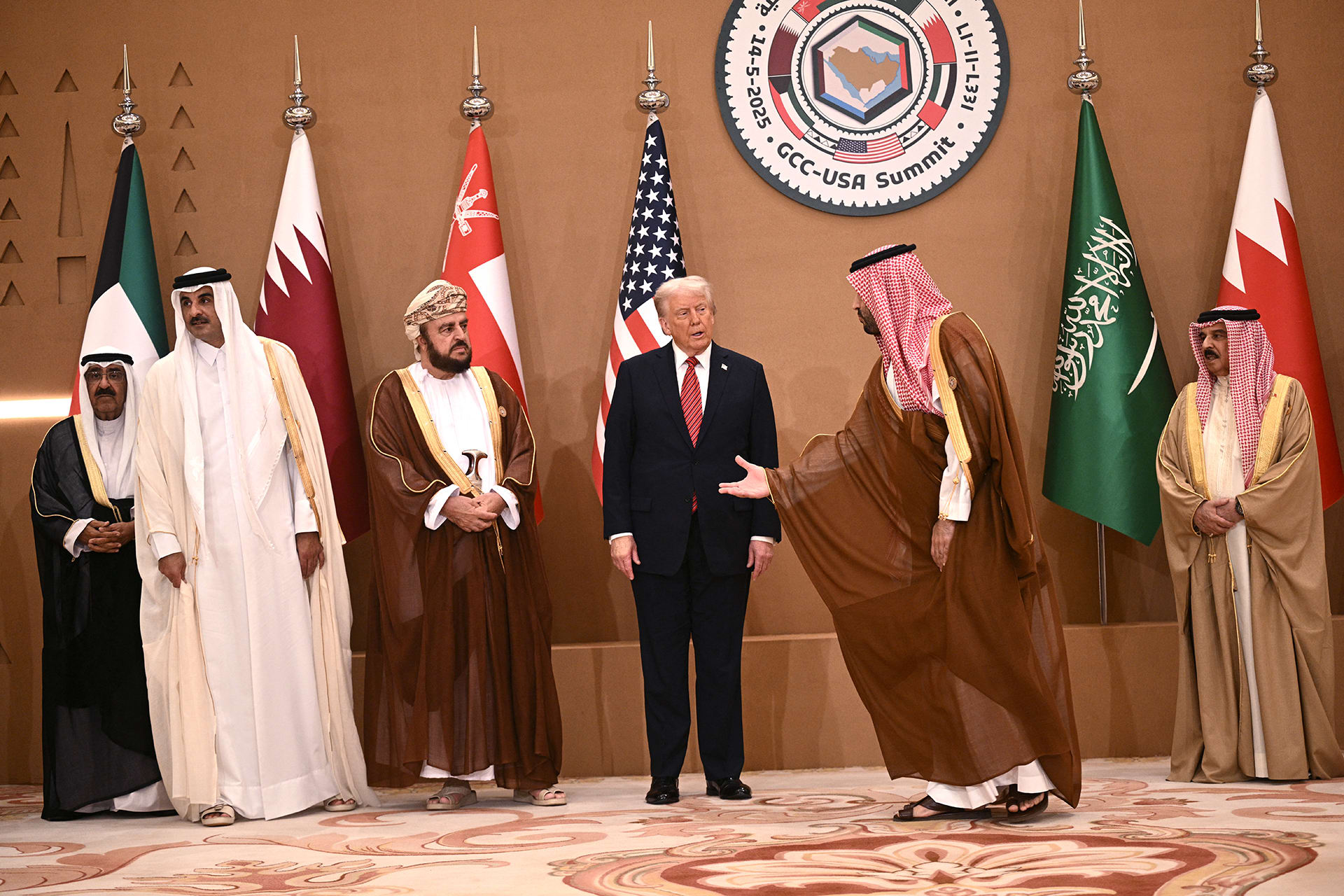
Gulf Cooperation Council (GCC) economies—including Bahrain, Kuwait, Oman, Qatar, Saudi Arabia, and the United Arab Emirates (UAE)—have dramatically grown and transformed their sovereign wealth fund (SWF) vehicles over the last decade, as part of efforts to diversify away from volatile energy-price cycles. Today, the region hosts some of the world’s largest SWFs, with around a dozen sovereign funds (led by Saudi Arabia and the UAE) managing somewhere between $4–$6 trillion in assets, according to estimates from SWF trackers and the International Monetary Fund. Just last year, the region’s sovereign funds are estimated to have invested more than $120 billion, with the United States by far the largest single beneficiary.
This shift in focus has included greater emphasis on foreign illiquid private investments, especially in the United States, as well as greater cross-border business to help develop non-energy industries at home. Indeed, the Gulf’s financial and technology-related conferences had become highlights of the annual travel calendar for the world’s largest institutional investors, akin to Davos in Switzerland or Milken in Los Angeles. Both sides have been eager to increase cross-border, profitable relationships.
Now, however, GCC budgets are under strain: the war has largely disrupted energy exports and dramatically slowed other revenue streams, such as tourism. At the same time, domestic capital needs have grown, including increased defense spending and repairs for damaged infrastructure. Fiscal outlooks are deteriorating. These developments contributed to a decision by Moody’s Ratings to downgrade Bahrain’s outlook to “negative” from “stable” in late April. They also likely spurred talks that are reportedly taking place between the U.S. Treasury Department and some GCC governments about Washington providing emergency dollar liquidity to the region if the Iran war persists and continues to disrupt oil shipments through the Strait.
However long the conflict lasts, GCC capital to the United States will not dry up. These economies run consistent, large current-account surpluses that will continue to be “recycled,” including into a broad array of U.S. financial assets. But a potential reduction in the flow of funds in 2026 could still be a significant challenge for U.S. beneficiaries.
U.S. hyperscalers might need to lean more on debt to fund their artificial intelligence (AI) aspirations, a trend that over the last year has made investors more cautious about those firms’ balance sheets and valuations. Less GCC capital could also translate into fewer fees for financial intermediaries that are involved in these “capital supply chains,” some of whom are already struggling to successfully attract and retain different client segments (namely U.S. retail investors).
Altogether, this creates an underappreciated source of risk for tech-heavy U.S. financial markets at a time when the S&P 500 equity index is near record highs—as is American anxiety over the state of the U.S. economy.
The evolution of GCC capital
It helps to look at history to understand today’s U.S.-GCC capital relationship. The starting point is simple: the GCC’s economic fortunes have long been subject to challenging boom-bust oil-price cycles, given that anywhere from 50 percent to nearly 90 percent of total government revenue came from energy sales.
Higher energy prices created greater fiscal space for government projects, but equally, sharp declines in oil prices imposed immediate fiscal strains that often put large, longer-term projects at risk. The 2008 global financial crisis and resulting oil-price decline, for instance, contributed to a debt crisis in Dubai, where real-estate projects required financial lifelines from the UAE central bank. These repeated oil-price collapses—including in 2014-16, driven in large part by increased U.S. energy supplies—exposed the region’s fiscal vulnerability and accelerated the push to diversify.
Indeed, it appears that the U.S.’ transformation into a net energy exporter, along with concerns about fiscal dependence on energy exports, led Saudi leadership to pursue Vision 2030, the kingdom’s 2016 roadmap to diversify away from fossil fuels into areas like tourism, renewable energy, and technology. The Public Investment Fund (PIF) was the primary sovereign vehicle to support the plan, both by generating profits from its portfolio and by investing in selected sectors, domestically and overseas.
Around this time, the willingness of Western investors to leverage China’s state-owned vehicles as a major source of foreign capital was waning, partly due to political pressures. Despite a pause after the killing of Saudi journalist Jamal Khashoggi in 2018, the need for an alternative to China’s deep pool of capital—along with interest among the GCC governments to partner with other economies—drove a major shift in global capital flows towards the Middle East.
To give a sense of the shift, in 2016, Chinese foreign direct investment (FDI) flows into the United States totaled more than $55 billion, according to the American Enterprise Institute. By 2025, Chinese FDI to the United States had fallen to about $3.8 billion.
U.S. interest in GCC funds has grown further in recent years thanks to two additional factors: Donald Trump’s election for a second term in 2024, which ushered in a more collaborative, transactional view of the region, and an extraordinary need for capital to fund the United States’ AI efforts. By 2026, Saudi Arabia and the UAE were among the top ten global destinations for FDI. A decade earlier, they were not even in the top twenty destinations, according to an annual survey by the management consulting firm Kearney.
Comprehensive data are difficult to attain for cross-border GCC capital flows, partly because some investments are conducted via intermediaries. However, it’s still possible to back into ballpark estimates. Global SWF estimated that seven of the largest Gulf sovereign wealth funds invested $119 billion [PDF] in 2025, with most of those funds going to the United States.
While the region’s central banks focused on liquid and less volatile assets such as U.S. Treasury bonds, the SWFs leaned more toward illiquid private equity and direct investments to drive portfolio returns. Some of last year’s investments came through large U.S. investment managers. Saudi Arabia’s PIF, for instance, invested $20 billion in a Blackstone infrastructure fund, served as an anchor investor for Brookfield and partnered with BlackRock and Goldman Sachs, among others.
In addition, regional SWFs made direct investments into U.S. technology companies. PIF’s nearly $29 billion acquisition of Electronic Arts stood out, but there were several other notable direct deals made last year, including investments by MGX (a UAE vehicle) in capital raises for OpenAI and xAI. Gulf SWFs also made large investments last year in AI infrastructure. Stargate, a $500 billion venture with OpenAI, Oracle, and SoftBank, had MGX as a strategic partner. Meanwhile, other U.S. firms partnered with GCC sovereign funds to build in the region, including a $1.5 billion investment in the UAE by Microsoft and G42, an Abu Dhabi-based technology holding company, to support AI development and build digital infrastructure across the region.
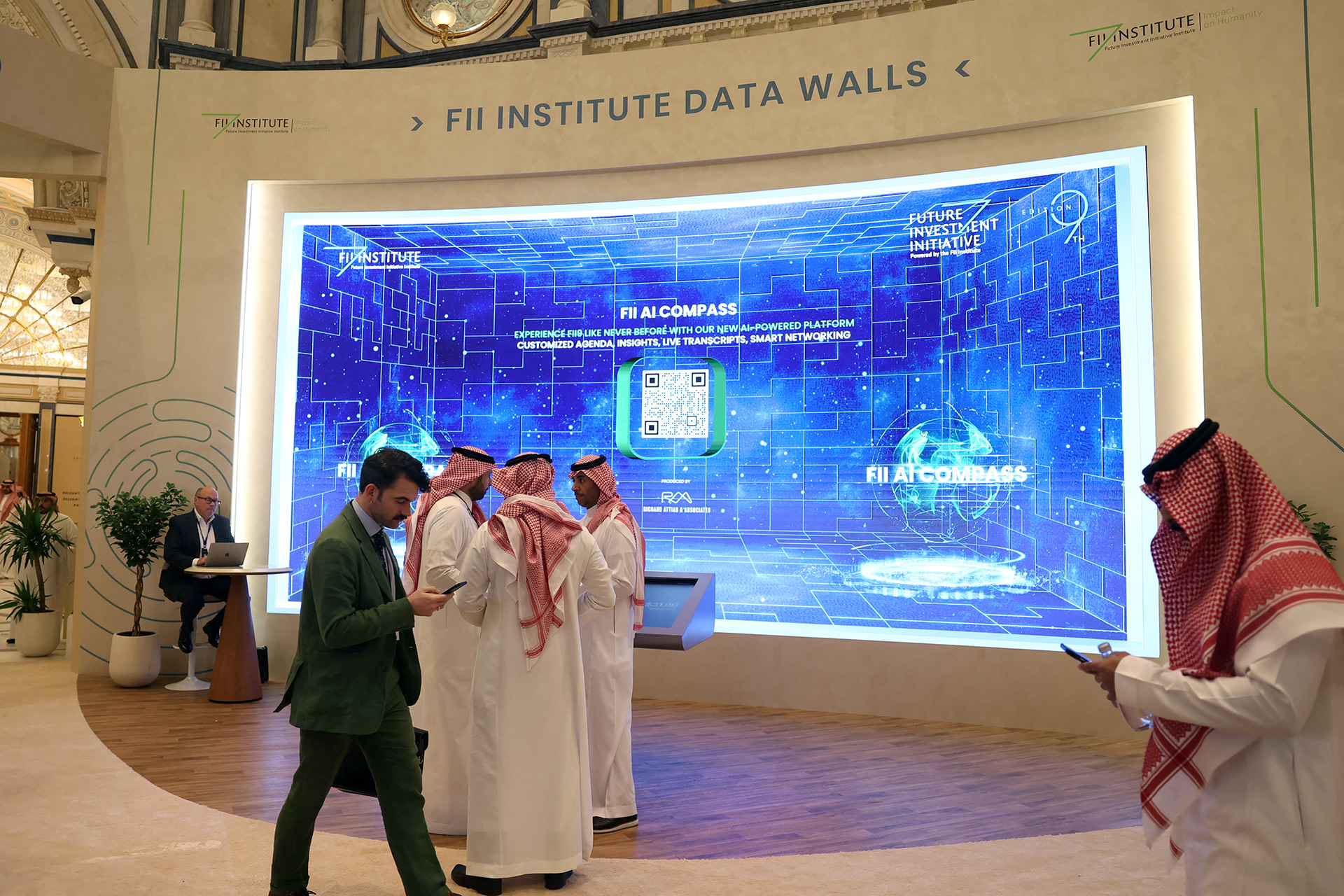
Capital flows are only one dimension of GCC endeavors that have gained immense influence as these countries have worked to diversify and grow their economies. Consider that when Saudi Arabia held its ninth Future Investment Initiative conference late last year, more than 7,500 global executives reportedly attended. The U.S.-Gulf ties have grown far beyond finance and tech, encompassing an array of corporations and other organizations that involve manufacturing, tourism, hospitality, universities, and popular sporting events, the latter ranging from Formula 1 and soccer to golf and tennis.
Is U.S.-bound GCC capital peaking?
Following this incredible transformation, some GCC members were starting to review—and in some cases rethink—their SWF approaches, even before the Iran war began. After Saudi Arabia’s $925 billion PIF launched a new five-year strategic investment plan in late 2025, for instance, PIF Governor Yasir Al-Rumayyan announced in April that international investments would be cut from 30 percent to 20 percent of the total. While PIF’s greater domestic focus appears more structural than a reaction to the war, it would be reasonable to expect that the war’s impact would lead Saudi Arabia and other GCC member states to redirect more capital back home as a way to replace lost energy and business revenues—at least in the near-term.
Energy proceeds have been stymied by the blocking of the Strait of Hormuz, while non-energy revenues have also taken a hit, as tourism and international business have been largely paused. Together, they have exacerbated budget deficits in places like Bahrain, Qatar, and Saudi Arabia, and whittled down surpluses in other regional economies like the UAE.
Governments need incremental capital to rebuild infrastructure damaged by the war. Rystad Energy, an independent research company, estimated in mid-April that repair to energy infrastructure in the region will cost more than $25 billion, with construction work on non-energy infrastructure adding to the total bill. GCC states could also see a need to direct more capital toward defense. While defense spending could benefit U.S. manufacturers, the amounts would likely be small in relation to the capital being deployed by SWFs in other U.S. assets.
Though it remains early to reach any broad conclusions, a few reports suggest a modest retreat from overseas investments, including those in the United States, could be underway. Just in April, Saudi Arabia’s $200 million gift for New York City’s Metropolitan Opera was withdrawn. Meanwhile, the Saudis confirmed in late April that they would withdraw financial support for the LIV golf league after this year’s season.
Critically, if this trend continues and gains momentum, there is no obvious, equally large capital source waiting in the wings. Unlike a decade ago when China and the Middle East effectively swapped places as the main sovereign funder for the United States, the next largest pools of sovereign capital today—like Japan, Norway, and Singapore—have different investment strategies or are not as large as the GCC’s SWFs in aggregate.
Without a very large and willing new pool of capital to take its place (U.S. investment managers have been trying to increase fundraising from domestic retail investors), a pullback in GCC funds would hit at a bad time for American AI firms as they continue to speed up their race to grow. If these firms cannot get the capital they need from public or private markets or friendly foreign investors, then they may need to rely more on debt issuance, which started raising eyebrows last fall among the investment community. (After Meta announced a $30 billion debt issue last October, for instance, Bloomberg data shows that its stock price fell more than 20 percent in a week as investor concerns over the firm’s balance sheet grew.)
Given the influence of these “mega” U.S. tech firms on the broader equity market, any similar worries in the coming months, which could resurface if other sources of capital prove insufficient, could weigh on equities more generally and spill over into U.S. consumer confidence.
This Iran war-related risk is much less obvious than rising gasoline or fertilizer prices for the United States. It has the potential, however, to be significant and damaging—which will grow the longer the Strait of Hormuz is closed.
This work represents the views and opinions solely of the author. The Council on Foreign Relations is an independent, nonpartisan membership organization, think tank, and publisher, and takes no institutional positions on matters of policy.