Happy 78th Birthday to the United States Air Force
The United States Air Force marks seventy-eight years of service today.
By experts and staff
- Published
 James M. LindsayCFR ExpertMary and David Boies Distinguished Senior Fellow in U.S. Foreign Policy
The United States Air Force (USAF) turns seventy-eight years old today. On September 18, 1947, Chief Justice Fred Vinson swore in Stuart Symington as the first secretary of the Air Force, officially founding a new branch of the U.S. military. General Carl A. Spaatz became the USAF’s first chief of staff eight days later on September 26, 1947.
The origins of the USAF lie in a decision made just four years after the Wright Brothers conducted the world’s first airplane flight at Kitty Hawk, North Carolina. In 1907, the U.S. Army Signal Corps created an Aeronautical Division and put it in “charge of all matters pertaining to military ballooning, air machines and all kindred subjects.” As aviation technology improved, the army’s air force grew bigger. An independent military arm became virtually inevitable after the Army Air Forces became an autonomous U.S. Army Command in 1942 and then grew substantially throughout the remainder of World War II. On July 26, 1947, President Harry Truman signed the National Security Act of 1947 and set in motion the creation of the USAF.
As technology developed, so too did the air force’s reach. On September 1, 1982, it established Air Force Space Command (AFSPC) to oversee military operations in space. That responsibility included not only monitoring ballistic missile launches around the world and placing military assets in space for all the services, but also developing and operating an array of satellite-based communications systems. As space grew in importance as a military domain, calls came to make the air force’s space assets its own service, much as the air force itself grew out of the army. That vision was realized on December 20, 2019, when the United States Space Force (USSF) was established by merging twenty-three air force units. The air force nonetheless retains considerable influence over the much smaller USSF—it handles 75 percent of the new branch’s logistics work.
The U.S. Air Force has 319,506 active duty personnel, 97,175 reserve personnel, 106,300 Air National Guard personnel, and 190,980 civilian personnel. The service flies 5,004 manned aircraft. These planes come in the form of some sixty different airframes, ranging from the B-2 stealth bomber to the F-35 jet fighter to the VC-25, which is better known as Air Force One. Nineteen airmen have been awarded the Medal of Honor.
I asked Colonel Paul P. Townsend, an air force officer spending a year as a visiting military fellow in CFR’s David Rockefeller Studies Program, to recommend resources for people wanting to learn more about the air force. He suggested four books:
Christina Olds and Ed Rasimus, Fighter Pilot: The Memoirs of Legendary Ace Robin Olds (2011). Robin Olds was an All-American football player at West Point who became a triple ace in WWII, married a Hollywood star, and led the 8th Tactical Fighter Wing in Vietnam. Every year, fighter pilots honor his legacy with “Mustache March” inspired by his appearance during his service in Vietnam. Robin often spoke to Air Force Academy Cadets and is remembered throughout the air force as a “Fighter Pilot’s Fighter Pilot” and an amazing leader.
Brian D. Laslie, The Air Force Way of War: U.S. Tactics and Training After Vietnam (2015). Laslie describes the challenges the air force faced after Vietnam, where the service suffered high losses, to become the elite force in action during Operation Desert Storm in 1991. He outlines the impact of RED FLAG, the Red Eagles, and the Weapons School to hone tactics and training. Many of the foundations he outlines continue to shape the way the air force prepares to fight wars.
Robert Coram, American Patriot: The Life and Wars of Colonel Bud Day (2007). Bud Day was a prisoner of war in Vietnam for 5 years and 7 months. He received both the Medal of Honor and the Air Force Cross. He was also a pioneer in creating the “Fast FAC” (Forward Air Controller) mission during Vietnam as part of the “Misty” pilots, whose details are covered in the book, Bury Us Upside Down. Bud also regularly addressed the Air Force Cadet Wing about the trials he endured as a POW in Vietnam and the strength of the air force spirit.
Paul Kennedy, The Engineers of Victory (2013). Kennedy highlights many of the critical technical initiatives that propelled the air force to play a decisive role in winning World War II. Innovations like using the Rolls-Royce engine in the P-51 Mustang to enable deep bomber escort operations and the Army Air Corps sub-hunting to enable the movement of people and equipment to the European theater were critical developments that enabled war efforts. Kennedy shows how innovation in military operations is essential for adapting to the battlefield environment and overcoming challenges.
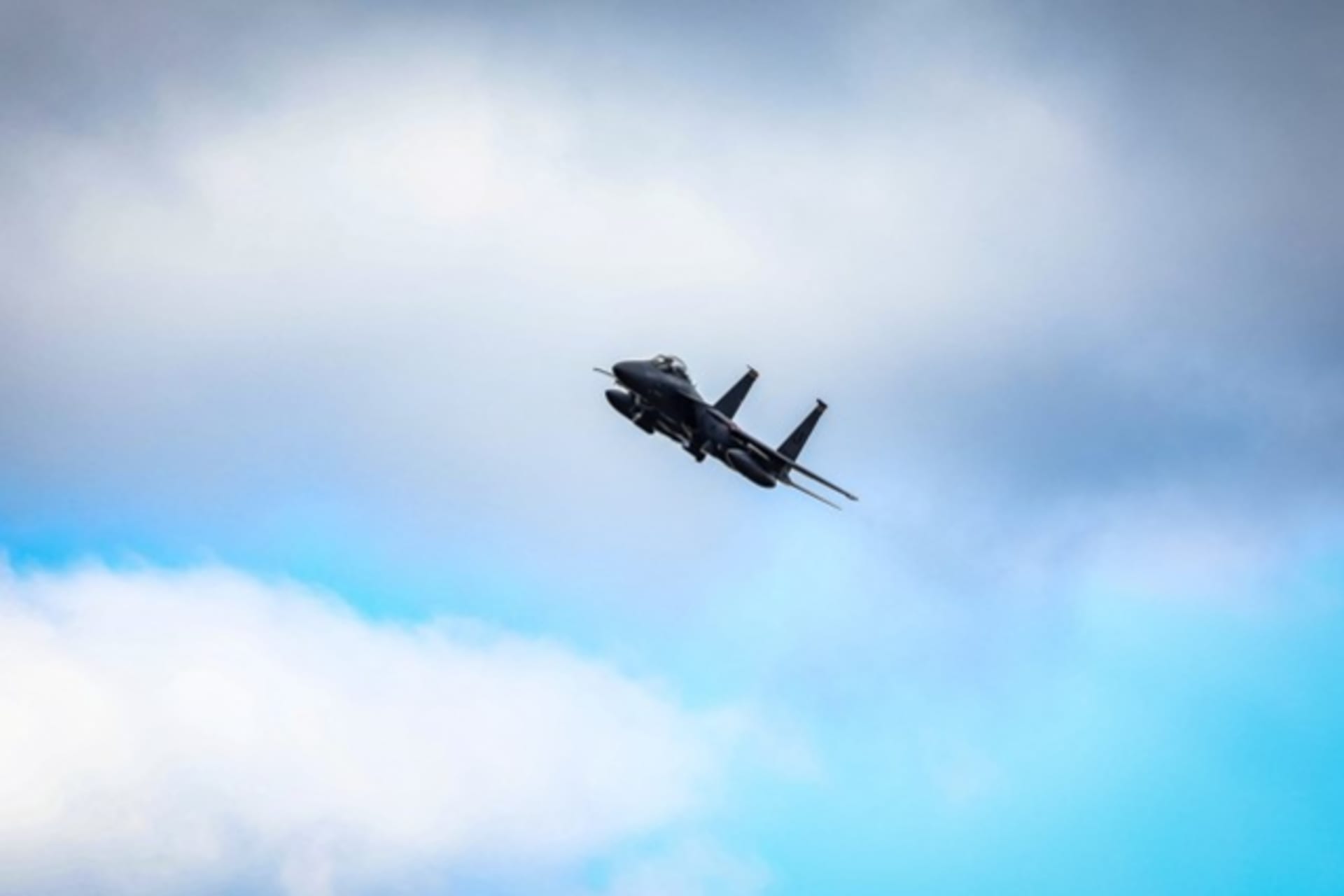
Colonel Townsend also recommends several videos to understand the air force’s training process and performance in the field. The Netflix documentary Air Force Elite: Thunderbirds showcases the trials of the Air Demonstration Squadron, commonly known as the “Thunderbirds,” and what it takes to fly a high-performance aircraft as professionally as the Thunderbirds can. Fighter Pilot: Operation RED FLAG centers on the two-week aerial combat exercises that the air force conducts several times a year and explores the painstaking training airmen undertake to ensure they can operate their aircraft at the highest capacity. Finally, the Amazing Stories of F-15 Strike Eagle Combat over Israel April 13, 2024 details how U.S. fighter pilots contributed to destroying the nearly three hundred ballistic missiles, cruise missiles, and attack drones that Iran launched against Israel on April 13 and 14, 2024. Two Airmen were awarded the Silver Star, the U.S. Armed Forces’ third-highest military decoration for valor in combat, for their heroism during the mission.
For an even deeper dive into the operation of the U.S. Air Force, Colonel Townsend recommends the Chief of Staff of the Air Force’s Leadership Library. Current Chief of Staff General David W. Allvin has updated the list to include podcasts, articles, and videos.
Oscar Berry assisted in the preparation of this post.