How Free Are American Elections?
By experts and staff
- Published
- Micah ZenkoSenior Fellow
—Alexis de Tocqueville, Democracy in America, ch. IV, “The Principle of the Sovereignty of the People of America” (1835)
In his excellent historical survey, The Right to Vote: The Contested History Of Democracy In The United States, Harvard professor Alexander Keyssar wrote of a flawed “progressive presumption” of America’s road to universal enfranchisement. In reality, he contends: “The evolution of democracy rarely followed a straight path, and it has always been accompanied by profound antidemocratic undercurrents.” Of course, the United States has a long history of voter suppression, with the most recent group disenfranchisement in the United States stemming from the 1974 Supreme Court decision Richardson vs. Ramirez, which held that states may bar convicted felons from voting. (Currently, all states but Maine and Vermont do this.) The number of convicted felons prohibited from voting is estimated at 5.85 million, up from 1.17 million in 1976. (For how the United States compares with forty-four other democracies in the disenfranchisement of convicted felons, see here.)
In response to invitations from the U.S. government, the Organization for Security and Co-operation (OSCE) has monitored U.S. national elections since 2002. In 2004, ninety-two observers from thirty-four OSCE participating states were deployed; in 2008, there were thirteen core team experts in Washington, DC, and forty-seven observers deployed to forty states. This year, the OSCE sent fifty observers to monitor and report on the elections—including in Texas. After the 2010 elections, OSCE found: “Attempts to introduce new voter identification and proof of citizenship requirements are heavily politicized, split on the issue of enfranchisement versus integrity of the vote. A broad variety of procedures exist within and between states which has, at times, resulted in an unequal treatment of voters.”
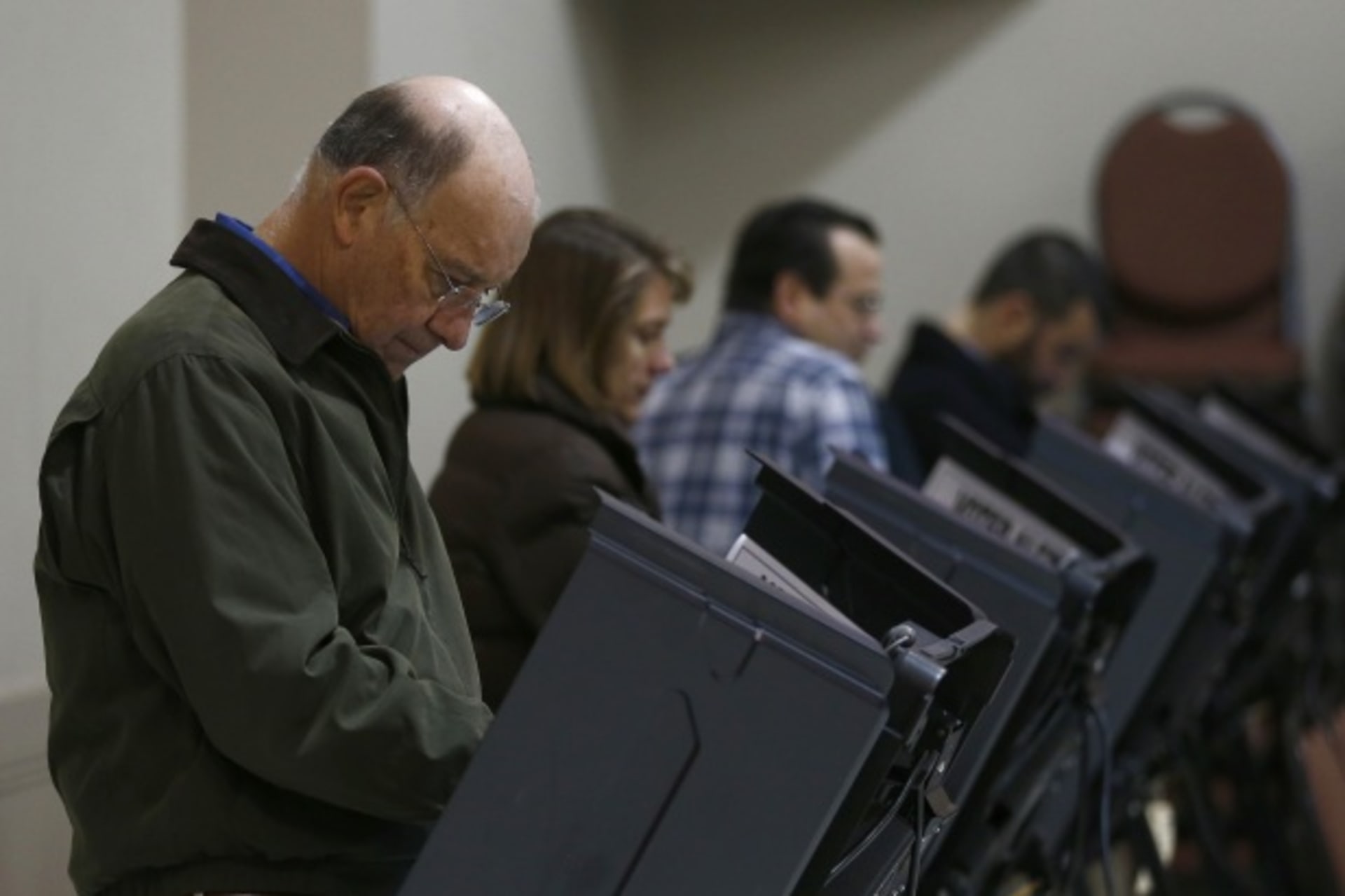
At the same time, compared to other wealthy democracies, the U.S. voting rate is a dismal 48 percent (compared to the OECD average of 70 percent). Moreover, voting rates in the United States have declined by 32 percent since 1980—more than any other OECD country that existed at the time. With most prospective voters heading to the polls today—and charges of “voting irregularities” and inexplicable delays already reported in several battleground states—it is worth a closer look at how U.S. electoral freedoms compare with other countries.
Ranked nineteenth under full democracies with a score 8.18 (out of 10)
Corruption Perception Index: 7.1 (out of 10)
Ranked forty-seventh with a grade of 14.00