How I Got My Career in Foreign Policy: John Sawers
Following an illustrious diplomatic career, John Sawers became the chief of the United Kingdom intelligence service, MI6. He sat down with CFR to talk about the importance of overseas postings and what it’s like to run a spy agency.
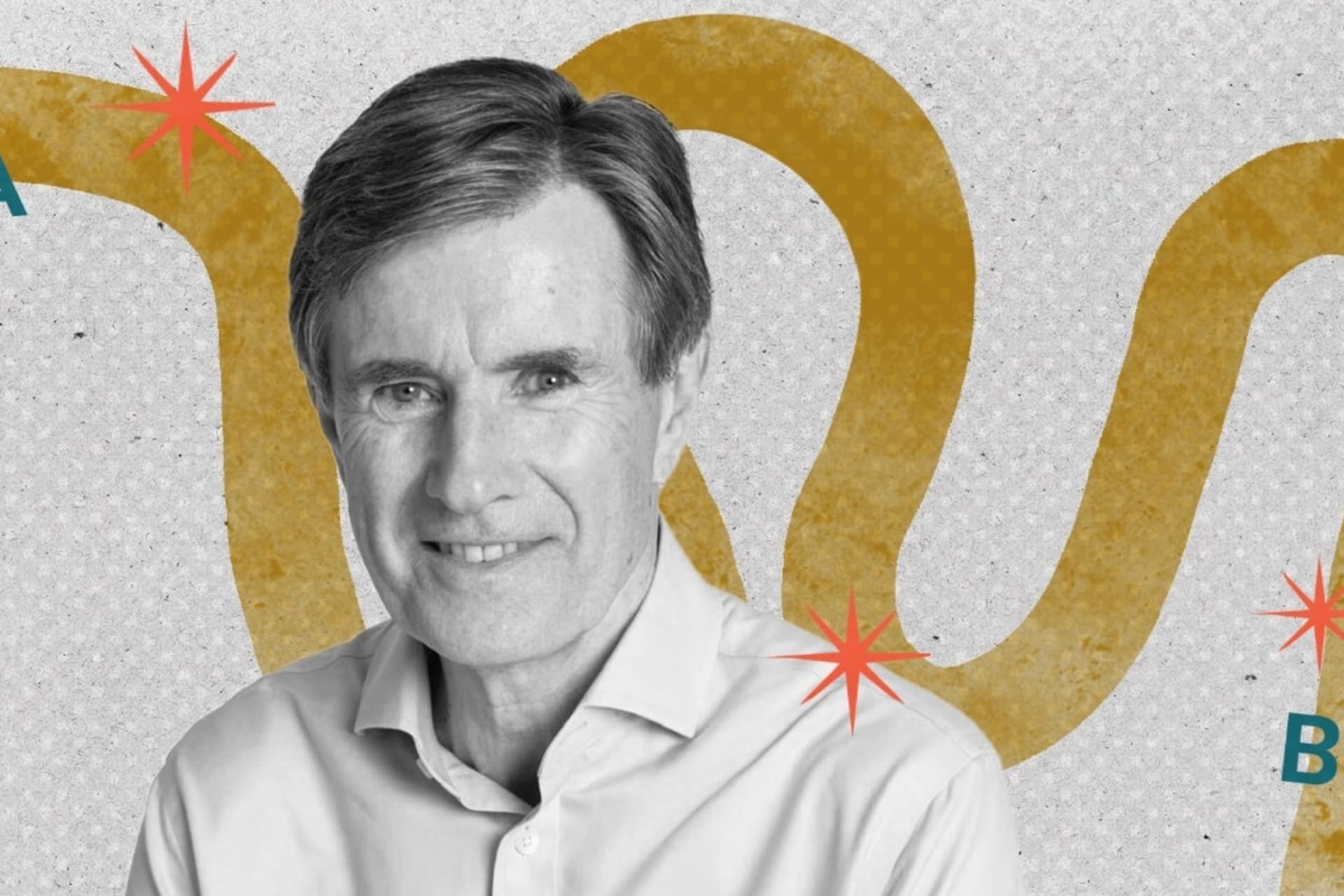
John Sawers’ wide-ranging diplomatic career took him to postings in Africa, the Middle East, and even New York. Yet his most high-profile role brought him home—in 2009, he became the chief of MI6, the first person to be appointed to the position from outside the service. Now, he serves as a member of the Council on Foreign Relations’ Global Board of Advisors. Read more about the lessons he learned as a diplomat, his first time meeting Nelson Mandela, and what he feels are the most critical issues facing the world today.
Here’s how John Sawers got his career in foreign policy.
What did you want to be when you were little?
The first goal I had, I think, when I was a child, was to fly. I applied to join the Air Force cadets when I was quite young, but I had a medical issue which prevented me from becoming qualified to start the pilot training. So I gave up that idea and didn’t really have a clear notion of what to do until I went on to university, and then there were a range of factors that came in.
What sparked your interest in foreign policy?
The world was quite a turbulent place in the early ‘70s, when I was completing my high school and going on to university. The Vietnam War was raging. Britain was joining the European Union. The Yom Kippur War took place in 1973. There was a crisis with Ugandan Asians being evicted from their homes and going back to Britain. It was that the most interesting items on the news—I always found—were foreign affairs, and that’s what intrigued me at the time.
I had an instinct for public service, wanting to work for a wider public good. I was never really motivated by money or fame or anything. It was about how I could contribute to society, really. And I became secretary of the students’ union, running that full-time for a year.
I was intrigued by the police, and even the prison service attracted my attention at one stage, but gradually, that sense of combination of public service and fascination with the world, led me down the road of foreign affairs.
Once you finished university, you joined the foreign service. From what I saw when I was researching you, you then spent the next few years in postings in Syria, in Yemen, in South Africa. What was it like doing your first international postings?
It was absolutely fascinating because I had read about the rest of the world. I remember as a child having an encyclopedia, which had extraordinary photographs of communities in Africa, in Asia, in the Middle East and so on, completely beyond my experience. And when I first went to Yemen in 1980, I think the only places I’d been to before were Western Europe and North America. So it was an experience completely new to me to go beyond the circles of Western countries.
The depth of the culture—I was learning Arabic at the time I went to Yemen, and I was fascinated to climb one of the highest mountains in Yemen, and on the top was a shepherd tending his sheep, who spoke immaculate classical Arabic. And it was just a sign to me of just how civilization and education and culture is passed on in different ways, in different communities, and different societies.
Those early years overseas really brought home to me just how varied the world was and how fortunate I was, in many ways, to be born in a developed country with English as a mother tongue, and to have had some security in my childhood and growing up, because most of the world doesn’t experience that. And it was a real eye-opener and a personal experience to live in these countries.
I also was particularly struck—because I studied South African history during my time at university—that you were posted there from 1988 to 1991. What was it like being there during such a seminal time, as the transition from apartheid was beginning? And what did witnessing that teach you about managing other complicated political transitions as you went on in your career?
Well, like you, when I was young as a student, I was fascinated by South Africa. I remember organizing demonstrations against South Africa. One of my first experiences at university was being lobbied not to open a bank account with a particular bank who had business in South Africa. So South Africa was part of my upbringing and my moral coaching, in some ways. It was a very strongly held view, both at a political level and moral level in our society—perhaps particularly in Britain, because we were historically close to South Africa and had a lot of business ties between the two countries.
But being there as a diplomat, I arrived at the beginning of 1988 when it was a rock-solid apartheid state of emergency—thousands of political prisoners arrested. And I saw it through the end of the P.W. Botha era, the opening up of politics on the minority white side, then the release of ANC [African National Congress] prisoners, ultimately the release of Nelson Mandela, then the difficulties and negotiations in 1990–1991.
What it taught me was that change can happen in societies. Change doesn’t have to happen or even be accompanied by violence. There was violence on all sides in South Africa, but the core to change was a sense that the intellectual underpinnings of apartheid had actually fallen away. The economic basis of it was being really curtailed by sanctions and business boycotts and so on. And the white minority recognized they had to change, and the majority in South Africa saw that there was an opportunity for a peaceful transition, and that was strongly supported by the international community of which we were part.
And so it was a really fascinating four years in South Africa, where it goes from, as I say, rock-solid apartheid to a country in really very major peaceful transition, of a sort which was almost inconceivable just four or five years previously.
What was it like being there the day Nelson Mandela was released?
Well, that was terrific for me, because—I remember it well—it was the 11th of February, 1990, and I went down into Cape Town to hear his first speech. And it was a bit disappointing, because his very first speech had been written for him by ANC activists, rather than it being him himself.
But the following morning, I got a call from an ANC friend who said that Madiba [Mandela’s clan name] is speaking in the gardens of Archbishop [Desmond] Tutu’s residence. “Why don’t you come around?” So I rushed around to Archbishop Tutu’s residence, and there was Mandela talking to just a very small select group of about a dozen or maybe twenty South African journalists, or journalists based in South Africa. It wasn’t a great, massive press conference for the entire world press that had gathered in Cape Town.
And I realized, as it broke up, that I might have a chance to speak to Mandela. And so I quickly made up a message from the British government of “welcoming you to freedom and looking forward to working with you to bring a final end to white minority rule in South Africa.” And he said, “Ah, the British, British. So good to talk to you. I so look forward to working with Margaret Thatcher.”
It was a very special moment for me, as I was a young diplomat in my early thirties. It was a sort of seminal moment. And it was a seminal moment for the transition in South Africa, which taught me so much about how to affect change in the rest of the world.
That’s incredible. What a story! Jumping a little bit ahead—after these postings, you then became principal private secretary to the United Kingdom (UK) Foreign Secretary Douglas Hurd. What was it like moving from working on foreign policy on-the-ground abroad, to doing it at home, from inside the UK equivalent of an administration?
Well, Douglas Hurd was the first senior politician I worked with closely. I was effectively his chief of staff. I’d worked on policy at home before, in the mid-80s, but this was my first exposure at the political level. Douglas Hurd was a remarkable man, and it was again a time of real change.
The Soviet Union had just broken up. There was a good degree of upheaval in the Middle East. The Balkans were falling apart in a rather violent and ugly way. China had gone through Tiananmen and was going into a new phase after that. So there was a huge amount of change in the world, and working for a senior politician enabled me to see all these things from the top down.
It sort of raises your perception from a tactical level up to a strategic level. And it was a privilege to work for Douglas Hurd—sitting with him, talking to fellow foreign ministers or world leaders when we traveled abroad. You just learn so much when you sit at the feet of one of the leading statesmen of the time.
From there, you transitioned again to outward-facing diplomatic roles—you were UK ambassador to Egypt, and then special representative to Iraq, and then permanent representative to the United Nations (UN). Moving into those sort of diplomatic or representative roles, is there anything about that that surprised you?
I think one thing that did surprise me was that your personality counts for a lot—a lot more than you think. When you’re representing your government, you’ve got your sort of lines to take, you’ve got the policy decisions made by the government at home. But whether it was in Egypt or in Iraq or at the UN, it was interesting how so much of the work was done between individuals, between human beings, and how you got on with other people—whether they trusted you, whether they could see some means of benefiting from a relationship with you, because you could deliver something for them.
Obviously, when you take your first ambassadorship—which I did in Egypt—it’s a great honor. You hear the national anthem playing for you when you present your credentials, and you realize that you are, in some ways, the embodiment of your country. And your personality and how you deal with other people—it’s not just the messages you bring or the benefits or access you provide. It’s your personality as well. And that’s one thing which I hadn’t really hoisted on board so fully, and it applies at the UN as well.
The United Nations—there are 193 countries represented, each by a permanent representative, and I was one of the permanent five, so had an elevated position there. But many of the votes in the General Assembly, even some in the Security Council, were decided there by the permanent representatives, rather than being sort of directed from back home. So how you got on with your perm rep colleagues was really central, in many ways, in whether they would support you or not.
Now, obviously, if there’s a big issue of huge stakes involving great power politics and so on, then capitals take a close interest, and you can still negotiate at the margins. But I remember my interactions with my Chinese colleagues at the UN, you had a personal relationship where you knew your capitals were in different positions, but you wanted the UN to succeed—at least we did back then, fifteen to twenty years ago. You could find a way forward through the strength of your trust and your engagement with other [permanent representatives], even from countries which might otherwise be—not hostile to you, they weren’t hostile at the time—antagonistic towards you, like China.
Do you think that’s still true for the UN, or have we become more polarized?
The UN had a period when—the political UN, the Security Council—was working. For about twenty-five years, really, from 1989 to 2014. Before 1989, it didn’t work, and after 2014, it hasn’t worked. I was fortunate to be at the UN at a time when the political UN was still functioning, although it was difficult.
Of course, there’s the operational UN, which does peacekeeping operations, all the specialized agencies—development, climate change, human rights issues and so on, World Health, UNESCO, all these groups. And the operational UN, I think, is still important.
But the political UN is much less effective these days. The UN was designed to correct the failings of the League of Nations between the two World Wars, and the way it was able to gain support was effectively by giving the great powers a veto over any interventions which might be against the great powers’ interests. And so the great powers have been part of the problem, Russia in particular. So it’s not been possible for the political UN to work.
That’s interesting. Now we come to the big kahuna, so to speak. You became chief of MI6, and is it right, you were actually the first in decades to be appointed from outside the organization?
That’s correct.
How does one become chief of MI6? Who makes the call to offer it to you?
Well, these days, and including when I became chief, there’s a selection process. It’s not like in the United States, where the president rings you up and says, “This is what I want you to do.” It’s more open than that.
As you imply, Ivana, traditionally, the chief of MI6 had come from within the service, as a professional intelligence officer. I started my career in the intelligence world, but switched over to diplomacy after a few years. So I’d done the basic training; I’d worked inside the organization, but I’d seen at an early stage that my interest was more in policy and diplomacy than it was in operations and intelligence.
So it was a bit of a surprise to get a call from the cabinet secretary at the time to say that they’d like me to apply for this job. He wasn’t offering it to me, but he said he’d like me to apply for it, because they weren’t persuaded that there was the right talent inside the organization to lead it at a time. This was 2009, remember, when the legacy of the faulty intelligence on Iraq, the allegations of mistreatment of detainees, these issues had dented confidence in and trust in the service. They needed someone to come in to rebuild that trust in the organization.
As always with these appointments, of course, the foreign secretary makes the formal decision. The prime minister takes an interest and has a sort of veto over the process, and so you end up talking to a range of people in the process. But ultimately, it’s an appointment by the foreign secretary on the recommendation of the cabinet secretary. And that’s how it works, but with all these things there’s an informal process that surrounds the formal process.
I bet! Actually, I had a small question. When you say you started off in the organization when you were young, is it that MI6 connected to the foreign service in the UK, or is it, you started there and then you went into the foreign service?
No, what happened was, I was at university and running the Students’ Union, and I applied to join the Foreign Office. Slightly to my surprise, I was accepted, which was great. And one of the professors at university that I knew asked me to go and have a cup of coffee with her. So I went along, and she said, “John, congratulations on being accepted to join the Foreign Office. But would you like to do something even more exciting?” So I said, “That sounds intriguing. Do you mean intelligence work?” And she said, “Yes, that’s right.”
She was the sort of recruiter at my university, Nottingham University, for MI6. In those days, it was all done behind closed doors. The organization wasn’t even acknowledged as existing. So recruitment was done entirely through informal mechanisms. So to some extent, I was poached by MI6 out of the hands of the Foreign Office.
But after a few years in MI6, I realized that what I really wanted to do was what I first intended to do, which was to be a diplomat and be in the Foreign Office. So I had that experience, which was very helpful, and not least when I later became chief of MI6. It is the only role in the service that is outward facing, which is dealing with the rest of government, dealing with parliament, dealing with the media, and it’s a genuine leadership role. But it’s very different from a policy-making role. It’s about providing the intelligence and information and understanding of difficult problems which help decision makers, ministers, the prime minister, make better decisions.
And so it was curious—my career was bookended by a few years at the beginning and a few years at the end in intelligence, whereas most of my career was diplomacy.
Interesting. You slightly alluded to this, but the question I was going to ask you was, what’s the biggest change or challenge in transitioning from public diplomacy roles to leading an organization that works in the shadows, so to speak?
Well, when you’re in the Foreign Office in London, or you’re running an embassy or a mission overseas, you’re advising all the time on policy. You are giving your best understanding of what is happening, and you’re recommending what the British government should do in response to this. In the intelligence world, you don’t recommend. You don’t get involved in that way in the policy debate, although I did find on a number of occasions sitting on the National Security Council—then-Prime Minister David Cameron would say, “Well, I think we should do such and such”—and you as an intelligence chief, you don’t argue necessarily the points. You say, “Well, if you go down that road, I think this will happen, and that will happen, and do you really want that to be the result of your endeavors, prime minister?” And this is during the Arab Spring and in the run-up to the problems in Ukraine with Russia.
So you have an influence on the policy-making process, but your real job as chief of the intelligence agency is to inspire and motivate and enable the excellent men and women in the service to produce what only they can produce, which is hard intelligence, giving insights and information on the intentions of hostile actors, whether they’re hostile governments or hostile organizations like al-Qaeda.
So it’s a very different focus, a different type of role. As I say, it’s a genuine leadership role to be chief of the service. And it was at a time—as it has been for the last twenty years—when technology was changing incredibly rapidly, and we had to ensure that our people had access to the best data analytics, the best technological devices that you could get, because intelligence is partly staying ahead by guile and wit. It’s also staying ahead on the technology side as well. And that was a huge investment we had to make during my time as chief, which has continued through my successors.
Interesting. Switching gears slightly, because this series is aimed at young people who are coming up in the field. I’m curious for them, how important would you rate overseas postings?
Well, I think if you’re involved in foreign policy, you actually have to have experience overseas. When young people at universities or recently out of university say to me, “How do I apply for the Foreign Office or the intelligence world?” I say, “Well, your best bet is to get some experience in the world. Go off and work for an NGO or for a business, or just travel—just go to Latin America or Southeast Asia or India or parts of Africa, and live there for a while. Get some experience of what it’s like. Learn the language.” Because unless you understand and have some experience of living in very different countries, then you’re not going to be very perceptive or wise about what the United States and the United Kingdom government should be doing about a particular problem.
Now, obviously, if you’re interested in domestic policy, then there’s still some advantage in traveling around the world. But if your interest is in foreign affairs or in diplomacy, intelligence, international security, or whatever, there is absolutely no alternative to getting experience overseas.
You can do that within the organization. A lot of young people join their diplomatic services, the State Department or whatever, fresh from university. And that’s when those experiences overseas are just so profound. I remember Nick Burns, who was my counterpart in the State Department for a number of years, and went on to be ambassador to China for the United States. He joined the State Department at age 21, and his first posting was to Nouakchott in Mauritania, and his first experience was to go into a slave market and witness the degradation of people within the slave business that was still operating at the end of the 1970s. These sorts of experiences are just very profound and very moving.
I had those similar experiences in Yemen—again, a very underdeveloped, very wild country. One of my colleagues was held up and kidnapped and had his Land Rover stolen from him. It was a wild place. And understanding how wild much of the world is is a crucial part to understanding how terrorist organizations arise, how people fight for security, and how valuable security is, both in our own societies and in other societies as they’re trying to develop.
So I think, as I’ve said, there’s no substitute for experience overseas, if international policy is your favorite area.
Also for young people entering the field today, are there issues that you think are the most critical to focus on? What’s taking up your brainspace these days?
Obviously we’ve moved to a world of great power competition. The rivalry between the United States and China, the aggressiveness of Russia, the importance of allies of the United States, like European countries, Japan, Korea and so on—no less important, but it seems less valued in the United States. So I think these issues of how nations relate to one another, how they compete with one another, and the values of a rules-based system which we’ve had for the last seventy-five years, is eroding as we speak. There’ll be a need to sort of redevelop some of these international rules for a more orderly international society for years ahead.
Then you’ve got the overarching issues of technology—competition over technology, how it’s changing everybody’s lives. The issues of climate, of how climate change is going to drive large movements of people, as their territory becomes sort of infertile or inhospitable, going to create conflicts, and the energy transition is going to be another big driver of change in the global economy, just like technology is a big driver of change.
So these overarching issues, I think, are also very important and relate to migration, which has become the single most toxic domestic policy issue in many of our countries. These are the issues I think that dominate: great powers, alliances and how you preserve them, international rules and systems, technology and climate and migration.
Well, be that as it may, we want to end on something fun. I’m sure over the years you’ve had your fair share of cool work trips and meals while on the job. Is there any particular memory of a trip or a meal that stands out as most fun or most meaningful?
Well, I do remember traveling up to the far northeast of Syria. I was doing some work on the minorities in Syria—the Kurds, the Armenians, the Jews, and so on. And I arrived in the Armenian town of Qamishli in the far northeast corner of Syria on a day when they commemorated the fleeing from the killings by the Turks in 1915. And to mark the terrible experiences the Armenians went through at that time, they ate all the bits of a sheep and a goat you wouldn’t normally eat, because this is what their forefathers were eating as they fled from the murderous Turks. Sitting in the Armenian community in Qamishli and eating all sorts of unpleasant-looking bits of animal was one of my happier memories. So that was good.
I remember another occasion. I went with Douglas Hurd to the Kremlin. We were meeting with Boris Yeltsin, and we had Douglas Hurd, our ambassador, and me on the UK side. It was Boris Yeltsin and two others on their side. But the Russians had said no to the ambassador and “just one person,” and so they sort of grabbed me and tried to throw me out of the room. And I was saved by my boss, who appealed to Boris Yeltsin: “No, let him stay. He’s going to take notes and he’s learning a lot about what’s happening, so don’t give him the wrong lessons about Russia.” Actually, he did give me the right lessons about Russia, but it was an early experience of being a young diplomat in a hostile environment, and again, the importance of those personal relationships, because it was Douglas’ relationship with Yeltsin that saved my bacon that day!
This interview has been edited for length and clarity. It represents the views and opinions solely of the interviewee. The Council on Foreign Relations is an independent, nonpartisan membership organization, think tank, and publisher, and takes no institutional positions on matters of policy.