Winston Churchill’s “Iron Curtain” Speech
Eight decades ago, Winston Churchill warned of Soviet aggression in a speech that angered many Americans but proved prophetic.
By experts and staff
- Published
 James M. LindsayCFR ExpertMary and David Boies Distinguished Senior Fellow in U.S. Foreign Policy
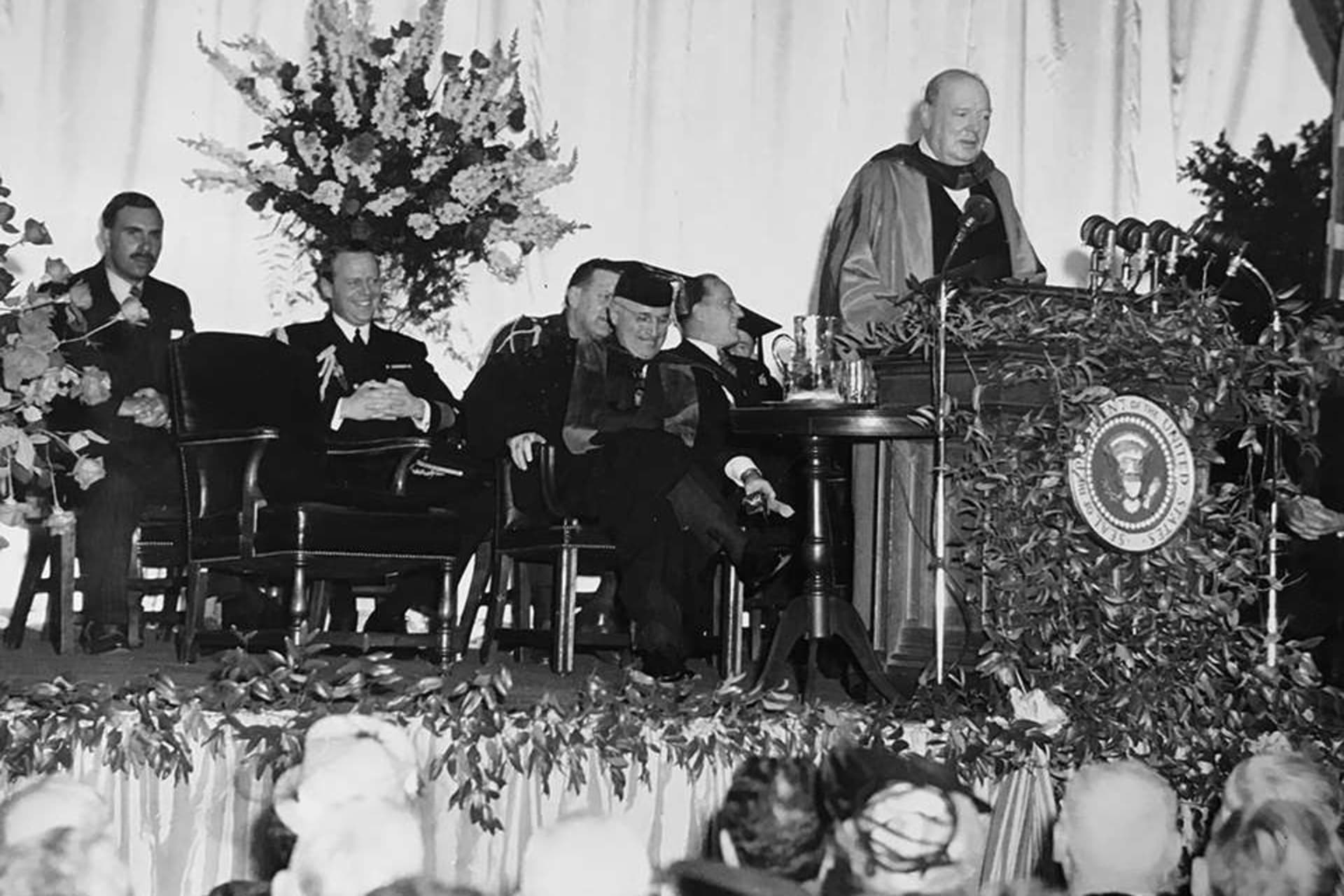
Politicians give speeches all the time. Most of what they say is quickly forgotten, or perhaps better left unsaid in the first place. But occasionally a politician gives a speech that defines an age. That is precisely what happened on March 5, 1946, when Winston Churchill spoke at tiny Westminster College in Fulton, Missouri. He gave the world what became the central metaphor of the Cold War: the Iron Curtain.
The Setting for the Speech
Churchill was in Missouri at the encouragement of President Harry Truman. The man from Independence had grown up down the road from Fulton, and he introduced Churchill when he spoke at Westminster College. “Winnie” was no longer prime minister by the time he came to campus. In July 1945, just two months after he led Britain to victory over Germany, British voters tossed him and his Conservative Party out of power. But his electoral defeat had hardly dimmed his star power in the United States.
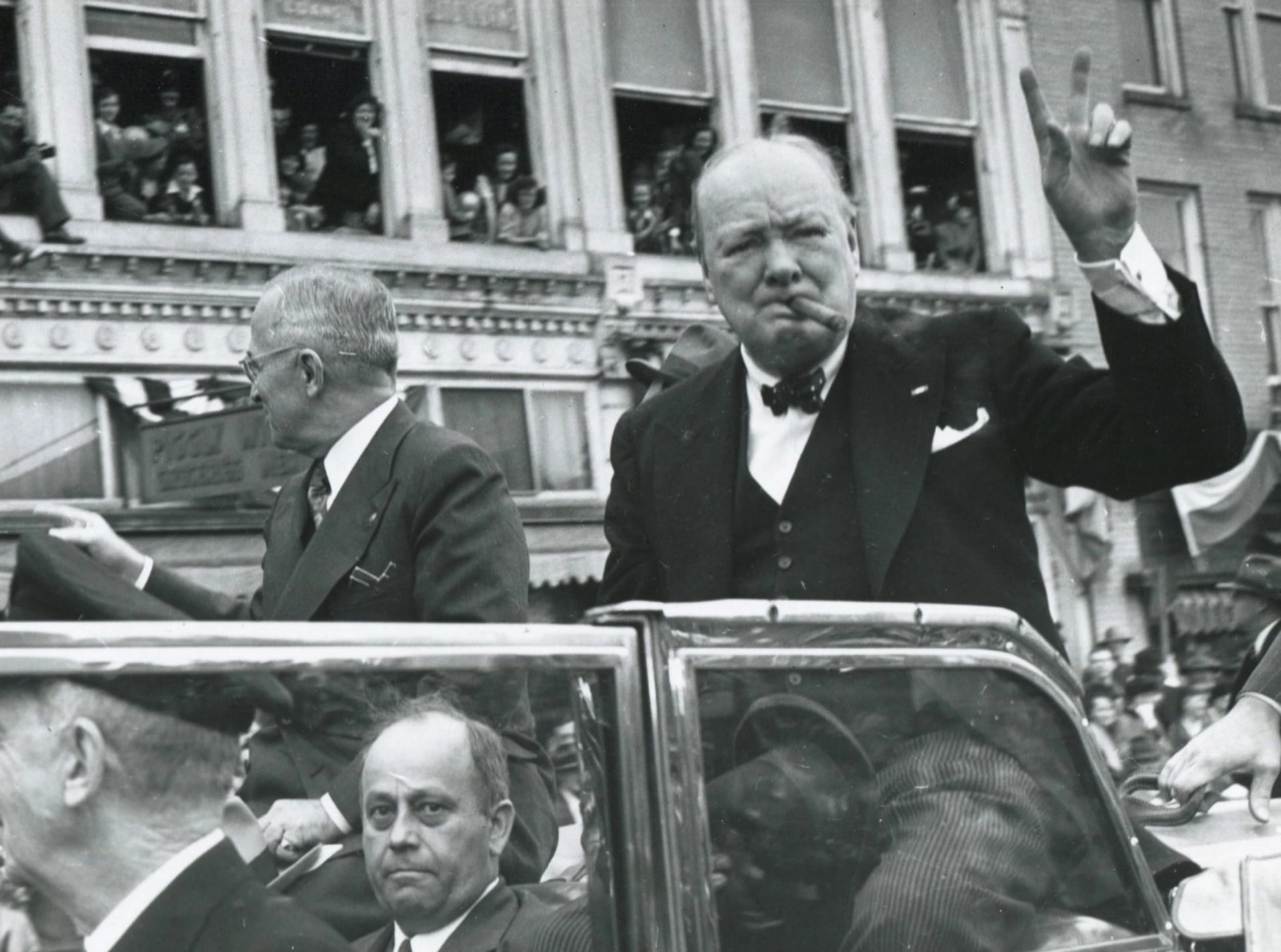
Churchill enjoyed the attention that the Americans gave him. He toyed with the press in the run-up to the speech. “I think ‘No Comment’ is a splendid expression,” he told reporters who asked what he would say in Fulton. “I am using it again and again.”
From Stettin in the Baltic…
When the day came, Churchill delivered remarks that would give the press something to write about. The title of his speech was “The Sinews of Peace,” but its primary message was that the United States and Great Britain needed to confront an increasingly aggressive Soviet Union. One sentence in particular stood out:
From Stettin in the Baltic to Trieste in the Adriatic, an iron curtain has descended across the Continent. Behind that line lie all the capitals of the ancient states of Central and Eastern Europe.
[Video: https://www.youtube.com/watch?v=5QuSXZTo3Uo&embeds_referring_euri=https%3A%2F%2Fwww.cfr.org%2F&source_ve_path=Mjg2NjY]

Churchill rejected “the idea that a new war is inevitable; still more that it is imminent.” But he did believe that the Soviets sought “the fruits of war and the indefinite expansion of their power and doctrines.” Just as George Kennan had written in his famous Long Telegram to the State Department eleven days earlier, Churchill argued that the only proper response was to hold fast. “I am convinced that there is nothing they admire so much as strength.”
Making History
Churchill knew that his stern anti-Soviet remarks would make a splash. As he left the auditorium, he told the president of Westminster College that he hoped the speech had “started some thinking that will make history.”
That it did, though at first not in the direction that Churchill hoped. Newspapers across the country criticized him for needlessly antagonizing Moscow; the Chicago Sun called his remarks “poisonous.“ And while most Americans today intuitively understand that London and Washington have a “special relationship,” when Churchill coined the term in Fulton, many Americans saw it as a threat to the newly created United Nations Organization. When Churchill stopped in New York on his way back to Britain, protesters outside his hotel chanted “Winnie, Winnie, go away, UNO is here to stay.”
Soviet leader Joseph Stalin also panned Churchill’s speech. He said that Churchill’s talk of a “fraternal association of English-speaking peoples” amounted to a “call to war with the Soviet Union” and reflected a racial theory of English supremacy no different from Nazi notions of German supremacy. In Stalin’s words, Europeans were not interested in “exchanging the lordship of Hitler for the lordship of Churchill.”
The Verdict of History
Stalin’s complaints carried no weight with Truman. But the American public’s unhappiness with what Churchill had said did. To defuse his domestic political problem, Truman insisted that he had not known what Churchill was going to say (though he did). And to balance things out, he invited Stalin to visit the United States (calculating, correctly as it turned out, that “Uncle Joe” would say no.)
Despite the public disavowals, Churchill’s speech, along with Kennan’s telegram, influenced the Truman administration’s emerging thinking on how to deal with Moscow. Truman’s meeting with Stalin at Potsdam had convinced him that the Soviet leader had more respect for the closed fist than the open hand. So Churchill accomplished what he had set out to do at Westminster College. His “Iron Curtain” speech started people thinking and made history.
The United States celebrates its 250th anniversary in 2026. To mark that milestone, I am resurfacing essays I have written over the years about major events in U.S. foreign policy. A version of this essay was published on March 5, 2012.
Oscar Berry assisted in the preparation of this article.