How the Big Beautiful Bill Act Reshaped Clean Tech Manufacturing, in Charts
President Donald Trump’s signature tax bill is contributing to a contraction in the country’s clean energy manufacturing that threatens U.S. supply chains and competitiveness, just as rising electricity prices underscore the industry’s importance.
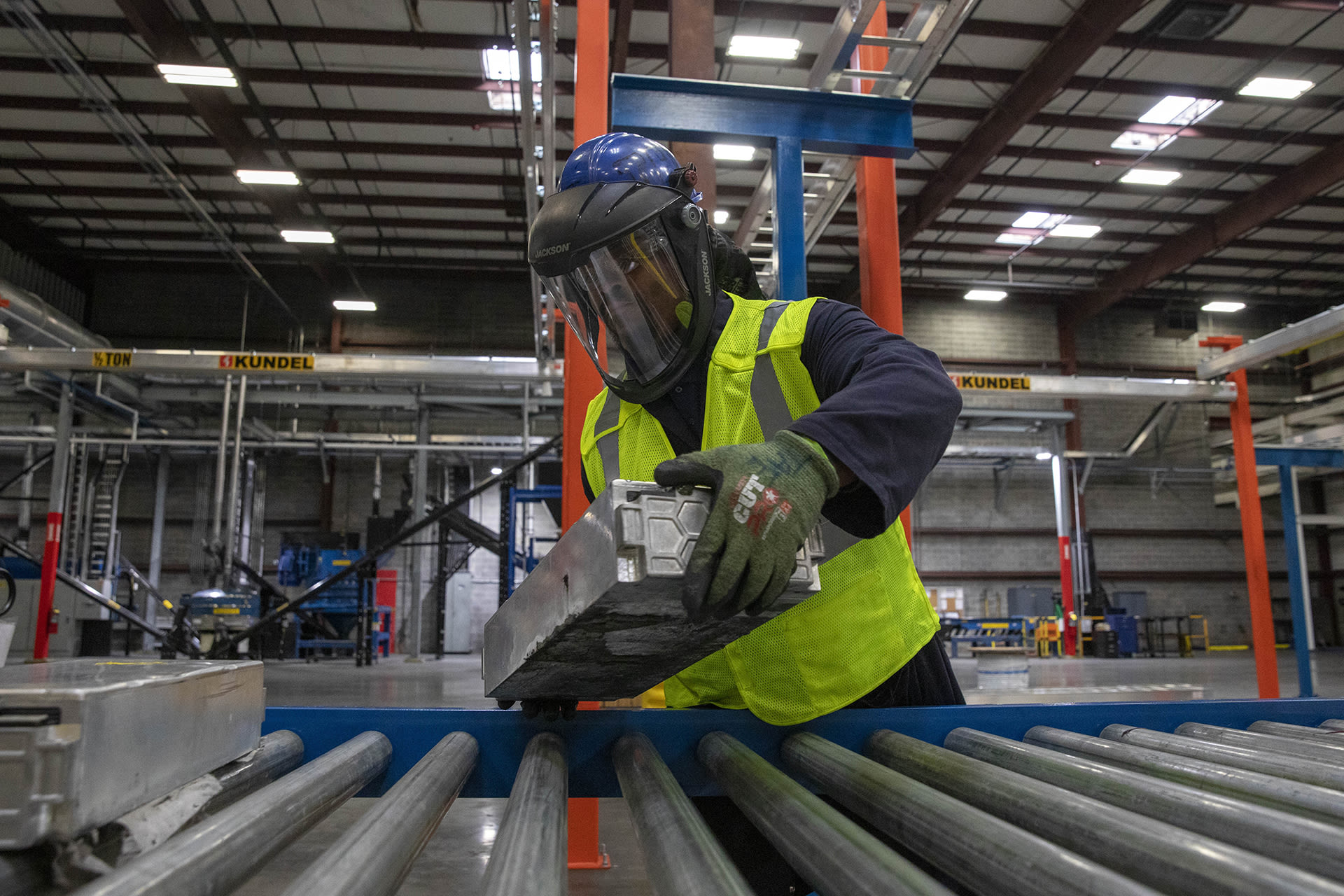
U.S. onshoring of clean technology manufacturing is critical to job creation, economic development, and strengthening supply chain security. However, clean technology manufacturing projects and investments have plummeted in many industries since the beginning of the Trump administration and face further declines following the passage of the One Big Beautiful Bill Act (OBBBA) in July 2025. This downturn threatens the United States’ ability to become competitive in these essential industries.
The OBBBA and Trump’s Clean Energy Policy
The OBBBA fundamentally reshaped U.S. industrial policy in clean energy technology. It removed and expedited the phaseout of manufacturing tax incentives for several clean technologies, making it harder for U.S. companies to compete with cheaper competitors on the global stage. It also eliminated several demand-side deployment incentives, diminishing long-term demand signals for clean technology manufacturing that are critical to maintaining sustained growth.
Other changes made it harder for U.S. companies to manage their supply chains. The OBBBA introduced new sourcing restrictions that block tax credits for companies with ties to foreign adversaries. The restrictions disproportionately burden solar, battery, and electric vehicle (EV) manufacturers because those supply chains rely heavily on components from China. Unclear guidance from the Treasury Department on the exact specifications of Foreign Entity of Concern (FEOC) requirements subjected the industry to a year of increased doubt over access to tax credits and potential long-term reliability risks for financing clean energy projects. The industry awaits clear guidelines on the specific qualifications that determine which companies maintain access to subsidies, effectively stalling future investment.
Beyond the OBBBA, President Donald Trump’s trade disputes taking place concurrently with the rollback of tax credits have also hindered manufacturing momentum. Tariffs on solar imports from India, Indonesia, and Laos (which together accounted for 78 percent of cell imports in 2025) reduced U.S. manufacturers’ access to non-Chinese solar suppliers.
Investment Fell, Project Cancellations Rose
Clean technology manufacturing has been rising for the last decade, but it surged in the wake of the 2021 Bipartisan Infrastructure and Jobs Act and the 2022 Inflation Reduction Act. Though investment today is still 200 percent higher than before President Joe Biden took office in 2021, the 2024 re-election of Trump appears to have marked a turning point. Investment in the first quarter of 2026 decreased by 34 percent [PDF] compared to the same period of 2025, and new investment announcements fell by just under 80 percent from the beginning of 2025 to 2026. That trend has continued following the implementation of the OBBBA.
Manufacturing project cancellations spiked after Trump’s return to office in January 2025, and again following the passage of the OBBBA six months later. Notably, the canceled investments reached a record high of $8 billion in Q4 2025, directly following the OBBBA’s passage.
Battery and EV manufacturing accounted for the majority of canceled investments. EVs faced the biggest immediate losses from the OBBBA: tax incentives that supported their manufacturing, including consumer purchase credits and other demand incentives, expired only two months after the bill passed. This led to an immediate drop in sales and market forecasts for EVs.
In an attempt to preserve some of the value of their battery manufacturing investments, U.S. automakers including Ford and General Motors have pivoted to producing grid-scale batteries. Though this is a silver lining insofar as it means that some U.S. companies are continuing to develop expertise in battery manufacturing, the shift to grid-scale batteries is unlikely to reach the same levels without the demand pull of EVs. Even as the data center boom propels demand for grid-scale batteries, automakers will face an uphill battle to retool EV battery factories for grid-scale technologies and to avoid Chinese market manipulation of the battery supply chain.
The combination of tax credit cuts, uncertain FEOC guidelines, and trade disruptions has acted as a brake on U.S. clean energy manufacturing. However, as electricity demand continues to rise, market signals could overcome some of those barriers, and policy changes in the next Congress [PDF] could provide a boost to domestic manufacturing and improve U.S. competitiveness in this fast-developing market. Until then, declines from the last year and a half show that clean tech manufacturing in the United States is unlikely to reach its potential.
Former Climate Realism Intern Baptiste Saez contributed to the research for this article.