The U.S.-China Trade Relationship: What’s Behind the Competition?
Updated
U.S. President Donald Trump and Chinese President Xi Jinping appear to have maintained a fragile truce in the globally defining U.S.-China trade war after their May summit in Beijing. Experts say complete decoupling of the world’s two biggest economies is still unlikely, and high tariffs, rare earth restrictions, and tech export controls remain major sticking points.
- The United States and China, the world’s two biggest economies, are facing considerable trade tensions, with implications for the global economy, supply chains, and trading system.
- President Donald Trump imposed tariffs on China in 2018, many of which were maintained by President Joe Biden. Those tariffs became steeper under Trump’s second term, while Beijing retaliated with its own levies and strict export controls on rare earths and other materials critical for technology development.
- Although the U.S. Supreme Court decision struck down some of Trump’s emergency act tariffs, the bulk of the U.S.-China trade war tariffs are still in place.
- The May Trump-Xi summit in Beijing extended a fragile détente between the two countries but failed to produce a comprehensive deal to restore normal trade relations.
Introduction
U.S. trade with China has grown enormously in recent decades and is crucial for both countries. Today, China is one of the largest export markets for U.S. goods and services, and the United States is the top export market for China. This trade—much of which grew after China joined the World Trade Organization (WTO) in 2001—has brought lower prices to U.S. consumers and higher profits for U.S. corporations. But it also comes with costs, notably the loss of American jobs due to import competition, automation, and multinational companies moving manufacturing overseas.
Economic tensions between Washington and Beijing have risen steadily over the past two decades as U.S. policymakers chart a progressively assertive course toward China, which has flouted some of its WTO commitments and taken advantage [PDF] of gaps in the rules, which were written for market economies. When China joined the WTO, many thought that it would eventually open up and become a freer society and reduce state intervention in the economy. These reforms did not materialize.
The first Trump administration’s trade war with China in 2018 marked a new decline in relations. Chinese officials warned that there are “no winners” in a trade or tariff war. While tariffs remained in place, both sides negotiated the Phase One Deal [PDF] that aimed to prevent further escalation. President Biden continued many of Trump’s policies and significantly expanded export controls on certain critical products, such as semiconductors. In his second term, Trump escalated his tariff threats as China imposed export controls on rare-earth minerals, which created a global supply shortage for the materials necessary to build most technologies.
The U.S. Supreme Court overruled some of Trump’s proposed tariffs in February 2026, forcing the administration to consider other authorities to maintain its tariff agenda. However, the bulk of the tariffs against China remain in place. After being delayed by the Iran war, Trump and Xi met in May—which marked the first visit to Beijing by a sitting U.S. president in nearly a decade. Trump was also the last president to make the trip, traveling there during his first term in 2017.
This latest meeting appears to have concluded with few breakthroughs. While it was announced that China would buy two hundred Boeing jets, Trump later suggested that the number could more than triple. U.S. Trade Representative Jameison Greer also said he expected China to buy “double-digit billions” of U.S. farm goods “over the next three years,” though China did not confirm this.
How has Trump’s return to office influenced U.S.-China relations?
A central focus of Trump’s second administration is addressing what it considers an unfair trade imbalance between Washington and its major trading partners, including Beijing. Trump ended the de minimis exception on Chinese goods a month into his presidency, which allowed items of less than $800 to be imported into the United States without paying customs duties, and imposed a 10 percent tariff on Chinese goods. Over the following months, China retaliated, resulting in the two countries rapidly escalating their tariffs on imported goods from the other. By April 2025, this reached a height of 145 percent tariffs on Chinese goods entering the United States, and a 125 percent tariff on U.S. imports to China.
Trump and Xi met in South Korea in October 2025 for the first time since Trump’s second term. Though there was no formal agreement, the two sides extended a trade truce reached in Geneva in May 2025 by another year. Trump agreed to lower tariffs previously used to pressure cooperation on combating the fentanyl crisis. For its part, China committed to purchasing U.S. soybeans, after halting imports earlier that May, and also agreed to postpone by a year its proposed export controls on rare-earth minerals.
The United States and China took further steps to defuse their trade war by the end of November 2025, reducing their tariffs rates to 30 percent and 10 percent, respectively. After the Supreme Court struck down Trump’s emergency tariffs in late-February, Trump enacted 10 percent across-the-board tariffs on February 25, 2026, for 150 days, as a bridge to a final increase on the U.S. average tariff, which will likely be decided by the U.S. Trade Representative this summer after an investigation.
The initial effects of the tariffs have been stark. U.S. imports and exports with China fell more than 25 percent by the end of 2025, according to research by the Peterson Institute for International Economics. Meanwhile, China reached a $1.1 trillion trade surplus that same year, in spite of U.S. tariffs. After a recent March meeting between U.S. and Chinese trade representatives in Paris, the administration has proposed rethinking their China strategy, including potentially creating a formalized “Board of Trade” to manage agreements between the United States and China.
What is the trade deficit between the U.S. and China?
The United States has a $202 billion trade deficit in goods with China, its largest with another country, but the lowest it’s been in two decades. However, the country also runs a trade surplus in services with China, $33 billion in 2024, which several experts say lowers the overall trade deficit. While Trump has made reducing U.S. trade deficits a priority, many economists and trade experts do not believe that trade deficits hurt the economy and warn against trying to “win” the trade relationship with particular countries.
But the U.S.-China trade relationship has compounding implications for the global economy. Both countries are the two largest economies in the world; combined, their economies comprised 43 percent of the global gross domestic product (GDP) and nearly 48 percent of global manufacturing output in 2023, according to the World Bank. China is also the third-largest export market for the United States, behind Canada and Mexico, exceeding $195 billion in 2024. China also has a substantial holding in U.S. treasury bonds—roughly $760 billion—making it the second-largest foreign creditor to the United States, after Japan.
Are the United States and China in a trade war?
The trade war started in 2018 when the U.S.-China trade deficit hit its highest point: more than $377 billion. Trump imposed tariffs on hundreds of billions of dollars worth of Chinese goods to reduce U.S. imports from China, and the trade deficit has since decreased. (Though experts note that much of this trade is now being routed through third countries.) Both countries have experienced economic pain as a result of the trade war: U.S. economic growth slowed, the trade deficit continued to grow, and studies found that U.S. companies primarily bore the cost of the tariffs.
At the time, Trump claimed the tariffs would decrease the U.S. trade deficit with China, bring back manufacturing jobs to the United States, and force China to reform its trade practices, including intellectual property (IP) theft. Few of these promises materialized.
In 2020, Trump negotiated a so-called Phase One agreement [PDF] with China that called for resolving the trade war and outlined protections for U.S. trade and commitments from the Chinese government to reform some of its trade practices. Many experts criticized the deal as punting on core U.S. concerns in exchange for a commitment by Beijing to purchase an additional $200 billion worth of U.S. goods—which it failed to live up to.
Biden retained some $360 billion worth of tariffs from Trump, even increasing the levy for certain competitive industries. For instance, Biden quadrupled tariffs on electric vehicles made in China, tripled those on steel and aluminum, and doubled the duty on semiconductors; introduced unprecedented export controls that restrict Beijing’s ability to obtain advanced technology; and banned some U.S. investment in sensitive technologies that lawmakers feared could be used to aid China’s growing military.
Inu Manak, CFR senior fellow for international trade, said these tariffs largely fail to reduce China’s exports in a global economy. As China moves production to other parts of the world, the United States eventually purchases Chinese goods from other trade partners, such as Mexico and Vietnam.
Any U.S. decoupling from China could reach its limits in the next decade since the two economies are still greatly interdependent, according to experts. “Both China and the United States have an interest in preserving much of their economic relationship,” a Carnegie Endowment of International Peace 2024 report argued.
How did we get here?
In 1979, the United States and China normalized relations as Chinese policymakers aimed to boost international trade and investment under the leadership of Deng Xiaoping, and in 1986, Beijing applied to rejoin the General Agreement on Tariffs and Trade, the WTO’s predecessor. After protracted negotiations with the United States and other WTO members, China joined the organization in December 2001, under the condition Beijing commit to a sweeping set of economic reforms, including steep tariff cuts for imported goods, protections for IP, and transparency around its laws and regulations.
Trade surged after China’s accession: The value of U.S. goods imports from China rose from about $100 billion in 2001 to more than $400 billion in 2023. This leap in imports is due in part to China’s critical position in global supply chains. Chinese factories assemble products for export to the United States using components from all over the world. (For instance, components for smartphones, such as Apple’s iPhone, are mostly sourced from China, Japan, Taiwan, and South Korea).
U.S. consumers have benefited from lower prices, many favor more cooperation with China, according to a CFR-Morning Consult poll conducted in January 2026. U.S. companies have also profited immensely from access to China’s market. In a 2019 study, economists Xavier Jaravel and Erick Sager found that increased trade with China boosted the annual purchasing power of the average U.S. household by $1,500 between 2000 and 2007. For China, gains from trade with the United States and the rest of the world have been tremendous. Since 2001, China’s economy has grown more than five-fold, adjusted for inflation, and it is now the world’s second largest, behind the United States. (By some measures, it is the largest.) Hundreds of millions of people have escaped extreme poverty as a result of this growth.
To achieve these goals, the Chinese government poured subsidies into a range of industries, with the aim of creating “national champion” companies. Some experts argue that these subsidies are wasteful and anticompetitive [PDF] as they disrupt other countries whose companies cannot compete against such levels of state support. Moreover, many economists say that China artificially devalued its currency, the renminbi, in the decade after joining the WTO by accumulating U.S. dollar reserves. A weaker renminbi makes Chinese products more affordable abroad and U.S. goods more expensive in China, thereby contributing to the United States’ trade deficit with China.
The George W. Bush administration, responding to calls from U.S. companies for better protections, imposed tariffs on a range of Chinese goods that were subsidized or “dumped” (i.e., sold below market value). It also launched high-level dialogues with China to address other ongoing trade issues.
These dialogues continued under President Barack Obama, whose administration used a special safeguard to impose tariffs on imported tires. Scrutiny of Chinese investment increased, with Obama taking the rare step of blocking two Chinese acquisitions on national security grounds. The administration also won several WTO disputes against China and concluded negotiations for the Trans-Pacific Partnership (TPP), a mega-regional trade agreement that Obama billed as a way to contain China on trade and shore up economic integration with other trading partners in the region. Trump withdrew the United States from the TPP in 2017 after taking office, but the agreement continues to exist as the Comprehensive and Progressive Agreement for Trans Pacific Partnership and has expanded to include several additional countries.
What are China’s biggest exports to the United States?
Electronics, machinery, and textiles rank among top Chinese exports to the United States. China is also the world’s top supplier of electronics and machinery components, including smartphones, computers, and key components needed to produce these products. Continued global growing demand for electronics and items such as textiles from China has put the country on track to overtake its record $1.2 trillion trade surplus last year.
Meanwhile, China imports machinery and mineral, chemical, and vegetable products from the United States, though in much lesser numbers. Examples of items imported by China include oilseed and grains; oil and gas products; pharmaceuticals; and more. In 2024, China spent respectively $13.5 billion and $12.5 billion on petroleum and soybeans, its top two export products. Integrated circuits have also risen in the ranks of China’s U.S. exports, with China spending $9.96 billion on them in 2025.
How does technology, such as artificial intelligence (AI) and semiconductor chips, factor into the relationship?

Technological competition is a core feature of U.S.-China trade relations. The United States has characterized various Chinese technologies—including the formerly Chinese-owned social media app TikTok and Chinese telecommunications company Huawei—as national security threats. China, for its part, has perfected the model of obtaining Western technology, Jennifer Hillman, senior fellow for trade and international political economy, told CFR. Beijing uses the technology to develop domestic companies into giants, then unleashes them into the world market—at which point foreign companies can no longer compete. Over the past decade, Washington and Beijing have been battling along several technological fronts, including:
AI leadership. With AI increasingly deployed in defense, intelligence, and economic contexts, both countries have sought to solidify their supremacy on this frontier technology. Although U.S.-made AI models outperform their Chinese competitors, China has focused on scaling the use of AI applications in manufacturing and daily life, wrote CFR President Michael Froman. Beijing achieved a major technological milestone with Chinese startup DeepSeek launching one of the world’s most advanced AI models in January 2025. It reportedly operates at cheaper costs and higher energy efficiency that rivals the capacity of the U.S. AI titans, such as OpenAI and Google DeepMind.
Taiwan and semiconductors chips. In an effort to restrict China’s technologic access, the United States began implementing export controls on advanced semiconductor chips—an essential component for most technologies, including smartphones, computers, weapons systems, and AI infrastructure—in 2018. This also included export controls on technologies that were seen as having a “dual-use” capacity for commercial and military purposes. The second Trump administration, however, seemed to reverse course by approving the sale of U.S. company Nvidia’s advanced H20 chips to China in August 2025. The agreement has come under sharp scrutiny by U.S. officials.
Meanwhile, Taiwan, which produces 90 percent of the world’s chips, is a critical part of the U.S.-China economic relationship. Taiwan Semiconductor Manufacturing Company (TSMC) is the top supplier for U.S. companies, such as Apple, and it has invested in manufacturing facilities in the United States. Despite the United States accounting for a third of Taiwan’s total exports, the island’s economy also relies on trade with China; in 2025, China and Hong Kong made up 26.6 percent of Taiwan’s total exports.
TikTok and national security. The social media app TikTok, created by Chinese company ByteDance, had been a major target by U.S. lawmakers seeking to restrict Chinese access to Americans’ data. After Trump floated the idea of banning TikTok in his first term, Biden signed into legislation that ByteDance would be required to sell the social media app to a U.S. owner or face a ban. TikTok sued the U.S. government, but the Supreme Court ultimately upheld the ban. In January, ByteDance agreed to divest almost 80 percent of TikTok’s assets, valued at $14 billion, to an U.S.-owned joint venture that included global conglomerates Oracle, Silver Lake, and MGX. (ByteDance still owns the remaining 19.9 percent stake in the company.) Efforts to ban TikTok have fueled larger conversations about what U.S. policymakers have characterized as Chinese efforts to spread disinformation and collect sensitive information on Americans.
IP Theft. Firms have long accused Chinese companies of stealing intellectual property to develop counterfeit products, pirated software, access trade secrets, and forced technology transfer on condition of doing business in China. The research organization Intelligence and National Security Alliance found in a May 2021 report that Chinese IP theft costs between $300 and $600 billion [PDF] annually. Although China’s IP laws have improved over the past decade, theft is still prevalent, even among Chinese firms that have appropriated capabilities domestically.
Why has China imposed export controls on critical minerals?
China produces 60 percent of the world’s rare earths and processes almost 90 percent of rare earth magnets, dominating the supply of the minerals crucial to manufacturing automobiles, semiconductors, and military weapons worldwide. Experts say having control of this critical sector of the global supply chain helps China bolster domestic manufacturing and regulate which entities are permitted to access its supply.
While China has had export controls in place since 1994, the government modernized its policies in 2020, creating a unified framework for managing sales of dual-use technology, military goods, and “national security” interest technology. Its recent controls on rare earths announced in October 2025 included expanding the license requirements for various rare earths and controlling the trade of rare earth magnets produced outside China.
Analysts say China’s so-called rare earth chokehold, which made it able to entirely cut off the United States and Europe from several critical minerals, makes the rest of the world more vulnerable to geopolitical tensions between the United States and China. The International Energy Agency argues that China’s export controls could “significantly undermine international efforts to diversify rare earth supply chains and scale up strategic manufacturing.”
How does energy production factor into the U.S.-China relationship?
As the United States and its European allies slowly back away from climate efforts, China has heavily invested in clean, renewable energy, making it a leading figure in energy investments. China’s domestic solar power-generation capacity quadrupled between 2021 to 2025, while petroleum remains the largest primary source of energy consumption in the United States.
China also became the world’s largest auto exporter for conventional vehicles and electric vehicles (EV) in 2025, producing some of the cheapest and most efficient EVs on the market. The United States and Europe have imposed tariffs on Chinese EV imports to protect their own domestic EV industries. In 2024, the Biden administration implemented a 100 percent tariff on Chinese EVs, effectively blocking Chinese companies from entering U.S. markets, and a 25 percent tariff on EV lithium batteries. Meanwhile, Trump has issued tariffs on Chinese graphite—an important component in making lithium batteries.
Recommended Resources
CFR’s Senior Fellow for China Studies Zongyuan Zoe Liu dives into how the Supreme Court’s ruling against Trump’s tariffs can affect his negotiations with China.
This Backgrounder breaks down what to know about tariffs.
In this report by the Carnegie Endowment of International Peace, researchers examine the path toward U.S.-China relations coexisting in the coming decade.
This Council report by CFR’s Manak and Helena Kopans-Johnson details the division of responsibilities between U.S. Congress and the president in implementing trade policy.
A poll by CFR and business intelligence company Morning Consult takes a pulse on Americans attitudes toward trade, including the belief that U.S. tariffs on China are too high.
In an interview with the Wall Street Journal, former Secretary of Commerce and CFR Distinguished Fellow Gina Raimondo argues that funding domestic innovation, rather than export controls to China, is what will keep the United States globally competitive.
Colophon
Expert Reviewers
 Zongyuan Zoe LiuCFR ExpertMaurice R. Greenberg Senior Fellow for China Studies
 Inu ManakSenior Fellow for International Trade
Staff Writers
Data Visualization
- Will Merrow
- Austin Steinhart
- Lara Yeyati Preiss
Additional Reporting
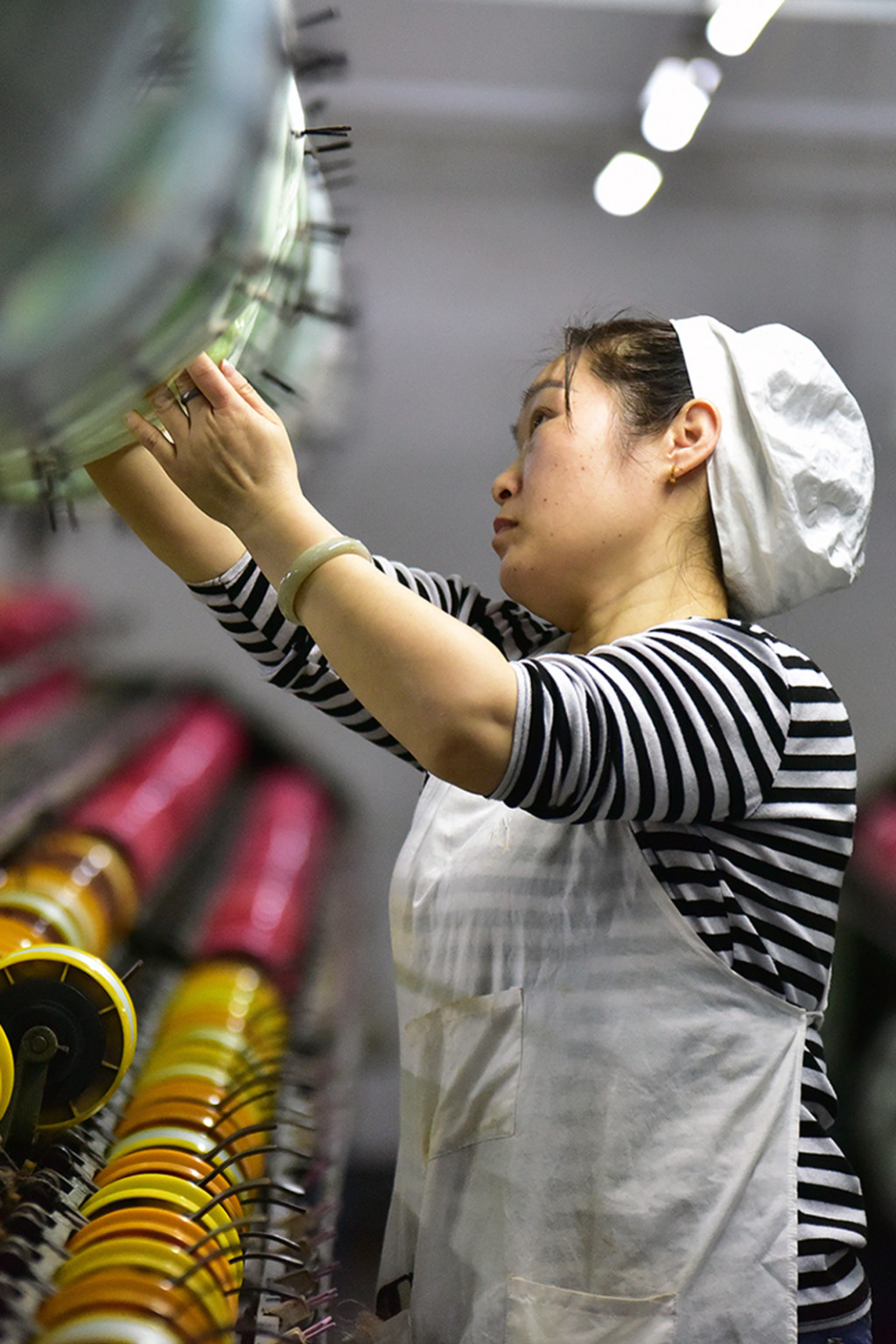
Surina Venkat, Noah Berman, and Anshu Siripurapu contributed to this Backgrounder. Header image by CFOTO/Future Publishing/Getty Images.

 Backgrounder
 Backgrounder
 Backgrounder
 Backgrounder