The Interview and Its Challenge to North Korea’s Leadership
By experts and staff
- Published
- Scott A. SnyderSenior Fellow for Korea Studies and Director of the Program on U.S.-Korea Policy
Today is the third anniversary of Kim Jong-il’s death, marking the completion of a traditional period of mourning for Korean leaders and the presumed consolidation of power under Kim Jong-il’s successor, Kim Jong-un. During the three-year mourning period following the death of North Korea’s founder Kim Il-sung in the mid-1990s, Kim Jong-il waged a struggle behind the scenes to overcome the Arduous March, a famine that decimated North Korea’s population. In 1997, Kim Jong-il emerged publicly as chairman of the National Defense Commission and as leader of a “military first [pdf]” policy.
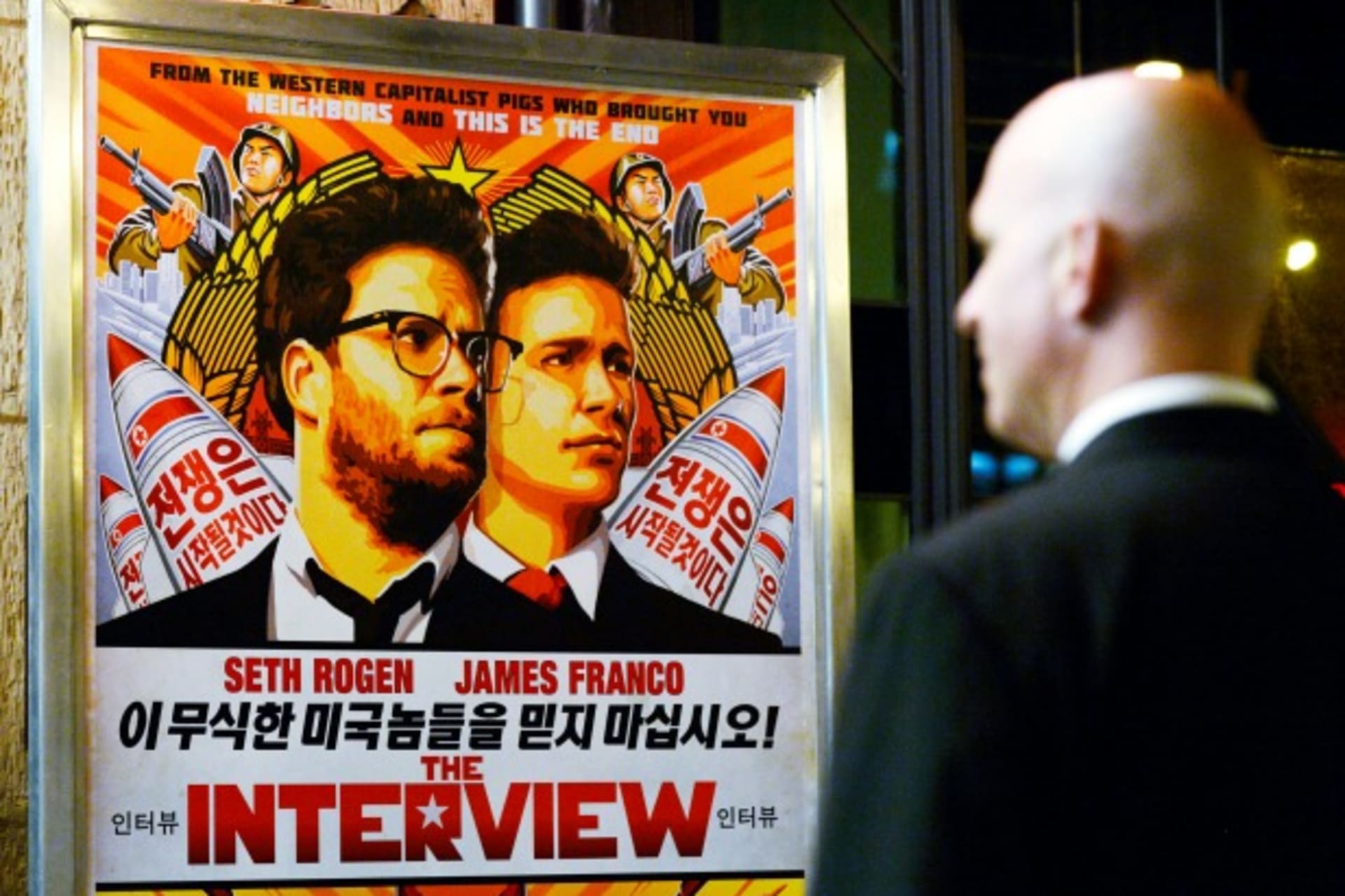
Kim Jong-un has made more visible moves than Kim Jong-il to consolidate power in the three years since his father’s death, but he has arguably faces a more serious challenge to North Korea’s honor and survival than his father did. Pyongyang perceives that challenge is being executed as part of a two-pronged pincer movement: on the one hand, North Korea attributes the UN Commission of Inquiry accusing North Korea of crimes against humanity to a U.S. strategy of naming and shaming Pyongyang; on the other hand, North Korea suspects that the U.S. government is orchestrating an even more insidious policy through Hollywood of pointing and laughing at the Kim regime, going even so far as to dramatize Kim’s assassination in a comedic plot that treats Kim Jong-un as a laughingstock.
In fact, Kim Jong-il made North Korea’s comedic debut a decade ago as a crafty lonely warbler in Team America: World Police. While this characterization poked fun at Kim Jong-il, it also showed him outfoxing his nemesis Hans Blix, Goldfinger-style, by trapping Blix in an aquarium full of man-eating fish, and the final physical attack on Kim Jong-il was done after he’s revealed his inhuman form. Although Kim was the object of humor, dishonor was conveyed with subtlety. Nonetheless, the damage was done as the film so well publicized the accumulated excesses that are part of the cult of personality surrounding North Korea’s Kim family leadership. The path from Team America to the less subtle, edgier The Interview is obvious; the bizarre Kim regime seems to cry out for satire and mockery. Why not exploit North Korean propaganda as part of a Hollywood marketing strategy?
From Team America to The Interview, North Korea’s leadership has become the butt of a joke that serves to obscure North Korea’s steadily growing threatening behaviors. I see four noteworthy trends:
The growing international challenge to the viability of Kim Jong-un’s leadership, both on human rights grounds and as a regime that simply doesn’t pass the laugh test in the twenty-first century, may indeed be much more serious than the challenge of the famine that his father faced in the 1990s. Kim Jong-un has announced his goal of simultaneous nuclear and economic development, but greater reliance on nuclear, missile, and cyber threats will come at a cost to international willingness to help him with economic development by engendering greater international hostility to his rule. In this respect, Kim Jong-un may find that he is even more lonely than his father was.