Iran Regime Attempts Creative Negotiating Stance
The Iranian regime, solidifying control after a bloody crackdown, is pursuing nuclear talks that so far have offered few concessions despite the looming threat of U.S. military action.
By experts and staff
- Published
 Ray TakeyhCFR ExpertHasib J. Sabbagh Senior Fellow for Middle East Studies
Ray Takeyh is Hasib J. Sabbagh senior fellow for Middle East studies at the Council on Foreign Relations.
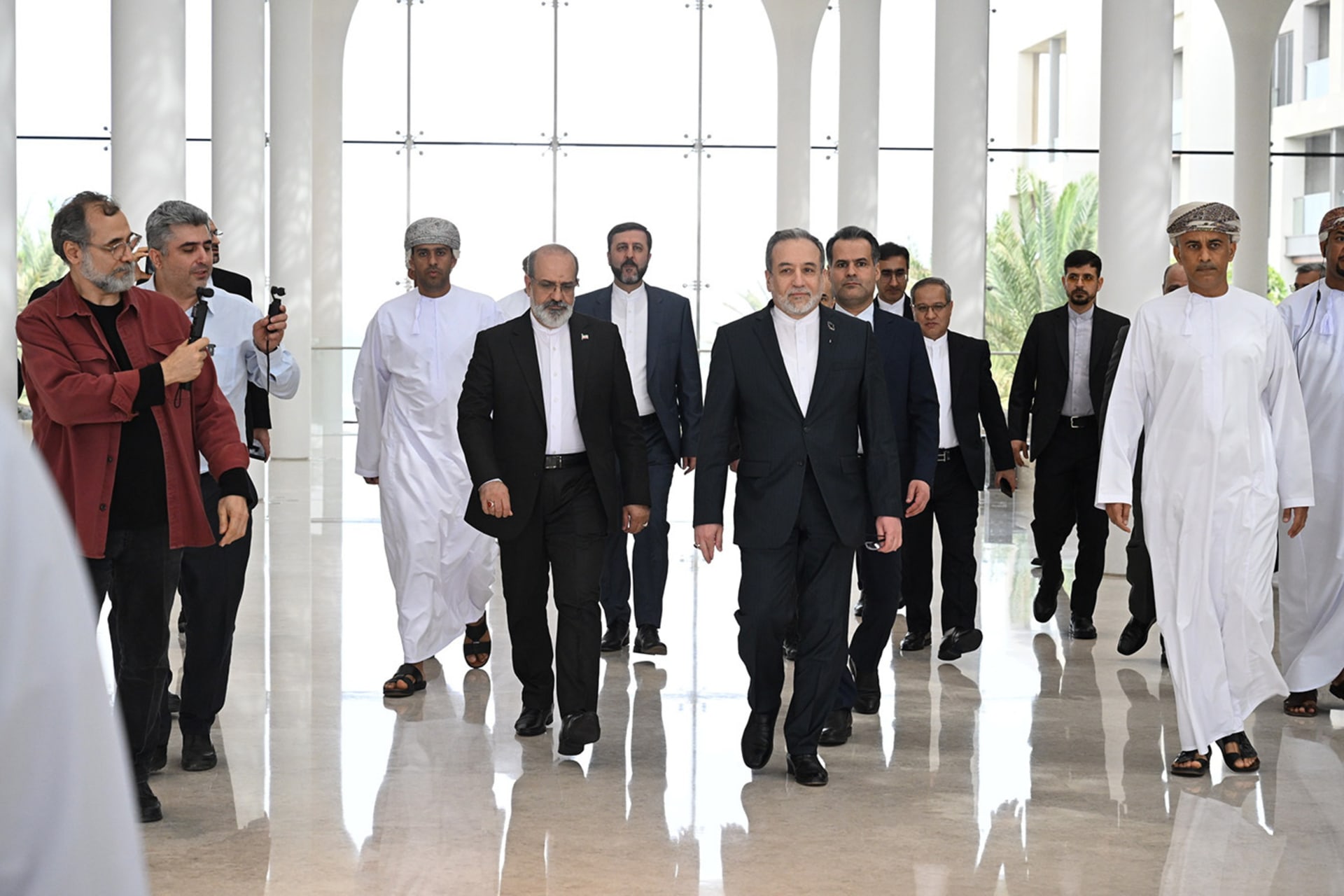
Indirect U.S.-Iran talks that kicked off this month have largely adhered to the hardline government’s terms, including a move of venue to Oman and limiting discussions to Iran’s nuclear program. The talks come at a time of intensifying U.S. military buildup near the Middle East, with the USS Abraham Lincoln aircraft carrier and accompanying ships and warplanes now in the region.
President Donald Trump has said the United States would attack Iran if it resumes building its nuclear and missile programs, saying they pose an “extraordinary threat to the United States.” His administration has not consistently spoken out about the regime’s crackdown on nationwide protests, which some human rights groups say have killed more than six thousand people. The regime also appears to be consolidating its hold on domestic unrest, although there has been little respite from the economic crisis that sparked protests in late December.
Negotiating across redlines
The Iranian negotiating team is trying to be creative. It is trying to sustain its red lines, including no freeze on enrichment and no deal without easing sanctions, while accommodating some U.S. demands. The talks have been limited to the nuclear issue, as Iran has insisted. Iran has long denied any plans to develop nuclear weapons. But the Iranian team has seemingly offered to cap its enrichment at low levels and even dilute some of the highly enriched uranium that has been a source of concern for the international community. Presumably, this means acceptance of inspections by the International Atomic Energy Agency to verify its compliance.
At this point, both sides are considering their next steps. The U.S. position thus far has remained zero enrichment. Any deal will require sanctions relief, which is likely to be subject to its own complicated set of negotiations.
Warnings from Israel
Israel, which vehemently opposed the nuclear deal the Obama administration and other outside power reached with Iran, fears that the United States will be entrapped in a protracted diplomatic process while Iran is building up its forces. Israeli Prime Minister Benjamin Netanyahu will issue his warnings about this in his planned February 11 visit to the White House. The Israeli government is concerned that continued diplomatic engagement between Iran and the United States could result in U.S. concessions, such as permitting some degree of domestic enrichment in Iran, coupled with sanctions relief.
Netanyahu could also seek agreement to strike Iran’s ballistic missile force before its further enhancement. The Iranian regime has been trying to revamp its air defenses and rebuild its ballistic missile force since June 2025 attacks by Israel crippled them, followed by U.S. air attacks that heavily damaged its nuclear facilities.
Ongoing domestic crackdowns
The regime has regained control of its streets in the aftermath of violence by its security forces, including police and intelligence services, that have killed more than 6,400 protesters, according to the U.S.-based Human Rights Activists News Agency, though some reports say the figure is much higher.
The regime is now moving to the second phase of its repression, principally by arresting large numbers of people. Among those arrested are reformers who were critical of the government’s response during the crackdown. The scale of arrests and detentions is likely to grow as the regime is trying to quell all forms of dissent. The underlying causes of discontent, namely the lack of economic opportunities and political participation, remain, but the crackdown has, for now, given the regime a respite.
Iran’s remaining proxy network
The Trump administration has linked possible military action with Iran’s support for armed groups like Hamas and Hezbollah, though they have been weakened since the Israel-Hamas war provoked by the October 7, 2023, attack on Israel. As of early 2026, Hamas is significantly degraded, and Iran lacks a reliable means of dispatching assistance to this group.
Hezbollah’s military capabilities have been degraded and its leadership decimated by Israeli strikes. The Israelis continue to target Hezbollah’s remaining assets, and the Lebanese army is dispatched into southern areas near the Israeli border, with a pledge to prevent cross-border Hezbollah attacks. The group still maintains some measure of military power and hardware, but it is a shadow of its previous self.
The ties between the Houthis and Iran deepened during the ongoing civil war in Yemen and Saudi intervention. Today, the Houthis remain the most formidable of Iran’s allies, with their ground and missile forces largely intact.
As for other affiliates in Iraq, the most significant of Iran’s allies in Iraq is Kata’ib Hezbollah. There are also many Shia militias as part of the so-called Popular Mobilization Forces. They have been equipped by the Islamic Revolutionary Guard Corps, although there is growing pressure from the United States to bring all these groups into the Iraqi army as a means of asserting control over them.
This work represents the views and opinions solely of the author. The Council on Foreign Relations is an independent, nonpartisan membership organization, think tank, and publisher, and takes no institutional positions on matters of policy.