Iran War Escalates on Energy Front
By experts and staff
- Published
Welcome to the Daily News Brief, CFR’s flagship morning newsletter summarizing the top global news and analysis of the day.
Top of the Agenda
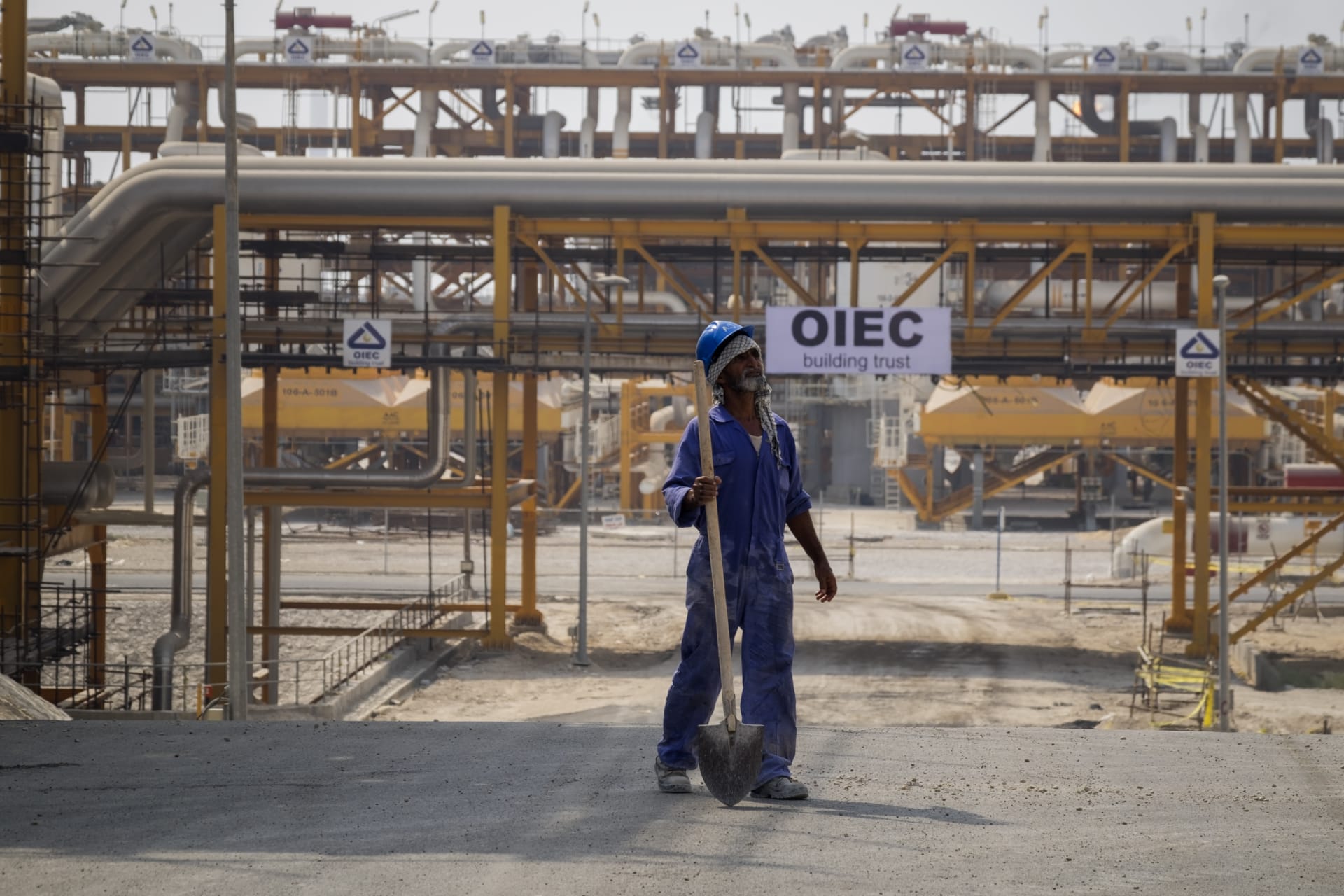
The war in the Middle East escalated yesterday with attacks on natural gas facilities in Iran and Qatar, threatening to deepen strains in global energy markets. Israel attacked the Iranian portion of the world’s largest gas field, known as South Pars. Iran responded by striking a liquefied natural gas facility on the Qatari side of the same gas reservoir, with the hub sustaining “extensive damage.” Kuwait and Saudi Arabia also said their energy facilities were targeted by drones. The events prompted heightened warnings to Iran from Gulf countries, with Saudi Arabia threatening military retaliation and Qatar expelling senior Iranian officials from the country. The attacks sent jitters through markets and the price of Brent crude oil rose above $118 per barrel before falling back below $114.
White House attempts to address oil prices. Trump wrote on social media last night that Israel would stop targeting Iran’s gas field—but threatened that if Iran attacks Qatar again, the United States would “blow up” the Iranian gas facility. Trump also claimed the United States “knew nothing” about the South Pars attack though multiple outlets, quoting unnamed U.S. and Israeli officials, reported he was aware and approved of the impending strike. The Trump administration issued a sixty-day waiver yesterday allowing foreign-flagged ships to move between U.S. ports and loosened its sanctions on Venezuela’s state oil company to make it easier to sell oil directly to U.S. companies and on international markets.
Congress looks backward and forward. U.S. Director of National Intelligence Tulsi Gabbard testified at a Senate hearing yesterday that Iran’s conventional military capabilities “have largely been destroyed” but the regime appears “intact.” In a written statement submitted prior to the hearing, she said Tehran had made “no efforts” to rebuild its nuclear enrichment capabilities after last June’s strikes. In a sign the Iran war could last considerably longer, the Pentagon asked the White House to approve a request to Congress for more than $200 billion in additional war funding, the Washington Post reported yesterday. The Defense Department and the White House did not comment.
“There is going to be a pretty big shock—the kind of shock that might lead to something close to a recession—if there isn’t a resolution in the near term. The current change in the price of oil is in some sense a balanced probability between the probability that this lasts for a really long time and the possibility that the United States declares victory, Iran reciprocates, says we’ve won, and the Strait [of Hormuz] is reopened.”
—Senior Fellow Brad Setser in a CFR YouTube Short
Across the Globe
Malaysia rejects U.S. trade deal. Malaysia considers the trade deal it reached last year with the United States “null and void” given the Supreme Court’s repudiation of Trump’s emergency tariffs, the country’s trade minister confirmed to reporters yesterday. As part of that deal, Malaysia had agreed to accept a U.S. tariff rate of 19 percent for most of its exports. The U.S. embassy in Kuala Lumpur did not comment.
Venezuela swaps defense chief. Acting President Delcy Rodríguez yesterday removed Gen. Vladimir Padrino López, the country’s defense minister since 2014, from his post. He was a longtime loyalist of former President Nicolás Maduro. Rodriguez named Gen. Gustavo González López as his replacement. González López has a background in military intelligence and was previously sanctioned by the United States for suppressing demonstrations.
Afghanistan-Pakistan pause in fighting. The two countries announced a ceasefire for the holiday of Eid al-Fitr following mediation by neighboring countries. The ceasefire will run through early next week. The pause comes as Afghanistan reels from the fallout of a strike on a drug rehabilitation hospital that Taliban officials said killed more than four hundred people.
Beijing’s reunification pitch. Taiwan’s government today rejected China’s latest reunification overture. It came after a spokesperson for China’s Taiwan Affairs Office said yesterday that “peaceful reunification” would ensure Taiwan’s energy security. A senior Taiwanese official told lawmakers today that the proposition was “impossible” and that Taiwan had its own means of withstanding global energy strains, including energy reserves.
Computing award. American physicist Charles Bennett and Canadian computer scientist Gilles Brassard won this year’s Turing Award for work on quantum cryptography. The prize is often referred to as the Nobel Prize of computer science. The pair’s encryption technology uses the physical properties of tiny particles to encrypt data so strongly that a quantum computer cannot decode it. Experts believe quantum computing will soon be able to crack conventional encryption processes.
Australia-EU trade talks. European Commission President Ursula von der Leyen announced yesterday she will travel to Canberra early next week as Australia and the European Union (EU) finalize a trade deal. The two sides revived negotiations on the agreement following Trump’s inauguration last year, after talks previously collapsed in 2023.
Executions in Iran. Iranian authorities executed a Swedish man yesterday, Sweden’s foreign minister said. She added that the man was arrested last June and alleged he did not get a fair trial. Sweden summoned Iran’s ambassador to protest. Iran’s Mizan state news agency reported the man had been accused of spying for Israel. Separately, Iran executed three men convicted of attacking police officers during January’s anti-government protests, the agency reported today. They were the first known executions tied to the demonstrations.
Proposal for stranded sailors. Bahrain, Japan, Panama, Singapore and the United Arab Emirates submitted a proposal to the UN shipping agency yesterday to create framework for safely evacuating around twenty thousand sailors on ships stuck in the Gulf due to the Iran war. This could include establishing a “safe maritime corridor,” per the proposal, which has the support of the United States. At least seven commercial sailors have been killed due to the conflict, the head of the UN agency said.
What’s Next
- Today, Japanese Prime Minister Takaichi Sanae meets with Trump in Washington, DC.
- Today, the European Council begins a two-day summit in Brussels.
- Tomorrow, the Northern Hemisphere experiences the vernal equinox, marking the start of spring.