Moscow’s Latest Victory Day Parade Reveals Cracks in Putin’s Russia
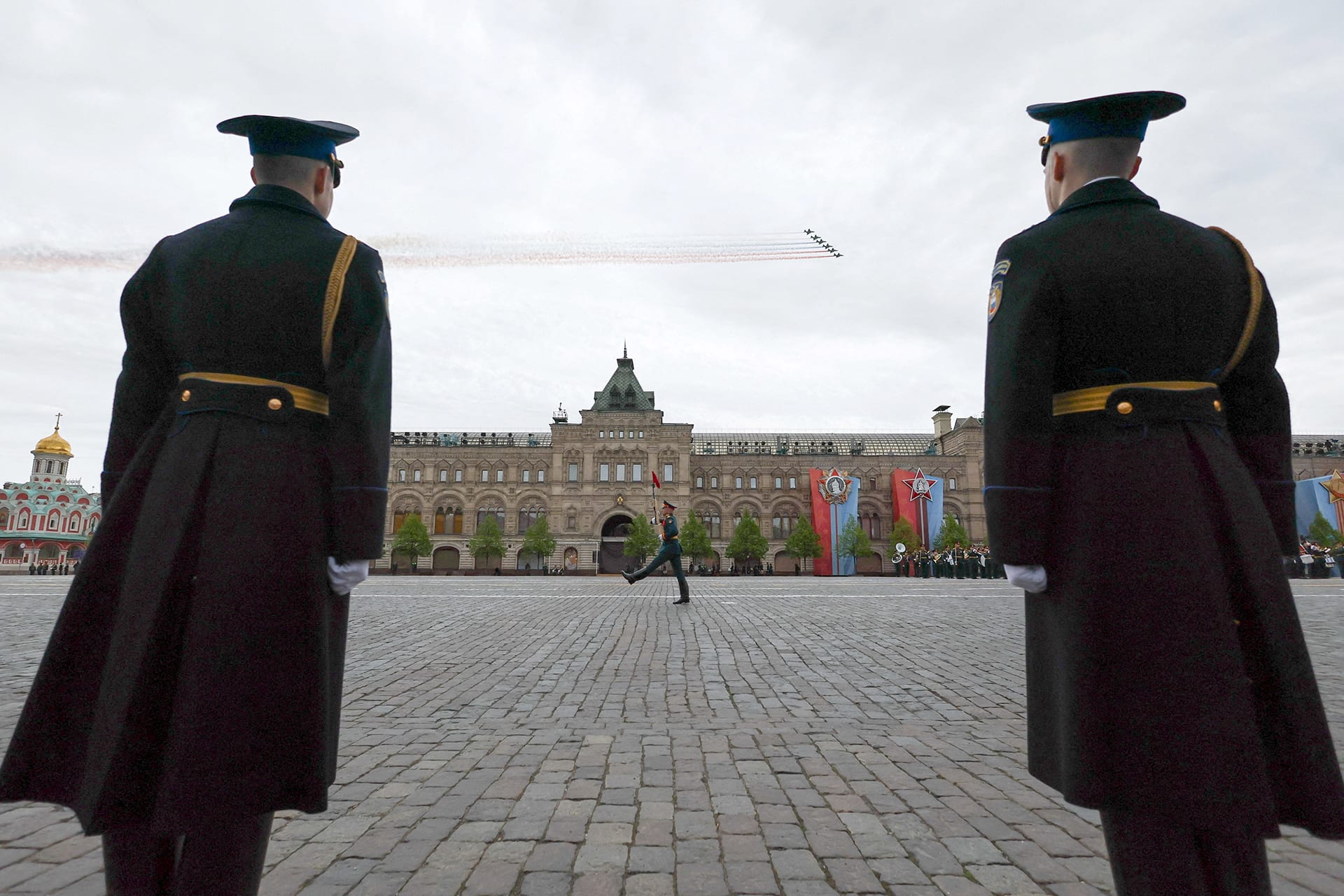
The country’s Victory Day parade was shorter, quieter, and notably tank-free—a reflection of how dramatically Russia’s position has shifted since the invasion of Ukraine. It was a clear illustration of the cumulative toll the war has had on Russian society, the security state, and Moscow’s standing as a global power.
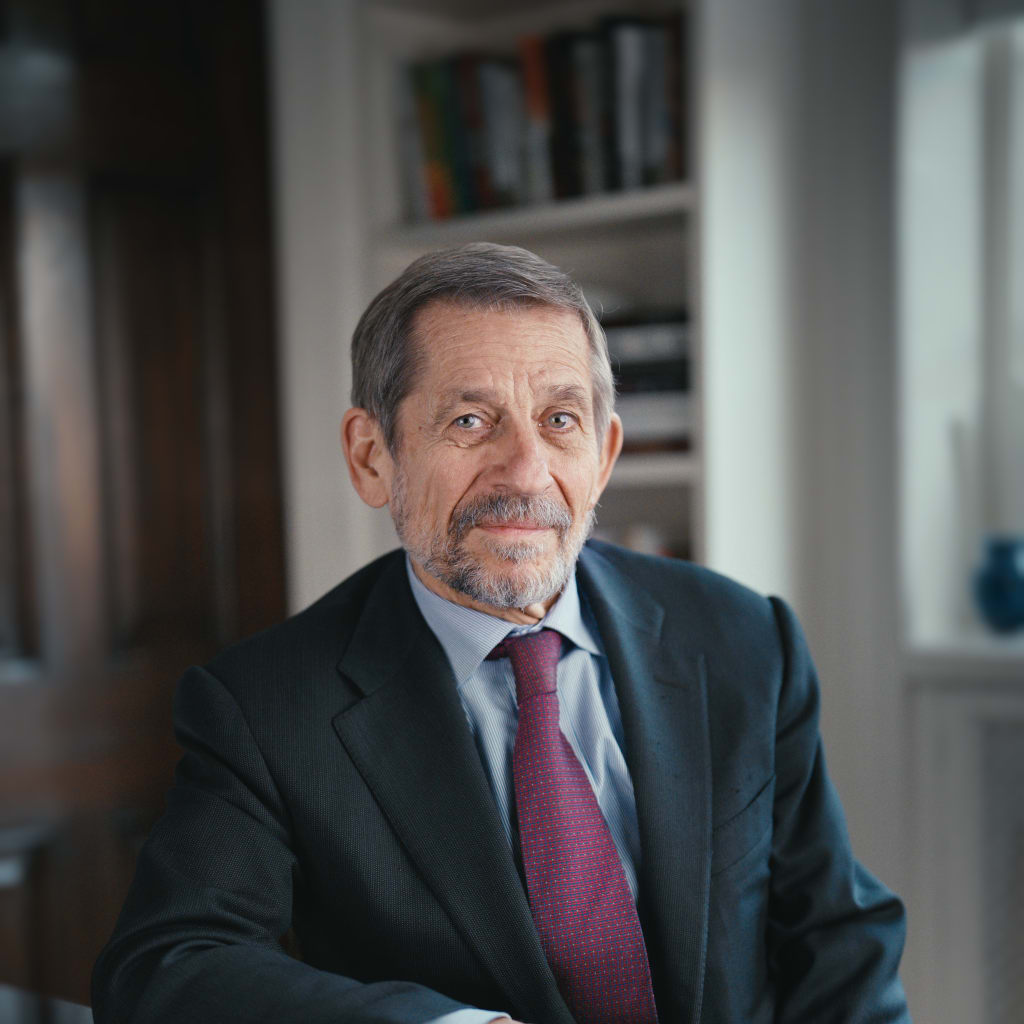
Thomas E. Graham is the Henry A. Kissinger distinguished fellow at the Council on Foreign Relations. His book, Getting Russia Right, was published in September 2023.
Since he rose to power a quarter-century ago, Russian President Vladimir Putin has turned the annual May 9 Victory Day celebrations into a demonstration of military might, pride, and patriotism. Tanks, rocket launchers, intercontinental ballistic missiles, and other military hardware provided graphic proof of Russia’s prowess.
Their absence this year, because of fears of Ukrainian air strikes, only underscored Russia’s increasing vulnerability as Ukraine develops even more potent capabilities for deep strikes into Russia. That the parade itself lasted about half the time of past ones, and that the Kremlin canceled the march of the Immortal Regiment—a separate event in which Muscovites parade through the streets with portraits of relatives who fought in the Great Patriotic War (as the Russians call World War II in Europe)—only reinforced the image of weakness and anxiety.
Although Putin praised U.S. President Donald Trump for engineering a ceasefire with Ukrainian President Volodymyr Zelenskyy, which allowed the parade to proceed without incident, the U.S. role revealed the extent to which the Kremlin is no longer in control of its own fate.
Growing discontent in Russia?
Broadly speaking, Russians actually benefited from the first two to three years of the war. The government poured vast sums into military production, creating tens of thousands of well-paying jobs. Men were paid handsome sums to join the military, and their monthly salaries far exceeded average wages. Chinese imports quickly replaced Western brands that were taken off the market, as Western sanctions took their toll. Polls indicated broad support for the war effort.
That has changed in the past year. Russia’s economic growth stayed steady at 4 percent in 2022 and 2023 before plunging to about 1 percent in 2024 and 2025. That growth then turned negative in this year’s first quarter. Officially, inflation is running at about 6 percent; the actual rate is probably in double digits for most Russians. High interest rates have squeezed out business investment, especially in non-military sectors. Polls now show that the majority of Russians want peace.
There is no evidence, however, that this discontent is about to transform into active resistance to the war effort. Putin’s approval rating may have declined in recent weeks, but it is still above 70 percent. There are no obvious figures who could galvanize the public’s grievances for political purposes. The recently leaked Western intelligence assessment that Putin increasingly fears assassination plots and coups may capture an element of the truth, but there is no evidence of breakdowns in his protective services.
Putin will not suddenly rethink his position on the Russia-Ukraine war if it becomes unpopular, although it might limit his options in prosecuting the conflict. After the resistance to the partial mobilization in the fall of 2022—hundreds of thousands of young men fled abroad to avoid conscription—the Kremlin has remained wary of calling for a mass mobilization to solve its manpower problems. The waning level of support will only reinforce that wariness. Nevertheless, if Putin decides to move toward settling the war in the near future, it will be for other reasons than popular discontent.
Moscow’s deteriorating internal security
The Russian security state has real enemies, and they are growing more capable: witness the growing frequency, depth, and effectiveness of Ukraine’s strikes against energy infrastructure and military targets in Russia. Moreover, internal tensions are on the rise.
The Russian security apparatus’s reaction is only exacerbating the situation, however. There is evidence of infighting among the security services, as they blame one another for security lapses, which have, for example, allegedly allowed the Ukrainians to assassinate high-ranking military officers. The widespread deployment of internet outages in Moscow—ostensibly to counter Ukrainian drone attacks—has sparked further widespread discontent in one of the most digitally advanced cities in the world. The banning of the Telegram social media app, which is widely used among the political elites, has only added fuel to the fire. It has also undermined Russia’s battlefield performance in Ukraine, where the app was the preferred means of communication among front-line troops.
This deteriorating internal situation in Russia does not pose a significantly greater danger to the West, however. Under any circumstances, Russia would have accelerated its hybrid attacks against Europe to undermine support for Ukraine and impede the consolidation of Europe against Russia. The risk of Russian aggression against a NATO ally has always been low and remains so, especially as the Russian military has struggled against what it initially considered a second- or third-rate Ukrainian military. Not to be overlooked, there is no evidence of any lapse in Moscow’s command and control of its nuclear arsenal, which remains a primary concern for the United States.
Putin suggests the war will end soon
Hours after the Victory Day parade, Putin told reporters that he believed the war “is coming to an end.” The Russian president is probably right about this, although not likely in the way he adumbrated.
His remarks indicated he thought the conflict would end because the Europeans would finally conclude that they could not use Ukraine to inflict a strategic defeat on Russia, and the Ukrainians themselves would crack. Just in case anyone thought Putin was ready to make significant concessions to reach a settlement, the Kremlin let it be known that Ukraine’s withdrawal from the Donbas—including territory Russia has not yet seized—was a condition not simply for ending the war, but for entering serious negotiations at all. That is an obvious non-starter for Kyiv.
Putin also faces considerable challenges ahead. No matter how or when the war ends, Russia will almost certainly find itself in a worse geopolitical situation. The war has exacerbated a long-standing demographic crisis; the economy has been restructured to churn out non-productive military hardware; and Russia is not investing sufficient amounts in the technologies, especially artificial intelligence, that will underpin national power in the decades ahead. Each day the war continues, Russia falls further behind the United States, China, India, and Europe.
In the meantime, Europe is developing hard-power capabilities in earnest for the first time in decades because of Russia’s aggression—and its fear of abandonment by the United States. Finland and Sweden abandoned their traditional neutrality to join NATO. Further European consolidation is being driven in large part by anti-Russian sentiment. Meanwhile, Russia is losing ground in the former Soviet space, as the United States and Turkey contest its presence in the South Caucasus, China overtakes Russia as the leading commercial power in Central Asia, Moldova accelerates its movement toward Europe, and even Belarus flirts with the United States.
Farther afield: Russia has lost its partner in Venezuela, former President Nicolás Maduro; its position in the Middle East has eroded with the removal of its Syrian ally, former President Bashar al-Assad, and the U.S.-Israeli attack on Iran, a strategic partner; and Russia is drawing down its forces and facing disillusionment with its remaining presence in the Sahel and Libya.
Russia has recovered from major strategic setbacks in the past—after the humiliating defeat in the Crimean War in the mid-nineteenth century or the collapse of the country during World War I, for example. But the recovery in each case took decades. The same is likely to hold today.
This work represents the views and opinions solely of the author. The Council on Foreign Relations is an independent, nonpartisan membership organization, think tank, and publisher, and takes no institutional positions on matters of policy.