How Aid to Gaza Compares Across Arab Countries
Throughout the Israel-Hamas war, Middle Eastern countries have provided significant aid to civilians in the Gaza Strip. Most have a geopolitical or economic interest in doing so.
By experts and staff
- Published
- Writer/Editor
- Christina BouriMiddle East Fellow, Office of Government Relations at The Episcopal Church; Former Research Associate, Middle East Studies
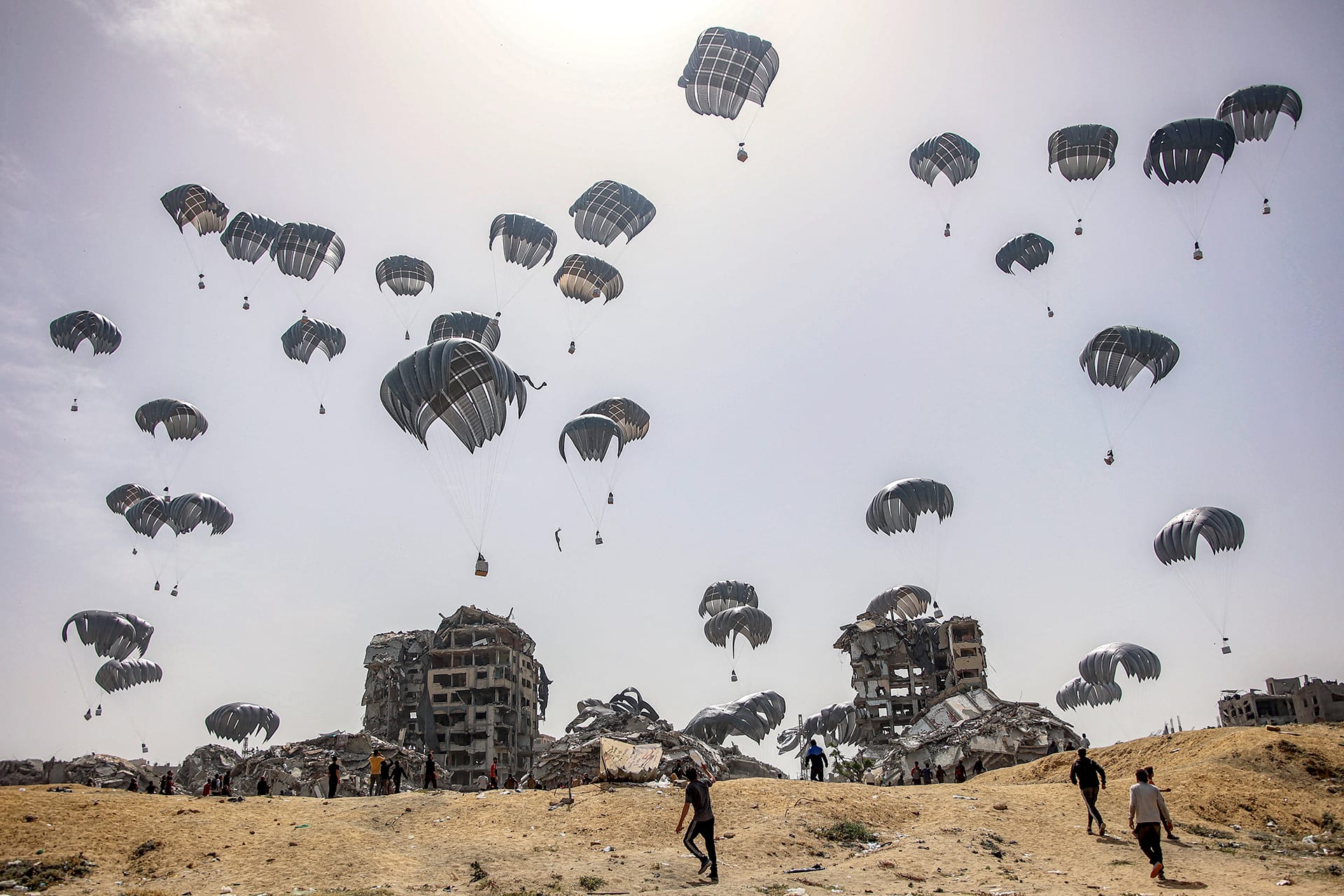
When the Israel-Hamas war erupted on October 7, 2023, Gaza’s Arab neighbors quickly stepped in to provide substantial humanitarian aid to Palestinians living in the enclave. Egypt and Jordan sent humanitarian aid convoys through land bridges, while Saudi Arabia and the United Arab Emirates (UAE) sent airdrops permitted by Israel.
The levels of aid increased after Israel and Hamas agreed to a ceasefire nearly two years later, in October 2025. But six months into that truce, the amount of aid flowing into Gaza has once again dropped. The United Nations reported a 37 percent overall decline in the first three months of 2026, and the latest data shows a continued dip. The Board of Peace has refuted this with claims that their leadership “has SIGNIFICANTLY scaled up support” for Palestinians, saying that food aid is reaching three times as many people as before the ceasefire.
The humanitarian crisis in Gaza, however, is far from resolved. While the ceasefire enabled some progress on reversing a widespread famine declared by the UN food monitor, experts say the gains are fragile. The United States and Israel contest the famine allegations. Meanwhile, Palestinians in the enclave still face displacement, hunger, disease, and violence.
The drop in aid in recent months lines up with the outbreak of Israel’s and the United States’ war with Iran. When the two countries launched Operation Epic Fury that triggered the war, Israel closed all the aid corridors into Gaza, citing security concerns. It has since reopened one corridor, Kerem Shalom, but all other crossings remain closed. The U.S.-run Civil-Military Coordination Center in Israel found that aid to the enclave dropped by 80 percent after the Iran war began.
At the same time, Israel moved to ban thirty-seven international aid groups from working in Gaza for failing to comply with rules to share certain details about their staff, funding, and operations, which Israel claimed it needs for security. (The Israeli Supreme Court issued a temporary injunction on this, delaying the resolution and allowing aid staff to continue working.)
Even before the war in Gaza broke out, 81 percent of the enclave’s population lived below the national poverty line, and 76 percent of families had reduced their meal consumption, the UN agency for Palestinian aid reported.
All of Gaza’s neighbors have different geopolitical interests when it comes to the delivery of aid, whether that’s appeasing their own Palestinian populations or bolstering their roles as mediators in various global conflicts.
Here’s what each country has done in response to the humanitarian crisis in Gaza.
Egypt
Egyptian President Abdel Fattah El-Sisi called for the continued flow of humanitarian aid to the nearly 2.3 million Palestinians living in the Gaza Strip in October 2023. Sisi has also been a proponent of reviving the peace process to allow for Palestinian statehood. Egypt hosted the Gaza Peace Summit last year, which included regional leaders and U.S. President Donald Trump. As of February 2026, Egypt had provided more than eight hundred thousand tons of aid to Gaza since the war’s outbreak.
Sisi is balancing the anger of the Egyptian public—which includes media reports suggesting that Egypt is blocking aid to Gaza through the Rafah border crossing—with his foreign policy interests.
“Egypt is one of the most-indebted countries in the world and a strategic partner of the United States, forcing Sisi to walk a fine line between criticism of U.S. policy and the outrage of Egyptians over the bloodshed in Gaza,” CFR Middle East expert Steven Cook told CFR. “This is why Egypt has positioned itself as a critical link providing humanitarian aid to Gazans, even if it has not always lived up to this role.”
Egypt’s lack of resources to support an influx of Palestinian refugees from Gaza strains its ability to accept fleeing civilians. In addition to Palestinians leaving Gaza, another wave of refugees is coming from nearby Sudan, leaving Egypt struggling to accommodate the regional refugee influx. At the same time, Israeli attacks have forcibly displaced Palestinians to Egypt’s northern Sinai governorate, which borders Gaza, creating significant political consequences and security risks.
Jordan
Since October 7, 2023, Jordan has funneled food, water, and medical supplies to Gaza through the nonprofit Jordan Hashemite Charity Organization (JHCO), delivered in collaboration with Jordanian Armed Forces and the foreign ministry.
As of May 2025, JHCO Secretary-General Hussein al-Shibli said that Jordan has directed more than $428 million in aid to Gaza. The last major delivery was in August 2025, when JHCO dispatched thirty-eight food supply trucks to the territory, assisted by the Jordanian Armed Forces and the UN World Food Program.
Prior to that delivery, the country’s military had resumed airdrops of aid from C-130 Hercules planes and helicopters after Israeli authorities lifted a nine-month ban. Overall, Jordan has carried out 164 airdrops of aid and assisted in nearly 400 additional airdrops conducted with international partners.
In addition, Jordan has taken on a diplomatic role. King Abdullah II spoke on the phone with Trump to help broker a ceasefire in the days leading up to the truce’s announcement. Jordan also worked with Egypt and other members of the Arab League to create Gaza reconstruction plans that would prevent Palestinian displacement. It also announced it would train police for the peace plan’s International Stabilization Force with Egypt. (Egypt has reportedly begun this training, but there have been no reports that confirm Jordan has done so yet).
Similar to Sisi’s situation in Egypt, Jordan is grappling with internal contention on the issue. More than half of Jordan’s population of 11.5 million people is Palestinian, or of Palestinian descent. Many have roots in the Nakba, the founding of Israel that resulted in many Palestinians being displaced in 1948, or the Six Day War in 1967. This population has been integral in pushing the Jordanian government to pressure the fighting sides to end the Israel-Hamas war. Protesters have held mass demonstrations in the streets of the capital, Amman, and boycotted U.S.-based chains such as Starbucks and McDonalds.
Qatar
Qatar has played the role of mediator and provider of humanitarian aid to the Gaza Strip since the start of the war. Following the announcement of the ceasefire in October 2025, Qatari and Palestinian ministers met to discuss the entry, delivery, and distribution of aid to Palestinians in Gaza in the weeks after the ceasefire began.
Qatar’s position, however, is a complicated one. Israel and Hamas held negotiation talks in Doha for the duration of the war from 2023 to 2025. Qatar also hosted Hamas’s political wing, which was headquartered in Doha until Israel’s attack on their compound in September 2025, and is home to the largest U.S. military base in the region, Al Udeid Air Base.
Saudi Arabia
Throughout the Israel-Hamas war, Saudi Arabia has delivered aid to Gaza through the King Salman Humanitarian Aid and Relief Center (KSrelief), which was established in 2015 as an ongoing fundraising campaign for Palestinians in need. KSrelief reported delivering more than 7,600 tons of aid supplies via 67 planes—some in collaboration with Jordanian airdrop campaigns—and 8 ships in early October 2025. It also delivered about twenty ambulances to the Palestinian Red Crescent Society and signed $90 million worth of agreements with international organizations for important relief projects in Gaza.
Under Crown Prince Mohammed bin Salman, Saudi Arabia had moved toward normalization with Israel, but after the war began, Riyadh’s sentiment shifted. During a November 2025 visit to Washington, bin Salman announced an approximately $1 trillion investment in the U.S. economy but made it clear that any possibility of Riyadh joining the Abraham Accords would depend on a two-state solution for the Palestinian territories.
Turkey
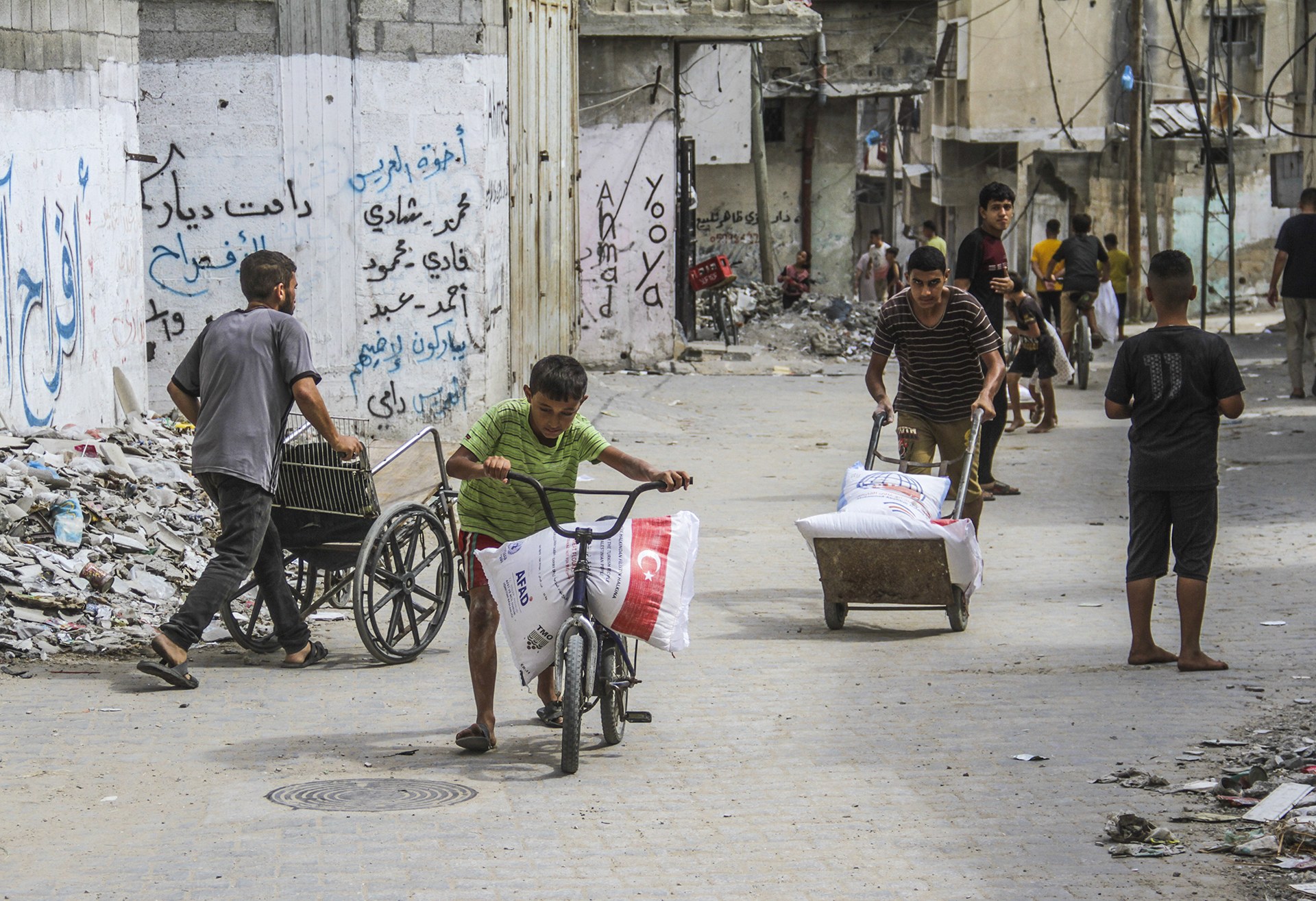
Turkey has provided nearly $15 million in financial support to Palestinians in Gaza and 101,000 tons of aid as of August 2025, funneled through the Turkish Interior Ministry’s Disaster and Emergency Management Authority, the Turkish Red Crescent, and the Turkish Cooperation and Coordination Agency.
Turkish President Recep Tayyip Erdoğan has strongly condemned Israel’s offensive in the Gaza Strip. The Turkish government has supported a sovereign Palestinian state and has accused Israel of restricting aid into the enclave.
UAE
The UAE has reportedly delivered around $3 billion in response to the humanitarian crisis in Gaza, according to a diplomatic advisor to the Emirati president, Sheikh Mohamed bin Zayed al-Nahyan. That is the largest amount delivered by any single country globally.
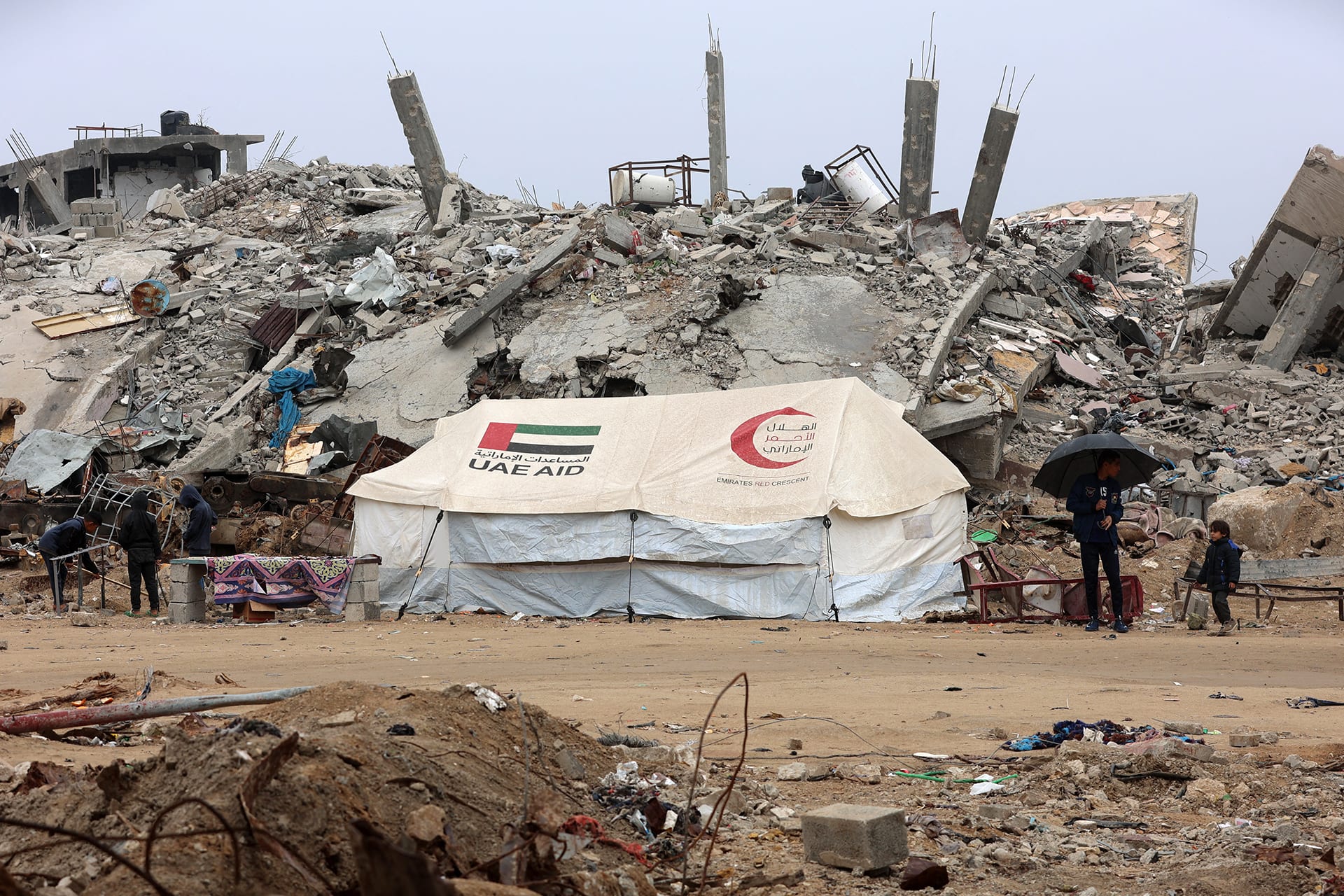
The UAE provided water, food, and medical supplies to Gaza via land routes at the Rafah crossing and airdrops—some of which were completed with Jordan. The Emiratis also established a field hospital in Gaza and deployed a floating hospital to treat patients in the Sinai coastal city of Al Arish in December 2023.
Abu Dhabi also drafted UN Security Council Resolution 2720 that month to demand an increased flow of humanitarian aid to Palestinians, the protection of the humanitarian staff who deliver it, and the appointment of a UN senior humanitarian and reconstruction coordinator to monitor shipments of aid entering Gaza. Some Palestinians were also evacuated to various Emirati hospitals for treatment in July 2024.
The UAE was the first of the Gulf states to normalize diplomatic relations with Israel following the establishment of the Abraham Accords in 2020.