NATO Agrees to New Defense Spending Target
By experts and staff
- Published
- CFR Editors
Welcome to the Daily News Brief, CFR’s flagship morning newsletter summarizing the top global news and analysis of the day.
Subscribe to the Daily News Brief to receive it every weekday morning.
Top of the Agenda
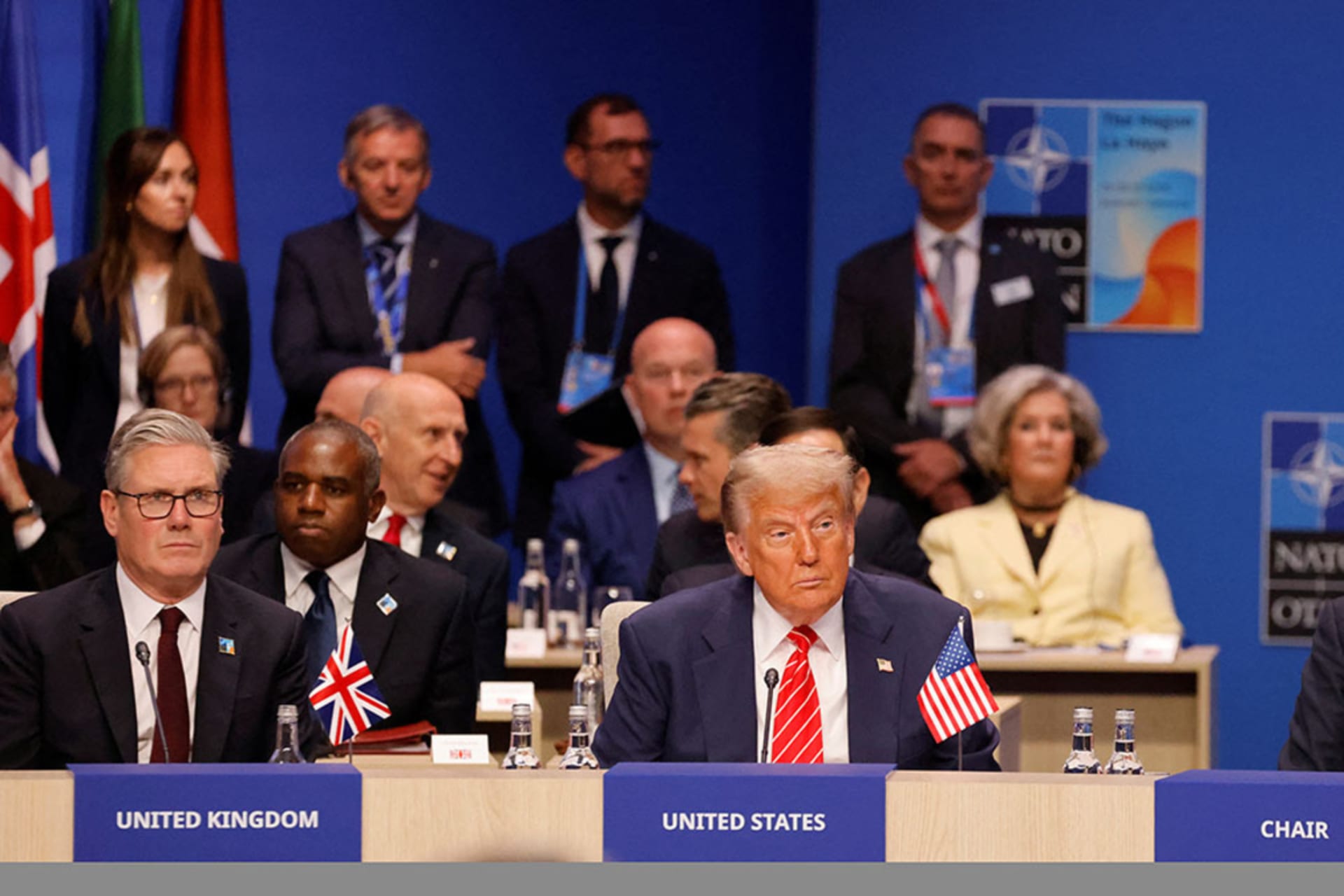
NATO allies endorsed a plan to spend 5 percent of their GDP on defense by 2035 and jointly reaffirmed their “ironclad commitment” to collective defense at its summit in The Hague today. The new goal includes both core military and related investments, and is a significant jump from the current target of 2 percent. The summit declaration said the new spending target would help the alliance respond to geopolitical threats—especially from Russia—and terrorism. It also voiced support for Ukraine, while omitting language from last year’s statement that Ukraine’s future was in NATO.
European security in the spotlight. The spending target was praised by U.S. President Donald Trump and alliance Secretary-General Mark Rutte, who called the summit “transformational.”
- Trump has long called for European countries to pull greater weight in NATO. On multiple occasions, he has made ambiguous comments about his support for its collective defense principle—including yesterday, when he said U.S. commitment to Article 5 “depends on your definition.” Speaking today alongside Rutte, however, Trump said he is with NATO allies “all the way.”
- Trump was expected to meet with Ukrainian President Volodymyr Zelenskyy following the summit’s main session today.
- Finnish President Alexander Stubb said that “we’re witnessing the birth of a new NATO, which means a more balanced NATO.”
Comments on further global hotspots.
- Trump spoke to reporters about the Israel-Iran truce and Israel’s ongoing war in Gaza. He said the truce was going “very well” and that his Middle East envoy Steve Witkoff believes a deal in Gaza is “very close.”
- Trump said Russian President Vladimir Putin offered to help mediate the Iran conflict but that he’d rebuffed the offer, telling the Russian president he didn’t need his help on Iran but rather “on Russia.”
“President Donald Trump’s personal unpredictability notwithstanding, the United States and Europe have to develop a new transatlantic security bargain as the main threat for the United States will be in the Indo-Pacific region. This means transitioning to a European-led NATO, without creating capability or deterrence gaps in the interim. Europe has little choice but to invest in growing its defense capabilities and to muster the political will and domestic support for such efforts.”
—CFR Fellow Liana Fix and Senior Fellow Rebecca Lissner in a Ukraine Policy Brief
Across the Globe
Israel-Iran truce. The ceasefire between the countries appeared to be holding early today. Trump wrote on social media yesterday that China would be allowed to keep buying oil from Iran, appearing to contradict U.S. sanctions policy. An unnamed White House official told news outlets that Trump was referring to the fact that the Strait of Hormuz would remain open. Iran’s legislature approved a bill today to suspend its cooperation with the UN nuclear watchdog and require the country’s top security council to approve any future inspections, state-linked media reported.
Examining strikes on Iran. The Pentagon assessed that last weekend’s U.S. strikes on three Iranian nuclear sites did not reach key elements of Iran’s nuclear program and likely only obstructed its progress by months, seven unnamed sources told CNN. The White House press secretary disagreed with the assessment and said in a statement the strikes had led to “total obliteration” of their targets. Yesterday, the Trump administration cancelled plans for classified intelligence briefings with U.S. lawmakers.
NSC rehiring. The White House has begun restaffing the National Security Council by trying to rehire fired workers, weeks after downsizing the council, unnamed sources told Bloomberg. Secretary of State Marco Rubio is reportedly directing the restructuring, which is not in response to specific events, an unnamed staffer said.
Japanese missile test. Japan tested a missile on its own territory for the first time, its army said yesterday. The country had run its previous tests in U.S. and Australian territories, which offer more space, due to safety concerns. Around three hundred soldiers participated in the exercise with a short-range, surface-to-ship missile; it will conduct a second one through Sunday. Japan is growing its military in an effort to deter China.
Nigeria-Brazil agriculture agreement. The countries signed a $1 billion deal to boost Nigerian agriculture through the use of mechanized farming equipment, training, and service centers, Nigeria’s vice president said yesterday. The deal was finalized during a visit by Brazil’s vice president to Abuja. Most farming in Nigeria is currently small-scale. Nigeria’s government is in the midst of a series of economic reforms that aim to make the country friendlier to private investment.
U.S. to fund Gaza charity. Washington will give $30 million to the Gaza Humanitarian Foundation aid group, despite the deaths of dozens of Palestinians near its distribution sites, according to four unnamed sources and a document seen by Reuters. The charity relies on private U.S. military contractors and logistics firms, but this is the first reported direct financial contribution from the government. The foundation and the State Department did not comment.
Potential EU counter-tariffs. The European Union (EU) plans to impose retaliatory penalties on U.S. goods, including Boeing aircraft, if the Trump administration follows through on promises to impose a baseline 10 percent tariff on EU goods, EU industry chief Stephane Sejourne said. Brussels is trying to get a better trade deal than the one that Washington recently reached with London, which retained a 10 percent baseline duty on most goods going to the United States.
Flooding in China. Southern China is preparing for the potential landfall of a tropical depression, only two weeks after flooding from Typhoon Wutip killed five people and prompted hundreds of thousands to evacuate. Summer flooding is common in China, though scientists say climate change is making it more severe. A World Meteorological Organization report released Monday said that Asia is heating up at almost twice the speed of the global average.
What’s Next
- Today, the annual assembly of the Organization of American States begins in Antigua and Barbuda.
- Today, U.S. Homeland Security Secretary Kristi Noem holds meetings in Costa Rica.
- Today, the U.S. House Foreign Affairs Committee holds a hearing in Washington on the U.S. Agency for Global Media.
- Tomorrow, a two-day EU summit on security issues begins in Brussels.