New Tools to Prevent Atrocities: Beyond Syria
By experts and staff
- Published
- Stewart M. PatrickJames H. Binger Senior Fellow in Global Governance and Director of the International Institutions and Global Governance Program
No U.S. President, with the possible exception of Bill Clinton, has devoted as much attention as Barack Obama to preventing mass atrocities and ensuring that their perpetrators are held accountable. Yesterday, in a reflective speech at the U.S. Holocaust Memorial Museum, the president announced several initiatives that will help the U.S. government put its “never again” rhetoric into practice more often. The most important of these were the creation of a high-profile Atrocities Prevention Board, the authorization of a National Intelligence Estimate (NIE) on the global risk of mass atrocities, and the imposition of targeted sanctions on those who exploit information technology to facilitate grave human rights abuses.
If implemented and preserved through subsequent administrations, these welcome innovations will give President Obama and his successors an institutional system and policy tools to work with other nations to anticipate, deter, and respond to crimes against humanity.
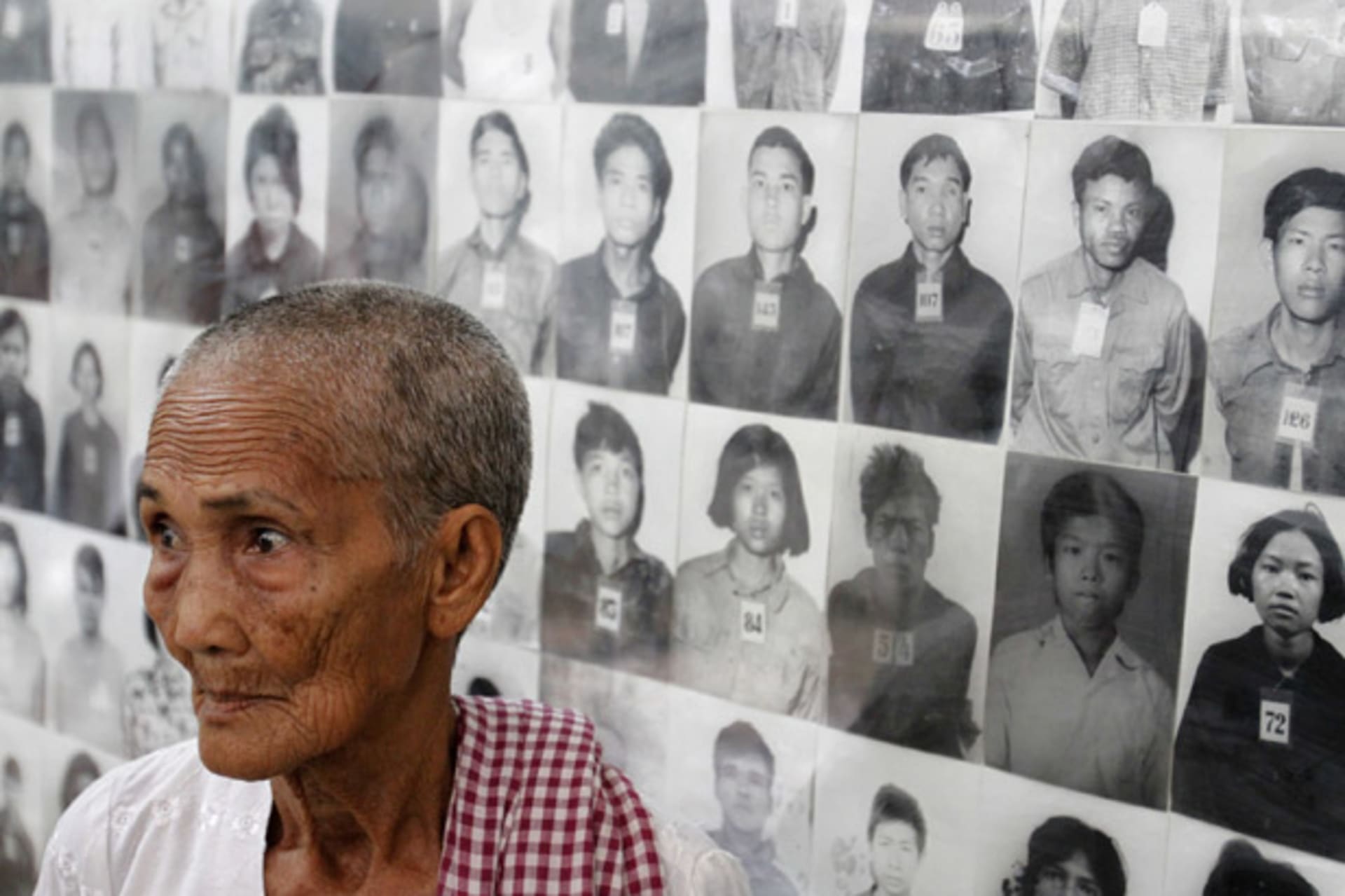
In the company of Nobel Laureate Elie Wiesel, President Obama invoked the memory of the Holocaust, and the faith in the survivors that one must never forget, and never give up. And yet for decades after World War II, from the killing fields of Cambodia to the bloody streets of Syria today, the promise of “never again” has yielded to the reality of “all too often”.
In 1999, the Clinton administration made some progress when it orchestrated a messy, but ultimately successful NATO air offensive to reverse a Serbian campaign of ethnic cleansing in Kosovo. At the time, Kofi Annan, then UN secretary-general, called for the articulation of new norms of humanitarian intervention. The ultimate result, thanks to the work of the Canadian sponsored International Commission on Intervention and State Sovereignty, was the unanimous embrace by the UN General Assembly in 2005 of a new global norm, the Responsibility to Protect (R2P).
In March 2011, President Obama presided over the first unambiguous military enforcement of R2P, deploying critical American military assets in a NATO-led coalition operation to prevent impending mass atrocities by Libyan dictator Muammar al-Qaddafi. The administration’s leadership secured passage of two critical UN Security Council resolutions, 1970 and 1973—the first referred Qaddafi and his henchmen to the International Criminal Court; the latter endorsed the use of “all necessary means” to end the threat to civilians.
Lest one imagine that the United States regarded the Libya operation as an isolated incident, on August 4, 2011, the Obama administration released Presidential Study Directive Ten. That document designated the prevention of mass atrocities and genocide as a “core national interest and core moral responsibility” of the United States and directed an agency-wide review of gaps in fulfilling this mission.
President Obama’s speech on Monday represented the culmination of that review. Of the many recommendations it generated, three endorsed by the president stand out:
These new sanctions will initially be limited to Syria and Iran, but they will surely gain wider use as a new arrow in the U.S. foreign policy quiver; a spokesman stated that administrations will possess the authority to impose them on individuals or groups. One intriguing possibility—sure to be watched closely by Beijing and Moscow—is that the administration will be pressed by human rights groups, or indeed Congress, to apply such sanctions to a wider array of oppressive authoritarian governments.
In the end, these tools will only impact situations on the ground gradually—and their use is unlikely to slow the brutal oppression in Syria soon. But they hold promise for future atrocities prevention and response, by elevating the battle against genocide to the highest level of government—and putting the onus on U.S. officials to react in a timely manner when the threat emerges.