Remembering a Fallen Hero on Memorial Day
The story of a U.S. Marine who made the ultimate sacrifice for the United States.
By experts and staff
- Published
 James M. LindsayCFR ExpertMary and David Boies Distinguished Senior Fellow in U.S. Foreign Policy
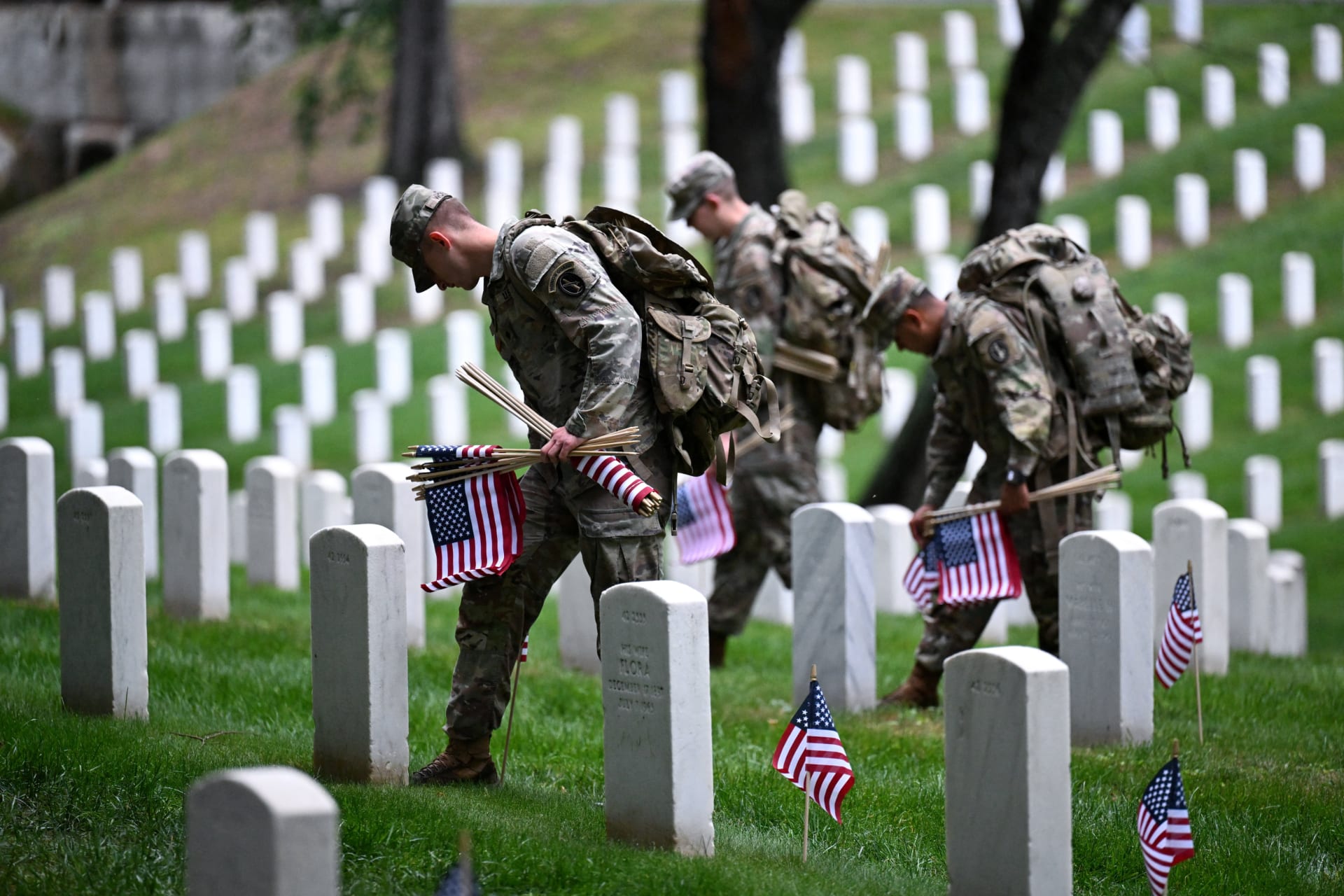
Monday is Memorial Day. The United States has fought twelve major wars in its history. It has also fought numerous smaller conflicts, with Operation Epic Fury being the most recent. Memorial Day is how we honor the soldiers, sailors, airmen, airwomen, Marines, and coast guardsmen who did not return home.
The Origins of Memorial Day
Memorial Day dates back to the months immediately following the Civil War when a few towns and cities began honoring their dead. In 1868, General John A. Logan—at the time the head of an organization for Union veterans, later a U.S. senator from Illinois, and the man for whom Logan Circle in Washington, DC, is named—called for May 30 to be observed as “Decoration Day.” The occasion was “designated for the purpose of strewing with flowers or otherwise decorating the graves of comrades who died in defense of their country during the late rebellion.”
After World War I, the purpose of the holiday shifted to honor all Americans who died fighting in the nation’s wars. As a result, the term “Decoration Day” increasingly gave way to “Memorial Day.” In 1967, Congress enshrined that switch in law. The following year, Congress decreed that, as of 1971, Memorial Day would be commemorated on the last Monday in May.
The Toll of War
Roughly 1.3 million American servicemen and women have fought and died for the United States. The Civil War remains the deadliest war in U.S. history. The North and South combined lost 650,000 soldiers.
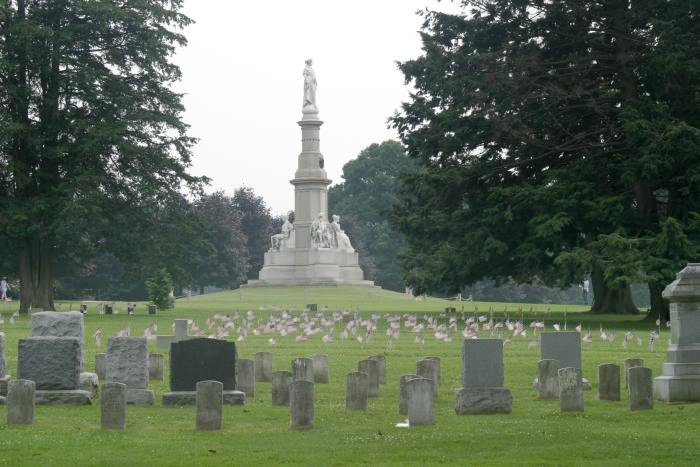
World War II is America’s second deadliest war, with some 405,000 Americans falling. The Stories Behind the Stars is working to tell the story of everyone who failed to return home from that war. The stories highlight what so many servicemen and women gave up for the United States.
In that vein, I want to tell the story of one young man who made the ultimate sacrifice in Vietnam. Like many others who did not come home, he volunteered to serve. Unlike most others, however, he was under no obligation to do so. He was a citizen of Mexico, not the United States.
Lance Corporal José “JoJo” Francisco Jiménez
José Francisco Jiménez was born in Mexico City on March 20, 1946. As a young boy, he lived with his grandmother and attended elementary school in Morelia, the capital city of the Mexican state of Michoacán. In 1957, he moved to Red Rock, Arizona, to live with his mother, Basilia, and sister, Pilar. He attended high school in Eloy, Arizona, a small town located roughly midway between Phoenix and Tucson on Interstate 10. He graduated in June 1968. In his senior year, he was president of the school’s chapter of the Future Farmers of America.
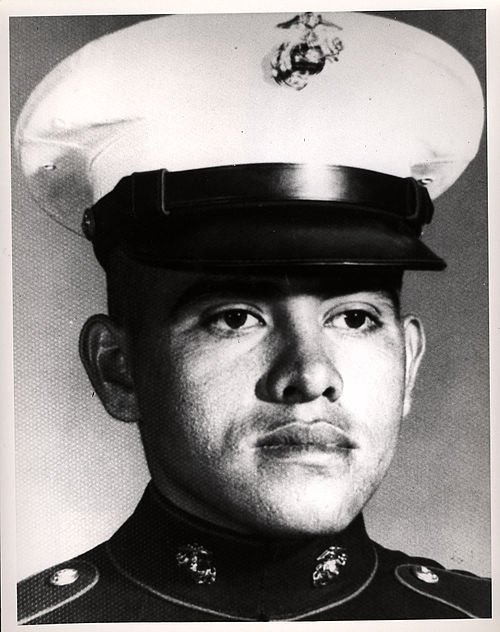
Jiménez joined the Marine Corps Reserve immediately out of high school. In August 1968, he was discharged from the reserve so he could enlist in the active-duty Marines. Pilar later recalled: “He wanted to show his appreciation to the United States for how well they treated my mom and him and me, just by letting us come over here and live. He felt grateful.”
Da Nang, Quang Nam Province, South Vietnam
Private Jiménez, or “JoJo” as he was nicknamed, graduated from basic training at the Marine Corps Recruit Depot in San Diego in October 1968. He completed his combat training two months later. In February 1969, he was deployed to South Vietnam. In June, he was promoted to lance corporal.
On August 28, 1969, LCpl. Jiménez was serving as a fire team leader in K company, 7th Marines, 1st U.S. Marine Division near Da Nang, South Vietnam. The day was hot and humid. K Company was one of three Marine companies sent on a search-and-destroy mission. K company had engaged North Vietnamese snipers when it received orders to take out an antiaircraft gun atop Hill 381.
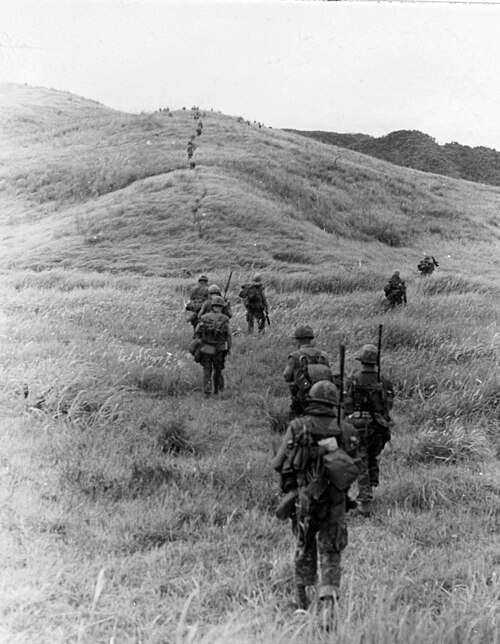
As LCpl. Jiménez and his men neared the gun emplacement, they came under heavy fire. The group took cover. Alan Jones, one of Jiménez’s fellow Marines, described what happened next:
JoJo, he was determined to go up there to take out the enemy and get that gun. And that’s what he did. He took out quite a few of the enemy and just kept on charging even though he was being fired at. It was astonishing.
LCpl. Jiménez killed six North Vietnamese soldiers before falling himself. In keeping with the Marine Corps’ ethos of “No Marine Left Behind,” other members of K Company volunteered to recover his body. Three of them died in the effort. Altogether, fourteen Marines died in the fight for Hill 381.
The Medal of Honor
LCpl. Jiménez was awarded the Medal of Honor for his bravery, one of three native-born Mexicans to be so honored during the Vietnam War. President Richard M. Nixon presented the Medal of Honor to Jiménez’s mother and sister in a ceremony at the White House on August 6, 1970.
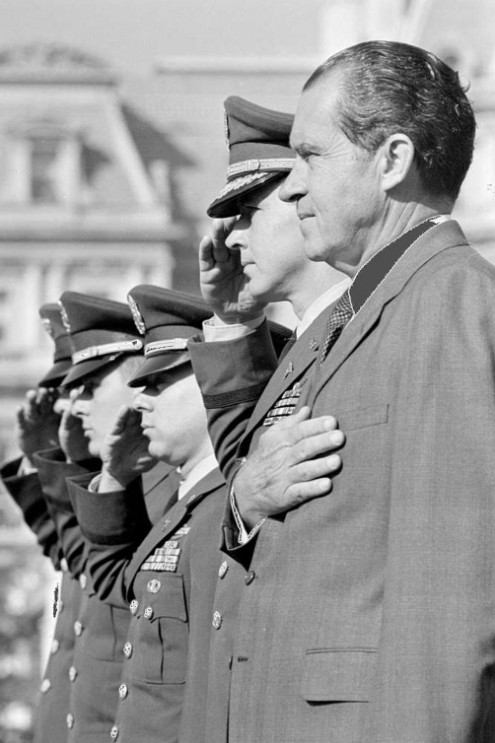
LCpl. Jiménez’s willingness to fight and die for the United States even though he was not a U.S. citizen impressed his fellow Marines. As Alan Jones put it:
It is amazing that he would risk his life for the American cause in Vietnam. Knowing JoJo, he wanted to do the right thing. I know he was very proud to be a member of the Marines. I know he was, and he always wanted to do the right thing. Maybe that was part of the reason he was so brave, so loyal, so determined to do the right thing on the battlefield. He never wanted to shirk his responsibilities; he always went forward risking his life quite a few times.
LCpl. Jiménez’s formal citation for the Medal of Honor ends with the following sentence: “He gallantly gave his life for his country.” And he did, whatever the legalities might say.
Burial and Reinterment
Basilia Jiménez buried her son in Morelia. She could not, however, afford to ship the heavy granite headstone the U.S. government provided back to Mexico so it could be placed on his grave. For seventeen years, the headstone rested under her bed. Finally, volunteers raised the funds to place the headstone on LCpl. Jiménez’s grave.
Basilia died in 2010. She was buried in Glendale Memorial Park in Glendale, Arizona. On January 17, 2017, thanks to generous donations from people and organizations touched by the family’s story, LCpl. Jiménez’s remains were moved from Morelia and buried next to his mother. Col. Steven Weintraub, a member of the U.S. Marine Corps Reserve who helped make the re-internment possible, said that LCpl. Jiménez’s story is one “that not only needs to be told, but echoed throughout the community, the Marine Corps, and the country.” I agree wholeheartedly.
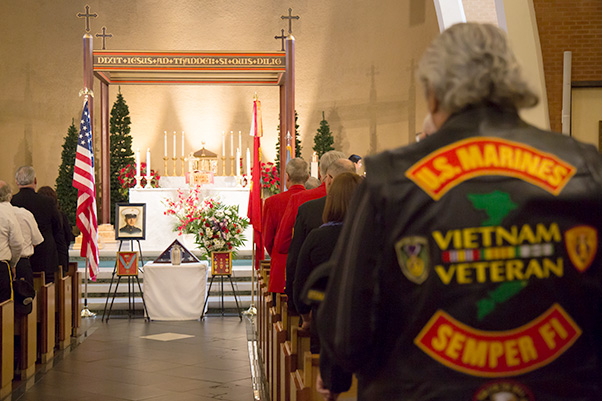
I hope that on this Memorial Day you will remember LCpl. Jiménez and the many others who gave their lives in service to the United States. If you happen to visit the Vietnam Memorial in Washington, DC, whether on Monday or on any other day of the year, you can find his name etched on panel 18W, line 2.
Oscar Berry assisted in the preparation of this article.
Other posts in this series: