Power and Purpose on Earth Day
By experts and staff
- Published
 Alice C. HillCFR ExpertDavid M. Rubenstein Senior Fellow for Energy and the Environment
 David M. HartCFR ExpertSenior Fellow for Climate and Energy
- Deputy Director of the Climate Realism Initiative
- Research Associate, Climate Change Policy
For all that scientists rightfully worry about the dangers of climate change, the environmental movement has come a long way in the last half century.
When Rachel Carson lit the movement’s proverbial match with her 1962 book Silent Spring, the pesticide DDT was still in routine use, wreaking indiscriminate havoc over insect and animal life in homes, gardens, and farms across the country. Smog regularly blanketed major world cities; in some particularly acute events, hundreds or even thousands of people died. Lead was in widespread use in pipes, paints, and fuel, industrial waste dumping was both underregulated and common, and rapid suburban growth was fueling the destruction of vulnerable local ecosystems. It was, in many ways, a dirtier and more dangerous country than the one Americans live in today.
These improvements were the product of intense citizen and scientific advocacy, legislative action, and diligent follow-through from Presidents of both parties. Senior Fellows Alice C. Hill and David M. Hart explore the history of Earth Day and the ways that it offers lessons for policymakers and the public today.
Earth Day’s Climate Connection
Alice C. Hill is the David M. Rubenstein senior fellow for energy and the environment at Council on Foreign Relations (CFR) and Angus Soderberg is a research associate for climate change policy at CFR.
Before the first Earth Day, environmental concerns largely focused on the inescapable evidence of industrial pollution—smog, sludge-choked rivers, and oil-fouled coastlines. In 1969, Ohio’s Cuyahoga River carried so much chemical waste that it literally caught fire. That same year, a massive oil spill in Santa Barbara, California, dumped three million gallons of crude oil into the Pacific Ocean, killing birds, fish, and marine mammals along a 35-mile stretch of coastline.
Senator Gaylord Nelson, a Democrat from Wisconsin, saw in the anti-Vietnam War protest movement a model for mass environmental advocacy that might catalyze a solution. Working with California Republican Pete McCloskey and a young Harvard graduate, Denis Hayes, Nelson launched what became the first Earth Day on April 22, 1970. Twenty million Americans took to the streets—roughly ten percent of the population at the time—making it one of the largest single-day civic demonstrations in recorded history.
This historic action, and the nationwide movement that gave it rise, drove a bipartisan push for environmental protection, leading Congress to pass more environmental legislation than at any point in U.S. history. The legislation enacted between 1969 and the late 1970s—including the Clean Air Act, the National Environmental Policy Act, and the Endangered Species Act, all signed by President Richard M. Nixon—still serves as the cornerstone of U.S. environmental policy.
The issue of climate change, if it was considered at all, was viewed as a distant concern. But over the next two decades, scientists increasingly sounded the alarm. By the 1990s, Earth Day had evolved from an American advocacy movement to a global one, helping lay the groundwork for the 1992 UN Earth Summit in Rio de Janeiro.
That gathering produced the UN Framework Convention on Climate Change, the treaty that has since guided international climate negotiations and provided the first formal multilateral acknowledgment that human-induced climate change posed a threat to human health and wellbeing. In three decades since the UNFCCC was agreed, Earth Day has become a durable symbolic focal point for global climate action. Notably, the Paris Agreement was opened for signature on Earth Day 2016.
Today, Earth Day is recognized as the largest secular observance in the world, with more than a billion people participating in advocacy, community service, and environmental protection activities in over 190 countries.
Yet this momentum has not translated into sustained legislative progress in the United States. The Trump administration has rolled back the Inflation Reduction Act’s climate provisions, a signature achievement of his predecessor, Joe Biden; withdrawn from the Paris Agreement (again); gutted EPA climate regulations established by multiple previous presidents; purged references to climate change from official documents; characterized the issue as ideological overreach; pressed for cuts to federal funding for emissions-reduction programs; and redirected energy policy toward expanded fossil fuel production.
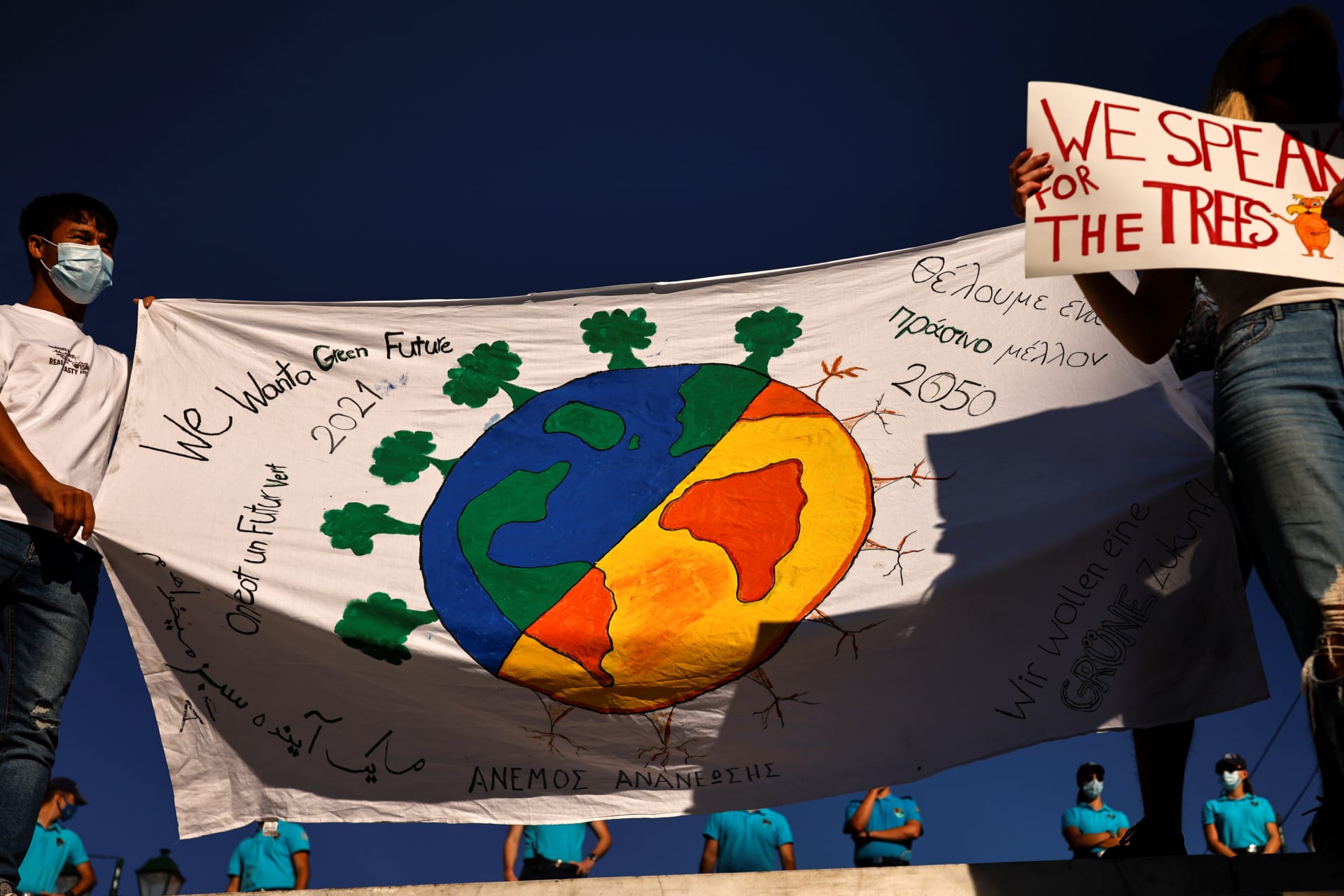
Perhaps with this context in mind, the theme of Earth Day 2026 is “Our Power, Our Planet” placing an emphasis on local environmental action by individuals, communities, and businesses.
It also speaks to the increasingly visible consequences of climate change. Like industrial pollution in the 1960s, climate impacts—deeper droughts, larger wildfires, prolonged heat waves, sea-level rise, and extreme precipitation—have begun hitting close to home.
The economic costs of rising heat and extreme weather have shifted from a rare national burden to an almost routine occurrence. The National Oceanic and Atmospheric Administration began tracking disasters that cost more than a billion dollars in 1980, and its first decade of data indicate that the United States used to average a little over three such disasters a year. More than twenty such events have been reported in each of the last three years, reflecting both the higher frequency of extreme weather and the growing concentration of infrastructure and homes in high-risk areas. The 2025 Los Angeles wildfires, which destroyed more than 16,000 structures, are estimated to have a total economic cost of around $250 billion.
Insured losses from natural catastrophes have also trended upward. According to Munich Re, global insured losses amounted to $108 billion for 2025, extending a pattern of years with losses exceeding $100 billion. In many high-risk communities—hurricane- and wildfire-prone areas in particular—homeowners have found property insurance increasingly difficult or impossible to obtain. Some insurers have sharply raised premiums to reflect rising risks; others have simply withdrawn from those markets.
Advocates, community leaders, and policymakers at every level continue to view Earth Day as a catalyzing event for pushing environmental action, including efforts to reduce heat-trapping emissions and build resilience to climate impacts. . What science makes plain, however, is that the climate will not wait for politics to catch up.
Valuing the Earth, Reviving Earth Day
David M. Hart is a senior fellow for climate and energy at the CFR.
The first Earth Day on April 22,1970, marked a highwater point for the environmental movement. Its success ushered in an era of bureaucratic management of environmental policy. The Trump administration seeks to end this era by devaluing human health and the environment in federal decision-making. Its anti-regulatory push warrants a revival of popular protest.
Born of the activism of the 1960s, the protests and pressure of that era’s environmental advocates wrought substantial achievements, including the passage of landmark federal legislation and the creation of the Environmental Protection Agency later in 1970. Inevitably, the translation of public sentiment into actionable law meant bureaucratization. Standards had to be set to determine how much pollution over what length of time constituted a violation. Measurements had to be taken to assess these standards. Technicians and lawyers had to demonstrate to the satisfaction of judges that violations had occurred. Qualitative values became quantitative valuations.
Environmental policymaking might have been a lot less fun than the raucous protests of the Earth Day, but it actually made a real difference for the environment. Rivers stopped burning, and the skies cleared. These improvements reduced disease, healed ecosystems, and sometimes provided economic benefits that outweighed the costs of pollution control. The bureaucratic analysis of costs, benefits, and risks became a foundation for environmental policy decision-making.
Fast forward to Earth Day 2026. Environmental policy is focused not only on the gross abuses that motivated protestors 56 years ago, but also the hidden dangers revealed by advances in science and technology since then. Greenhouse gases, pesticides, particulates, and other invisible pollutants have been brought within the ambit of environmental law.
Environmental policy tools have advanced as well. Cost-benefit analysis – a formal process, required by law, that establishes whether a policy’s positive effects will outweigh its economic costs – has become far more sophisticated, and the data available to plug into it has grown immensely. Yet, it remains far from deterministic. There’s always room for argument. That’s because even the most elaborate analyses come down to value judgments. How much is a human life worth? An endangered species? An ecosystem? People disagree. Administrative and legal processes ultimately resolve these disagreements.
One troubling development this Earth Day is the Trump administration’s efforts to short-circuit these processes. A particularly insidious tool in this campaign is the elimination of health and environmental considerations from cost-benefit analyses of proposed regulations. This approach values the polluter’s monetary costs of compliance and discounts most societal gains that could flow from tightening controls. The White House can also simply ignore an analysis if it wants to.
These steps systematically devalue the environment. A life, a species, an ecosystem? All worth nothing in the revised framework. This can’t be right. While we may not all agree on what these unique expressions of God and nature are worth, the average valuation is certainly more than nothing.
The new policy comes very close to returning federal policy to its pre-Earth Day state, when laissez-faire economics determined environmental outcomes. The bureaucratic model, for all of its flaws, produced better outcomes. Although a new administration could reverse most of what this one has done, grounding environmental policy once again in popular sentiment would help secure such gains. Expressing such sentiments in an undeniable fashion is the task of this era of Earth Days.