The Truman Doctrine
In an address to a joint session of Congress, President Harry Truman embraced a global role for the United States and opened a new chapter in U.S. foreign policy.
By experts and staff
- Published
 James M. LindsayCFR ExpertMary and David Boies Distinguished Senior Fellow in U.S. Foreign Policy
Presidential foreign policy doctrines abound. The first president to lend his name to one was James Monroe, though to be accurate, the term “Monroe Doctrine” wasn’t coined until two decades after his death. Since the end of World War II, seemingly every president has offered up a doctrine. The most consequential of them remains the Truman Doctrine, which President Harry S. Truman unveiled in a speech to a joint session of Congress on March 12, 1947. Truman’s speech set out the argument for U.S. global leadership and led to a fundamental and lasting change in how Americans defined the national interest. A survey that the Council on Foreign Relations conducted of members of the Society for Historians of American Foreign Relations ranked the Truman Doctrine as the twenty-eighth-best decision in the history of U.S. foreign policy.
Bad News From Britain
The events that produced the Truman Doctrine were set in motion three weeks earlier. On February 21, 1947, the British ambassador to the United States delivered two official notes to the State Department. They communicated a simple message: Britain’s severe economic problems were forcing the British government to end all aid to Greece and Turkey, effective March 31, 1947. Undersecretary of State Dean Acheson immediately understood that Britain’s decision opened the door to a geopolitical disaster. He told the State Department’s director for Near Eastern and African Affairs to “get your staff together and work like hell over this weekend.”
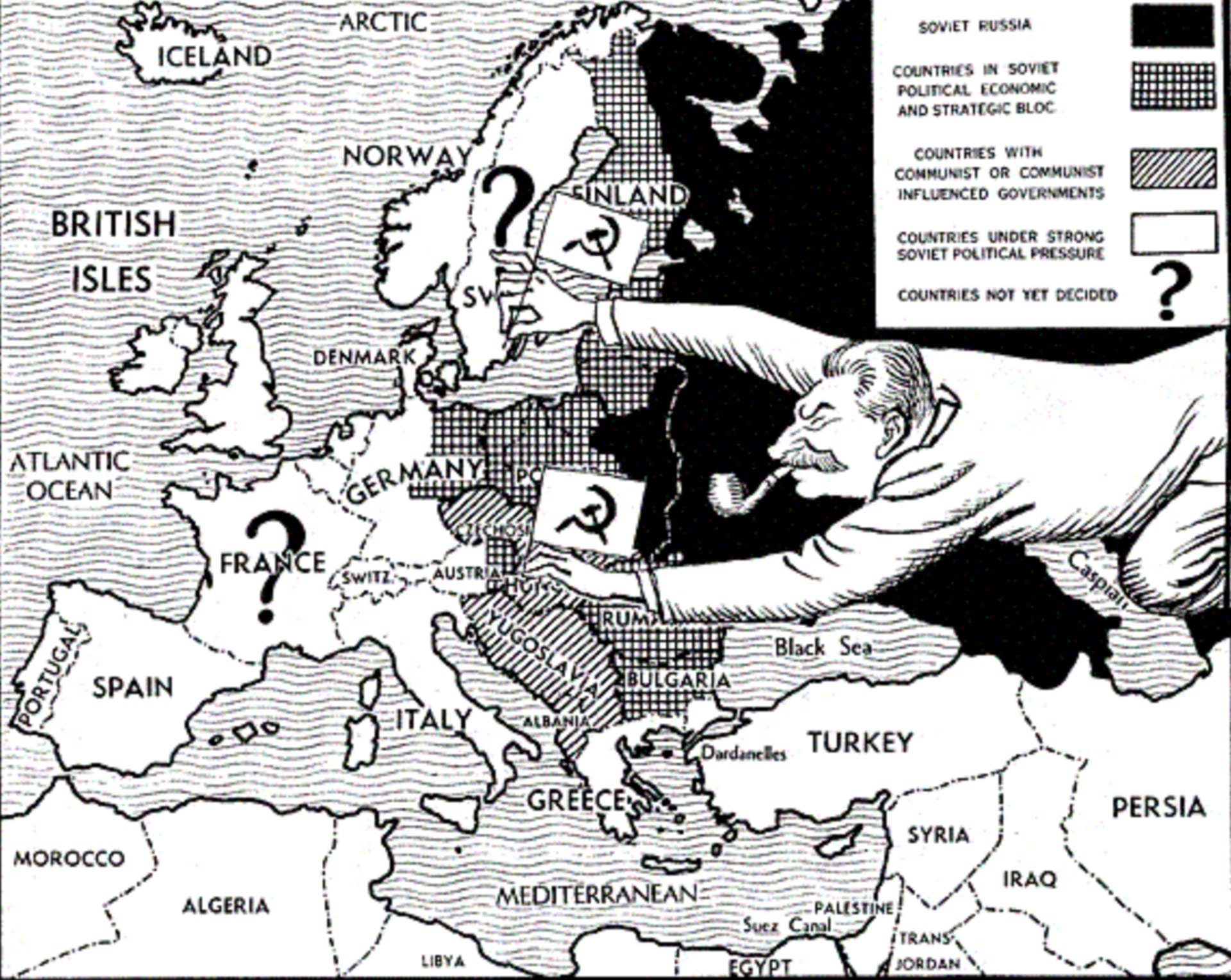
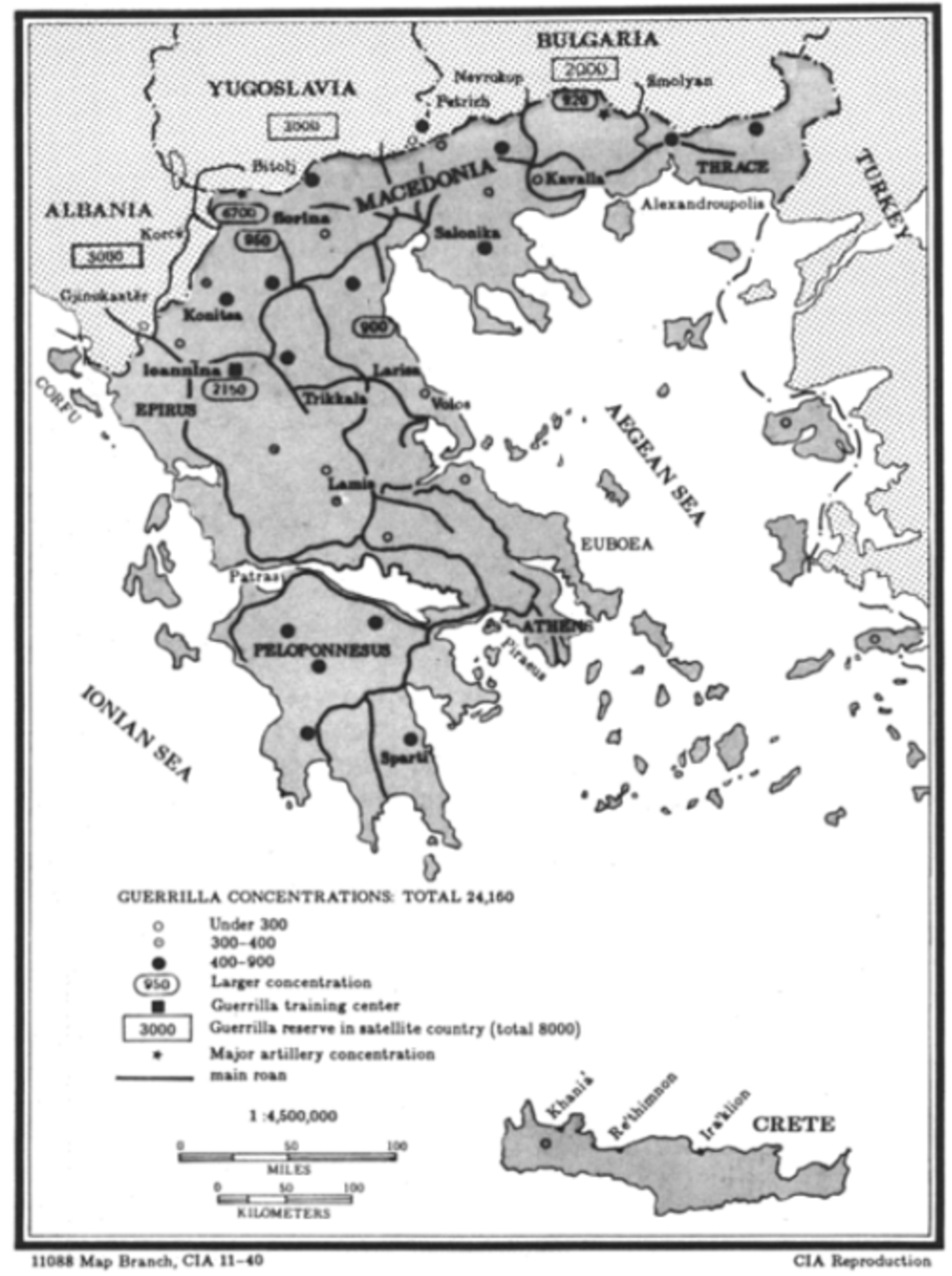
Why did Acheson, and subsequently Truman, see a looming international crisis in the news from London? The answer lies in the turmoil wracking the eastern Mediterranean at the time. Greece was embroiled in a civil war with communist rebels, and Turkey sat astride the strategically important Dardanelles that connected the Black Sea to the Mediterranean. Over the previous year the Soviet Union had been seeking to establish a sphere of influence in eastern and southern Europe. Without continued British support for Athens and Ankara, Truman and his advisers calculated that both countries might slip into the Soviet orbit.
“Scare the Hell out of the American People”
Truman was determined not to repeat the mistake that British and French leaders had made in the 1930s by trying to appease Nazi Germany. He intended to deter Soviet expansionism. That meant the United States would need to replace Britain as the major power in the eastern Mediterranean.
Accomplishing that feat was easier said than done. Truman faced two daunting obstacles. First, the United States had no tradition of providing economic aid to other countries. Indeed, the U.S. political tradition had long argued against becoming involved in the political affairs of other countries; the United States had entered both world wars only after all its efforts to remain neutral failed. Second, Republicans controlled Congress. They had campaigned on a pledge to cut federal spending, not send taxpayer dollars overseas.
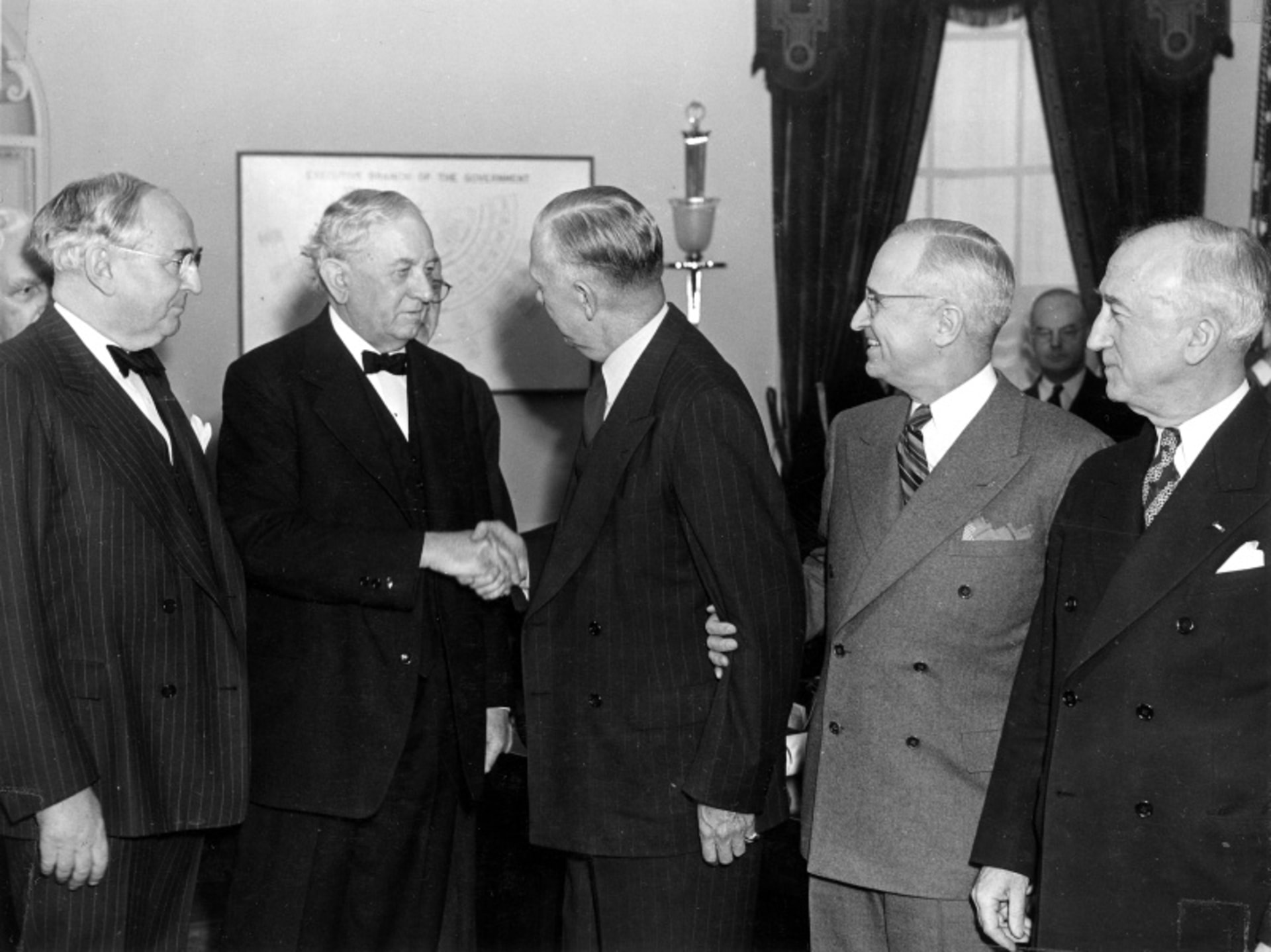
Knowing that he had to pursue what he called “the greatest selling job ever facing a president,” Truman met privately with congressional leaders to solicit their support. Sen. Arthur Vandenberg (R-Mich.), the chair of the Senate Foreign Relations Committee and an isolationist who had turned internationalist, told Truman that Republicans would support him if he made a public case for aiding Greece and Turkey. But Vandenberg added that Truman would be wise to “scare the hell out of the American people.”
Truman Speaks
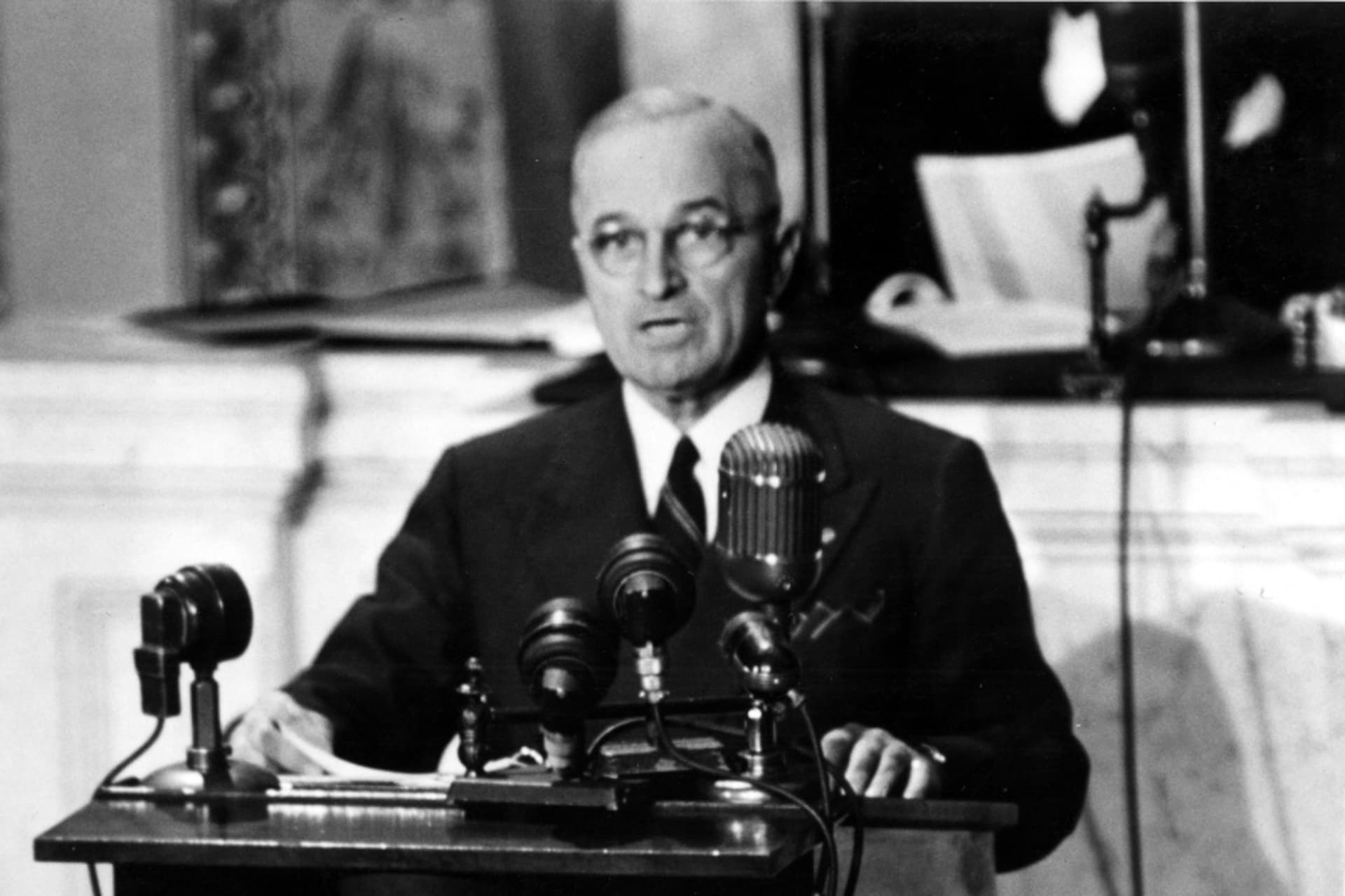
Truman took Vandenberg’s advice. On March 12, 1947, he appeared before a joint session of Congress and laid out what became known as the Truman Doctrine:
It must be the policy of the United States to support free peoples who are resisting attempted subjugation by armed minorities or by outside pressures.
With this single sentence Truman asked his fellow Americans to break with their traditional reluctance to become embroiled in events outside the Western Hemisphere and to assume the responsibility of global leadership. The United States needed to embrace this expansive new role, Truman argued, because the world was now caught in a struggle between two ways of life:
One way of life is based upon the will of the majority, and is distinguished by free institutions, representative government, free elections, guarantees of individual liberty, freedom of speech and religion, and freedom from political oppression.
The second way of life is based upon the will of a minority forcibly imposed upon the majority. It relies upon terror and oppression, a controlled press and radio; fixed elections, and the suppression of personal freedoms
As a down payment on preserving the way of life based on the will of the majority, Truman asked Congress to appropriate $400 million in aid for Greece and Turkey for the coming fiscal year.
[Video: https://www.youtube.com/watch?v=AV41VcyB8iA]

Congress Acts
Members of Congress found Truman’s portrait of the threat facing the United States both frightening and convincing. So, too, did the American people. In May, the House and Senate voted by wide, bipartisan margins to appropriate the funds Truman had requested.
Congress’s swift action meant that the United States was suddenly in the foreign-aid business. More importantly, the passage of the Greek-Turkish Aid Act signaled that the United States would not be retreating into the comfort and familiarity of Fortress America as it had after World War I. Rather, the United States intended to lead the Free World. That shift changed the course of history.
On the twentieth anniversary of the announcement of the Truman Doctrine, President Lyndon B. Johnson wrote that Truman had taught Americans “that freedom is not divisible; that order in the world is vital to our national interest; and that the highest costs are paid not by those who meet their responsibilities, but by those who ignore them.” That lesson remains relevant today.
The United States celebrates its 250th anniversary in 2026. To mark that milestone, I am resurfacing essays I have written over the years about major events in U.S. foreign policy. A version of this essay was published on March 12, 2012.
Oscar Berry assisted in the preparation of this article.