Sixtieth Anniversary of the U.S.-ROK Alliance: Where Do We Stand?
By experts and staff
- Published
- Scott A. SnyderSenior Fellow for Korea Studies and Director of the Program on U.S.-Korea Policy
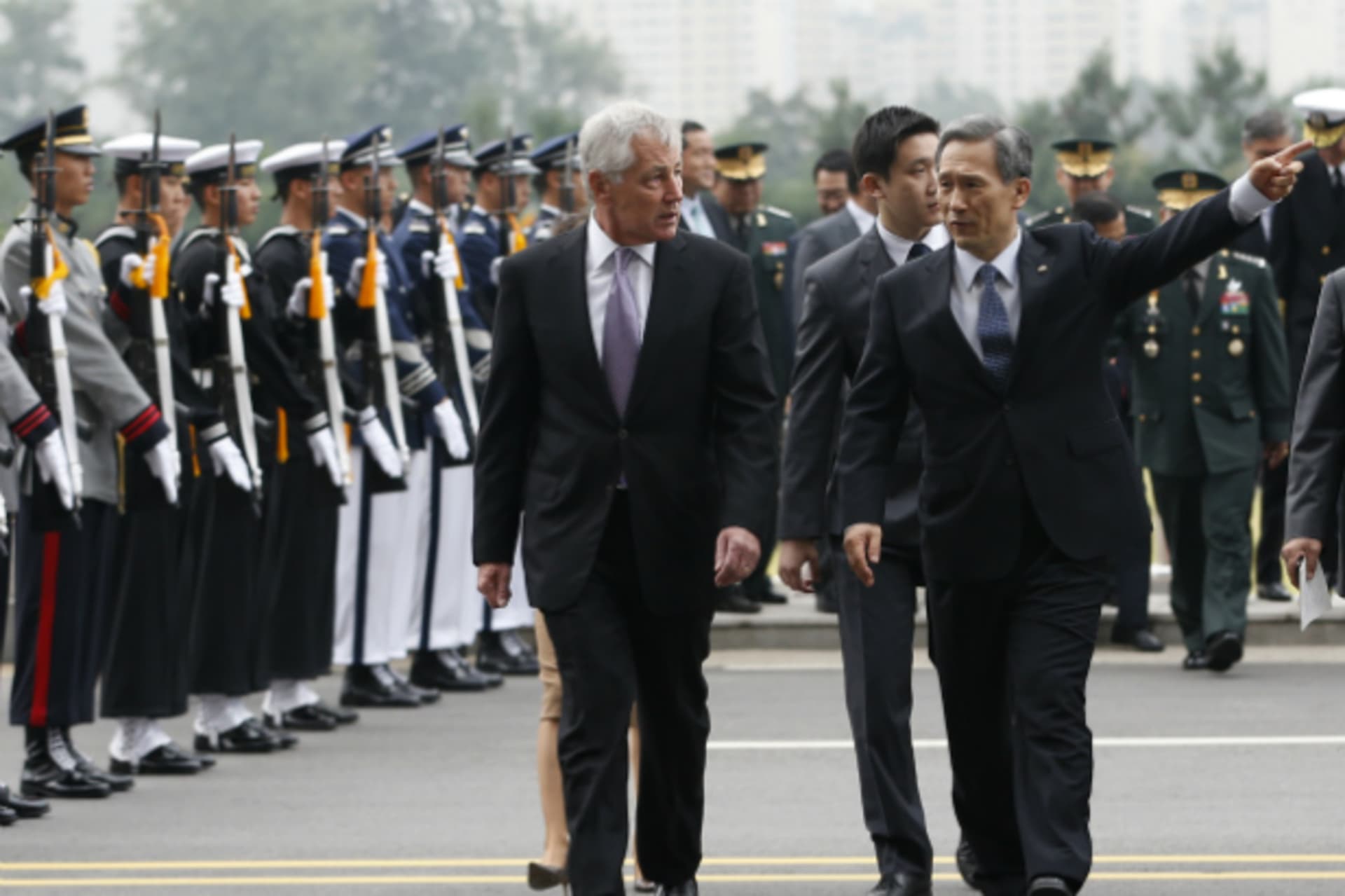
Defense Secretary Chuck Hagel spent four days in South Korea this week feting the sixtieth anniversary of the U.S.-ROK alliance, observing one the biggest South Korean military parades in a decade, and providing new direction to the alliance through a meeting with President Park Geun-hye and through his participation in the annual Security Consultative Meeting (SCM) with his South Korean counterpart. Secretary Hagel’s activities and the SCM highlighted the following main accomplishments and challenges for the alliance at sixty.
The U.S.-ROK alliance at sixty is considerably stronger than it was at fifty. Ten years ago, the alliance was looking backward more than forward, and the “tripwire” concept that dedicated U.S. forces to the single mission of deterring North Korea was widely viewed by Bush administration officials as out of sync with a world in which multiple and possibly unexpected security challenges put a premium on flexibility and mobility. The departure of a U.S. combat brigade stationed in South Korea for Iraq symbolized possible U.S. withdrawal and South Koreans demonstrated in the streets against U.S. Forces Korea (USFK)’s handling of a traffic accident that resulted in the death of two South Korean schoolgirls. Today, an air cavalry squadron that recently left Iraq has been deployed to South Korea to bring the Second Combat Brigade back to full strength, South Korean public support for the alliance is well over the 70 percent level, and the United States and South Korea have deepened and broadened coordination to meet both North Korean threats and challenges off the peninsula “as active strategic partners—both here on the Korean Peninsula, and around the world.”
Media reporting from the SCM shows that South Korea and the United States have indeed recognized that North Korea now has a viable nuclear weapons capability, but the consequences of that recognition—including developments in the alliance catalyzed by North Korea’s third nuclear test last February—are directly contrary to North Korea’s interests and objectives. Rather than accepting or allowing North Korea to benefit from its nuclear development, the allies have responded firmly with a “tailored deterrence strategy” that entails the use of all available military assets to launch a preemptive strike against North Korean if there are signs of an imminent nuclear attack by Pyongyang. This strategy aims to counter perceived political and military advantages North Korea may try to gain from its nuclear and missile capabilities. ROK President Park Geun-hye has been unequivocal in her commitment to South Korea’s self-defense, stating that “the genuine value of the military lies not in waging war, but on deterring war . . . I will make the North Korean regime recognize that the nuclear arms and missiles it has been constantly pursuing are no longer useful.”
Despite the U.S. government shutdown and other Washington antics, Secretary Hagel’s presence in Northeast Asia has provided an important symbol of assurance to allies that U.S. security commitments in Northeast Asia are enduring. North Korean brinkmanship and bluster last spring served to bracket U.S. commitments in Asia from many effects of sequestration. U.S. longstanding commitments to the region are being updated in response to North Korea’s evolving threat capabilities.
Activities of the past few days have also exposed some perennial challenges in the alliance relationship that both sides must continue to manage closely, including the following: