The Danger of Renewed U.S. Interest in the GERD
In a region already crowded with external actors, the U.S. risks escalating tensions.
By experts and staff
- Published
 Michelle GavinCFR ExpertRalph Bunche Senior Fellow for Africa Policy Studies
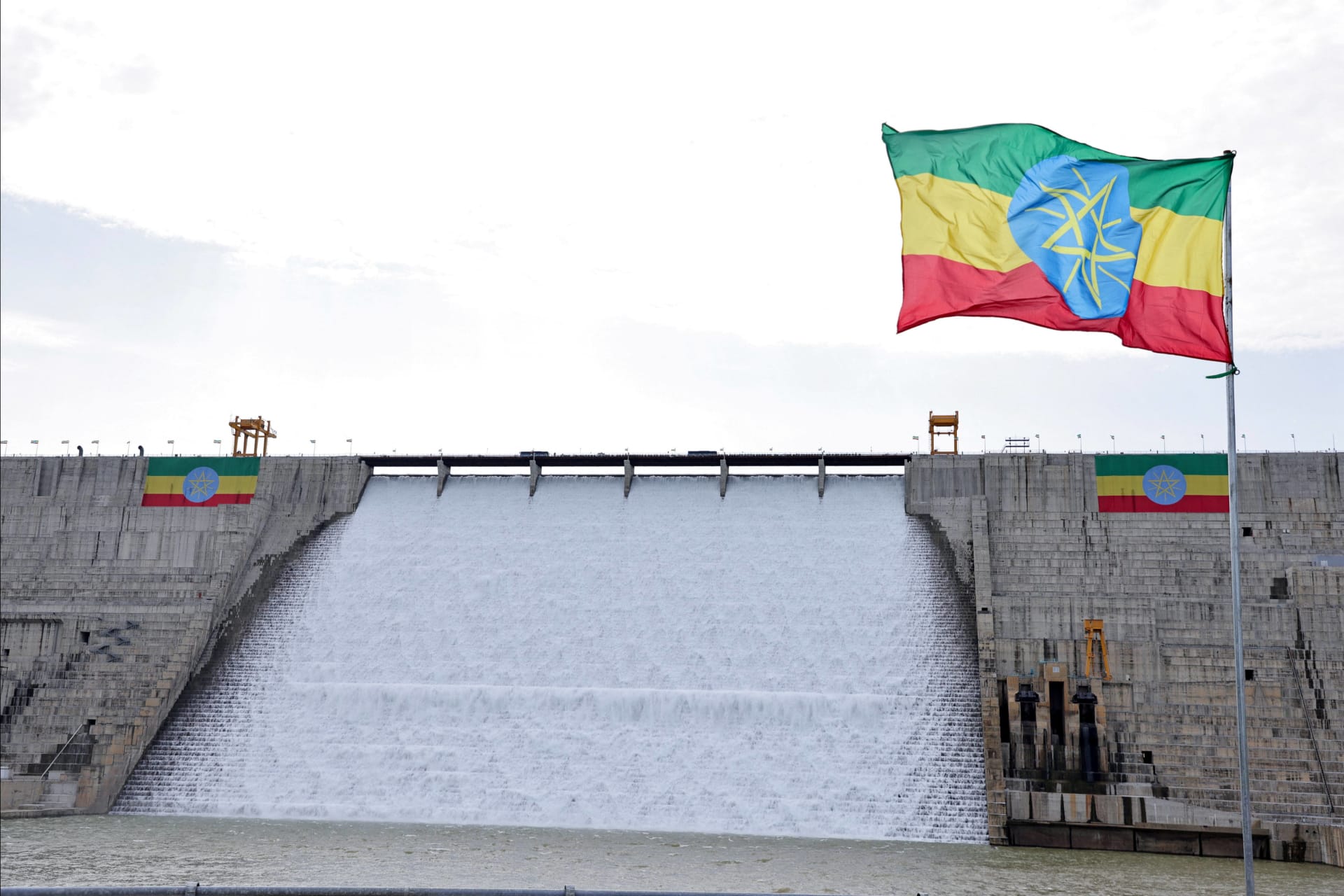
On Friday, President Trump sought to re-energize U.S. efforts to mediate the dispute between Egypt and Ethiopia regarding the Nile waters with a letter to Egyptian President al-Sisi. Longstanding disagreements over water allocation, which had been governed by a 1959 agreement between Egypt and Sudan that simply excluded Ethiopia and other riparian states, have come sharply into focus since Ethiopia constructed the Grand Ethiopian Renaissance Dam (GERD), a hydropower project that is vital for development in the energy-starved country of over 110 million people. Egypt, which relies on the Nile as its primary fresh water source, sees a GERD operating at the discretion of Ethiopian authorities as an existential threat to its population.
An agreement would be far preferable to the mutual suspicion and periodic saber-rattling that characterizes Egypt-Ethiopia relations now. But the U.S. is not perceived as an honest broker when it comes to the GERD. It’s not surprising that Sisi welcomed the White House’s engagement, since during Trump’s first term, the U.S. proposed an agreement that was acceptable to Egypt but not Ethiopia, and President Trump echoed Egyptian threats of using military force to destroy the dam. It’s also easy to understand why General Burhan, who leads the Sudanese Armed Forces’ coalition in Sudan, was equally welcoming. The SAF relies on Egyptian support in its disastrous conflict with its former comrades-in-arms, the notorious Rapid Support Forces.
But for these very reasons, the U.S. initiative may be less welcome in Ethiopia. Pride in the GERD is one of the most unifying sentiments in the country, and with multiple ongoing insurgencies and rising tensions with Eritrea and Somalia, Prime Minister Abiy needs all the unity he can get. His drive for access to the sea, and his government’s close relationship to the United Arab Emirates, have temporarily united a range of forces focused on containing Ethiopian ambitions. Somaliland’s long quest for recognition has become a venue for competition as well, and the Saudi-Emirati rift, with Egypt squarely in the Saudi camp, is part of the backdrop for this renewed GERD focus.
Bizarrely, the Nile waters dispute has been among the “wars” Trump claims to have ended in his first year in office. It’s clear that his desire to declare victory bows to no chronology or reality. But with so many forces jockeying for position in the already fragile Horn of Africa, bulldozer diplomacy risks crossing lines and triggering a logic of escalation. The worst suffering will be endured by Africans, whose interests are too often treated as afterthoughts by the many external powers eager to strengthen their influence in the Horn.