The Lessons of the Fall of Saigon
U.S. foreign policy traveled a different path than many Americans expected after the fall of South Vietnam.
By experts and staff
- Published
 James M. LindsayCFR ExpertMary and David Boies Distinguished Senior Fellow in U.S. Foreign Policy
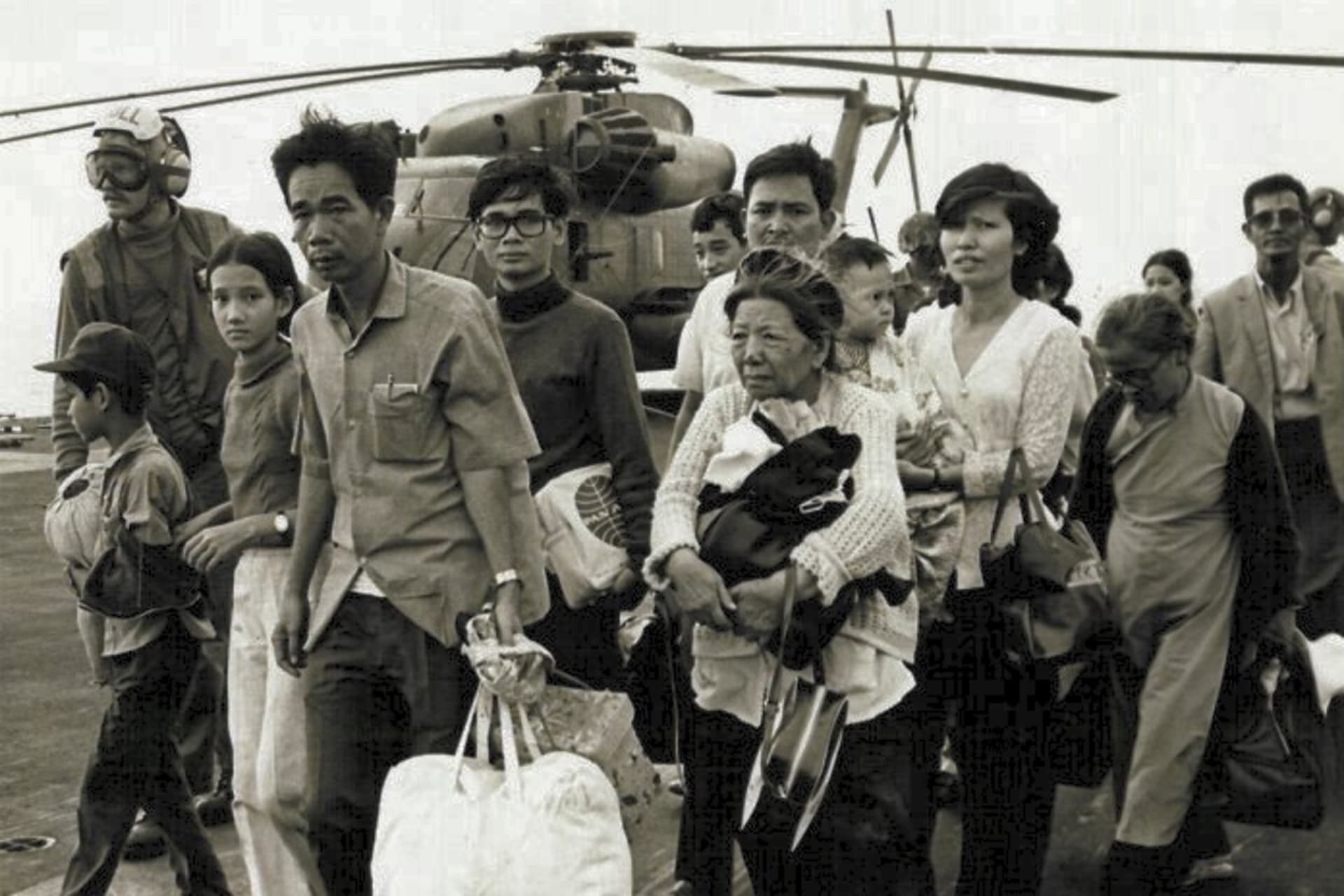
On April 30, 1975, the last U.S. forces left Saigon. By nightfall, North Vietnamese troops had seized control of the city. South Vietnam ceased to exist. The more than decade-long U.S. effort to communist expansion in Southeast Asia ended in abject failure.
Anyone who lived through America’s exit from Vietnam—or who has relived it through the histories, memoirs, novels, movies, and documentaries about the war—knows that it was a chaotic, ugly, and humiliating defeat for the United States. It is hardly surprising, then, that a recent survey I conducted on behalf of the Council on Foreign Relations with members of the Society for Historians of American Foreign Relations ranked the Gulf of Tonkin Resolution as the ninth-worst foreign policy decision in U.S. history and the decision to commit U.S. combat troops to Vietnam as the second worst.
What does the fall of Saigon have to teach us more than a half century later?
The Lessons of Vietnam
The Vietnam War highlighted many of the pathologies that can shape the making and implementation of U.S. foreign policy. The temptation to exaggerate threats. The refusal to recognize the limits of what military force can accomplish. The failure to recognize the power of nationalism. The overestimation of America’s staying power. The perils of misleading the public. The list goes on.
But the fall of Saigon also teaches an important lesson about how to think about the future—a lesson that is worth considering today as experts debate and predict where U.S. foreign policy is headed. Simply put, the future often surprises us.
The Weight of Pessimism
The consensus in the United States a half-century ago was that Vietnam had dealt a grievous blow to U.S. foreign policy, one from which the country might not recover. Much of the argument for keeping troops in South Vietnam after the Tet Offensive in 1968 rested on a perceived need to protect American credibility. A quick withdrawal would signal that the United States could not or would not protect its allies when push came to shove. U.S. adversaries would take that as a reason to act more aggressively.
The pessimism that gripped the United States in April 1975 is easy to understand. Washington had wound down its presence in Vietnam grudgingly and slowly, and only after vehement protests at home tore at the nation’s social fabric and bad economic policy had triggered stagflation. Nearly sixty thousand Americans had died. Hundreds of thousands of Vietnamese did as well. Cambodia would soon become a killing field. The Soviet Union and China seemed to be ascending. Arguments for optimism were hard to find.
A Surprising Turn of Events
The thing is, history traveled a different direction than predicted. Four years after the fall of Saigon, China was at war with Vietnam, and the Soviet Union had begun its calamitous occupation of Afghanistan. Ten years out from Saigon, it was “morning in America,” and the United States was the dominant power in Asia. Sixteen years out, the Soviet Union joined South Vietnam on the ash heap of history. Two decades after Saigon’s fall, the United States established normal diplomatic relations with Vietnam’s communist government, and Beijing was buying the treasury notes that helped Washington finance its persistent deficits.
Vietnam, it turned out, had not been a vital U.S. interest as policymakers and pundits had insisted for years. The mistakes that successive administrations had made were repaired. Rival powers made their own mistakes. Developments that no one foresaw scrambled everything.
Looking Ahead
Our inability to see clearly into the future is worth keeping in mind today as the mood turns pessimistic on what comes next for U.S. foreign policy. The United States has blundered into a war with Iran that has no easy out. The axis of autocracies gains strength as Beijing, Moscow, Pyongyang, and Tehran increasingly cooperate with each other. U.S. alliance relations are strained, and many allied publics see the United States as a greater threat to their security than Beijing.
To suggest that the future will surprise is not to argue that things will invariably work out for the better. As my former boss Richard Haass likes to quip, “things always get darker before they go totally black.” Events can surprise to the downside as well as to the upside. Americans years from now might look back at 2026 as the calm before the storm.
Rather, the reason to note that “it is tough to make predictions, especially about the future,” as Yankee legend Yogi Berra once put it, is to warn against defeatism. History is neither linear nor preordained. The future will provide opportunities as well as challenges. The test for the United States will be whether it can make the most of them, as it so often has done in the past.
The United States celebrates its 250th anniversary in 2026. To mark that milestone, I am resurfacing essays I have written over the years about major events in U.S. foreign policy. A version of this essay was published on April 30, 2011.
Oscar Berry assisted in the preparation of this article.