The Trump-Xi Summit: What It Means for Southeast Asia and South Asia
A long-awaited meeting produced modest stability but no grand deals—for Southeast Asia and South Asia, it could have been worse, but the region has reacted with significant worry about the summit’s outcomes.
By experts and staff
- Published
 Joshua KurlantzickCFR ExpertSenior Fellow for Southeast Asia and South Asia
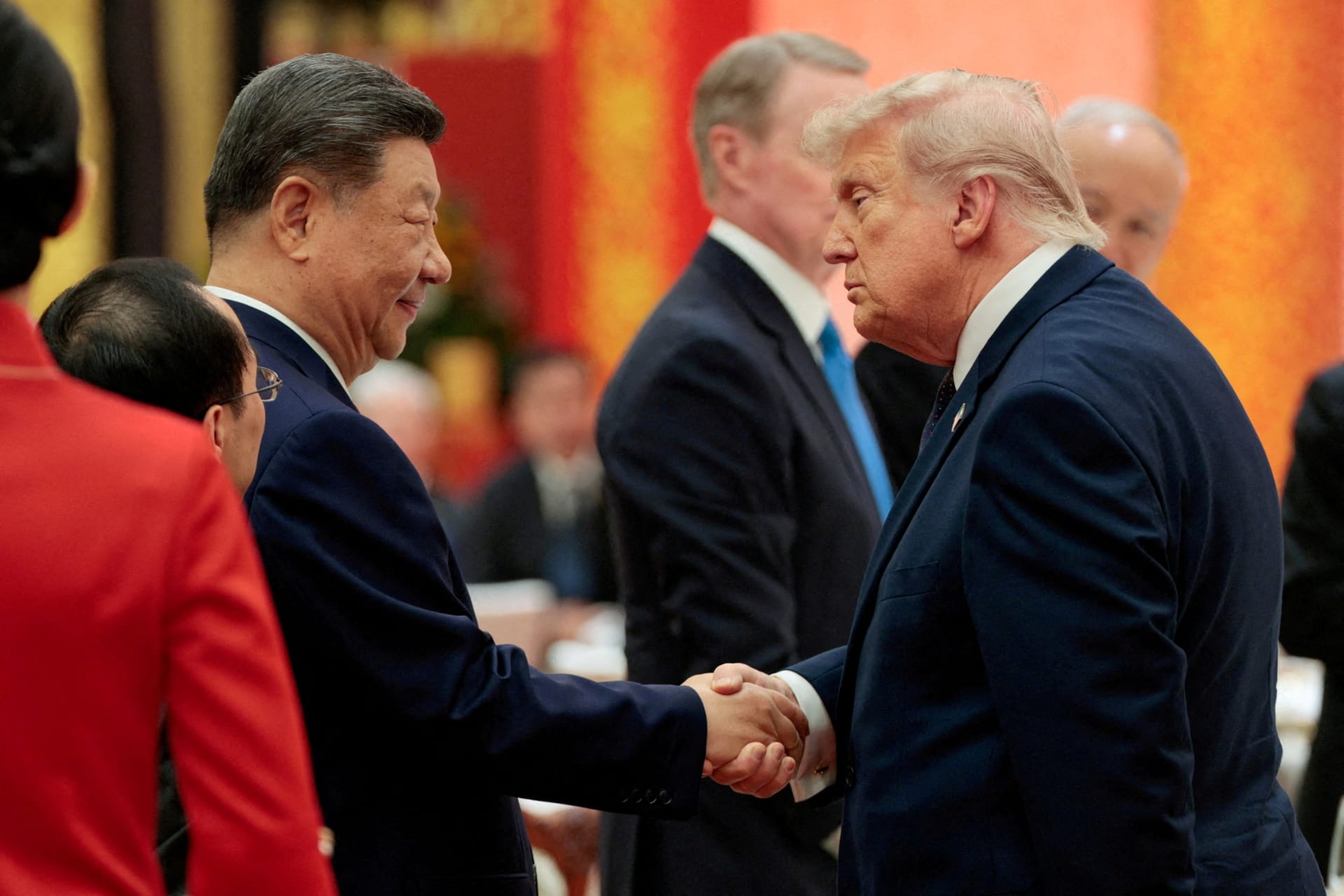
The summit in Beijing turned out to be—from the perspective of Southeast Asia and South Asia, at least— not totally disastrous. That the summit happened at all mattered. After nearly a year of canceled and delayed leader-to-leader contact, the fact that Trump and Xi actually sat across from each other in Beijing was itself a signal that the world’s most consequential bilateral relationship had not completely come off the rails, which is critical to Southeast Asian states.
The summit produced very modest substance, but it also did not damage Southeast Asian exporters by the two giants making a trade deal that cut out Southeast Asian states. Prior to the summit, that was one of Southeast Asian states’ biggest worries about what might happen.
That said, most Southeast Asian and South Asian states were fairly to extremely disappointed with the results of the Xi-Trump meeting. Despite Trump claiming that Xi wants to help keep the Strait of Hormuz open and is opposed to any tolling of it, there is no indication China actually committed to this. Indeed, China’s readout did not mention Iranian tolls, Iran is already setting up a new system to collect money from transiting ships, it has started letting stranded Chinese supertankers pass through the Strait again, and there is some evidence Beijing is paying Iran fees for “environmental upkeep” of the Strait, a de facto toll.
As a result, Iran could continue tolling the Strait indefinitely. Such a situation would prolong the energy crisis in Asia that is potentially pushing regional states into recession and causing them to take dramatic measures to cut energy usage, causing widespread popular anger. It also, as I have noted, could lead Southeast Asian states to reconsider whether ships should be free to sail through the valuable Strait of Malacca without paying any toll, causing significant regional instability.
Just the fact that no real progress was made toward ending the Iran war has seriously angered Southeast Asian leaders and consumers, already amidst their worst energy crisis in decades. Southeast Asia is one of the regions of the world most dependent on LNG from the Gulf. Throughout the region, many countries’ emergency stockpiles of oil and gas are running low, electricity blackouts are happening, consumers are panicking and not spending money, and governments are being forced to decide whether to maintain costly fuel subsidies or pass spiraling energy costs onto their publics. The subsidies already have strained budgets, blowing holes in Southeast Asian and South Asian states’ fiscal limits.
With nothing achieved on Iran at the Beijing summit, and Trump threatening more intense strikes on Iran, Southeast Asian and South Asian states are preparing for an even longer conflict – one that could cause a second, even bigger energy shock, with far higher inflation and greater damage to populations. Now that regional states have already run through most of their short-term “fixes” for fuel shortages, which were predicated on the idea that the war would be relatively short, they are left with few other answers. As the Associated Press recently reported: “About 8.8 million people [in the region] are in danger of being pushed into poverty and the conflict may cause $299 billion in economic losses to the Asia-Pacific region, according to the UN Development Program (UNDP). ‘The countries with the least resources to respond, or the consumers who can least afford to pay, are the ones who feel everything first,’ said Samantha Gross of the U.S.-based think tank Brookings Institution.”
Many Southeast Asian and South Asian states also were extremely worried by Xi’s new term for the U.S.-China relationship: “constructive strategic stability.” Trump appears, according to many outlets, to basically have agreed to this revamped framing, from the Biden administration’s framing of “strategic competition.”
Regional states, like Indonesia, already are openly worrying that their biggest concerns—the South China Sea, trade deals, other disputes with China—will be managed by Washington and Beijing together, cutting out Southeast Asian countries altogether. Even regional giants like Japan were frightened by this new construct, worried that their views on important regional issues like Taiwan, which Japan has all but committed to defending, could now be ignored by both Xi and Trump.
Indeed, Southeast Asian states fear that Trump’s increasingly amenable approach to China will further embolden Beijing to militarize and dominate the South China Sea and other regional waters. As Rameen Siddiqui of Modern Diplomacy notes: All of President Trump’s “needs [from China, on Iran, tariffs, and other issues] point toward concessions [by the White House], and the concessions most available are ones that matter enormously to Southeast Asia: reduced American pressure on Chinese South China Sea behavior … and an implicit acknowledgment that Beijing has primacy in its immediate neighborhood.” Add to this the possibility, as Trump has suggested, that he will use arms sales to Taiwan, already approved by Congress, as a bargaining chip, a move no U.S. president has made before, and regional states have become further scared.
Without U.S. rhetorical backing and U.S. freedom of navigation patrols in the South China Sea, which could lessen or be abandoned, Southeast Asian states would be on their own, and could hardly hope to match China’s massive navy. What’s more, the White House’s inconsistent commitment to maritime freedom of navigation overall—proposing a plan to collect tolls along with Iran in the Strait of Hormuz, for instance—adds to Southeast Asian states’ discomfort after the summit.
Then there was the fact that the two giants made no substantial progress on issues related to artificial intelligence (AI) or China’s export controls on rare earths. (China refines over 90 percent of the world’s rare earths.) Without any agreements, Southeast Asian states remain stuck between competing U.S. and Chinese technology platforms reliant on AI, making it nearly impossible for regional companies to make long-term plans about which AI platforms to use and how to use them.
In addition, the lack of any real deal on rare earth export controls will, for now, force South Asian and Southeast Asian companies to continue scrambling to obtain the minerals, as they have been since last fall. These companies thus will face further uncertainty, in a regional economic environment that, because of the Iran war, is already possibly the worst since the Asian financial crisis of 1997-98, with several states projected to fall into recession.
Some regional companies (and governments) are working on creating alternative supply chains to obtain rare earths. But these will take time to establish, and in the meantime, regional companies, economies, and consumers will suffer.
To be sure, Southeast Asian and South Asian states had not been sitting still, waiting for the world’s giants to decide their future. Long before Trump’s plane landed in Beijing, governments across the region had been rapidly diversifying their trade and investment partners. The European Union recently signed a new pact with Indonesia and is planning to finalize deals with Thailand, Malaysia, and the Philippines by next year. Vietnam, meanwhile, has been pursuing exploratory trade alignments with Mercosur, the South American bloc, as part of a deliberate push to build a massive portfolio of free trade agreements (FTAs). And there is renewed momentum around expanding the number of Southeast Asian states in the Comprehensive and Progressive Agreement for Trans-Pacific Partnership.
But even this diversification will not be enough, given the energy crisis, rare earths shortages, disconnects over AI—and the possibility that the U.S.-China trade truce could break down again. While a truce between the two sides over escalating tariffs remains in place until November 2026, there is no guarantee that a tariff war will not resume, especially with unpredictable leadership in Washington.