The Protectionist Turn

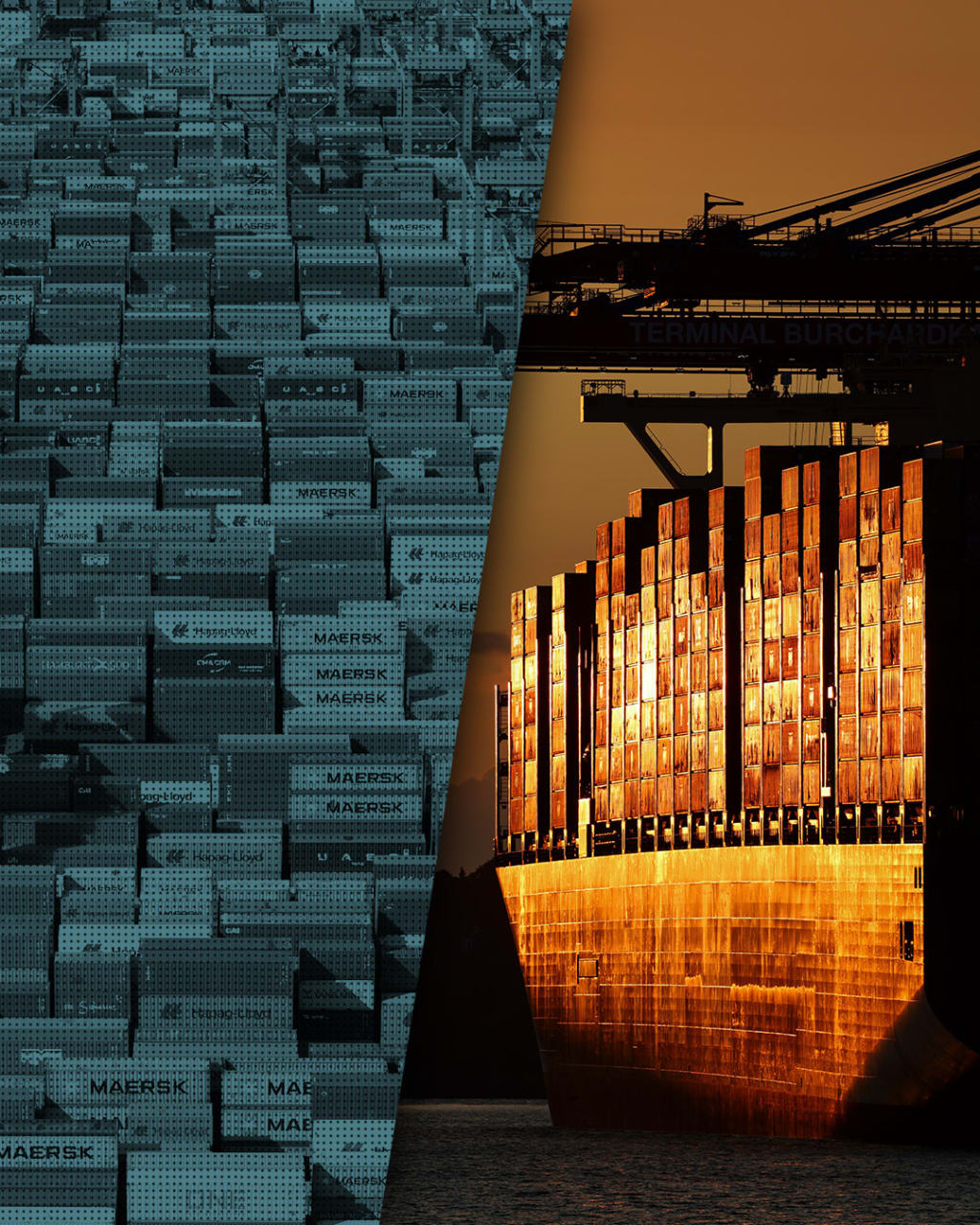
In 2016, Donald Trump surged to the presidency on the back of popular anger over deteriorating economic prospects in the upper Midwest and the so-called Rust Belt. Over the previous fifteen years, jobs in those electorally significant communities had been lost to factories in China, concentrating in industries such as furniture, textiles, apparel, electronics assembly, and metal goods. The phenomenon became widely known as the China shock.
Politically, the moment was ripe for a change in U.S. trade policy that would address popular anger by sheltering U.S. manufacturers from Chinese competition—particularly from those competitors abetted by Beijing’s export and financing supports.
Following his inauguration in 2017, Trump imposed sweeping tariffs on Chinese imports, levied mainly under the authority of Section 301 of the Trade Act of 1974. This raised the average effective tariff rate to almost 3 percent by 2019.
Tariffs are taxes paid by American importers. By 2019, the average tariff on Chinese goods had risen from about 3 percent to 20 percent, covering some $360 billion worth of imports. Although some of that cost was passed on to U.S. consumers in the form of higher prices, a large majority of Americans deemed Chinese trade practices unfair, and a plurality supported the tariff policy.
During the 2020 presidential campaign, Joe Biden criticized the tariffs as economically harmful. Yet as president, he maintained the bulk of them, issuing only some targeted exclusions. Tariffs thus emerged as a durable, bipartisan pillar of economic policy toward China.
But Trump’s return to office in 2025 brought with it a global expansion of tariff policy. Invoking the 1977 International Emergency Economic Powers Act (IEEPA), Trump claimed sweeping authority to impose tariffs on any nation’s exports at any level for any length of time. He began levying them at rates beginning at 10 percent, four times the prior average.
He then negotiated bilateral trade and investment deals, exchanging slightly lower tariff rates for disproportionate concessions on tariffs, as well as pledges to invest in the United States. Those deals skirted the congressional ratification required when formal trade agreements involve changes to U.S. law or binding obligations.
The Supreme Court struck down the IEEPA tariffs in February 2026. But the Trump administration, having anticipated the decision, has moved expeditiously to reintroduce them under alternative legal authorities based on “national security,” “unfair trade practices,” and “balance of payments” concerns. The last of these authorities—based on “balance of payments” concerns—is once again being challenged in court.
China’s share of total U.S. imports has fallen from a high of 22 percent in 2017, the first year of Trump’s first term, to about 8 percent—its lowest level since China joined the World Trade Organization in 2001. But the overall U.S. trade deficit, in spite of the new global tariffs, barely budged last year—clocking in at just over $900 billion.
Trump has stated repeatedly and falsely that it is foreign countries—and not American consumers—that pay the tariffs. The American public, however, is progressively coming to understand that tariffs are responsible for higher prices on everything from household items to automobiles. With midterm elections coming in November, the administration is likely to issue exemptions to firms importing popular consumer goods and the raw materials used to make such goods. The current average effective tariff rate, now roughly 11 percent, should therefore fall somewhat.
Longer term, however, Trump has likely ushered in two major and durable changes in U.S. trade policy. First, future presidents, irrespective of party, are unlikely to return to Congress the tariff-setting and deal-making powers that Trump has asserted for the executive branch. This is likely to make U.S. trade policy considerably more volatile.
Second, the WTO, created in 1995 to set and administer global trade rules, is unlikely to regain the authority that Trump effectively stripped from it in his first term. In 2017, he began refusing to allow the appointment or reappointment of judges to the system’s Appellate Body, ending the enforceability of dispute-settlement panel decisions. Biden continued this policy, and the body has been inquorate since 2019.
Trump’s many bilateral deals have also eroded the bedrock WTO principle of most favored nation (MFN) status for all members—whereby any trade advantage granted by one member country to another must be extended immediately and unconditionally to all others. Trump’s deals not only depart from the MFN principle but have forced U.S. counterparts to do the same. Many countries have also followed the U.S. lead in justifying new trade barriers by claiming a national security rationale, thereby placing them beyond the effective purview of the WTO. This development appears permanent, suggesting little if any role for the WTO in setting and enforcing trade rules going forward.
Over the coming decade, the domestic political dynamics that produced these enormous changes are unlikely to reverse. U.S. trade policy is therefore likely to remain more discretionary, more bilateral, and more closely tied to broader strategic and economic objectives than in the pre-Trump era. The European Union, China, and other major trading nations are likely to mirror this shift.
Still, a multilateral trading system on a smaller scale could be revived under a future presidency, and there is a historical precedent it could follow. The 1947 General Agreement on Tariffs and Trade (GATT), which governed multilateral trade until its 1995 reincarnation as the WTO, made enormous progress in lowering tariffs over nearly five decades. And it did so in a way that would be congruent with the new reality on trade.
With the GATT, unlike with the WTO, the United States insisted on the compatibility of members’ policies with the principles of a market-driven economy. The cost of this insistence was that the GATT began with only twenty-three members. The benefit was that the Soviet Union, which refused to accept limitations on export subsidies and other trade distortions, declined to join, thereby excluding from the club a country that would have undermined the institution through unfair practices.
With the WTO, the United States aspired to universality and therefore allowed China in without a clear path to its transformation into a market economy. China’s economy is now fourteen times larger than in 2001. The systematic overcapacity induced by Beijing’s direction and subsidies has made it increasingly difficult for open trade to operate without the United States and other Chinese trading partners acceding to their own unlimited deindustrialization. A future, pro-trade-minded administration could therefore look to recreate a GATT among a WTO subset of genuine market economies—that is, excluding China. Such a development would square the circle of supporting U.S. global competitiveness, aiding affordability, and preventing job loss to unfair foreign trade practices.
More from the Future of American Strategy >>