The Tampico Incident and the U.S. Invasion of Veracruz
A misunderstanding over a gasoline purchase led President Woodrow Wilson to order U.S. forces to seize Veracruz, Mexico.
By experts and staff
- Published
 James M. LindsayCFR ExpertMary and David Boies Distinguished Senior Fellow in U.S. Foreign Policy
Karl Marx wrote that history repeats itself, “the first time as tragedy, the second as farce.” But some historical events combine elements of both. Just consider the Tampico Incident, which occurred on April 9, 1914.
The Mexican Revolution
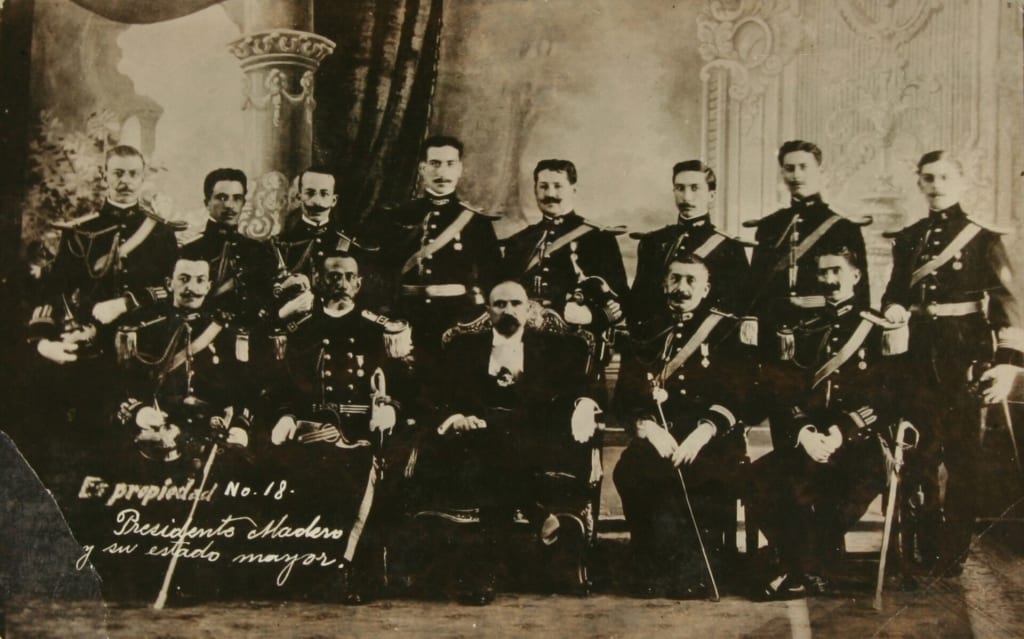
Mexico was in the throes of a civil war in 1914. Three years earlier, longtime Mexican dictator Porfirio Díaz was ousted from power by forces loyal to Francisco Madero, the scion of one of Mexico’s wealthiest families. Madero, however, lacked the political skills needed to keep his coalition intact and his enemies at bay. In February 1913, he was forced to resign by General Victoriano Huerta and then murdered. Huerta made himself president. Like Madero, he found power easier to seize than to keep. A civil war soon erupted.
As April 1914 started, Huerta loyalists were defending the port city of Tampico against attacking revolutionary forces. Located 250 miles south of Brownsville, Texas, on the Gulf of Mexico, Tampico was packed with foreign citizens who had sought refuge from the fighting. Many of them were Americans who worked in Mexico’s oil industry. Several U.S. warships had docked at Tampico to evacuate U.S. citizens should it be necessary. Rather than calming the waters, the deployment roiled them.
A Failure to Communicate
On the morning of April 9, nine unarmed sailors departed the USS Dolphin on a whaleboat to pick up cans of gasoline in Tampico. Things quickly went awry. Unbeknownst to the Americans, the warehouse they were visiting was in an area of the city off-limits to foreigners. Once the sailors docked, they were arrested. In what could be a metaphor for U.S.-Mexican relations more broadly, the two sides did not understand each other. The American sailors spoke no Spanish, and the Mexican soldiers spoke no English.
News of the arrests quickly reached the soldiers’ commanding officer, Colonel Ramón Hinojosa. The last thing he wanted was a confrontation with the U.S. Navy. He immediately ordered the U.S. sailors released and allowed them to resume loading their boat while he awaited word from his commanding officer, General Ignacio Morelos Zaragoza, on what to do next. Meanwhile, the warehouse owner informed the Dolphin of the arrests.
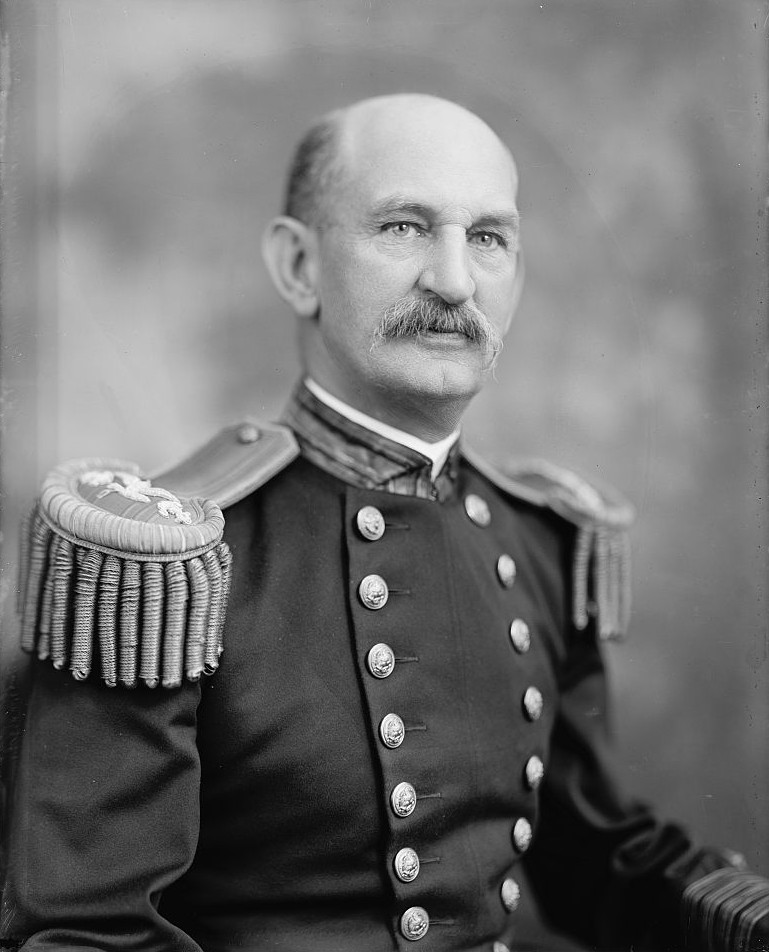
Admiral Henry Mayo oversaw the U.S. naval forces at Tampico. He was known to his colleagues as an officer who “does what he thinks is right, and as a rule he does not lose a lot of time doing it.” He quickly sent Captain Ralph Earle and the local U.S. consul Clarence Miller to meet with Morelos Zaragoza. The general apologized immediately and profusely.
National Honor and Twenty-One Gun Salutes
The incident should have ended there. But it didn’t. Mayo remained incensed. He fixated on the fact that two of the U.S. sailors were on the whaleboat when they were arrested. Because it was flying the U.S. flag, Mayo equated the sailors’ arrest to their having been abducted from U.S. soil.
Mayo deemed Morelos Zaragoza’s oral apology insufficient for such disrespect. He wanted to send a message to Mexico that the United States should not be trifled with. So later that day, he sent Morelos Zaragoza a message stating that he had twenty-four hours to “publicly hoist the American flag in a prominent position on shore and salute it with twenty-one guns.” If the Mexicans agreed, the United States would respond in kind.
Morelos Zaragoza rejected Mayo’s demand as unreasonable, a view that Miller, the U.S. consul, shared.
Enter Woodrow Wilson
Cooler heads might have prevailed if the matter had remained confined to Tampico. But news of Mayo’s demand reached Secretary of State William Jennings Bryan. Rather than nipping the dispute in the bud, the “boy orator of the Platte,” as Bryan was known, informed President Woodrow Wilson of the incident.
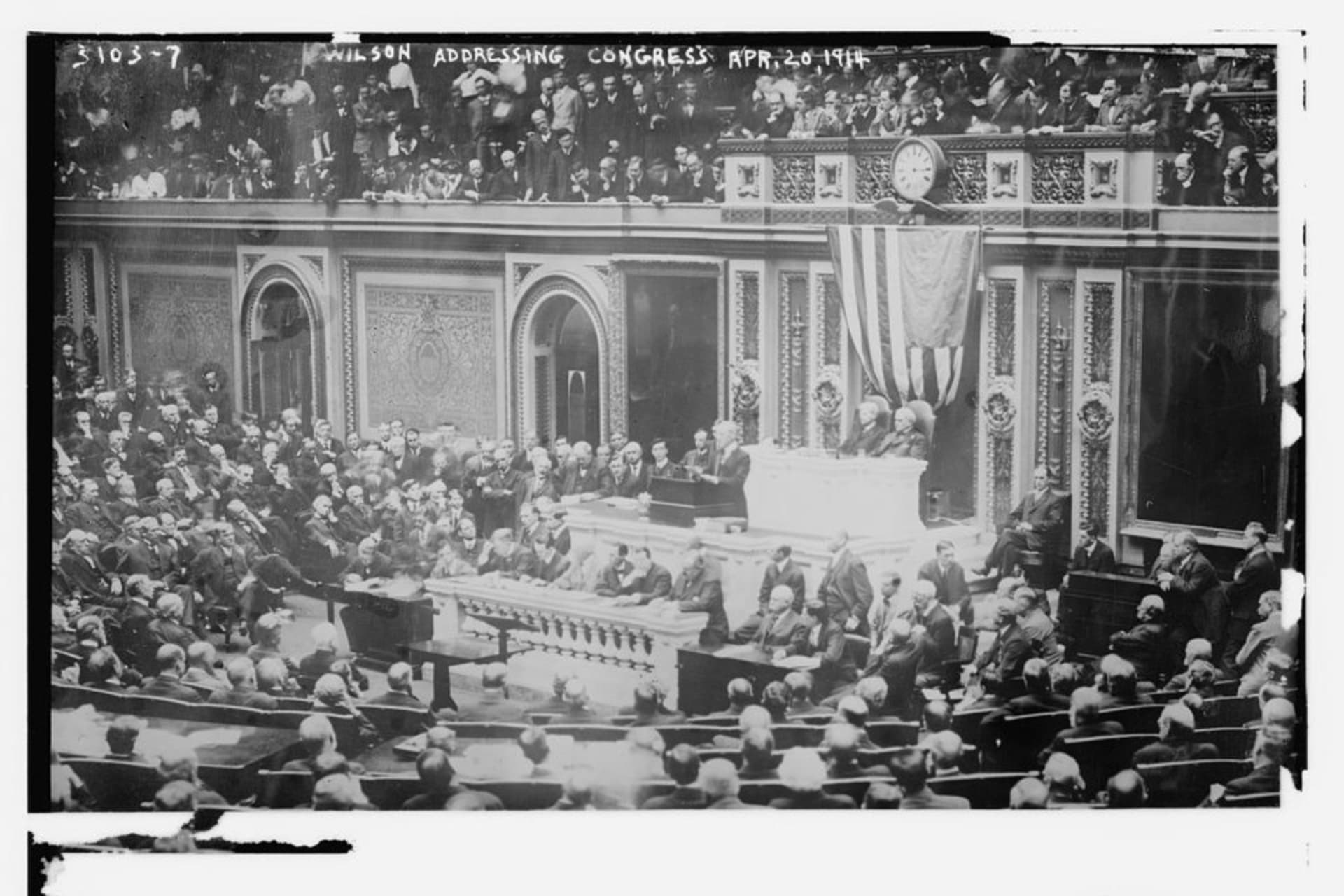
Wilson was enjoying a leisurely weekend away from Washington with his family in White Sulphur Springs, West Virginia, when the news arrived. He had already been looking for an opportunity to push Huerta from power. The moralizing Wilson despised Huerta, seeing him as despicable and cruel. Indeed, Wilson had terminated U.S. diplomatic relations with Mexico City upon taking office a year earlier because he refused “to recognize a government of butchers.” As Wilson told the British ambassador to the United States, “I am going to teach the South American republics to elect good men.” Now Wilson had his reason to act. He backed his thin-skinned admiral.
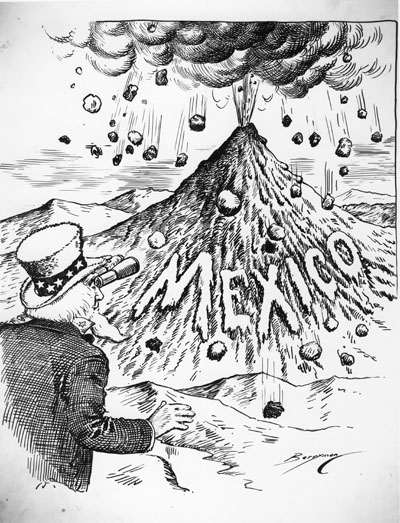
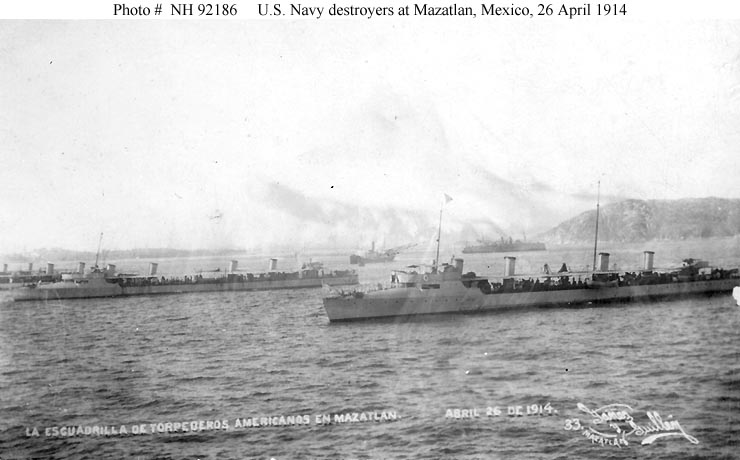
The Mexicans responded with a compromise—a simultaneous salute by both countries. Wilson rejected it. On April 18, he issued an ultimatum: Mexico would salute the American flag or suffer the consequences. Huerta refused. Three days later, 800 American sailors and marines landed at Veracruz, 240 miles southeast of Tampico, purportedly to stop an arms shipment destined for Huerta’s forces but primarily to teach him and Mexico a lesson. That invasion left nineteen Americans and several hundred Mexicans dead. It also, at least initially, had the opposite effect than the one Wilson intended. Huerta’s popularity was strengthened rather than weakened.
A Lamentable Legacy
What of the U.S. citizens in Tampico? Once Wilson ordered the invasion of Veracruz, U.S. naval warships sailed south. The Americans in Tampico were left on their own to face the backlash from Mexicans angry at the attack on Veracruz. These Americans were eventually relocated to Galveston, Texas—minus all of their belongings—by British and German warships anchored off Tampico during the crisis.
Admiral Mayo never got his twenty-one-gun salute. At the Niagara Falls Peace Conference, which diplomats from Argentina, Brazil, and Chile mediated, the United States dropped its demand for an apology. Thus ended one of the more lamentable episodes in U.S. foreign policy.
The United States celebrates its 250th anniversary in 2026. To mark that milestone, I am resurfacing essays I have written over the years about major events in U.S. foreign policy. A version of this essay was published on April 9, 2013.
Oscar Berry assisted in the preparation of this article.