The Ultimate Price of Prediction Markets
A recent Department of Justice indictment of a U.S. soldier who bet on the capture of former Venezuelan leader Nicolás Maduro illustrates the national security risks posed by geopolitical event contracts.
By experts and staff
- Published
- Special Assistant to the President and Research Associate
Sam Henry Lazarus is a research associate and special assistant to the President at the Council on Foreign Relations.
In the words of President Donald Trump, “The whole world, unfortunately, has become somewhat of a casino.” So it has—and the American people, including the national security enterprise sworn to protect them, are the marks.
An indictment [PDF] unsealed Friday in the Southern District of New York alleges that an active-duty U.S. Army Special Forces master sergeant used classified intelligence to wager on President Trump’s surprise raid to capture Venezuela’s Maduro.
The case is the first of its kind in the United States, but it won’t be the last. Geopolitical prediction markets offer an unprecedented incentive for national security insiders to leak classified information by wagering on geopolitical contingencies—and they are uniquely transparent venues for adversaries to exploit those leaks. Leading event contract exchange Polymarket runs on a public blockchain and its onshore competitor, Kalshi, operates on a publicly available limit order book. Foreign intelligence services can analyze that trading data just as well as we can and manipulate it just as easily—tipping off the targets of pending U.S. actions, shaping public sentiment, driving desired policy outcomes, tilting elections, or simply ripping off unwitting American counterparties.
The stakes of regulatory inaction are not only monetary, but mortal—and Americans may pay the ultimate price if regulators don’t act.
At the vanguard of this speculative frenzy are Polymarket and Kalshi, of which the president’s son, Donald Trump Jr., is an investor and advisor, respectively. Many of these exchanges, including Polymarket, allow any U.S. citizen savvy enough to use a virtual private network (VPN) and a crypto wallet to wager on coups, air strikes (such as Operation Epic Fury), and invasions.
Had Maduro checked the Polymarket on his own head, he might have seen what a Green Beret sent to capture him already knew. Between December 27 and January 2—the eve of the raid—Master Sergeant Gannon Ken Van Dyke, a U.S. Army Special Forces communications specialist who helped plan and execute Operation Absolute Resolve, is alleged to have quietly staked roughly $33,000 on Polymarket at about 7 cents a share that Maduro would be out of office by January 31. When U.S. forces extracted Maduro from Venezuela’s capital Caracas in the predawn hours of January 3, Van Dyke allegedly reaped more than $409,000 in profit.
The Van Dyke case is hardly unique. Another Polymarket user netted approximately $550,000 on a series of suspiciously well-timed bets tied to U.S. strikes on Iran and the removal of Ayatollah Ali Khamenei. And in February, Israeli prosecutors charged an Israel Defense Force reservist and a civilian with using classified intelligence to wager on the timing of Israel’s June 2025 strikes on Iran.
Trades of this nature are not aberrations; they are these markets working as designed—and their architects know it. Polymarket CEO Shayne Coplan calls his exchange “the global truth machine.” Asked on 60 Minutes whether prediction markets rely on some traders having inside information, he claimed that aggregating closely-held information “is a good thing… it’s sort of an inevitability.” Kalshi CEO Tarek Mansour, for his part, describes his ambition to “financialize everything and create a tradable asset out of any difference in opinion.”
There is merit to Polymarket and Kalshi’s marketing schtick. Policy wonks have long sought to distill the ocean of qualitative forecasts produced by intelligence agencies and the open-source commentariat into high-confidence probabilistic estimates. That ambition is exactly why the Defense Advanced Research Projects Agency (DARPA) created the Policy Analysis Market (PAM) in 2003, a government-backed exchange meant to price Middle East contingencies. Congress shut PAM down days before its planned launch, decrying the initiative as a “federal betting parlor” on terrorism and assassination. Two decades later, private capital has built what the Pentagon could not, but the distillation of truth by the “magic of the price system” comes at a steep cost. And that cost is compounding.
More than $1 billion has been traded on geopolitical prediction markets since 2022, with volume on Polymarket and Kalshi more than doubling year-over-year. As these markets grow more liquid and offer more wagers on geopolitical contingencies, the financial incentive for insiders to trade on non-public information rises—and with it, the risk to national security. All of this is playing out against a backdrop of laissez faire U.S. federal regulation.
After the 2008 financial crisis, the 2010 Dodd-Frank Act updated the Commodity Exchange Act to give the Commodity Futures Trading Commission (CFTC) a new tool: the power to block event contracts it finds “contrary to the public interest” when they involve terrorism, assassination, war, gaming, or activities that are illegal under state or federal law. However, after a 2024 district court ruling in KalshiEx v. CFTC found that contracts on congressional control did not “involve” gaming, the commission has surrendered much of the field—dropping its appeal, permitting Kalshi to list contracts on sports and the tenure of foreign heads of state, and closing its investigations into Polymarket.
Nor has the administration moved effectively to keep U.S. persons off offshore exchanges. Van Dyke allegedly placed his bets not on Polymarket’s domestic affiliate, where such trades would be straightforwardly illegal, but on the company’s high-volume offshore protocol, which the CFTC fined $1.4 million in 2022 on the condition it bar U.S. persons. Polymarket’s apparent lax enforcement of that ban is a core reason the offshore protocol commands such significant market share in geopolitical wagering. That an active-duty warfighter has been charged with trading on classified information through the offshore platform ought to raise concerns.
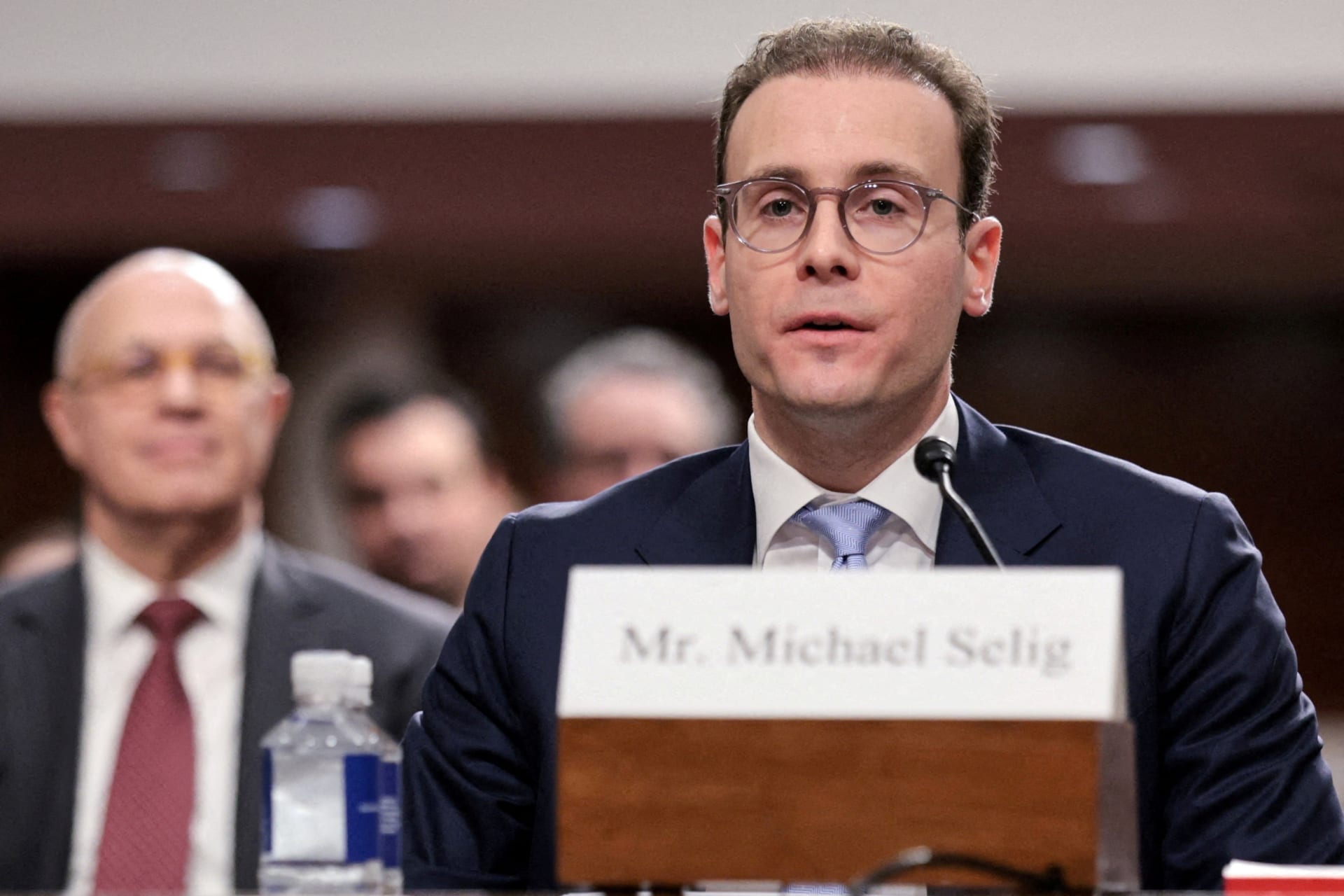
Even so, some trumpet Van Dyke’s arrest as a victory. “Polymarket’s wild west days are over,” the Wall Street Journal declared, heralding “a new era of stricter enforcement.” CFTC Chairman Mike Selig vowed the agency “won’t tolerate” insider trading in event contracts and that anyone who engages in it “will face the full force of the law.” Polymarket’s Chief Legal Officer Neal Kumar proclaimed the indictment “proved just how easy it is to find and charge criminal insider trading when markets are onchain.” These arguments miss the forest for the trees.
By the time a national security insider is caught trading, the damage is done. An unregulated and easily accessible market on Maduro’s tenure should not have existed in the first place. The ultimate enforcement mechanism is preemption. Yet that is precisely the approach regulators have willfully abandoned.
What’s needed is a common-sense regulatory regime—one that preserves the wisdom these markets can aggregate while erecting guardrails around listings, onshore or off, that pose acute risks to U.S. national security. That starts with rigorously enforcing the prohibitions Dodd-Frank wrote into the Commodity Exchange Act, scrapping self-certification in favor of pre-emptive government vetting of new listings, and implementing more robust know-your-customer (KYC) requirements to aid enforcement and keep insiders like Van Dyke out of these markets.
To prevent activity from simply migrating offshore, regulators should seek the voluntary cooperation of foreign exchanges in harmonizing their listing criteria and KYC standards with those of onshore venues. Where cooperation isn’t forthcoming, the government should be prepared to deploy sanctions and other economic security tools to bring offshore exchanges—which rely on U.S. financial infrastructure and U.S. investors—into compliance. Ultimately, the U.S. government may need to mount a coordinated global campaign to ensure regulatory harmonization and close the offshore loopholes that put national security at risk, not unlike the post-9/11 effort to monitor and dismantle terrorist financing networks.
Despite Trump’s conceptual misgivings about geopolitical wagers, the administration does not appear poised to tighten the current regulatory regime. Asked about Van Dyke’s alleged trades, the president mused: “That’s like Pete Rose betting on his own team. Now, if he bet against his team, that would be no good. But he bet on his own team.” Unlike Pete Rose’s wagers, Van Dyke’s alleged bets, which had the effect of leaking classified information, lessened the odds of his team—our team—winning.
This work represents the views and opinions solely of the author. The Council on Foreign Relations is an independent, nonpartisan membership organization, think tank, and publisher, and takes no institutional positions on matters of policy.