India, the United States, and Democratic Values in the International Order
The democracy question is either treated as a bilateral irritant or ignored in the U.S.-India partnership, but democratic values matter to the relationship as a shared structural challenge that extends well beyond either country’s borders.
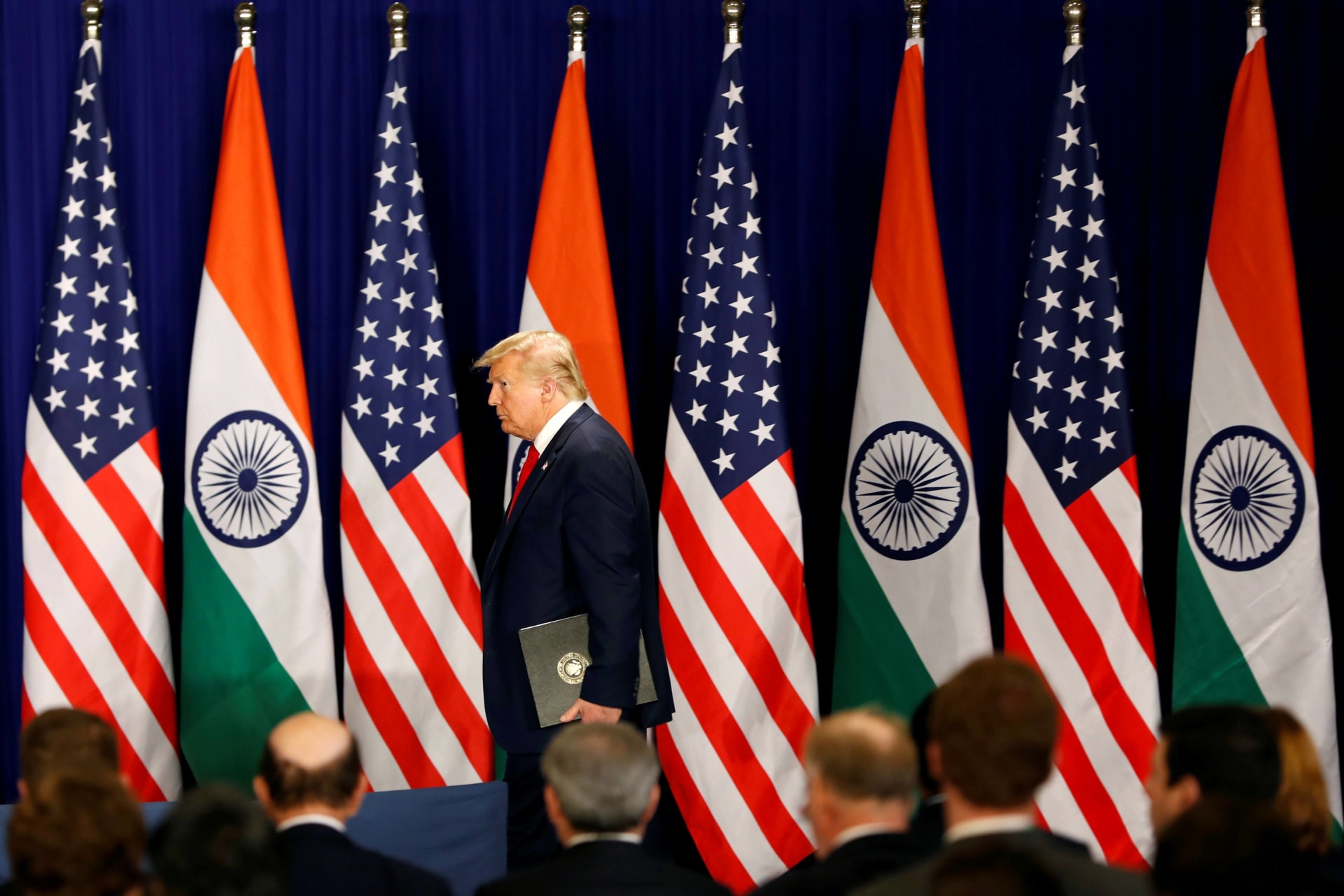
For decades, U.S. policymakers sought a close partnership with India, viewing the world’s largest democracy as a natural ally. Yet a U.S.-India partnership never progressed. Only after the Cold War did a close partnership with the United States became possible. Ironically, their shared democratic identity was not the engine that drove the relationship forward. What pulled Washington and New Delhi into closer orbit was a convergence of strategic interests: the collapse of the Soviet Union (a country India considered a close friend and relied on for defense procurement); a shared concern about China’s rise; cooperation on counterterrorism and economic complementarity; and a shared vision of a multipolar Indo-Pacific. Yet democratic ideology was important as a reassuring background affinity—a source of rhetorical warmth, diplomatic legitimacy, and a belief, at least on the part of the United States, that the two countries ultimately belonged in the same camp.
In recent years, accusations of democratic backsliding in both countries have further diminished the idea of shared democratic beliefs. In India, Prime Minister Narendra Modi’s government has been accused of systematically eroding the country’s democracy. Observers have raised concerns about India’s religious majoritarianism, constraints on press freedom, weakening of judicial independence, and use of state power against civil society organizations. Freedom House now rates the country as “partly free.” Both the first Trump administration and the Biden administration made it clear that such criticisms of India were less important than a strong U.S.-India relationship. Today, the second Trump administration has itself been accused of challenging electoral integrity, degrading domestic institutional norms, and deprioritizing democratic values abroad. And President Donald Trump’s instrumental use of tariffs and economic leverage is now considered a more decisive factor in the relationship than democracy, whether as foreground or background.
The democracy question has been reduced to a bilateral irritant: the United States lecturing India about its domestic politics or even ignoring the issue entirely, or each side accusing the other of blatant hypocrisy. This framing misses something important: democratic values matter to the relationship as a shared structural challenge that extends well beyond either country’s borders. In a world where the liberal international order is fraying, it matters where the two countries genuinely converge or diverge on liberal principles—not just within their own political systems but in the global arena.
The following Council on Foreign Relations (CFR) memos by experts in three countries, part of a larger CFR project assessing India’s approach to the international order in different issue areas, reframe the question of democratic values. Rather than asking how democratic each country is at home, they ask where and how India engages with democratizing norms in the liberal international order—and what that engagement means for the U.S.-India relationship. Each piece examines a different dimension of that order.
Sarang Shidore (Washington, DC) explores Indian leaders’ longstanding push to democratize global governance structures themselves—to make institutions such as the UN Security Council and the international financial institutions more representative of the postcolonial world. He argues that India’s strategy of multialignment, rooted in self-interest rather than ideology, produces both synergy and friction with the United States, and that Washington would be better served by working with that strategy than against it.
Kate Sullivan de Estrada (Oxford, UK) maps India’s engagement with the security architecture of the liberal order—alliances, integration into security communities, crisis management, and nuclear governance. She finds a consistent pattern of selective participation paired with deliberate limits. India is deepening functional cooperation with the United States while advocating for neutral crisis responses and nuclear restraint, while resisting any binding commitments and hierarchy that would constrain its autonomy. The convergence is real, but it has a ceiling.
Constantino Xavier (New Delhi) turns to technology governance, arguing that India is uniquely positioned to anchor a democratic alternative to China’s authoritarian tech model, pushing for a leading role as a technology power and shaping a new technology order. Yet he warns that the potential to build democratic technology governance depends on sustained partnership with like-minded powers, especially the United States—a partnership now jeopardized by Washington’s retreat from democratic coalition-building under the current administration.
Taken together, these pieces suggest that a productive way to assess U.S.-India convergence is not to keep grading each country’s democratic report card, but to examine where both are willing to champion democratic norms in the international system, and where their visions of a just global order fundamentally differ. That is where the real stakes of the relationship lie.