The United States Declares War on Britain in 1812
A war launched amid nationalist fervor failed to yield the successes and benefits that proponents envisioned.
By experts and staff
- Published
 James M. LindsayCFR ExpertMary and David Boies Distinguished Senior Fellow in U.S. Foreign Policy
Some dates in American history stand out. Mention April 12, 1861, December 7, 1941, or September 11, 2001, and most people know what historical event you have in mind. Ask what happened on June 18, 1812, however, and the most likely response is a blank stare. But on that date, the United States, then a weak and fragile country on the fringes of the known world, declared war on Great Britain, then one of the world’s most powerful countries.
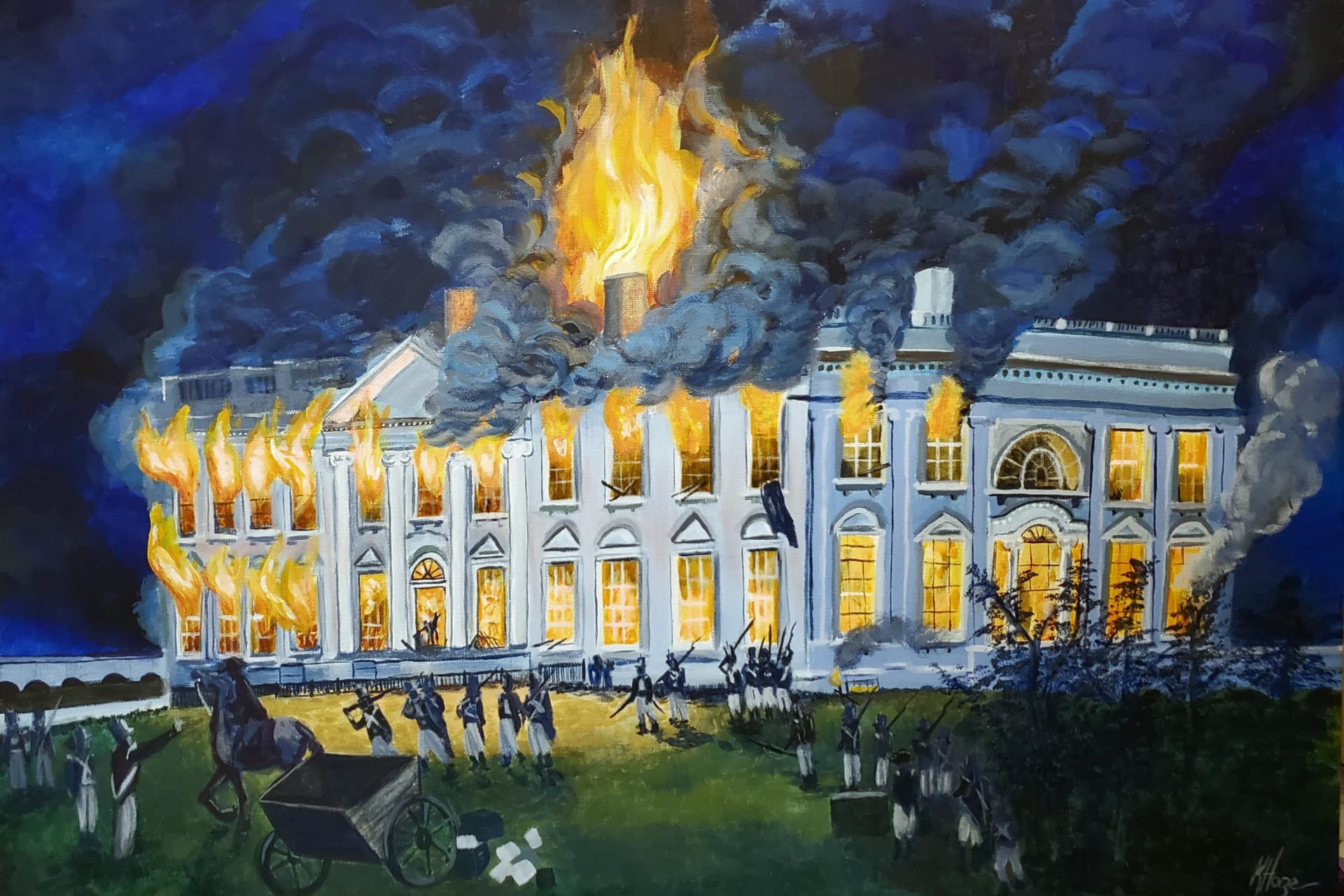
There is a good reason for the amnesia surrounding the War of 1812: America’s so called second war of independence went poorly. A bid to seize British Canada failed miserably. British troops sacked Washington, DC, burning the White House and the Capitol as President James Madison and First Lady Dolley Madison fled the city. New England states organized a convention that discussed secession and proposed amending the Constitution to require a congressional supermajority to declare war. A recent survey I did with members of the Society for Historians of American Foreign Relations ranked the War of 1812 as the thirty-fourth worst foreign policy decision in U.S. history.
“A Solemn Question”
Doubts about the wisdom of fighting Britain were evident long before Congress voted for war. When Congress convened in November 1811, tensions with Britain had been building for years. Efforts to resolve those differences through diplomacy and economic embargoes had failed. But the first question the so-called War Congress debated was not whether to go to war; rather, it was whether and how to prepare for one.
By any measure, the United States was ill-prepared for any war, let alone a war with Britain. The U.S. Army had only 6,700 poorly trained and equipped troops. The U.S. Navy had just two dozen ships. The British Royal Navy, in contrast, commanded six hundred ships, with eighty-five on patrol in North American waters.
The debates over what to do became heated. One sticking point was whether the United States should increase the size of its navy. Even some lawmakers who were spoiling for war voted no, arguing that the United States could not hope to match the Royal Navy. In their view, all that constructing a few frigates would accomplish would be to saddle the government with debt it would struggle to repay. Congress only provided funds sufficient to outfit three existing frigates and to overhaul four others.
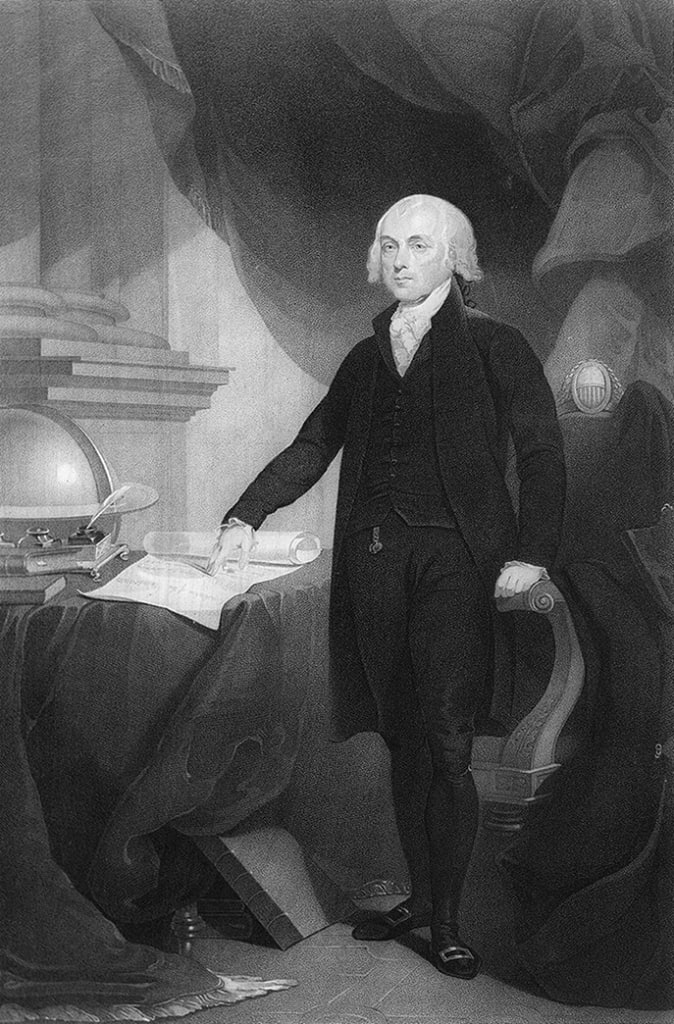
By late spring, it became clear that last-ditch efforts to secure a diplomatic resolution had failed. On June 1, 1812, President James Madison sent Congress a special message reciting the indignities that Britain had inflicted on the United States since independence. He concluded:
We behold, in fine, on the side of Great Britain a state of war against the United States, and on the side of the United States a state of peace toward Great Britain.
Madison stopped short of recommending war, saying that was “a solemn question which the Constitution wisely confides to the legislative department of the Government.” But his expectation was clear.
“The Suspense We Are in Is Worse Than Hell”
The House moved quickly to take up Madison’s call. On June 4, it voted 79 to 49 in favor of a resolution to declare war against Britain. While speedy vote revealed, however, that Madison did not command the allegiance of all his fellow Republicans. Some two dozen of them rejected his call for war.
The extent of the division among Republicans became clearer in the Senate. While they held an even larger majority there than in the House, many Republican senators opposed Madison personally, hoped to deny him the party’s presidential nomination, or were unpersuaded that a general war was wise. For nearly two weeks, the Senate debated what to do. The drama caused one member of the House to complain, “the suspense we are in is worse than hell—!!!”
The representative’s consternation was easy to understand. At one point, the Senate appeared poised to authorize only a limited naval war against Britain. That motion failed, however, on a tie vote when one supporter switched positions at the last moment. The vice president normally would have cast a tie-breaking vote. But Vice President George Clinton had died two months earlier. (How he might have voted is a great historical “what if?” He had significant differences with Madison, and all the members of the Clinton faction in the Senate voted for a limited war.) The Senate also came within two votes of authorizing a maritime war against both Britain and France, which had also been harassing U.S. shipping.
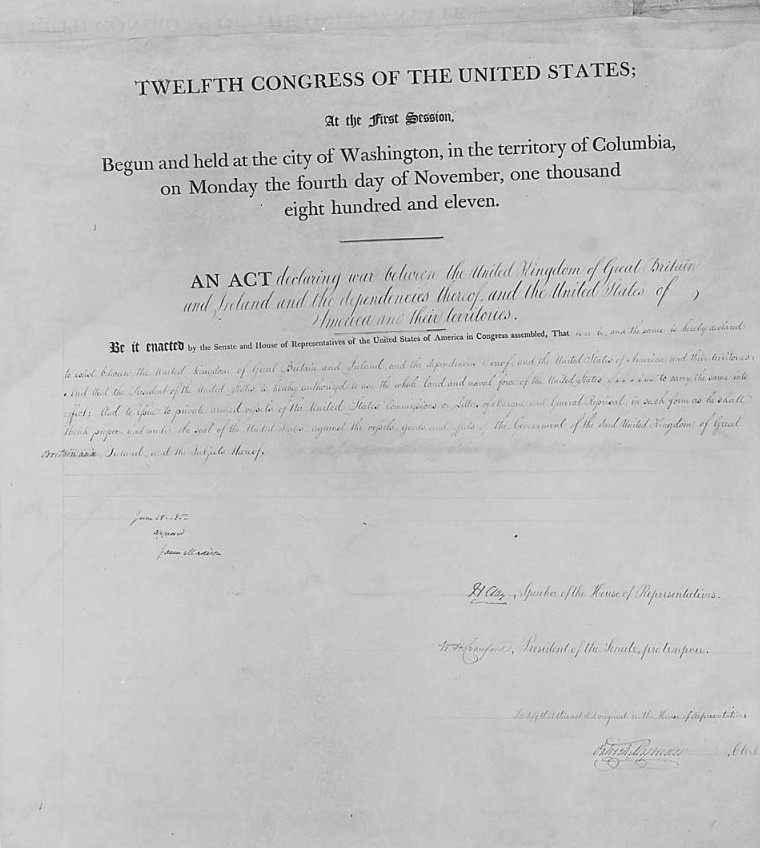
Unwilling to abandon the idea of war entirely or to postpone making a decision, the Senate voted 19 to 13 on June 17 in favor of the House-passed resolution. Madison signed the declaration of war the next day. The House and Senate votes remain the closest votes in favor of a declaration of war in U.S. history. The votes also revealed a sharp partisan split. All thirty-nine Federalists in Congress voted against war.
Poor Timing
Many of those lawmakers who voted for war might have cast their votes differently had they known what was happening in London as the Senate debated what to do. On June 16, the day before the final Senate vote, the British government agreed to suspend one of the policies that had inflamed American passions, the Orders-in Council. Written in the midst of Britain’s war against Napoleonic France, it authorized the Royal Navy to prevent U.S. merchant ships from entering French ports. A week after suspending the Orders-in-Council, London formally ended the policy without demanding any concessions from the United States.
But news traveled slowly at the start of the nineteenth century. Washington did not learn of the British decisions until August. Madison later speculated that, had Americans known about the concession, the declaration of war “would have been stayed” and negotiations “would have been pursued with fresh vigor & hopes.”
Arguments for War
So why did the United States opt for war against a far stronger Britain? The so-called war hawks, a fiery group of fresh-faced members of Congress from western states led by Speaker of the House Henry Clay, encouraged the march to war. They exuded confidence and promised great rewards. Clay viewed the coming war as “the combined energies of a free people… wreaking a noble and manful vengeance upon a foreign foe.” But the war hawks were a minority in Congress. Multiple objectives and calculations drove the decision for war.
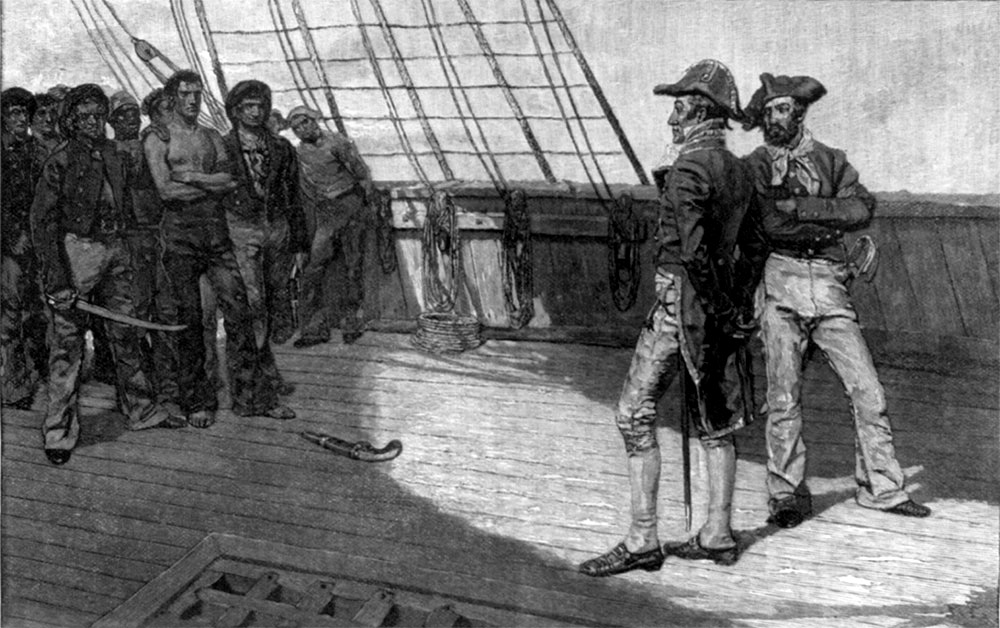
One factor was national honor. Many Americans fumed over Britain’s lengthy and repeated mistreatment of U.S. shipping and sailors. For years the Royal Navy had boarded U.S. merchant ships and forced sailors into service. This policy of “impressment” was justified on the grounds that the Royal Navy had the legal right to seize British deserters. Many British captains, however, refused to recognize the citizenship of British subjects who had become American citizens or made little attempt to determine the nationality of the sailors they seized. (At the time, American and British accents were indistinguishable, ruling out one easy way to distinguish between the two.) As many as 10,000 U.S. sailors were forced to serve in the Royal Navy, which was infamous for its low pay, unforgiving work conditions, and harsh discipline.
One egregious incident came in June 1807. A British warship fired on the USS Chesapeake in U.S. waters some ten miles southeast of Cape Henry, Virginia, after hailing it on the pretext of requesting a favor. The attack, which amounted to an act of war, killed three American sailors and saw the British remove four sailors as deserters. Despite bitter U.S. protests, London refused to offer an apology or compensation. Some Americans called for war; President Thomas Jefferson wrote that “this country has never been in such a state of excitement since the Battle of Lexington.” Recognizing that the United States was not prepared for war, Jefferson opted instead to bar U.S. trade with Britain, its primary trading partner. However, the Embargo Act of 1807 and successor legislation did little to change British behavior. Many Americans believed that more needed to be done to redeem their national honor. As Massachusetts Republican Elbridge Gerry wrote to Madison, “By war, we should be purified, as by fire.”
A loss of overseas markets provided another driver for war. The British interference with commercial shipping had hurt farmers in western and southern states who looked to export their surplus products. The decision by the Jefferson and Madison administrations to retaliate by banning U.S. exports compounded the problem. Continuing those failed policies seemed intolerable. War offered the potential to restore freedom of the seas and renewed access to foreign markets.
Land hunger was also at work. Many Americans had their sights set on moving westward. They worried that Britain was helping Native American tribes block their westward expansion. The narrow U.S. victory over a native confederacy led by Shawnee leader Tecumseh at the Battle of Tippecanoe in November 1811 fueled that fear. Madison noted in his war message that he could not help but connect British influence with:
the warfare just renewed by the savages on one of our extensive frontiers—a warfare which is known to spare neither age nor sex and to be distinguished by features peculiarly shocking to humanity.
Still other Americans dreamed that war with Great Britain would lead to the conquest of Canada, end Britain’s presence on the North American continent, and open the door to taking Florida. Clay declared that the “militia of Kentucky are alone competent to place Montreal and Upper Canada at your feet.” Even the now-retired Jefferson agreed, telling a journalist that “the acquisition of Canada this year . . . will be a mere matter of marching.”
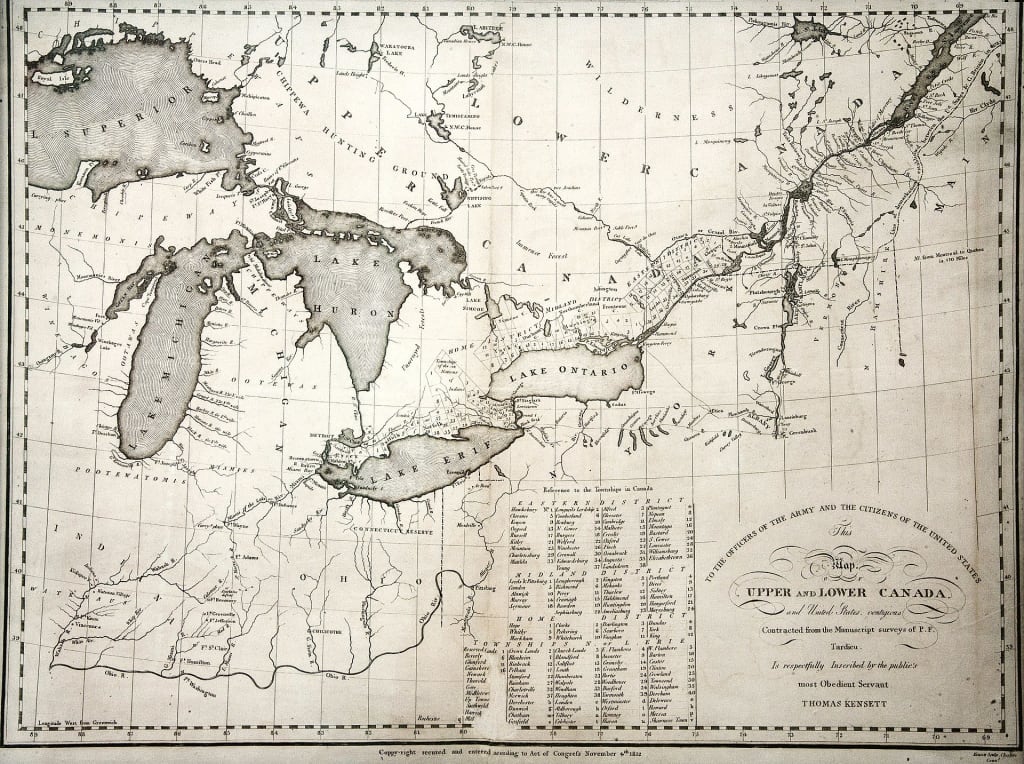
Finally, partisan politics played a role. Historians have long debated whether Congress pushed a reluctant Madison to war or whether he quietly maneuvered Congress into supporting a war of his choosing. However one answers that question—and the truth likely lies somewhere in the middle—both Madison and the Republicans who opposed him came to recognize they had a common interest in supporting war with Britain. If the party split on the question of war, it faced an uncertain future in the 1812 elections.
“Abandoned, Given Up, Surrendered”
The war hawks got their war, but in a story that would be repeated in the decades to come in Mexico, the Philippines, Vietnam, Afghanistan, and Iraq, the promised quick victory did not materialize. The Canadian militia and British regulars proved to be far better fighting forces than the war hawks imagined. It did not help matters that Congress declared war knowing that the United States was not prepared to fight it. The thinking, as one Republican put it, was that Congress should emulate the young couple willing “to get married, & buy the furniture afterwards.” That turned out to be poor policy. The war turned into a bitter conflict that saw 2,260 U.S. soldiers killed and sparked talk in New England of secession.
The War of 1812 did have its moments for the United States. Commodore Oliver Hazard Perry defeated the British in the Battle of Lake Erie, famously telling his superiors, “We have met the enemy and they are ours.“ The refusal of Baltimore’s Fort McHenry to surrender in September 1814 despite a withering volley of “bombs bursting in air” led Francis Scott Key to pen the words to the ”Star-Spangled Banner.” The one great U.S. victory on land came on January 8, 1815, when outnumbered U.S. troops led by General Andrew Jackson routed a far more experienced British army in New Orleans. That victory came, however, two weeks after U.S. and British negotiators had signed the treaty ending the war.
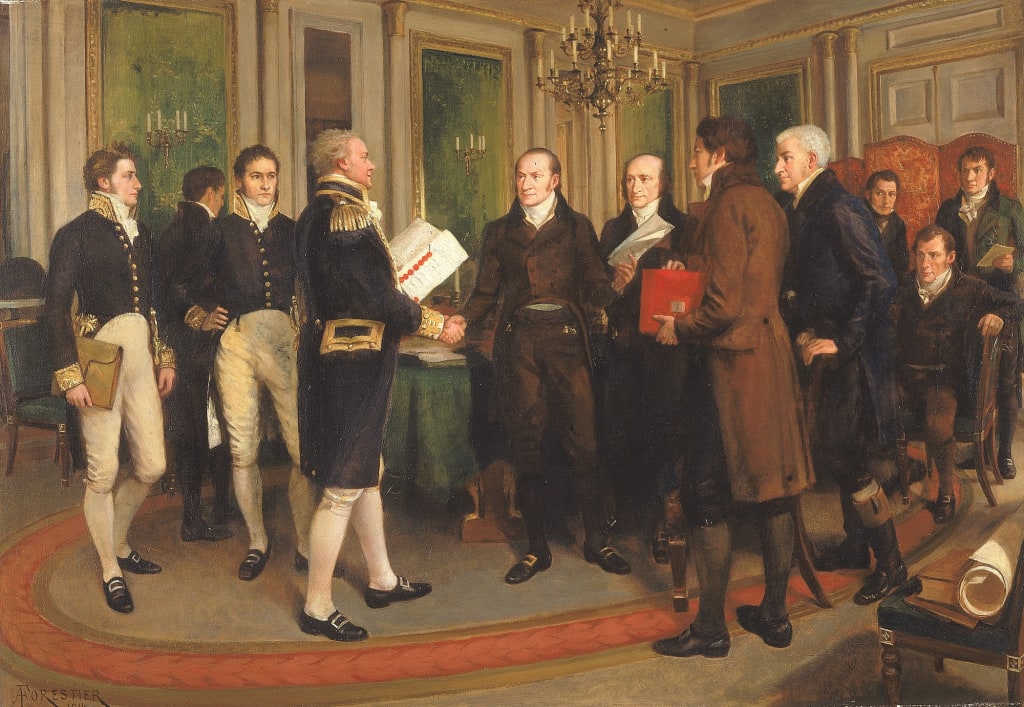
That agreement, officially known as the Treaty of Ghent, restored the status quo ante bellum. Britain refused to renounce impressment as an official policy, but American sailors were soon released and the practice died off. Secretary of State (and later President) James Monroe declared victory and asserted that Americans “had acquired a character and rank among other nations which we did not enjoy before.” Critics argued, not for the last time in U.S. history, that with the treaty U.S. war aims had been “abandoned, given up, surrendered.” But to the many ordinary Americans who had tired of the war, the treaty was, as one historian wrote just two years after its signing, “generally satisfactory.”
Today most Americans misremember much of the War of 1812—if they remember it at all. So it is fitting that one history of the war is entitled “A Forgotten Conflict.”
Oscar Berry assisted in the preparation of this article.
The United States celebrates its 250th anniversary in 2026. To mark that milestone, I am resurfacing essays I have written over the years about major events in U.S. foreign policy. A version of this essay was published on June 18, 2012.