Trade Policy in the ICU
By experts and staff
- Published
- Stewart M. PatrickJames H. Binger Senior Fellow in Global Governance and Director of the International Institutions and Global Governance Program
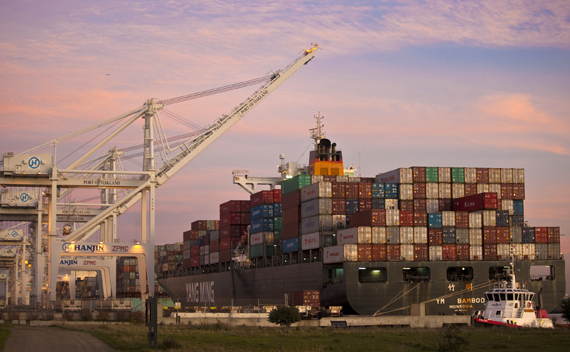
After World War II, the United States spearheaded a historic era of global trade liberalization. Successive U.S. administrations, Republican and Democratic alike, rejected protectionism to forge multilateral agreement to improve market access for trade and investment. The results were impressive. By the end of the twentieth century, the world enjoyed unprecedented prosperity, poverty had declined dramatically, and international trade had dampened political tensions across the globe. Thanks to rising living standards, the U.S. public and Congress strongly supported globalization.
Those days, alas, are over.
Dramatic economic reversals have affected the United States in the past decade. As wages decline or stagnate, and unemployment climbs, more Americans blame their misfortunes—rightly or wrongly—on international competition. In Congress, there is little faith that further trade liberalization will restore high-paying jobs. Meanwhile the Obama administration—despite the President’s early 2010 pledge to double U.S. exports over five years—has been MIA . It has even failed to win legislative approval for modest bilateral accords with Korea, Colombia, and Panama.
This crisis of confidence comes at a crucial moment. Trade remains a powerful engine for U.S. growth. Booming emerging economies present tremendous opportunities, provided the United States adopts—and successfully implements—an ambitious vision. “If the United States is to prosper in today’s global economy, it must enhance its ability to attract the investment and jobs linked to producing goods and services for these large and prospering markets. In short, the United States must become a great trading nation.” This is the central message of a timely CFR Task Force Report, U.S. Trade and Investment Policy a bipartisan undertaking co-chaired by former Bush White House chief of staff Andrew Card and former Senate majority leader Tom Daschle.
The report faces a tough sell to an ambivalent U.S. public. Trade has provided tangible benefits such as rising productivity and more inexpensive and high-quality imports. Yet, Americans are more focused on the downside—notably stagnant wages, rising income inequality, and higher levels and longer periods of unemployment. The Great Recession has destroyed millions of jobs, many of which will not return. Wage anxiety has led much of the U.S. public—and many legislators—to view trade as a threat. While the relative role of international competition in putting downward pressure on U.S. income remains uncertain, the task force itself acknowledges, “it seems reasonable to think that trade has played some role in the post-2000 wage stagnation in America.”
And yet trade is critical for U.S. long-term growth. Nobel Laureate (and CFR Senior Fellow) Michael Spence observes that nearly all U.S. job growth in the past two decades has occurred in the nontradable sectors, mainly government and health care. Fiscal difficulties, however, and health care reform will constrain both in years ahead. Growth will thus depend on the U.S. capacity to generate new, high-paying export-related jobs. The political challenge is to persuade an increasingly skeptical U.S. public and Congress that this is something that trade and globalization can deliver.
The CFR task force report, drafted by CFR Senior Fellows Edward Alden and Matthew Slaughter, identifies seven sensible priorities for the United States to pursue:
Given the current fiscal environment, many of these recommendations will face stiff headwinds (especially expanding services to the unemployed), but the world’s economy is shifting. Restoring the vigor and credibility of U.S. global trade leadership will require bipartisan congressional cooperation to restore TPA, compete with Germany, Japan and other aggressive export promoters, and attract FDI. Otherwise, the United States may risk its prized economic standing.