Trump Pledges ‘Demolition’ of Iranian Infrastructure as Deadline Looms
By experts and staff
- Published
Welcome to the Daily News Brief, CFR’s flagship morning newsletter summarizing the top global news and analysis of the day.
Top of the Agenda
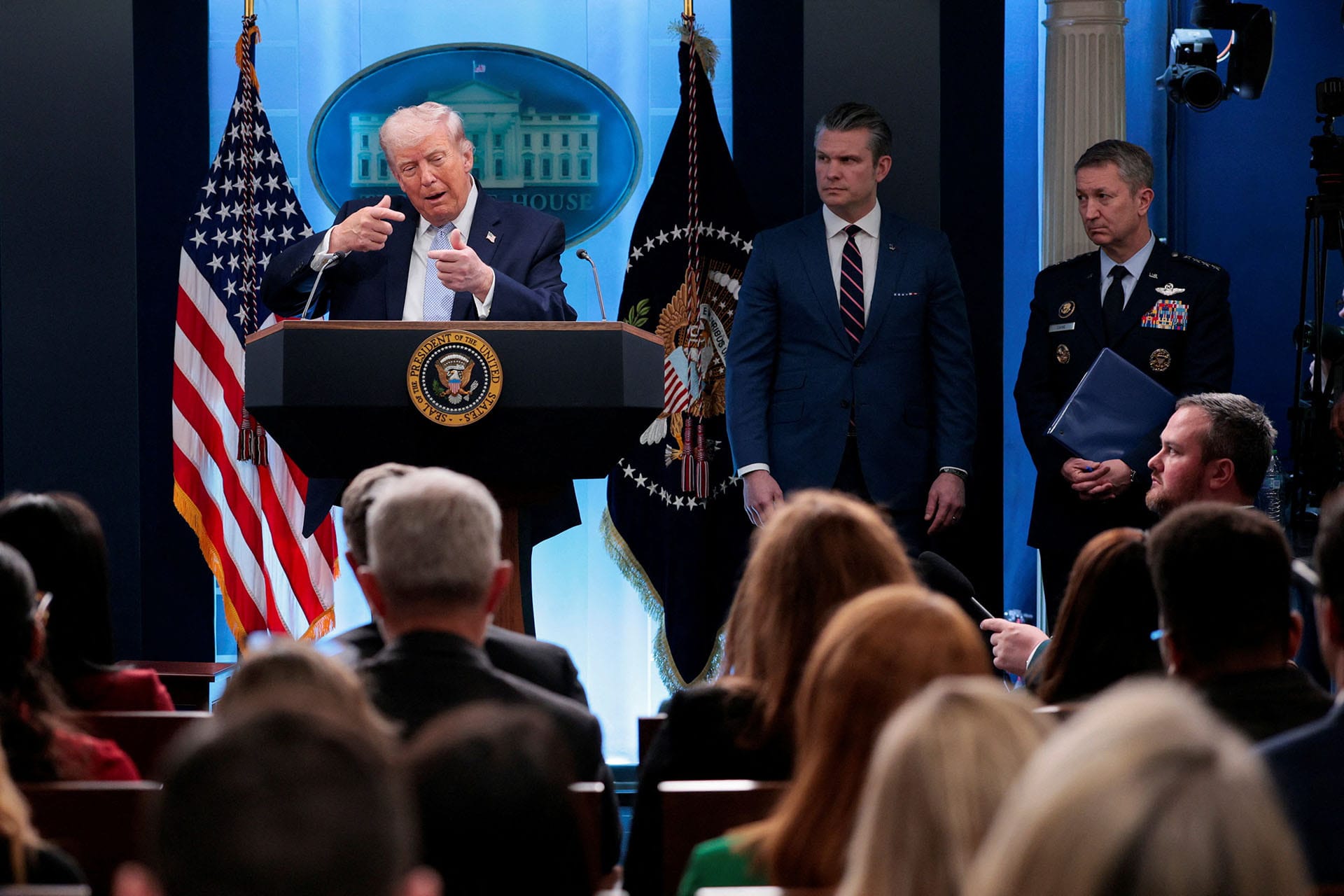
Trump rejected Tehran’s response to a ceasefire proposal yesterday, while his 8 p.m. Eastern Time deadline for nationwide strikes on Iran is approaching with no sign of a diplomatic breakthrough. If an agreement to reopen the Strait of Hormuz is not reached by tonight, Trump vowed at a news conference yesterday to execute a “complete demolition” of Iranian bridges and power plants in just four hours. “A whole civilization will die tonight” if “less radicalized minds” do not prevail, he wrote this morning on social media. While Trump and Iran’s ambassador to Pakistan also said diplomacy was underway, infrastructure strikes have already escalated: Israel said yesterday it attacked airports in Tehran and the South Pars gas complex, while Iran struck a Saudi petrochemical plant overnight.
Iran’s ceasefire response. Iran issued a ten-point counterproposal yesterday to a ceasefire outline put forth by mediators, Iranian state media said. It includes a permanent end to the war, the lifting of sanctions on Iran, and the reconstruction of infrastructure damaged in the fighting. Trump called the proposal a “significant step” but “not good enough.” Iran has accused Trump of threatening war crimes by vowing to destroy civilian infrastructure, an accusation echoed by international law experts and human rights groups. Yet Trump’s aides believe Iran’s infrastructure facilities constitute legitimate military targets because striking them could weaken the country’s missile and nuclear programs, the Wall Street Journal reported citing unnamed U.S. officials.
The latest attacks. Iran struck a petrochemical complex overnight in Jubail, Saudi Arabia, one of the largest industrial cities in the world. Early morning strikes also damaged a synagogue in Tehran, Iranian state media said, as U.S.-Israeli bombing continues. Today, the United States carried out dozens of attacks on military targets on Iran’s Kharg Island, U.S. officials told multiple news organizations. Meanwhile, Israel mirrored Trump’s threats of escalation, warning Iranians to stay away from rail lines until 9 p.m. local time tonight.
“We leave Tehran in a much, much weakened position. They’re no longer going to be able to wreak the kind of havoc they did before. But this is the thing about asymmetric warfare. The United States, in asymmetric warfare, has to win. Iran just has to survive. It just has to not lose. And with relatively few capabilities, it could still cause a lot of chaos in the region.”
—CFR President Michael Froman tells Fox News
Across the Globe
Indonesia’s steps on jet fuel. The Indonesian government will offset rising jet fuel prices caused by the Iran war by absorbing some of the cost itself while allowing airline tickets to rise by up to 13 percent, an economic policy minister said yesterday. The policy will last for two months.
Shooting in Istanbul. Turkish officials said a gunman was killed and two others “neutralized” after a shootout today near the Israeli consulate in the city. Turkey’s interior minister said the attackers were connected to an organization that “exploits religion,” without providing further details. Israeli diplomatic staff left the consulate soon after the 2023 start of the Israel-Hamas war due to strained diplomatic ties.
Chinese solar tech in Cuba. Chinese solar panel donations and raw nickel-for-panel exchanges have helped drive a sharp expansion of Cuba’s solar power capacity since 2024, the Financial Times reported. Cuba has more than quadrupled its solar power generation in that period, with solar amounting to around 9 percent of its power generation by the end of last year. The increase in solar generation has helped counteract recent U.S. pressure on Cuba’s energy supply, but has not saved the island from repeated blackouts in recent weeks.
Hamas demilitarization plan deadline. Trump’s Gaza Board of Peace has reportedly set a Friday deadline for Hamas to agree on a timetable to demilitarize, the New York Times reported, citing unnamed diplomats. Talks between representatives of the Board of Peace and Hamas were scheduled for Cairo today. The group’s disarmament is a key element in Trump’s multi-step peace plan for Gaza.
Attacks across Ukraine… Russian attacks caused energy outages across Ukraine and killed multiple people, Ukrainian authorities said yesterday. Three people were killed in Odesa and one in Kherson, authorities said, while several more were wounded in both cities and in Nikopol and Kharkiv.
…and on a Russian oil port. Russia blamed Ukraine yesterday for an attack on a major Black Sea oil terminal that handles 1.5 percent of the world’s oil supply. The consortium and the Ukrainian government did not immediately comment. Kyiv has repeatedly targeted Russia’s oil infrastructure in recent weeks, and yesterday claimed a separate attack on nearby Russian oil facilities at Novorossiysk.
Somalia’s offshore oil push. Somalia will soon be ready to begin its first offshore drilling operations, its oil minister wrote on social media yesterday. The drilling project will be executed in partnership with Turkey, whom Somalia’s foreign minister called a “trusted long-term partner” in the country’s economic development. The arrival of a Turkish government-owned drilling ship in Somali waters is expected Friday.
Earthrise. The crew of the Artemis II mission traveled past the far side of the moon yesterday before beginning their trip back toward Earth. On their journey they witnessed a solar eclipse as well as the Earth rising over the moon’s horizon—a moment that recalled an iconic 1968 photograph snapped by the Apollo 8 mission, which helped inspire the global environmental movement.
What’s Next
- Today, U.S. Vice President JD Vance begins a visit to Hungary.
- Today, the leader of Taiwan’s Kuomintang opposition party begins a visit to mainland China.
- Tomorrow, NATO Secretary-General Mark Rutte visits Washington.