Trump Shouldn’t Give China a Veto on Taiwan Arms Sales
President Trump’s decision to pause arms sales to Taiwan will embolden China and weaken deterrence.
By experts and staff
- Published
 Rush DoshiCFR ExpertC.V. Starr Senior Fellow for Asia Studies and Director of the China Strategy Initiative
 David SacksCFR ExpertFellow for Asia Studies
Following President Donald Trump’s meetings with Chinese leader Xi Jinping in Beijing, Taiwan was absent from both the White House’s readout and its fact sheet. But any sense of relief proved short-lived.
In a lengthy interview from Beijing, Trump disclosed not only that he and Xi “talked the whole night” about Taiwan, but that he was holding “in abeyance” a major arms package for the island and that “it’s a very good negotiating chip for us.” Aboard Air Force One, Trump confirmed that he and Xi discussed arms sales “in great detail.” He dismissed the Six Assurances, noting “1982 is a long way…a big far distance away.” (One of the Six Assurances, issued by President Ronald Reagan in 1982, pledges that the United States “has not agreed to consult with the PRC on arms sales to Taiwan” — a commitment that successive American presidents have treated as binding precedent). Acting Secretary of the Navy Hung Cao’s subsequent comment that the administration is “doing a pause” on arms sales effectively confirms what many already suspected: the administration has paused arms sales to Taiwan under pressure from Beijing.
This is a strategic error. At stake is far more than the fate of the nearly $14 billion arms sale under consideration. Providing Taiwan with asymmetric weaponry to raise the cost of a Chinese blockade or invasion advances peace and stability by deterring aggression. That deterrence, when coupled with pledges that the United States does not support Taiwan independence and would accept any peaceful resolution of cross-Strait differences that obtains the consent of the Taiwanese people, has kept the peace for decades. The alternative to this approach is to risk a conflict that could cost more than ten percent of global GDP and close the door on American leadership in artificial intelligence, since nearly all AI chips are produced in Taiwan.
In suggesting arms sales were a bargaining chip, and then delaying them, Trump will embolden China to increase its coercion of Taiwan and seek additional U.S. concessions. His comments break with a bipartisan consensus on the imperative to provide Taiwan with defensive weapons that has held firm for nearly half a century. Such a consensus is rooted in the recognition that the best way to maintain peace and stability in the Taiwan Strait is through a credible deterrent.
This approach dates back to the Taiwan Relations Act (TRA) of 1979, which states that it is the policy of the United States “to provide Taiwan with arms of a defensive character.” From 1950 to 2024, the United States sold Taiwan nearly $56 billion in arms, ranking it fifth in the world. China, for its part, is pursuing the most significant peacetime military buildup in history, with a budget far greater than Taiwan’s. Even when Taiwan’s defense spending stagnated and cross-Strait relations reached an all-time high, China’s development of military capabilities targeting Taiwan continued unabated. A failure to provide Taiwan with the asymmetric weapons it needs to defend itself would further tip the balance of power in China’s favor and risk the breakdown of deterrence.
A failure to swiftly approve the arms package would also create the perception that Taiwan’s security is up for negotiation and may have already been negotiated away. This would have negative implications not only for Taiwan but also for American credibility in the region, as allies would fear that Trump could also sacrifice their security for Chinese concessions in other areas. During meetings the authors held in Tokyo last week, it became clear that many in Japan view the decision on this arms package as a critical indicator of whether the Trump administration will pursue an accommodationist policy that trades U.S. and allied economic and security interests for an illusory and fleeting stability. That sentiment is shared in Australia, the Philippines, and South Korea.
The key to sustainable deterrence is for Taiwan to buy, build, and field asymmetric weapons at scale. After years of uneven progress, Taiwan is now stepping up, prioritizing drones, mines, and missiles that can hold at risk far more valuable assets like ships and aircraft. But Trump’s comments now risk undermining these nascent efforts to significantly boost defense spending and make critical investments. Just under three weeks ago, Taiwan’s legislature approved a special defense budget that funds last year’s $11 billion arms sale and the pending $14 billion package. (Taiwan has at times used special defense budgets to fund large-scale U.S. weapons purchases, given the chronic uncertainty over when these items will be approved). Securing approval for the $14 billion package was a struggle, with some in the opposition Kuomintang (KMT) arguing that Taiwan should only allocate money for arms that the United States has already formally approved. If this package does not go through, those voices will be vindicated — making passage of future special defense budgets considerably harder.
By weakening the pro-defense camp in Taiwan and strengthening those who doubt whether Taiwan can or should spend more on defense, the United States is dealing itself a strategic setback. It is not only making it harder for Taiwan to purchase U.S. asymmetric capabilities, but it is also undercutting those in Taiwan who want to build their own such weapons through an entirely indigenous supply chain, which is the best path to a viable and credible long-term deterrent capability. Further, while the Trump administration has been urging Taiwan to dramatically boost defense spending, the president’s statements remove the onus on Taiwan by giving room to the argument that the island would spend more if only the United States would sell it more weapons.
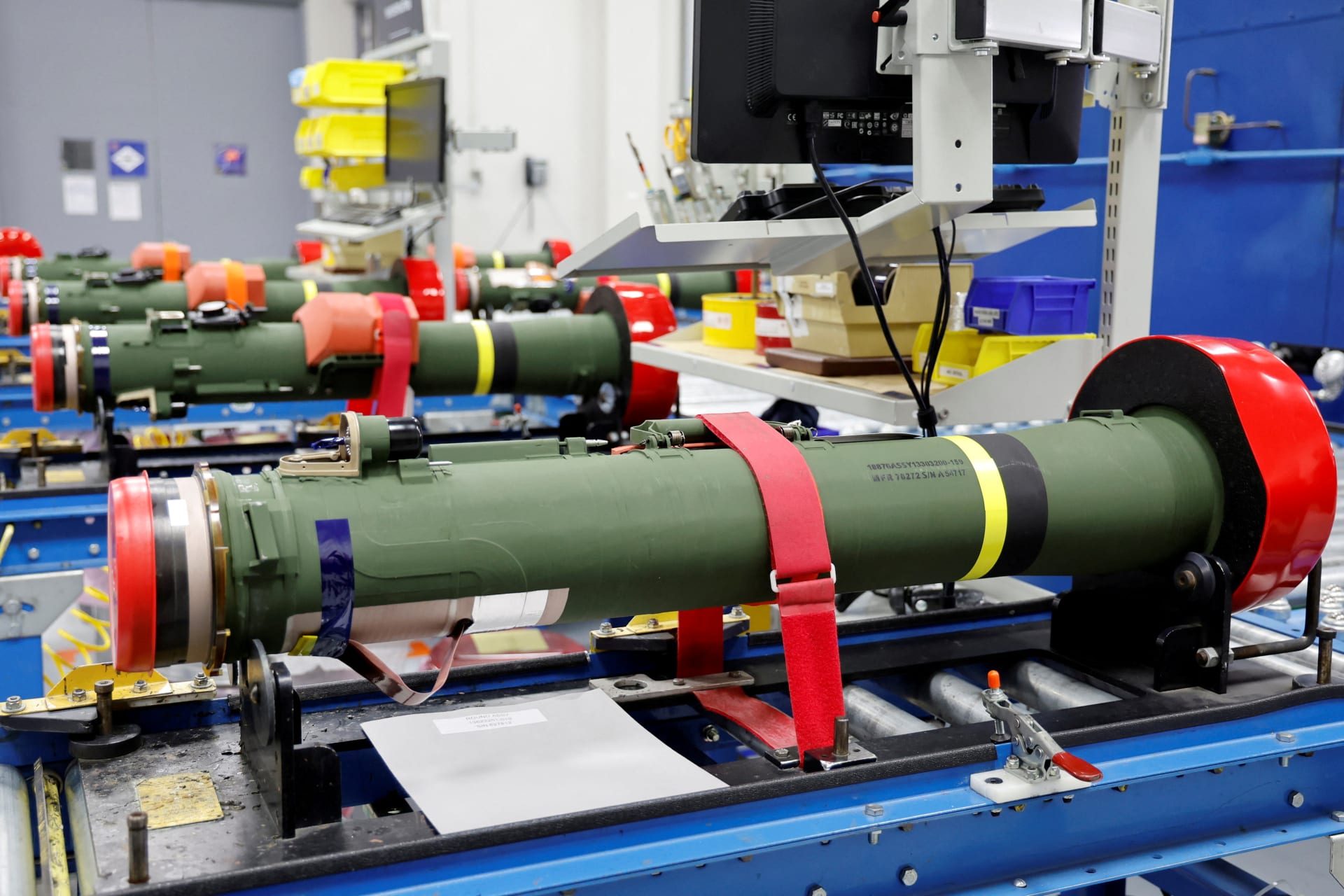
A failure to approve the arms sale would materially impact Taiwan’s defense. The package under consideration reportedly includes Patriot (PAC-3) interceptors and National Advanced Surface-to-Air Missile Systems (NASAMS), which would greatly improve Taiwan’s air defense capabilities, as well as TOW anti-tank and Javelin anti-armor missiles. These systems are in high demand worldwide, and delays risk other countries jumping ahead of Taiwan in the queue. While some might argue that pausing arms sales is sensible because the United States needs these same weapons for operations in the Middle East, these arms are not coming from U.S. stocks and will not be delivered to Taiwan for years. In fact, these sales help the U.S. defense industrial base scale up now by providing predictable demand.
Finally, deepening uncertainty about the fate of the arms sale will fuel skepticism of the United States in Taiwan. Academia Sinica’s “American Portrait Survey” reveals that only 34 percent of respondents now view the United States as a credible country, down from 45 percent in 2021. The same survey found that 60 percent of respondents see arms sales as a sign of U.S. commitment to Taiwan.
For these reasons, it is important that the Trump administration swiftly approve the pending arms sales to Taiwan. In so doing, the United States should recommit to a policy where arms sales to Taiwan are not a negotiating chip but a critical component of a sensible deterrent policy.