Trump Threatened New Canada Tariff
By experts and staff
- Published
Welcome to the Daily News Brief, CFR’s flagship morning newsletter summarizing the top global news and analysis of the day.
Top of the Agenda
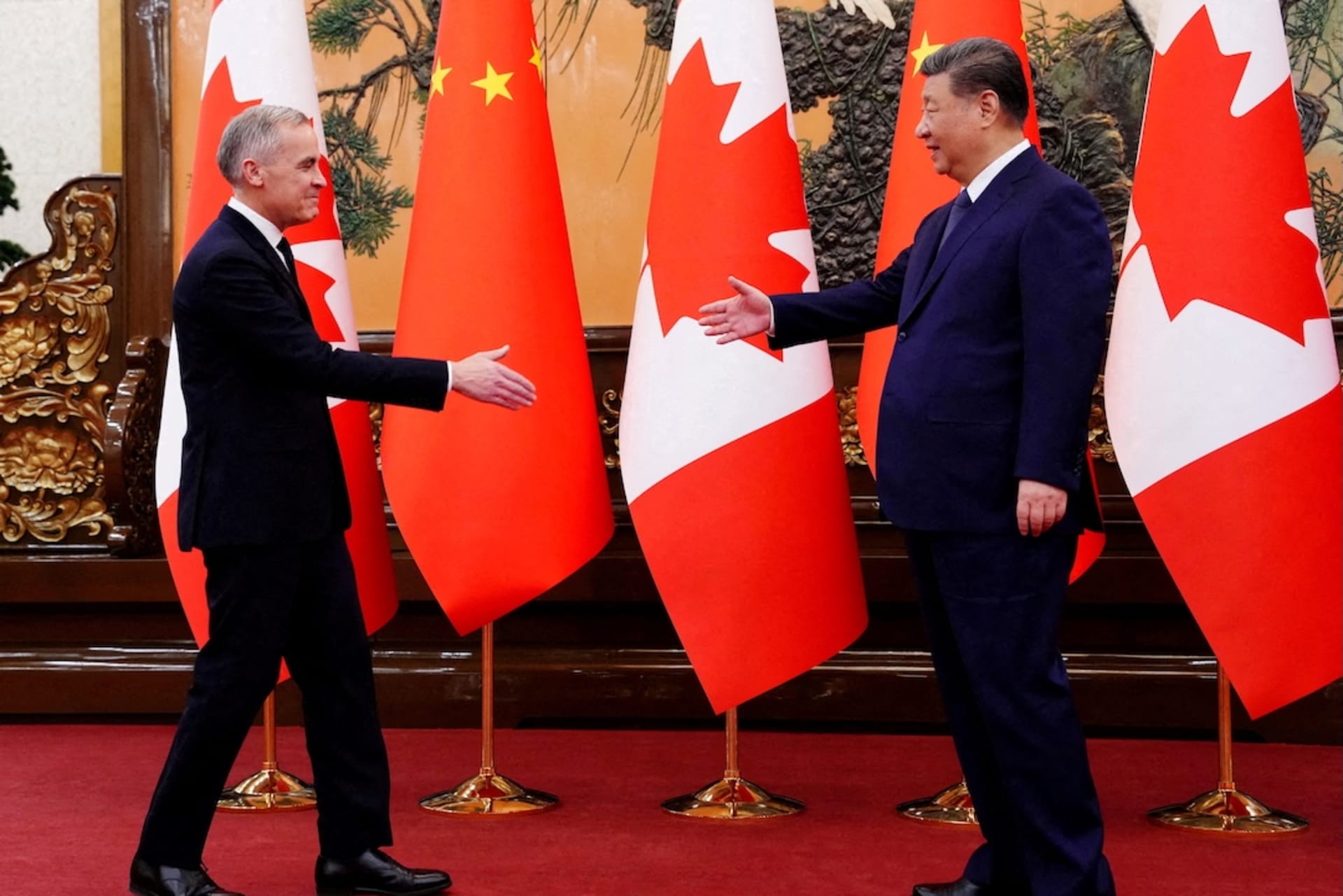
Trump threatened Canada Saturday with 100 percent tariffs if the country made a deal with China. He sharply criticized Canadian trade policy in a series of social media posts over the weekend, writing that China is “taking over” Canada. Trump’s broadsides follow Canada’s announcement earlier this month of plans to reduce tariffs on some Chinese electric vehicle imports. Canadian Prime Minister Mark Carney said Sunday that the reduced tariffs were meant to “rectify” bilateral trade issues with Beijing and that Canada was not pursuing a free trade agreement with China.
Trump’s turnaround. Trump’s weekend comments reversed his stance from earlier this month, when he called Canada’s tariff reduction “good” and what Carney “should be doing.” But Trump’s tone shifted last week after Carney delivered a Davos speech that indirectly criticized Trump’s foreign policy. Trump later suggested the speech was ungrateful. On social media Saturday, he called Carney “Governor,” seemingly reviving his past habit of calling for Canada to become the fifty-first state of the United States.
Zooming out. Canada and the United States are both members—together with Mexico—of a free trade pact that limits their ability to impose tariffs on each other and make trade agreements with outside countries. Carney said yesterday that Canada’s actions vis-à-vis China were fully compliant with the trade agreement. All three parties are required to review the deal by July, which could trigger major changes or even its demise. Though Canada and Mexico have both voiced support for extending the agreement in recent weeks, Carney has also said Canada is working to diversify its trade partners.
“Carney and the European powers are by no means abandoning the United States. Rather, they seek to employ ‘variable geometry’ and develop coalitions of the willing to forge a new geopolitical equilibrium. Derisking, a term originally coined by European Commission President Ursula von der Leyen to describe the European Union’s strategy toward China, is now being deployed against the United States.”
—CFR President Michael Froman, The World This Week
Across the Globe
National Defense Strategy. The Trump administration released its new National Defense Strategy Friday, which pledged to focus more on the Western Hemisphere and less on Europe than the Biden administration’s version did. It said Washington would seek “a stable peace, fair trade, and respectful relations with China” and provide “more limited” support for European allies than in the past, echoing the National Security Strategy released last year.
Ukraine peace talks. Ukrainian President Volodymyr Zelenskyy called talks with Russian and U.S. envoys in Abu Dhabi on Friday “constructive” in a social media post, adding that the next round could occur as early as the coming week. A document detailing U.S. security guarantees for Ukraine was “100 percent ready” to be signed, Zelenskyy said at a news conference yesterday. Even as diplomacy moves forward, Russian air attacks cut power to 1.2 million Ukrainian properties for part of the weekend.
Chinese military purge. China’s top general was put under investigation for “serious violations of discipline and law,” its defense ministry said, in an apparent extension of a purge within the senior ranks of the military. Only one of the six generals that President Xi Jinping appointed to the country’s top military commission in 2022 has so far avoided removal.
Killing by U.S. immigration agent. The killing of nurse Alex Pretti by a U.S. Border Patrol agent in Minneapolis Saturday has sparked renewed national criticism of the Trump administration’s immigration enforcement tactics. Trump told the Wall Street Journal yesterday that the U.S. government is reviewing the incident. Though the Department of Homeland Security claimed its officers fired “defensive shots” after Pretti “violently resisted” being disarmed, bystander videos appear to show an agent shooting Petti multiple times after another agent had already pulled a gun from his waistband.
Truce in Syria. Syria’s military and the Kurdish-led Syrian Democratic Forces extended a truce that was set to expire on Saturday, both parties said. The Syrian defense ministry said the extension will last fifteen days and facilitate a U.S. operation to transfer prisoners linked to the self-declared Islamic State from Syria to Iraq.
NATO’s Afghanistan veterans. Trump praised British soldiers who served alongside U.S. forces in Afghanistan on Saturday, after British Prime Minister Keir Starmer called Trump’s previous remarks about the veterans “insulting and frankly appalling.” Trump had claimed that European troops stayed off the front line in Afghanistan. The United Kingdom lost 457 service members in the war.
Shrinking Saudi infrastructure project. Saudi officials are significantly downsizing plans for an infrastructure corridor and megacity named Neom that was envisioned to cover an area around the size of Belgium, the Financial Times reported. High spending on other projects, as well as low oil prices, reportedly prompted the shift. Neom said in a statement it seeks to “prioritize our initiatives so that they align with national objectives.”
Visa bans for Haitian officials. The United States is revoking visas for two members of Haiti’s transitional leadership council and their families for allegedly supporting gangs, the State Department said Saturday without naming the individuals. The measure came after reports of infighting in the transitional council last week
What’s Next
- Today, Germany hosts the North Sea Summit on renewable energy.
- Today, European Commission President Ursula von der Leyen and European Council President Antonio Costa attend India’s Republic Day celebration as chief guests.
- Tomorrow, the United States officially withdraws from the 2015 Paris Agreement on climate change.