Testimony From Bruce Hoffman on Reviewing the 9/11 Commission & Intelligence Reform Impacts
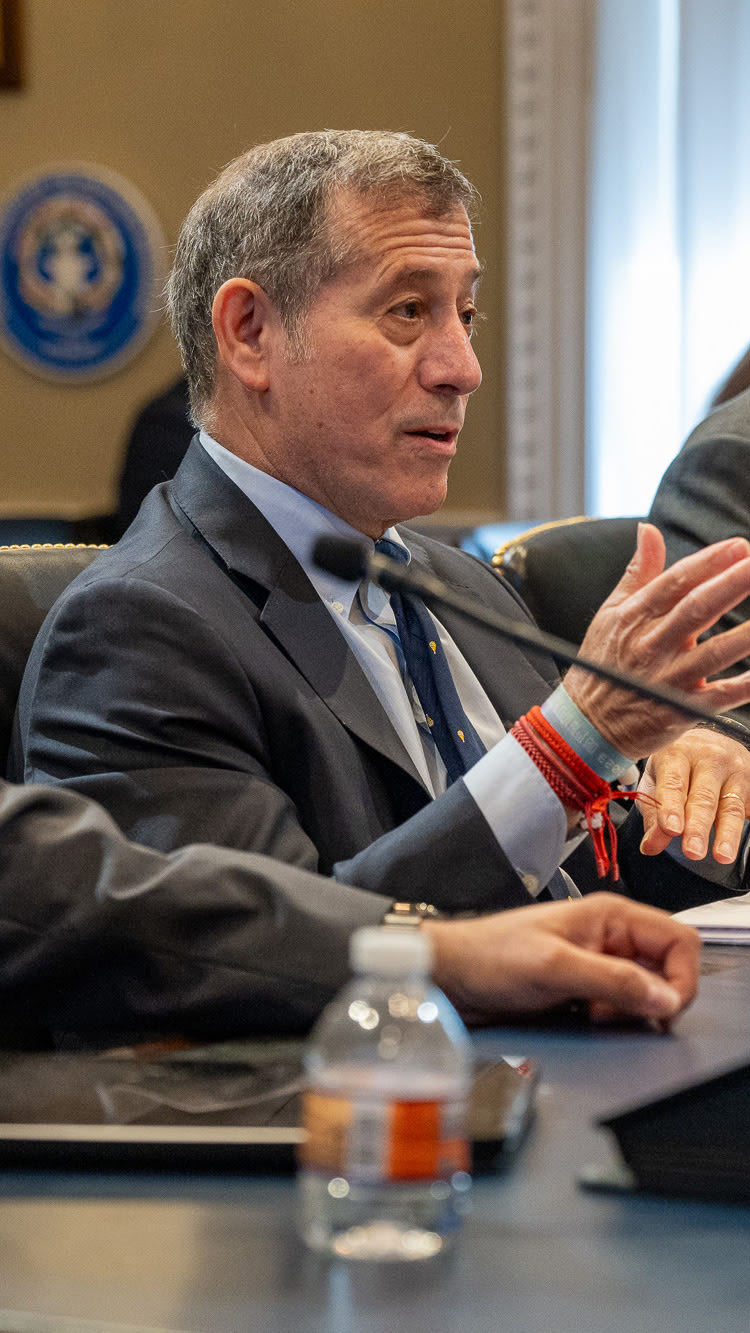
By experts and staff
- Published
 Bruce HoffmanCFR ExpertShelby Cullom and Kathryn W. Davis Senior Fellow for Counterterrorism and Homeland Security
Committee
U.S. House Permanent Select Committee on Intelligence
Hearing Title
Twenty-Five Years After 9/11—Reviewing the 9/11 Commission & Intelligence Reform Impacts
Date
May 20, 2025
Dr. Hoffman’s remarks to the Permanent Select Committee on Intelligence argued the following:
Twenty-five years after the 9/11 attacks, the United States has not suffered another catastrophic terrorist strike, but conflating that record with the infallibility of the U.S. security apparatus would be a mistake. The intelligence reforms enacted through the 2004 Intelligence Reform and Terrorism Prevention Act were necessary and consequential, yet the framing of 9/11 as fundamentally an intelligence failure deserves scrutiny. The August 2001 Presidential Daily Brief had warned that Osama bin Laden was determined to strike the United States; it was the thirty-sixth such warning that year. The lesson, reinforced by Israel’s similar experience before October 7, is that intelligence can only do so much: even the best organized intelligence community with the best assets, technology, information, and analysis does not matter if political leadership is unwilling or unable to act. Today, the counterterrorism architecture built after 9/11 is eroding—through budget cuts, personnel losses, and the diminution of terrorism as a national security priority—recreating the conditions of under-resourcing and institutional neglect that preceded the 2001 attacks. Moreover, the terrorist threat to Americans has both changed and grown.
The most easily assessable and urgent structural problem concerns the National Counterterrorism Center (NCTC) within the Office of the Director of National Intelligence, whose statutory mandate bars it from acting against domestic threats even as the line between foreign and domestic terrorism has dissolved. Data from the National Institute of Justice and the Anti-Defamation League alike confirm that right-wing extremists now account for the majority of terrorist killings in the United States—a category conspicuously absent from the 2026 National Counterterrorism Strategy. Congress should revisit the NCTC’s foundational authorities to bring domestic threats within its analytic and coordinating remit, provided that robust safeguards for civil liberties and legislative oversight accompany any such expansion. Parallel concerns apply to the Federal Bureau of Investigation: new agent training has been reduced from twenty-one to sixteen weeks, reversing a post-9/11 upgrade; human intelligence capabilities remain underdeveloped; and full integration between agents and analysts in the field has yet to be achieved.
Terrorism may no longer dominate the news cycle, but it has not diminished as a threat. Today, the United States faces both different and more numerous terrorist enemies than existed on 9/11, and that, as the 2026 National Counterterrorism Strategy argues, are now domestic as well as foreign. As General James N. Mattis, then commander of the U.S. Central Command, observed in 2013, “No war is over until the enemy says it’s over. We may think it [is] over, we may declare it over, but in fact, the enemy gets a vote.” And America’s enemies have incontrovertibly chosen to continue this war. Sustaining the intelligence community’s capacity—its personnel, legal authorities, and institutional memory—is the precondition for preventing the next attack, whatever form it takes.