Iran’s Support of the Houthis: What to Know
Iranian support has boosted the military prowess of Yemen’s Houthi rebels, helping them project force into the Red Sea. The group has now launched its own attacks in the U.S.-Israeli war on Iran, making Yemen another front in the growing regional conflagration.
By experts and staff
- Updated
- Writer/Editor
- Kali RobinsonSenior Writer/Copy Editor, Middle East
Yemen’s Iran-aligned Houthi movement has become one of the Middle East’s most potent nonstate actors since Israel’s war against Hamas reignited in 2023. The group’s campaign of disruptive strikes in the Red Sea has persisted despite U.S. retaliatory attacks and fueled tensions in recent years.
After a period of relative calm following the announcement of a U.S.-brokered ceasefire between Israel and Hamas in late 2025, the Houthis entered the U.S.-Israeli war on Iran that began in February, opening another front in the widening conflict. The Houthis launched an initial ballistic missile at Israel on March 28, pledging to continue strikes “until the aggression against all fronts of the resistance ceases.” Several more Houthi missile attacks have followed.
Who are the Houthis and how many are there?
The Houthis are a local rebel movement that currently rules a third of Yemen’s territory and two-thirds of its population. They revolted against the internationally recognized government—supported by a Saudi-led coalition—in 2011 and overthrew it in 2014. Yemen’s civil war continues today, with its front lines largely frozen.
The Houthis’ government, based in Yemen’s capital, Sanaa, is recognized only by Iran and is influenced by strict readings of Islamic law and local caste-based traditions. The group’s infamous, Iranian-inspired rallying cry points to their ambitions beyond Yemen: “God is great, death to America, death to Israel, a curse upon the Jews, victory to Islam.” The United States designates them as a terrorist group.
The Houthis are formally known as Ansar Allah (Supporters of God in Arabic), but their popular name refers to the movement’s leaders, who come from northern Yemen’s Houthi tribe.
The Houthi movement is rooted in Zaidism, also known as “Fiver” Shiism [PDF], meaning it recognizes only the first five of the Prophet Mohammed’s successors. It is practiced mainly in northern Yemen, where it has also taken on elements of Sunni Islam. Zaidis compose around a third of Yemen’s population of thirty-four million.
How did the Houthis become aligned with Iran?
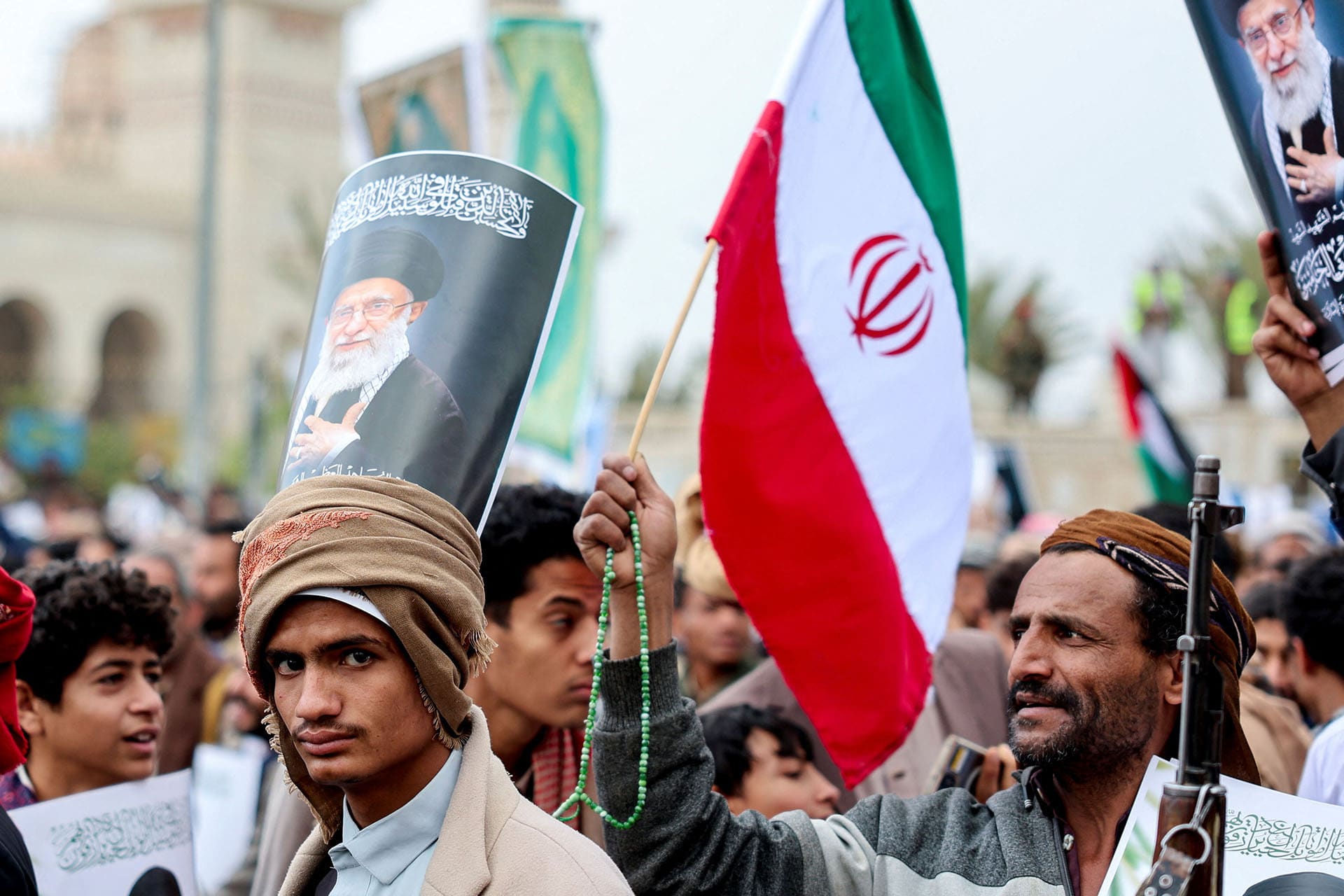
Some experts estimate Iranian military support for the Houthis began as early as 2009 amid the Houthis’ first war against Yemen’s government. Most experts agree the Houthis were receiving weapons from Iran by 2014, the year they captured Sanaa. In both cases, military intervention against the Houthis by Iran’s regional rival, Saudi Arabia, likely catalyzed Tehran’s increased interest in the group.
Militant groups allied with Iran are frequently called Tehran’s proxies, but many experts say the Houthis are better characterized as Iran’s “informal partner” [PDF]. Iran’s model of “exporting” its 1979 Islamic Revolution by cultivating armed groups in the region allows these groups a degree of flexibility, the Washington Institute for Near East Policy’s Michael Knights told CFR. However, the Houthis and the Islamic Republic share an ideological affinity [PDF] and geopolitical interests that motivate the Houthis to assist Iran, Knights said.
While the Houthis held Iran’s former Supreme Leader Ali Khamenei—who was killed in February in the United States’ Operation Epic Fury—and the Islamic Revolution in high esteem, notable differences separate them from Iran and its closest partners. The Houthis don’t practice the “Twelver” Shiism prevalent in Iran, though they have reportedly incorporated Twelver beliefs into their interpretation of Zaidism. They also weren’t founded with Iran’s help, as groups including Lebanon’s Hezbollah and Iraq’s Badr Organization were.
How extensive is the military relationship?
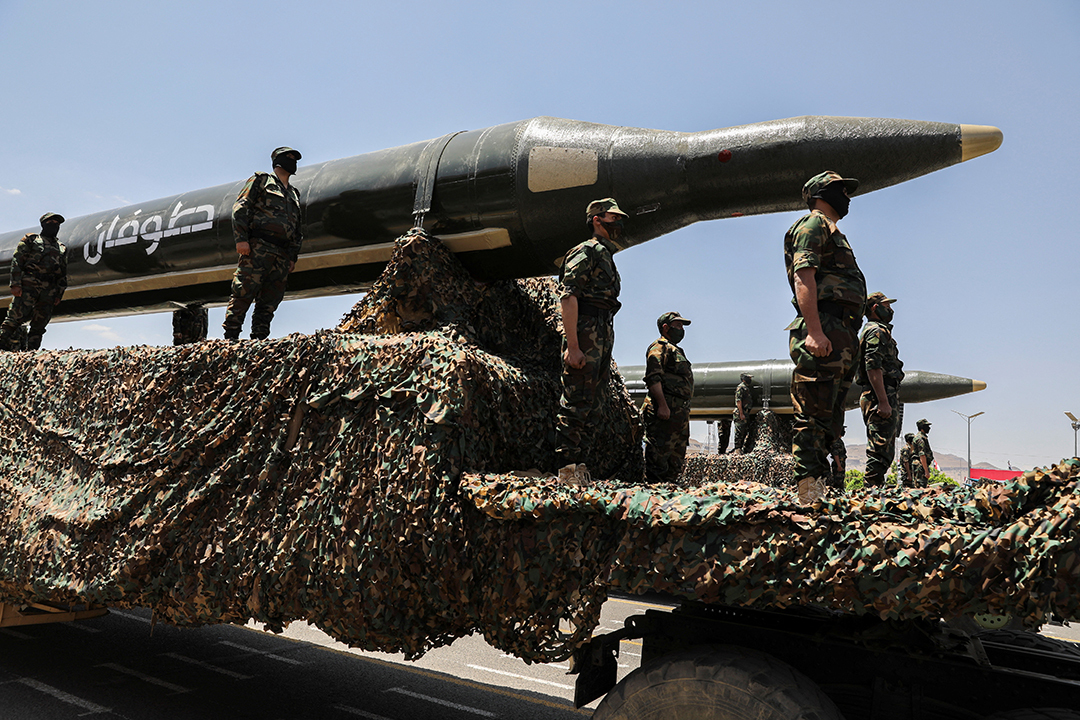
Iran is the Houthis’ primary benefactor, providing them with security assistance, such as weapons transfers, training, and intelligence support. In July 2025, for example, the Yemeni National Resistance Forces seized the largest-ever shipment of Iranian munitions intended for the Houthis. The shipment included 750 tons of conventional weapons, including advanced drone parts, missile warheads, and radar systems, many of which were made by a U.S.-sanctioned firm linked to Iran’s defense ministry. Such aid typically reaches the Houthis via Iran’s paramilitary Islamic Revolutionary Guard Corps (IRGC), which also helps advise the Houthis’ military command.
Iran facilitates a supply of more sophisticated weaponry than the Houthis could acquire on their own, especially missiles and drones. While Iranian support has helped the Houthis gain and maintain military superiority within Yemen, experts say it has had greater effect elsewhere. “The role of Iran has been decisive in providing the Houthis with smuggled weapons and expertise to project power into the Red Sea and Bab al-Mandab Strait,” Gulf analyst Eleonora Ardemagni wrote [PDF] for the Yemen-based Sana’a Center for Strategic Studies in 2023.
The Houthis assist Iran by menacing Saudi Arabia’s border and protecting Iranian ships in the Red Sea, giving Iran room to evade sanctions on oil shipping by distracting its enemies and facilitating a shadow network, Iran expert Mohammad Ayatollahi Tabaar wrote for Foreign Affairs in 2024. At the same time, experts say Yemen offers a testing ground for Iranian weapons on its front lines and in the Red Sea. Like all axis of resistance members in Iran’s proxy network, the Houthis offer Iran plausible deniability: members routinely claim responsibility for attacks likely ordered or perpetrated by Iran. For instance, many experts blame Iran for attacks on Saudi Arabia’s oil facilities that the Houthis took responsibility for in September 2019.
How were the Houthis involved in the Israel-Hamas war?
Following the start of the Israel-Hamas war in October 2023, the group attacked U.S.- and Israel-linked targets in the Red Sea and the Bab el-Mandab Strait—which connects the sea to the Gulf of Aden—in what they called a show of support for Hamas and Palestinians. These attacks effectively blocked vessels and had ruinous effects for international shipping. Experts said it was unclear whether Iran or Houthi leaders ordered the initial strikes, but Tehran voiced its unequivocal support for the operations and reportedly assisted the Houthis in targeting vessels.
The Houthi threat in the Red Sea concerned Washington especially, as freedom of navigation is a core U.S. interest. In response to the group’s initial attacks in 2023, the United States under President Joe Biden worked with the United Kingdom (UK) to launch a joint military campaign against Houthi targets in Yemen, while U.S. and European Union naval missions protected ships in the Red Sea. Israel conducted its own air strikes on Yemen in 2024, primarily targeting critical infrastructure.
In March 2025, the Trump administration launched a new offensive on Houthi military and strategic targets in Yemen, dubbed Operation Rough Rider. The U.S. military said the campaign struck more than eight hundred targets, including radar systems, air defenses, and ballistic and drone launch sites used by the Houthis to attack commercial ships and naval vessels in the Red Sea and Gulf of Aden.
The Houthis alleged the attacks killed women and children, while U.S. defense officials said the strikes eliminated top Houthi commanders alongside hundreds of Houthi targets. The Houthis launched retaliatory strikes on U.S. warships in the Red Sea later that month and announced they would resume attacks on Israeli ships as well after Israel missed a deadline to resume aid deliveries to Gaza. (Houthi attacks on Israeli ships had been briefly paused following an Israel-Hamas ceasefire deal in mid-January 2025.). This prompted a joint U.S.-UK response that April.
In a statement on state television, General Hossein Salami, former head of Iran’s IRGC, denied any involvement in the Houthis’ retaliatory attacks. The two sides agreed to a ceasefire in May, but tensions escalated again in August when an Israeli strike in Sanaa killed Prime Minister Ahmed al-Rahawi, the most senior Houthi official to be killed in the conflict.
How strong are Houthi military capabilities now?
The Houthis have rapidly evolved from a state insurgent group to a state-level actor with strong—and growing—military capabilities. With training, intelligence, and weapons support from the IRGC and Hezbollah, the Houthis have gained control of critical Yemeni infrastructure like the Port of Hodeidah in Sanaa on the Red Sea coastline. This leverage facilitated their regular strikes on the Red Sea between 2023 and 2025, and enabled them to withstand retaliatory U.S.-UK strikes.
Despite taking “significant hits” over those years, the Houthis “are far from a spent force,” Yemen expert Amed Nagi wrote for the International Crisis Group. Much of their arsenal is concealed in mountainous terrain, a strategy that has spared their stockpile from total destruction. They have been quietly rebuilding it since the Israel-Hamas ceasefire took effect in late 2025.
The Houthis threatened to get involved in the U.S.-Israeli war against Iran from its first weeks, indicating they were capable of putting resources toward the conflict. The Houthis entered the fray on March 28 when they fired ballistic missiles at Israel. Their entry into the conflict could upend the Red Sea ceasefire, but a weakened Iran would deprive the Houthis of crucial arms and intelligence from their primary beneficiary, Nagi explained.
Does the Iran war threaten the Bab el-Mandeb Strait and surrounding waters?
The Houthis have the potential to open yet another front in the war via the Bab el-Mandeb Strait, the twenty-mile-wide strait it had previously targeted during the Israel-Hamas war. One of the world’s busiest maritime routes, Bab el-Mandeb is the only point of entry to the Red Sea from the Indian Ocean and is a vital choke point for energy supplies—particularly crude oil—heading to Asia, Europe, and North America.
The effect of closing Bab el-Mandeb on global trade would be “immediate, especially for energy flows,” Nagi explained, especially given the recent closure of the Strait of Hormuz. It could further cripple global trade: in the first half of 2023, shipments through the waterway accounted for 12 percent of all seaborne-traded oil. While the move could provide Iran with more leverage, it also risks provoking a regional response, particularly from Saudi Arabia, which sends a significant amount of oil through the strait. The Houthis would therefore likely be cautious of goading more Gulf countries into the war, experts say.
Houthi Deputy Information Minister Mohammed Mansour warned in March 2026 that “closing the Bab el-Mandeb Strait is a Yemeni option” if hostilities against Iran and Lebanon intensified or if Gulf states became directly involved on behalf of the United States and Israel. Days later, Ali Akbar Velayati, a top advisor to Iran’s supreme leader, issued a similar warning, saying that Iran was eyeing Bab el-Mandeb as the next Hormuz. “If the White House dares to repeat its foolish mistakes, it will soon realize that the flow of global energy and trade can be disrupted with a single move,” Velayati wrote on social media.
Colophon
Additional Reporting
Clara Fong and Isabel McDermott contributed to this article.