United States and China Agree to Trade Truce
By experts and staff
- Published
- CFR Editors
Welcome to the Daily News Brief, CFR’s flagship morning newsletter summarizing the top global news and analysis of the day.
Subscribe to the Daily News Brief to receive it every weekday morning.
Top of the Agenda
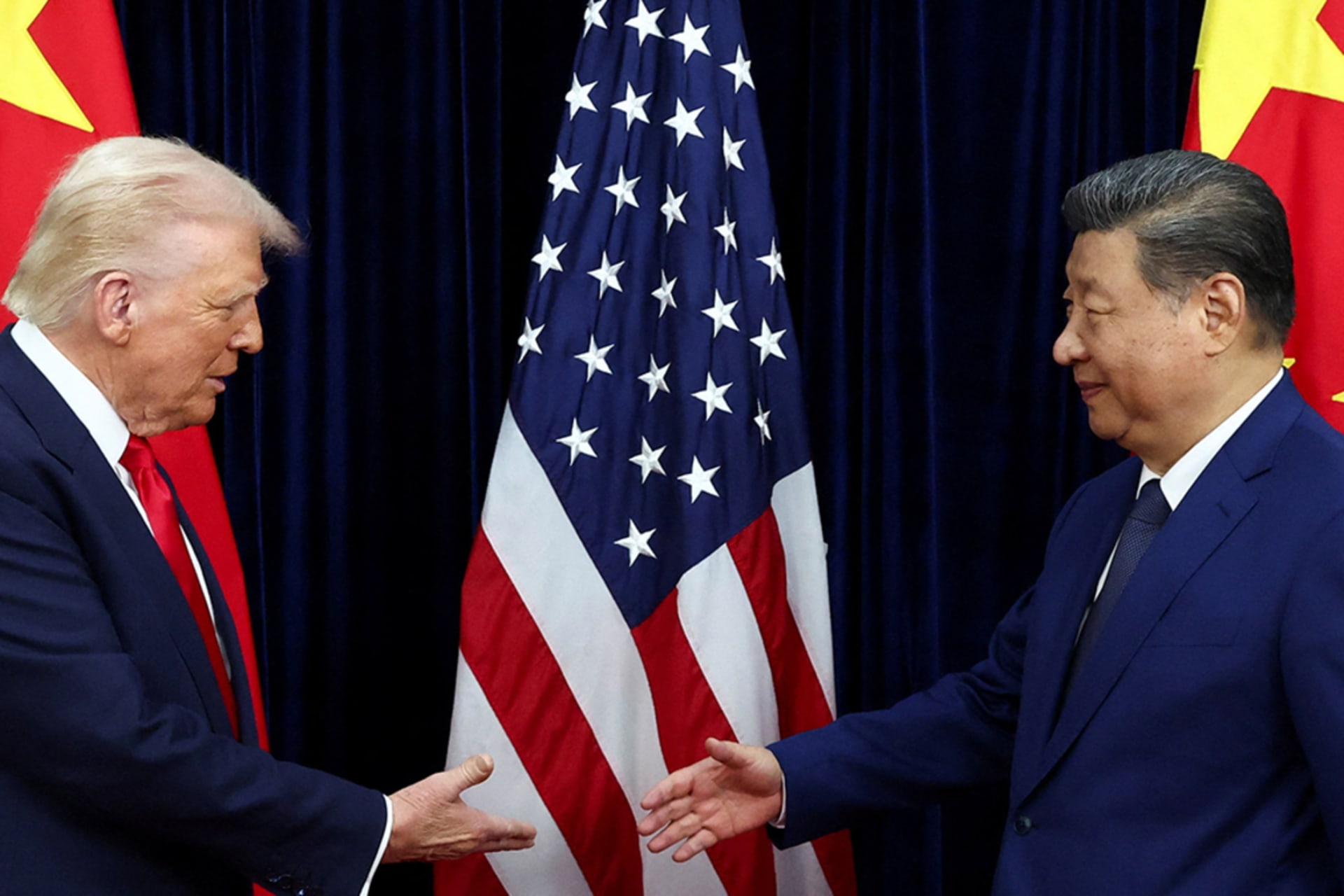
Trump and Xi agreed to a one-year trade truce at their meeting in South Korea that will lower tariffs and export controls, bringing temporary relief to businesses and consumers. It was the leaders’ first summit of Trump’s second term and kicked off a series of meetings between the two that Trump said will include a visit to China next year. In addition to dropping a threat of 100 percent tariffs from earlier this month, the United States will reduce tariffs on Chinese exports from 57 percent to 47 percent, while China agreed to suspend its most recent export controls on rare earth metals for one year. Trump called the meeting “truly great,” while Xi said the countries should focus on the “long-term benefits of cooperation.”
More details. As part of the agreement, the United States will postpone fees on Chinese ships arriving at U.S. ports and China agreed to buy “large quantities” of U.S. soybeans and step up work to stop the flow of fentanyl precursor chemicals, Trump said. Trump also hinted that China could soon strike a deal to buy U.S. oil and gas from Alaska. The United States will suspend plans for export controls on subsidiaries of Chinese companies, China’s commerce ministry said. There was no announcement about the status of TikTok after the meeting.
The context. Today’s meeting introduced a more comprehensive truce than others the countries have reached in recent months, with Trump saying the agreements would be finalized “pretty soon” and that the deal would be renegotiated in a year. Other contentious aspects of the U.S.-China relationship, such as China’s stance on Taiwan, did not come up, Trump said, though the leaders discussed the war in Ukraine “very strongly.” The meeting was closely watched internationally in part because China’s export controls have squeezed the manufacturing sectors in third countries.
“Over the last several years, China has identified a number of choke points it has in terms of leverage over the U.S. economy. Rare earths, critical minerals, magnets being the one that they’ve used so far, but we’re actually quite dependent on China for any number of inputs…I think [China’s control of this leverage] is fixable, but it does require years of investment. I think it requires a lot of cooperation between the U.S. and its allies and partners.”
—CFR President Michael Froman on the Rachman Review
Across the Globe
Trump’s stance on nuclear testing. Trump ordered the Department of Defense “to start testing our Nuclear Weapons on an equal basis” with other countries, he wrote on social media. The last confirmed U.S. nuclear weapons test was in 1992. Most countries have adhered to a global treaty banning nuclear testing since the 1990s, with the exception of North Korea, which last conducted an explosive test in 2017. Russia recently tested a nuclear-capable missile and nuclear-powered drone. A Chinese foreign ministry spokesperson said Beijing hoped Washington would uphold “its commitment to suspend nuclear testing.”
U.S. wind-down in Romania. Some U.S. forces will withdraw from Romania as part of a “process to ensure a balanced U.S. military force posture,” U.S. Army Europe said. Though the move reduces the number of troops on NATO’s eastern flank, it added this was a “positive sign of increased European capability” and not a sign of lessened U.S. commitment to the alliance. The chairs of both the House and the Senate Armed Services Committees said the move sent the wrong signal to Russia and was done without consulting Congress.
Senate pushback on U.S. tariffs. The Republican-controlled Senate passed a bill yesterday to repeal Trump’s tariffs on Canada, after passing a similar bill on Brazil tariffs earlier in the week. The move underscores that some Republicans are breaking with Trump’s tariff agenda, though House Republican leaders have declined to introduce anti-tariff legislation this year.
Dutch election. The far-right Freedom Party was neck-and-neck with the centrist liberal Democrats 66 party in yesterday’s Dutch snap election with almost all of the vote counted today. The Freedom Party’s leader triggered the snap election after a dispute over immigration quotas and led the polls ahead of the vote, but Democrats 66 surged in popularity late in the election.
U.S. envoy in Lebanon. Senior U.S. envoy Morgan Ortagus urged Lebanon’s government to disarm Hezbollah by the end of the year during a visit to the country yesterday, a deadline which the Lebanese government had endorsed back in August. Israel has launched multiple strikes on Hezbollah targets in southern and eastern Lebanon in recent days, killing more than a dozen people and sparking fears of renewed conflict.
WTO paid back. The United States paid more than $25 million in overdue membership fees to the World Trade Organization (WTO), emails seen by the Financial Times showed. Despite criticizing the WTO as “toothless” last month, the Trump administration has been cooperating with the organization at a technical level.
Brazil’s deadly police raid. A raid against drug trafficking in Rio de Janeiro Tuesday left an estimated 132 people dead, including four police officers, the state public defender’s office said. The state governor claimed that those targeted committed “narco-terrorism.” Security experts criticized the operation’s heavy-handedness, while the UN high commissioner for human rights said Brazilian law enforcement must “comply with international standards regarding the use of force.”
Paraguay’s Mideast move. Paraguay will follow a group of Arab and African countries in opening a consulate in Western Sahara in support of Morocco’s claim to the disputed region, Morocco’s foreign ministry said. Paraguay had previously recognized a self-declared rebel government in the territory but endorsed autonomy under Moroccan sovereignty following talks with Morocco. The United States, France, and the United Kingdom back the Moroccan plan.
What’s Next
Today, the Japan Mobility Show begins in Tokyo.
Today, Peru concludes hosting the Intergovernmental Panel on Climate Change.
Tomorrow, the leaders of the Asia Pacific Economic Cooperation begin a meeting in South Korea.