United States Cuts Key Tariffs
By experts and staff
- Published
- CFR Editors
Welcome to the Daily News Brief, CFR’s flagship morning newsletter summarizing the top global news and analysis of the day.
Subscribe to the Daily News Brief to receive it every weekday morning
Top of the Agenda
President Donald Trump on Friday removed recent tariffs on more than two hundred food products and reached a framework deal with Switzerland and Liechtenstein to reduce tariffs to 15 percent. Both announcements underscore that Trump’s tariff policies continue to evolve. The White House cited progress in recent trade deals and the fact that certain food products could not be produced domestically as justification for the reversal on food tariffs. The deal with Switzerland and Liechtenstein came as both countries pledged investments and agreed to drop tariff and bureaucratic barriers to trade with the United States.
The shift on food imports. The food items that will now be able to enter the United States free of Trump’s so-called Liberation Day tariffs include bananas, beef, coffee, and orange juice. The change took effect retroactively at midnight last Thursday. Many of the items on the list have seen double-digit price increases in the United States, when measured year-on-year. While Trump has long argued that tariffs do not increase costs for U.S. consumers, he acknowledged Friday that tariffs “may in some cases” raise prices. Yet he insisted that the United States has “virtually no inflation.”
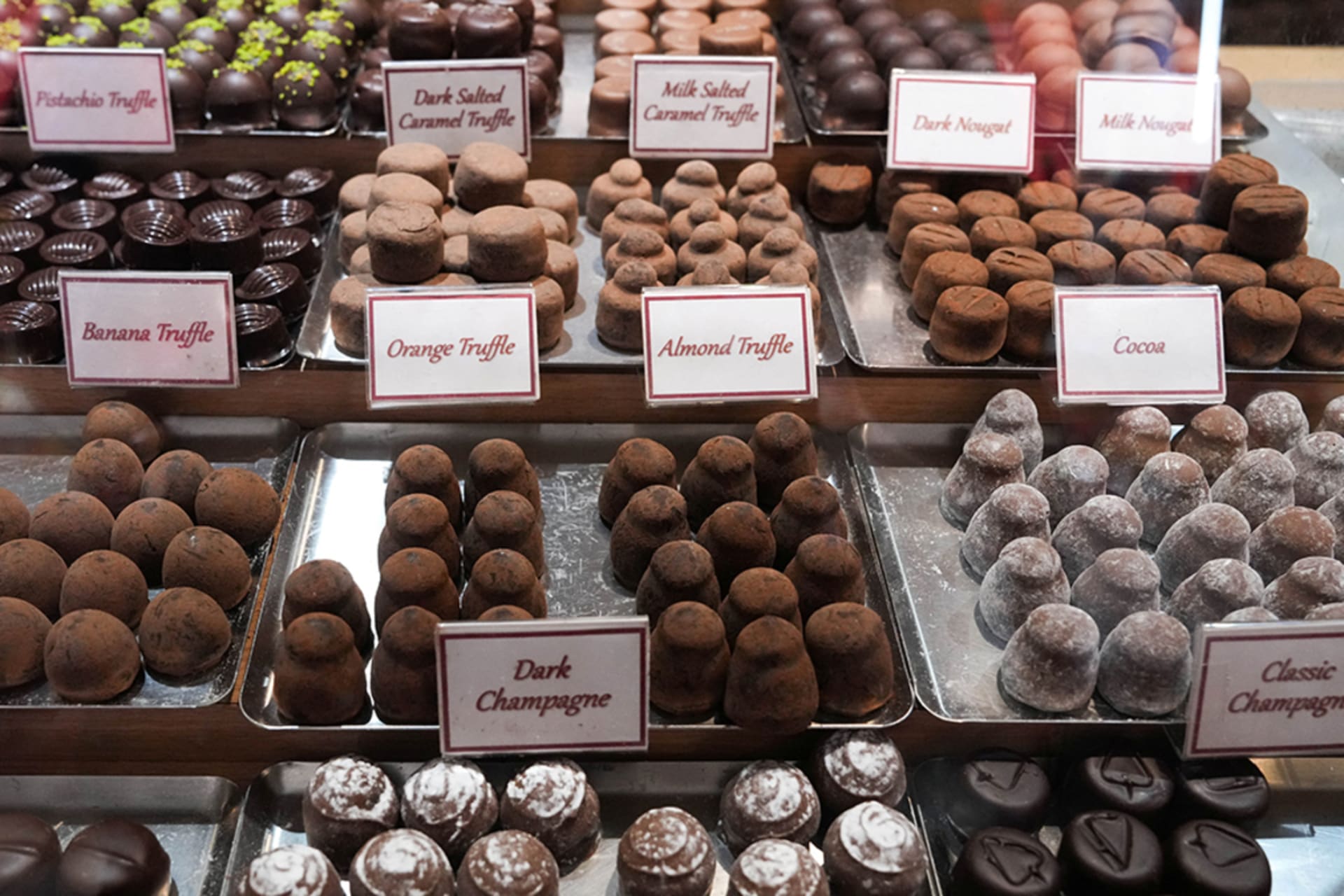
The new framework trade deal. The new deal makes Switzerland and Liechtenstein’s U.S. tariff rates the same as the European Union’s, down from a respective 39 and 37 percent. The move will lower prices for Swiss imports such as pharmaceuticals and chocolates. In exchange, the countries will remove tariffs on agricultural products and streamline customs regulations to make it easier for several types of U.S. products, including medical devices, to enter the country. Firms from the countries will also invest at least $200 billion in the United States, $67 billion of which is due to be invested next year.
“President Trump routinely claims that foreigners pay his tariffs, which is false—U.S. importers pay them. Over time, however, foreign exporters can be expected to bear a small but rising burden of the tariffs through price cuts, while most of the cost will be borne by U.S. consumers in the form of higher prices.
—CFR expert Benn Steil, Geo-Graphics
Across the Globe
DRC-M23 deal. The Democratic Republic of Congo (DRC) and M23 rebels signed a framework peace deal in Qatar Saturday, following U.S. and African Union mediation. The framework contains eight protocols, with more talks needed on how to implement six of them, U.S. envoy Massad Boulos told Reuters. The first two protocols cover prisoner exchanges and truce monitoring. The deal offers a glimmer of hope for ending the conflict, which has killed thousands and displaced hundreds of thousands more this year alone.
Ukraine’s defense, energy deals. Ukraine plans to acquire as many as one hundred French fighter jets over the next decade, presidents of both countries said today. Ukrainian President Volodymyr Zelenskyy said Kyiv was also looking to acquire French air-defense systems, radars, and air-to-air missiles and bombs. Separately, Greek Prime Minister Kyriakos Mitsotakis announced yesterday that Greece will start sending U.S. liquefied natural gas to Ukraine this winter.
China-Japan tensions. In response to rising tensions with Japan, China deployed its coast guard yesterday to patrol islands that both countries lay claim to. Beijing also warned citizens against traveling to Japan and cautioned Chinese students in Japan about alleged safety risks. The countries have traded verbal warnings since Japanese Prime Minister Takaichi Sanae said a Chinese attack on Taiwan could trigger a Japanese military response.
Protests in Mexico. Anti-government protests over violent crime and corruption took place in multiple cities across Mexico yesterday. Clashes in Mexico City wounded at least 120 people, 100 of them police officers. Demonstrators cited the case of an anti-crime mayor who was killed in recent weeks and called for stronger action against drug cartels.
Chile’s presidential race. Communist candidate Jeannette Jara and right-wing José Antonio Kast will advance to the runoff of the country’s presidential election after winning around 27 percent and 24 percent, respectively, in the first round yesterday. Overall, around 70 percent of votes in the first round of the election went to right-wing candidates. The second round of voting will take place December 14.
Referendums in Ecuador. Ecuadorians rejected a proposal to allow foreign military bases in the country in a nationwide referendum yesterday. The vote was a blow to President Daniel Noboa, who had hoped to bring back foreign bases—including potentially for the United States, which had a base in the country until 2009. Ecuadorians also rebuffed three other measures that were up for a vote, including shrinking the size of the legislature, ending public funding for political parties, and rewriting the constitution.
Iran’s nuclear stance. Iran’s foreign minister told a press conference yesterday that Tehran is not carrying out undeclared uranium enrichment. He said that Washington’s approach to nuclear talks does not suggest they are ready for “equal, fair negotiations,” but left open the possibility of such talks in the future.
Critical minerals at COP. For the first time, countries at the UN climate talks have included a warning about the environmental risks of extracting and processing critical minerals in a draft summit decision. While there is no guarantee it will remain in the final version due out this Friday, the draft underscores countries’ growing concerns about the environmental risks accompanying the global critical minerals race.
What’s Next
Today, the Shanghai Cooperation Organization begins a heads of government meeting in Moscow.
Tomorrow, Canadian Prime Minister Mark Carney begins a visit to the United Arab Emirates.
- Tomorrow, Saudi Crown Prince Mohammed bin Salman visits Washington, DC.