Vaccine Skepticism Has Risen in the U.S.—And in Many Other Countries
Four charts illustrate the global decline in public trust in vaccines and the threat it poses to decades of progress in immunization coverage.
By experts and staff
- Published
- Lara Yeyati PreissData Visualization Intern
- Senior Editor, Data Visualization
Vaccination is one of the most successful global health interventions in history, eradicating or eliminating some of the deadliest diseases through decades of coordinated effort. But that success is increasingly under pressure. Trust in vaccines has declined globally, fueled by the proliferation of misinformation and growing politicization of public health, making rising vaccine hesitancy one of the defining global health threats today.
Trust in Vaccines Has Declined Globally
Since 2015, trust in vaccine safety has declined in most countries surveyed by the Vaccine Confidence Project, a research group at the London School of Hygiene & Tropical Medicine that monitors global trust in immunization programs. This trend deepened during the COVID-19 pandemic, when debates over mandates intensified and spread to routine vaccines, amplified by a surge of health misinformation.
Public confidence in vaccine safety has fallen in countries across all regions, with some of the steepest drops exceeding 20 percentage points. This includes Germany and Sweden in Europe; Morocco and Tunisia in North Africa; and South Korea in East Asia. Even in countries where confidence appears stable or improving, national averages can obscure important internal inequities. A clear example is Mexico, where a recent measles outbreak began in largely unvaccinated Mennonite communities, underscoring how pockets of hesitancy can persist beneath broader trends and sustain transmission.
As Heidi Larson, director of the Vaccine Confidence Project, noted in 2020, “the scale of virtual connectedness nowadays is unprecedented, and this has emboldened skepticism about vaccines because people surround themselves with others who believe the same thing.”
Experts say vaccine skepticism has been increasingly shaped by fragmented media ecosystems and the proliferation of misinformation. This skepticism is also becoming more closely aligned with political ideology—often amplified by far-right movements and leaders across the world, for example in Europe and Latin America. “When you have political leaders… saying things that are clearly not true and not based on data, that spreads at the speed of light,” Seth Berkley, former CEO of Gavi and senior advisor to the Pandemic Center at Brown University’s School of Public Health, said.
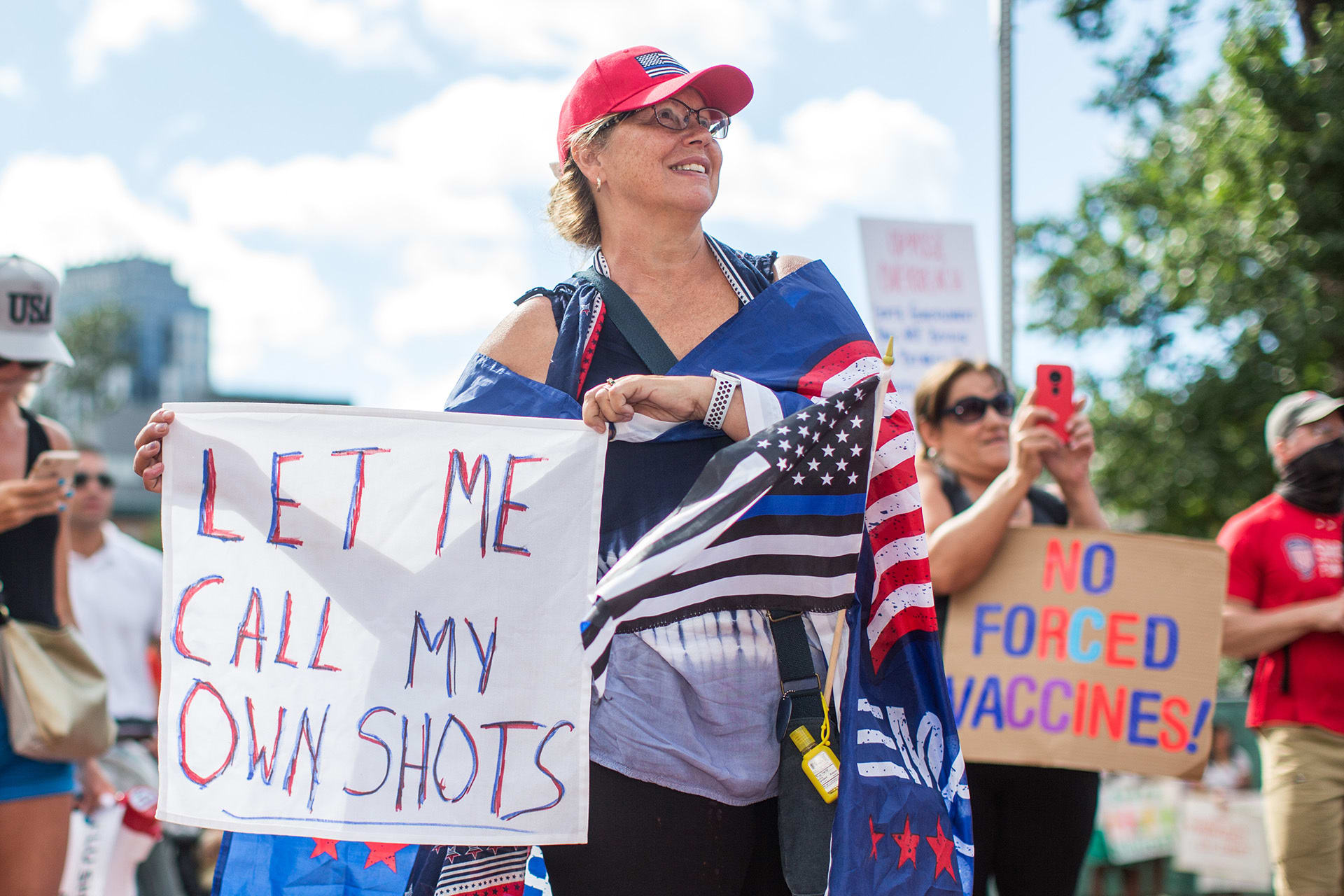
In the United States, where the overall decline is comparatively modest, confidence is deeply divided along partisan lines. According to a Pew Research study, Republicans are significantly less likely to express high confidence in childhood vaccines than Democrats (48 percent versus 80 percent). That skepticism now shapes federal health policy directly, most visibly through Health and Human Services Secretary Robert F. Kennedy Jr., who, prior to assuming office, claimed that “there is no vaccine that is safe and effective.” He has since instructed the U.S. Centers for Disease Control and Prevention to reverse its longstanding position that vaccines do not cause autism.
“The vaccine misinformation that could only be found online is now creeping into official U.S. policy sources and vaccine recommendations—and it will begin to reverberate globally, too,” Thomas J. Bollyky, Bloomberg Chair in Global Health at CFR, said.
Decades of Immunization Progress Under Strain
Growing distrust in vaccines casts a shadow over what has otherwise been a story of global public health success: a decades-long convergence toward higher immunization coverage across both higher- and lower-income regions, driven by sustained international coordination and financing—with the United States among the largest contributors through the World Health Organization (WHO), Gavi, and the U.S. Agency for International Development (USAID).
Today, coverage for certain vaccines such as DTP3—the third dose of the diphtheria, tetanus, and pertussis vaccine, which serves as an indicator of routine immunization system performance—exceeds 80 percent on average across most regions. In several countries, this represented a dramatic transformation: Ghana, India, and Nepal each went from covering fewer than 10 percent of children in 1980 to more than 90 percent today.
But that progress remains fragile. In places like the Palestinian territories, Sudan, and Venezuela, sustained declines in vaccination rates reflect the strain that conflict and humanitarian crises place on immunization systems. Setbacks have also occurred in lower-income countries where COVID-19 pandemic disruptions and cuts to global health funding, including the termination of USAID and the U.S. withdrawal from the WHO, have weakened vaccination systems and slowed recovery.
In other countries, however, coverage has slipped without a clear structural shock.
Vaccine Confidence vs. Vaccine Coverage
The relationship between public confidence in vaccine safety and actual vaccination coverage varies widely across countries. High-income countries have historically sustained higher levels of coverage, built on strong infrastructure and stable funding. But this favorable context has not insulated them from public skepticism.
High-income countries, in fact, span the full spectrum. Some combine strong coverage with relatively high public confidence, while others maintain high coverage despite lower levels of trust. Bulgaria, Hungary, and Latvia, for example, rely on mandates to sustain vaccination rates above 90 percent, as they rank among the countries with the highest levels of vaccine skepticism globally. Many other European countries achieve high coverage without mandates but through strong public health systems.
This variation reflects the interplay of forces shaping vaccination outcomes, including public confidence, access, and governance. In some countries, high levels of immunization persist even as trust weakens, underscoring the resilience of established vaccination systems. Yet this apparent resilience may not hold over time. In several countries that maintained high coverage levels over the past decade, declines in confidence coincided with meaningful drops in uptake. In Austria, a 15 percentage point drop in vaccine confidence between 2015 and 2023 was accompanied by a decline in coverage from 93 percent in 2015 to 85 percent by 2024. Romania experienced a similar pattern, with coverage falling from 89 percent to 79 percent over the same period—well below the 90 percent threshold recommended for DTP3.
Vaccine-Preventable Diseases Are Coming Back
Highly contagious diseases are the first to rebound when vaccination rates fall, providing an early alarm that is already sounding. The WHO announced in January 2026 that six European countries had lost their measles-free status, including Austria, Spain, and the United Kingdom—a shift driven by declining vaccination coverage. Canada lost its measles elimination status the previous year, and the United States is working to retain its own as cases surge.
Measles outbreaks are among the most visible signs of a broader trend. Vaccine-preventable diseases are rising globally, risking the reemergence of diseases that had virtually disappeared in many countries.
The consequences of eroding confidence are no longer hypothetical. Global health systems that eradicated smallpox and eliminated diseases like polio and diphtheria in many countries took generations to build. The conditions that sustain them—grounded in trust and political will—may be harder to rebuild than the infrastructure itself.
Nsikan Akpan and Allison Krugman contributed to this article.
Colophon
Data Visualization
- Lara Yeyati Preiss
- Will Merrow