Many Countries Eliminated Measles. Why Is It Coming Back in the U.S. and Globally?
Declines in vaccination rates and funding cuts have fueled measles outbreaks worldwide.
By experts and staff
- Published
- Surina VenkatDigital Content Editorial Intern
The United States declared victory in the fight against measles in 2000, saying the once common and deadly illness had been eliminated. But that could be changing, as measles makes an unwelcome global comeback. Canada already lost its measles-elimination status last year, and now the United States and Mexico—where cases have climbed into the thousands—face a similar fate.
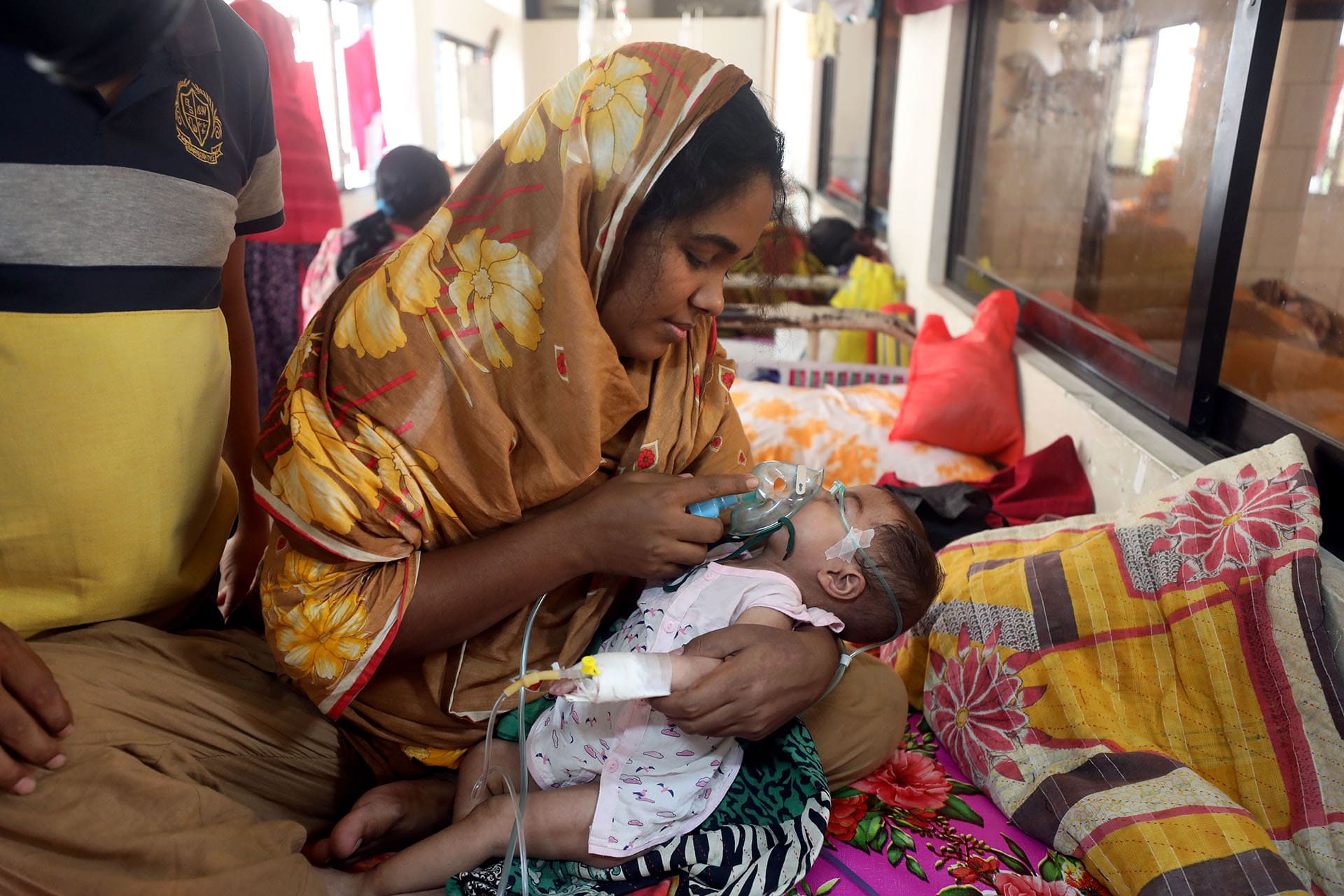
The disease is highly contagious but also easily preventable, owing to the invention of a vaccine in 1963 and decades of childhood immunization campaigns. Measles today persists primarily in low-income and lower-middle-income countries like Bangladesh, the Democratic Republic of Congo (DRC), and Pakistan, where vaccination rates remain low.
But rising vaccine skepticism and disruptions to public health infrastructure have revived measles in the past decade. Cuts to vaccination programs around the world have also increased the likelihood of measles’ continued spread, which experts say can pave the way for larger outbreaks.
What is measles?
Measles—also known as rubeola—remains staggeringly contagious. A person infected with measles can spread it to an average of twelve to eighteen people lacking immunity. An estimated ninety-five thousand people globally died from the disease in 2024, the last full year for which data is available.
Prior to vaccination campaigns in the late 1960s, the disease was incredibly common, particularly among children. In the United States alone, surveys in the 1950s indicated that 95 percent of the population had contracted measles by the age of fifteen. Measles epidemic cycles used to occur every two to three years.
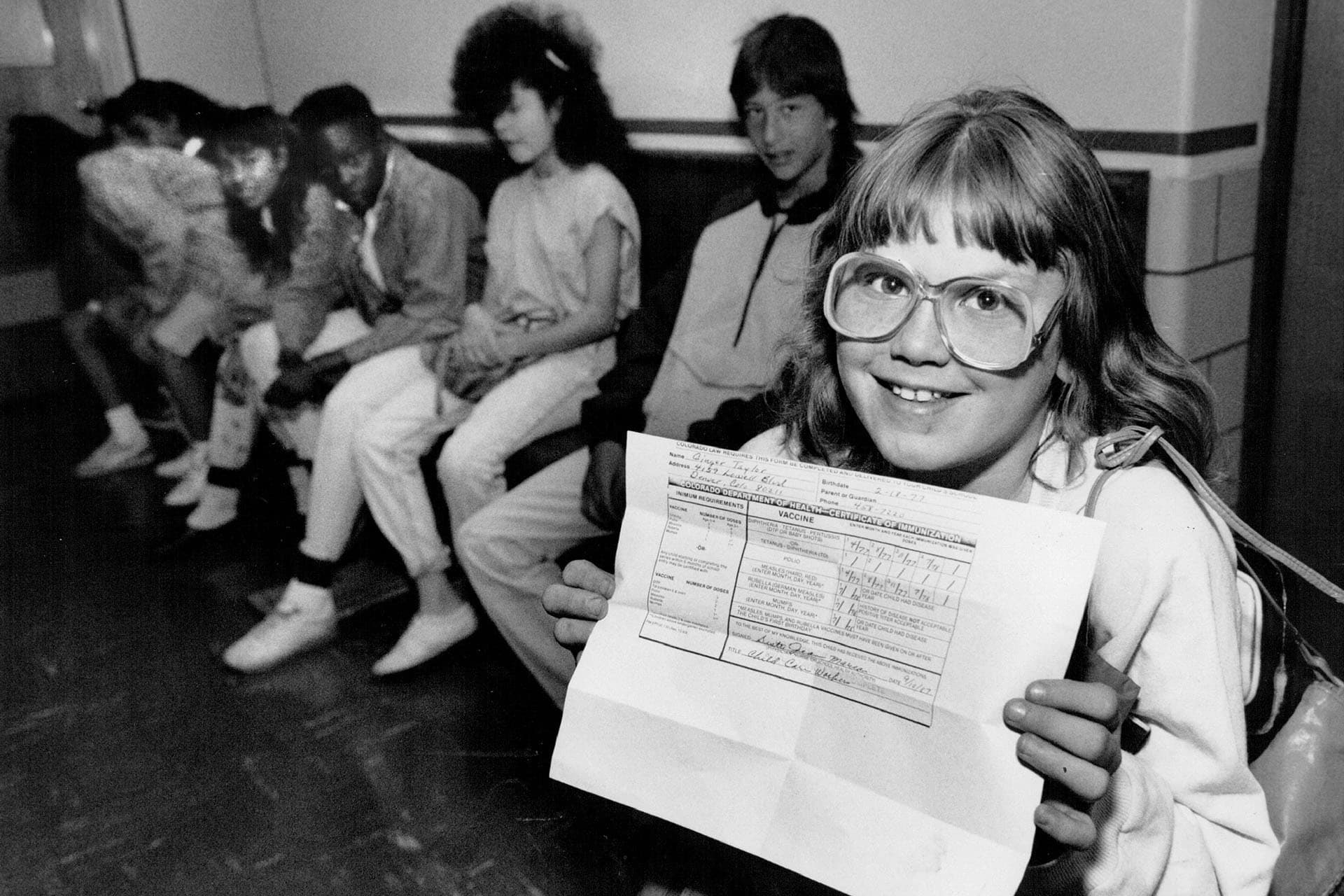
Though current fatalities from measles are low relative to the infection count, the disease used to kill approximately 2.6 million people worldwide annually, many of them children. In 1971, around eight years after the measles vaccine was invented, scientists combined existing vaccines to create the measles, mumps, and rubella (MMR) vaccine. As aggressive vaccination campaigns continued in the ensuing decades, the U.S. Centers for Disease Control and Prevention urged the public to administer one dose to their children when they were between twelve and fifteen months of age, and another at four years old.
The success of these campaigns allowed the United States to declare measles eliminated in 2000; by 2023, eighty-two countries had also declared measles eliminated. It is estimated that global vaccinations against measles between 2000 and 2024 saved fifty-nine million lives.
However, measles vaccinations are not universally accessible. “Gaps in coverage are driven by a mixture of deep-seated and long-standing global inequities, ongoing geopolitical conflicts, and vaccine hesitancy,” Jonathan Mosser, an associate professor at the University of Washington’s Institute for Health Metrics and Evaluation, said.
Where are measles outbreaks occurring?
In recent years, major measles outbreaks have occurred in countries including Ethiopia, the DRC, Iraq, and Kazakhstan, with tens of thousands of cases recorded.
Global and regional health authorities consider a country to have eliminated measles when there has been no continuous local transmission for at least a year. Recently, multiple countries have lost their measles-elimination status. In November 2025, Canada lost its status after the Pan American Health Organization (PAHO), a specialized international health agency for the Americas, revoked it following large measles outbreaks in several jurisdictions. Shortly after, the World Health Organization (WHO) confirmed in January 2026 that six countries in Central Asia and Europe—Armenia, Austria, Azerbaijan, Spain, the United Kingdom, and Uzbekistan—lost their elimination status based on 2024 data.
Meanwhile, the United States recorded more than 2,200 measles cases in 2025 and has already confirmed over 1,600 cases since the start of 2026. Both the United States and Mexico are considered at risk of losing their measles-elimination statuses when PAHO reviews them in November.
“The consequence of other countries losing their [measles] elimination status means the world is less prepared for serious disease threats,” Jennifer Nuzzo, director of Brown University’s Pandemic Center, told CFR. “It means we have lost abilities to prevent, detect, and respond to them. It should be considered the canary in the coal mine for what could happen in even more severe scenarios.”
At least 95 percent of a population needs to be vaccinated against measles to achieve “herd immunity,” the threshold at which enough people are immune against a disease and it cannot spread. Herd immunity helps protect those not fully vaccinated against measles from contracting the disease, such as infants too young to receive immunizations.
“When vaccination coverage is high, a new measles case arriving in a community is like an ember falling onto damp ground—it simply doesn’t have anywhere to spread,” Mosser said.
Why is measles spreading now?
Even as overall global measles vaccination rates have increased, many countries have seen their vaccination coverage rates slow or decline since 2010. According to experts, the stalling global vaccination rates can be attributed to distribution setbacks caused by the COVID-19 pandemic, increased vaccine skepticism fueled by disinformation, and long-standing global health inequities.
The pandemic, which began in 2020, only exacerbated this trend as lockdowns, transportation restrictions, and health-care system strains caused many children to miss their scheduled measles inoculations.
In the Americas, a substantial drop in vaccine coverage began pre-pandemic, with vaccination rates only just beginning to recover. Vaccination declines have been especially prominent in Latin American and Caribbean countries. A 2023 report by the UN Children’s Fund found that one in four children in the region were missing out on receiving important vaccines, marking the “biggest drop” in global childhood vaccination rates in the last decade. In Mexico, the share of children not vaccinated against measles reached almost 30 percent in 2021.
Meanwhile, in Canada, the percentage of two-year-olds who have received at least one vaccine dose against measles dropped to almost 82 percent in 2022 and 2023, down from about 90 percent in 2019. In the United States, the average measles coverage rate across two thousand U.S. counties studied fell to approximately 91 percent—a more than 2.6 percentage point decrease—following the onset of the COVID-19 pandemic in 2020, per a 2025 study from Johns Hopkins University.
Rising vaccine skepticism is also partly to blame. Growing distrust in public health has formed what one study called “pockets of susceptibility,” or communities with low vaccine coverage where outbreaks occur.
This has coincided with a rise in rhetoric disparaging vaccinations. In some countries, public officials have cast doubt on vaccine efficacy or reliability. Under the Trump administration, which has promoted unfounded claims that vaccines cause autism, the United States has scaled back childhood immunization guidance.
However, the nature of measles means that an outbreak in one country can reach far beyond its own borders. “Because countries are now no longer able to keep domestic transmission near zero, it just becomes harder for every country to control measles—even a country that has maintained a high level of measles vaccination coverage,” Brown University’s Nuzzo said.
What do U.S. foreign aid cuts mean for the global disease response?
Amid the growing politicization of vaccines, U.S. funding for combating infectious diseases at home and abroad has experienced drastic delays or cuts since President Donald Trump returned to office in 2025. The decline in funding has eliminated money for dozens of vaccine clinics across the United States. U.S. cuts have affected global efforts as well, destabilizing the work of international disease surveillance and laboratory networks responding to measles outbreaks.
Without robust public health programs to respond to the measles crisis, the World Health Organization (WHO) warns immunization gaps will continue to widen and drive further outbreaks. The UN agency helps support member countries’ immunization and surveillance activities, but it has experienced tumult after Trump initiated the withdrawal of the United States—historically one of the WHO’s largest contributors—on his first day back in office.
As of December 2025, the WHO’s Global Measles and Rubella Laboratory Network was only able to secure 15 percent [PDF] of its annual funding for 2026, which experts say is partly due to U.S. funding cuts. Gavi, the Vaccine Alliance—a public-private partnership between international health organizations and governments that has worked to increase global access to vaccines since 2000—announced that it faced a $3 billion shortfall for its 2026–2030 strategy after the Trump administration terminated Biden-era funding for the organization.
“To give specific examples of the cuts Gavi has had to make, access to measles and rubella vaccines will only be guaranteed for children up to age ten, instead of age fourteen, from 2026 onward,” a Gavi spokesperson told CFR. The organization has also made its malaria vaccination program “discretionary,” meaning that countries could opt in, but could also experience cuts to other vaccination programs to compensate.
Gavi will also cut its emergency vaccine stockpiles for cholera, meningitis, typhoid, Ebola, and yellow fever by 50 percent. As a result, the organization expects the number of deaths it can prevent will drop by six hundred thousand.
The U.S. Congress, which has generally made more measured cuts to health programs and services than Trump, introduced a bipartisan appropriations bill in January that would allocate billions to global health funding this fiscal year, including $300 million for Gavi. The Trump administration, however, has asked Gavi to phase out the use of thimerosal, a mercury-based preservative often used in vaccines, as a pre-condition for any U.S. funding. The fate of funding for Gavi and other global health initiatives remains uncertain, as does any plan to increase vaccination rates against a backdrop of rising public distrust in medicine.
With measles once again rearing its head, Mosser emphasized that public health infrastructure is crucial for responding to outbreaks and boosting coverage. “With our current vaccine, and with the right resources and commitment, we can interrupt the transmission of measles across entire continents,” he said. Only then can rising cases and deaths be avoided—which Mosser called an “entirely preventable tragedy.”
Colophon
Data Visualization
- Lara Yeyati Preiss
- Will Merrow