Iran Nuclear Talks: Three Lessons From the War for Negotiators
Diplomats have gathered in New York to review the future of the global nonproliferation regime, while Washington and Tehran develop terms for a potential future meeting in Islamabad. The Iran war has surfaced three initial nuclear security lessons that should shape the deals negotiators aim to reach.

Erin D. Dumbacher is the Stanton nuclear security senior fellow at the Council on Foreign Relations.
U.S. President Donald Trump was unequivocal last month when asked whether the United States would use a nuclear weapon against Iran: “A nuclear weapon should never be allowed to be used by anybody,” he said. That statement, striking in its restraint from a president who had threatened Iran with civilization-ending force, coincidentally came just before diplomats from 191 countries gathered in New York City to review the future of a treaty that has largely kept nuclear weapons from proliferating for more than 50 years.
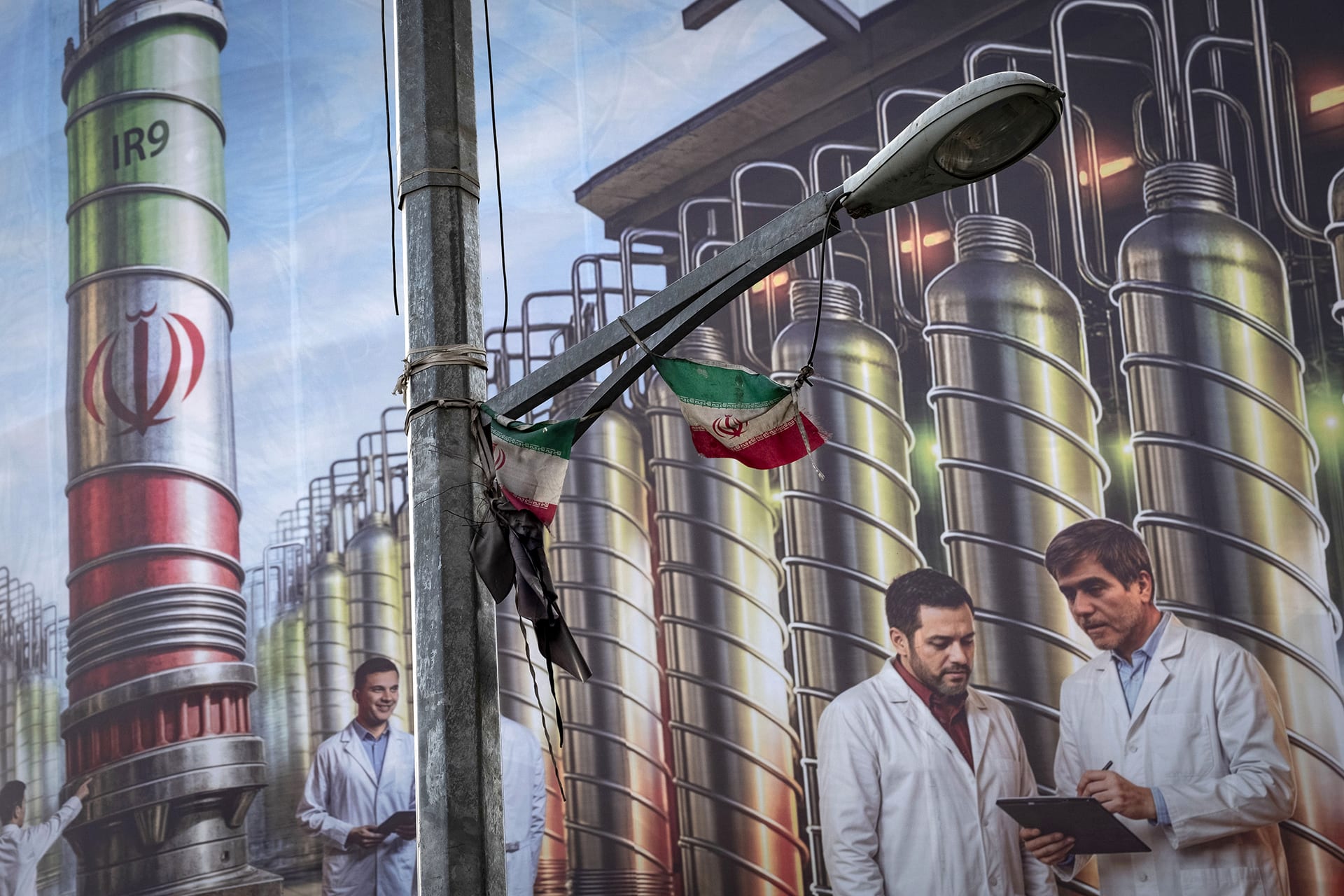
In New York, for the eleventh time, representatives of the states party to the Treaty on the Non-Proliferation of Nuclear Weapons (NPT) are reviewing the agreement’s fundamental bargain: few countries can possess nuclear weapons, but many can benefit from nuclear science and energy. Iran has tested the international nonproliferation system for decades as it sought and enriched nuclear materials. The U.S. president’s predecessors, sometimes with the other UN Security Council permanent five members (P5), slowed or curtailed Iran’s activities through negotiated inspections, export controls, sanctions, and even a sophisticated cyberattack on their enrichment facilities. But Trump’s seven-week war with Iran, and its unsteady ceasefire, has pursued another path to counter proliferation: military force.
The president’s gamble—that bombs can accomplish what inspectors and negotiators could not—now hangs over future ceasefire talks with Iran and the nonproliferation conference in New York. Though negotiators in both locations should aim for “better-than-nothing” deals, the paths are fraught. If Iran is unsuccessful in isolating nuclear issues from ceasefire talks and negotiators return to Islamabad for discussions, the United States could seek new limits on uranium enrichment and weaponization of Iran’s 440 kilograms of fissile material. Negotiators in New York are not expected to agree on new nonproliferation initiatives, but a formal, consensus document to reaffirm the NPT’s core bargain would be better than nothing—and more than recent Review Conferences have managed to deliver.
The outcomes of both sets of talks are far from clear. But the war itself, and its ripple effect on the NPT conference, has surfaced three critical nuclear security lessons that should guide whoever sits at either negotiating table.
Lesson one: Military strikes are not decisive
The first lesson negotiators should draw is that air wars alone cannot counter proliferation or eliminate a nuclear program. It is possible to stall, delay, or obliterate enrichment facilities, but even a tactically effective, full-scale air war cannot destroy Iran’s vast nuclear program without ground troops.
International Atomic Energy Agency (IAEA) inspectors have not been able to access major nuclear sites since before the Twelve Day War in 2025, when the U.S. Air Force dropped the world’s largest conventional bomb on Iranian nuclear enrichment sites—creating a blackout the current conflict has only deepened and that world leaders know exposes gaps in enforcing nonproliferation.
That is why the Trump administration’s counter-proliferation-through-force approach could backfire: it encourages those who want to develop nuclear programs to hide their activities rather than adhere to the successful nonproliferation approach of diplomacy and transparency that the P5 representatives of the UN Security Council have used since the signing of the NPT fifty-eight years ago. The Iran war could have a chilling effect on inspections and international engagement among states hedging with some nuclear materials—maintaining the materials and capacity to weaponize but staying below the weaponization threshold. Iran’s nuclear program is symptomatic of inherent disparity embedded into the NPT, which does not permit countries that did not test nuclear weapons before 1967 to ever have them. But will the other states be content to live without their own nuclear weapons now?
Iran’s next steps will likely be unclear during a ceasefire or even after the war concludes. The Islamic Republic could decide to shift to a North Korean model of proliferation, hiding some activities until it decides to unveil its capabilities in the form of nuclear tests and ballistic missile firings. If NPT member states can no longer gain as much transparency into Iranian nuclear program developments because negotiations do not establish invasive inspections, Iran’s path will be less predictable. And with a new leader at the helm of the Iranian regime, its nuclear strategy could be distinct from that of Ayatollah Ali Khamenei, who was recently killed in the U.S.-Israeli attacks.
Iran retains enough nuclear material, enriched to 60 percent capacity, for roughly twelve nuclear weapons if the regime decides to use its remaining nuclear facilities and know-how to sprint to weaponization. As IAEA Director General Rafael Grossi has said, the negotiators will “have to address all of this if they want to have a comprehensive agreement” to stymie the Iranian nuclear program.
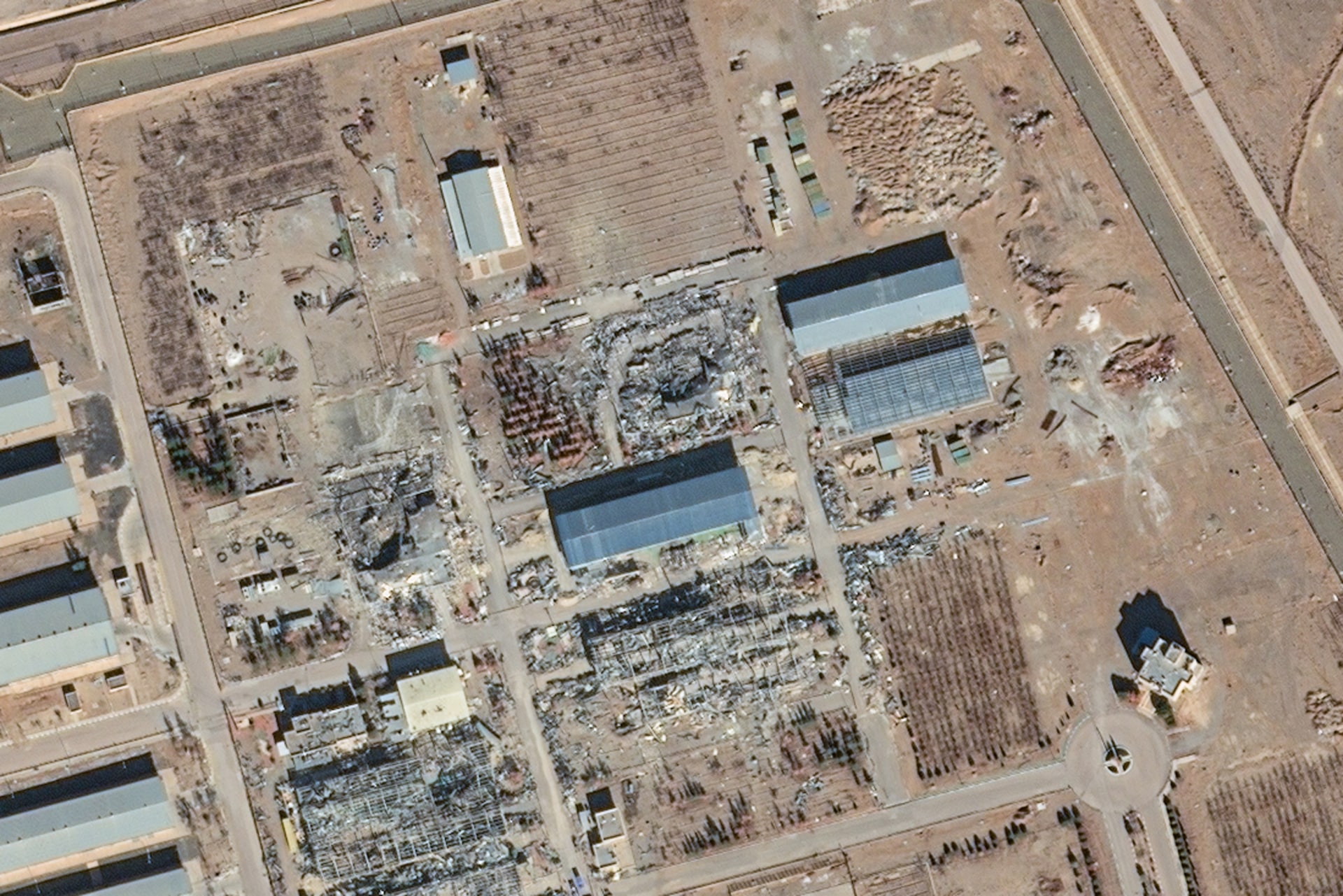
For now, the United States and Israel could pair a “mow the grass” strategy with diplomacy, committing military forces to repeated operations while in pursuit of a deal. But this conflict is already unpopular, and public support for sustained military engagement tends to erode over time. There is a risk that the United States could withdraw from the region without a comprehensive diplomatic settlement because of domestic pressure, an unwillingness to commit ground troops, or critical munitions shortfalls. In this scenario, Iran could then be left with enough fissile material and expertise to sprint to weaponization on its own timeline, making the Islamic Republic a second de facto nuclear weapons state in the Middle East.
Trump withdrew from the President Barack Obama-negotiated Joint Comprehensive Plan of Action (JCPOA) during his first term, promising to deliver something better. He said on April 20 that it would come together during this ceasefire: “The DEAL that we are making with Iran will be FAR BETTER than the JCPOA.” It was reported that the president preferred a more comprehensive agreement that included restraints on Iranian ballistic missile program and support for regional proxies. This is precisely why some advocates will push for a nuclear-weapons-free zone in the Middle East during the NPT Review Conference in New York. In the meantime, the Islamic Republic may believe that it can proceed with nuclear hedging or race to build a bomb.
Lesson two: Adopt modern nuclear energy safeguards
A second lesson is that nuclear energy could look even more appealing in Asia and the Middle East given the energy security risks the closure of the Strait of Hormuz exposes. Secretary of State Marco Rubio even called Iran’s decision to close the critical waterway the equivalent of an economic nuclear weapon. But sudden investment in nuclear energy carries its own risks. A nuclear power plant could be an obvious target for Iranian missiles and, in some cases, host nations want the option for an indigenous enrichment capacity. The economic and climate advantages of nuclear power are still apparent, but Iranian drone attacks on Emirati data centers and Qatari liquid natural gas export facilities have illustrated to Gulf officials that critical infrastructure can be easily struck.
Although a single drone attack is unlikely to cause destruction and radiological release, drone swarms, missile bombardments, or targeted strikes on backup power generation raise security and safety concerns. Indeed, the fortieth anniversary of the Chernobyl disaster and the more recent wartime risks at the largest nuclear power plant in Europe—Ukraine’s Zaporizhzhia—are reminders of the widespread health, safety, and economic responsibilities that nuclear power plant operators have to carry.
Countries like Saudi Arabia becoming more bullish about their pathways to domestic nuclear energy production carries a secondary risk if nonproliferation standards do not accompany their investments. Saudi Arabia could seek their own enrichment capacity, which can be repurposed as a pathway to weaponization. Already, the Trump administration is pursuing a civil nuclear agreement with the Kingdom that does not include these standards, unlike previous administrations.
Global markets can supply nuclear material without the need for domestic enrichment. However, representatives meeting in New York should adopt safeguards to protect these deliveries while also ensuring the safety of existing plants and new builds—including the emerging nuclear reactor technology currently drawing venture-capital interest.
Lesson three: Recommit to no use
The final lesson is one the Iran war illustrates plainly: leaders should impose limits on nuclear proliferation and reduce risks of nuclear use. The war reaffirms that countries prefer to fight with conventional munitions and avoid nuclear warfighting, even when it is over nuclear matters and with vast nuclear arsenals ready to fire upon adversaries. That means there is space to reaffirm the core belief, held since the 1960s and the NPT’s founding, that nuclear weapons should not be wielded again. Even though Trump threatened civilization-ending force against Iran—which he could singularly do as the only relevant decision-maker to launch a nuclear attack under U.S. law—there is no public evidence the president has entertained using nuclear weapons.
But it is unlikely that the United States, China, and Russia will agree on sweeping, new nonproliferation initiatives at the Review Conference in New York, be able to enact weapons-free zones, or restrain P5 countries from extending their nuclear deterrence to allies. There is a sense of foreboding for the future of the treaty and its accompanying safeguards as the U.S. dials back its international leadership, even though the NPT deserves credit for keeping the total number of countries around the world with nuclear weapons to just nine—not the “15 or 20 or 25” expected by leaders in the 1960s. Extensive export controls and domestic laws in the P5 and many other countries around the world have made the NPT’s ambitions a reality, and reversing that progress or adjusting the existing system presents new risks. So even a recommitment to the basic tenets of the NPT would be a win for the global nonproliferation regime at a time when popular support for nuclear proliferation in Poland and South Korea, for example, is growing.
Even if officials in New York will not restate it in formal proceedings, the Iran war should give world leaders another reason to redouble their nonproliferation efforts. Short of that, NPT parties could try to make progress on mutual agreements to limit artificial intelligence use in decisions about nuclear weapons, recommit to bans on nuclear testing, or arrange for safeguards of emerging nuclear technologies. At a time of heightened risk for nuclear proliferation, such statements would be—at the very least—better than nothing.
This work represents the views and opinions solely of the author. The Council on Foreign Relations is an independent, nonpartisan membership organization, think tank, and publisher, and takes no institutional positions on matters of policy.