Who Is Really in Charge in South Africa?
Iran’s inclusion in a BRICS naval exercise reveals a civil-military relations problem in Pretoria.
By experts and staff
- Published
 Michelle GavinCFR ExpertRalph Bunche Senior Fellow for Africa Policy Studies
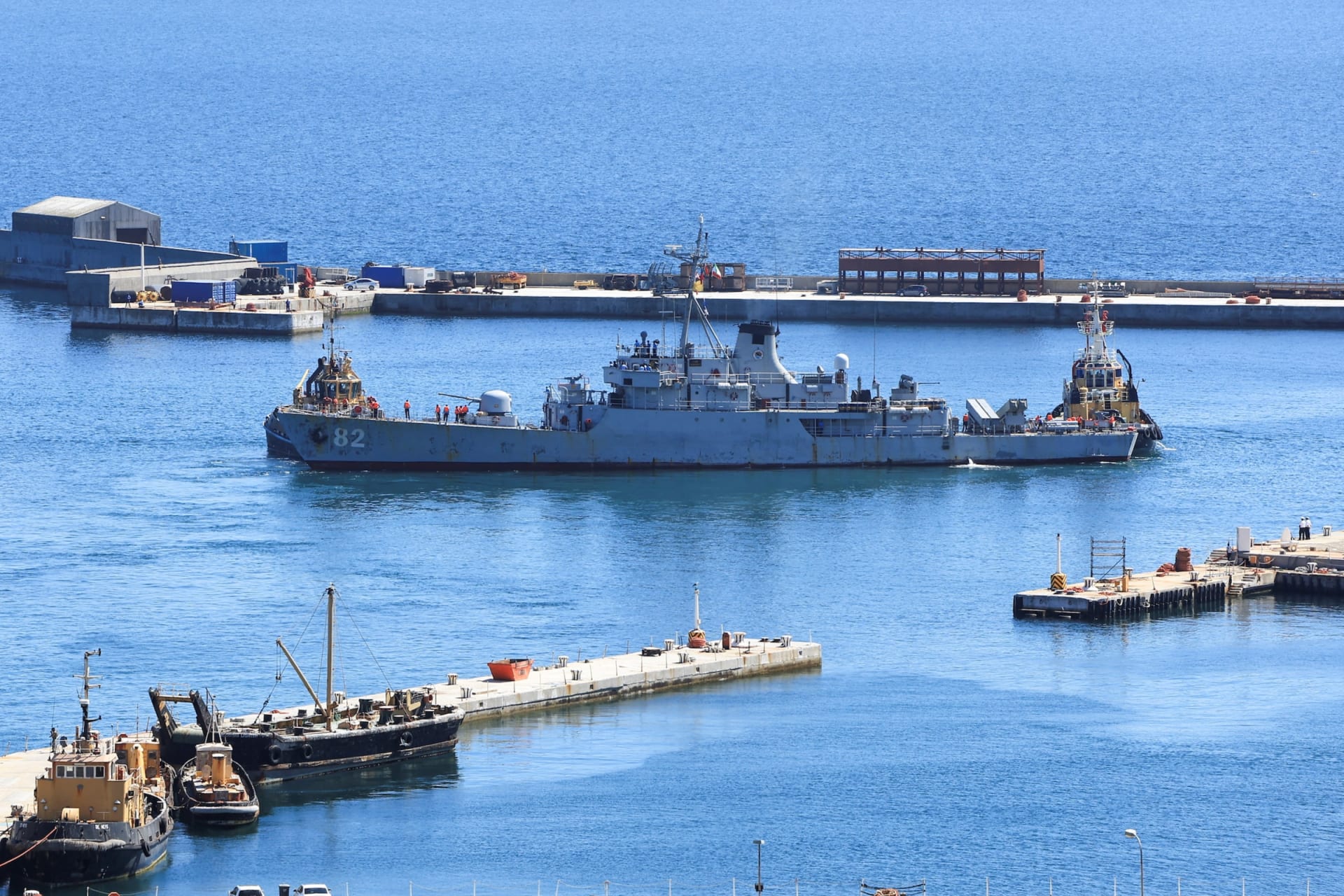
Earlier this month, several members of the BRICS grouping conducted joint naval exercises, called “Will for Peace 2026” off South African waters. China led the training, participating alongside their South African hosts, Russia, Iran, and the United Arab Emirates. South Africa’s enthusiasm for BRICS is not new. The somewhat inchoate grouping embodies a widely held desire in South African foreign policy circles to create alternative structures to those perceived as dominated by Western powers. But the incident was particularly newsworthy because of what it revealed about the gulf between South Africa’s military leadership and the civilians to whom, constitutionally, that leadership should be accountable.
The timing of the exercise, which spanned January 9 to 16, coincided with the violent Iranian crackdown on a mass civilian uprising aimed at fundamentally changing the nature of the Iranian government. Whether the optics of working with Iranian security forces as they massacred their own citizens troubled him or not, South African President Cyril Ramaphosa reportedly was concerned that doing so would worsen the already deeply troubled U.S.-South Africa relationship. Thus, President Ramaphosa expressly directed that the Iranian navy should not participate. And yet, they did.
Predictably, the U.S. Embassy in Pretoria complained about South Africa “cozying up” to the Iranians. But the fallout for the U.S.-South Africa relationship is a secondary issue. Rather, the incident exposed an alarming disconnect between the civilians constitutionally and democratically empowered to set policy, and South African military officials who appear to have simply disregarded lawful instructions.
South Africa’s Defense Minister issued a statement asserting that all parties had been informed of the President’s directive and committing to establish a Board of Inquiry to investigate what happened. But the critically important issue of whether or not the chain of command was simply ignored risks being lost in debates about how South Africa should respond to the United States’ neo-imperialist turn or what the nature of South Africa’s relationship with Iran should be, an issue also amplified by South Africa’s abstention from a resolution at the United Nations Human Rights Council aimed at broadening the UN’s investigation into Iran’s repression. Those are urgent, important topics that need discussion and exploration, but a situation in which South Africa’s armed forces are pursuing their own ideas about geopolitics is a five-alarm fire.
Accountability is often elusive in South African senior circles—in part because the African National Congress, the party Ramaphosa leads, is not just one part of a coalition government, but is also an entity divided against itself. Holding the party together has often come at the expense of imposing any real consequences to those undermining the government’s decisions and directives. This is not the first time South African military leaders appear to have gotten out over their skis when it comes to Tehran. It’s worth watching closely to see whether the issue fades into memory with no actual clarity about just what happened. South Africa prides itself on its hard-won democracy. Whether or not its leaders will acknowledge it, an unaccountable military is a serious threat to that precious asset.