Why Kevin Warsh Won’t Revolutionize the Federal Reserve
Warsh has aligned himself more closely with Trump’s agenda recently, but the president is mistaken to think a dramatic transformation at the Fed will lead to sudden rate cuts.
By experts and staff
- Published
 Roger W. Ferguson Jr.CFR ExpertSteven A. Tananbaum Distinguished Fellow for International Economics
- Research Associate, International Economics
Roger W. Ferguson Jr. is the Steven A. Tananbaum Distinguished Fellow for International Economics at the Council on Foreign Relations. Maximilian Hippold is a research associate for international economics at CFR.
President Donald Trump has nominated Kevin Warsh, a former Federal Reserve governor, to serve as the next chair of the Federal Reserve once Jerome Powell’s term as chair ends in May 2026. After years of railing against what he views as misguided monetary policy, Trump aims to resolve his issues with the central bank by installing an ally in arguably the most influential economic post in the United States. Yet if the president expects a dramatic transformation at the Fed that will lead to significant interest rate cuts, he is likely to be disappointed. Financial markets and economic realities will impose strict limits on the next chair.
Trump nominated Powell as Fed chair in November 2017, praising his “steady leadership, sound judgment, and policy expertise.” However, he soon became critical of the Fed’s interest rate hikes, arguing that Powell’s “hawkish” approach would undermine his economic agenda and his desire for interest rates to be reduced to 1 percent or lower. Since the start of his second administration, those criticisms have grown sharper. On Truth Social, Trump has called his last Fed chair pick a “major loser,” “TOO STUPID,” and a “FOOL.”
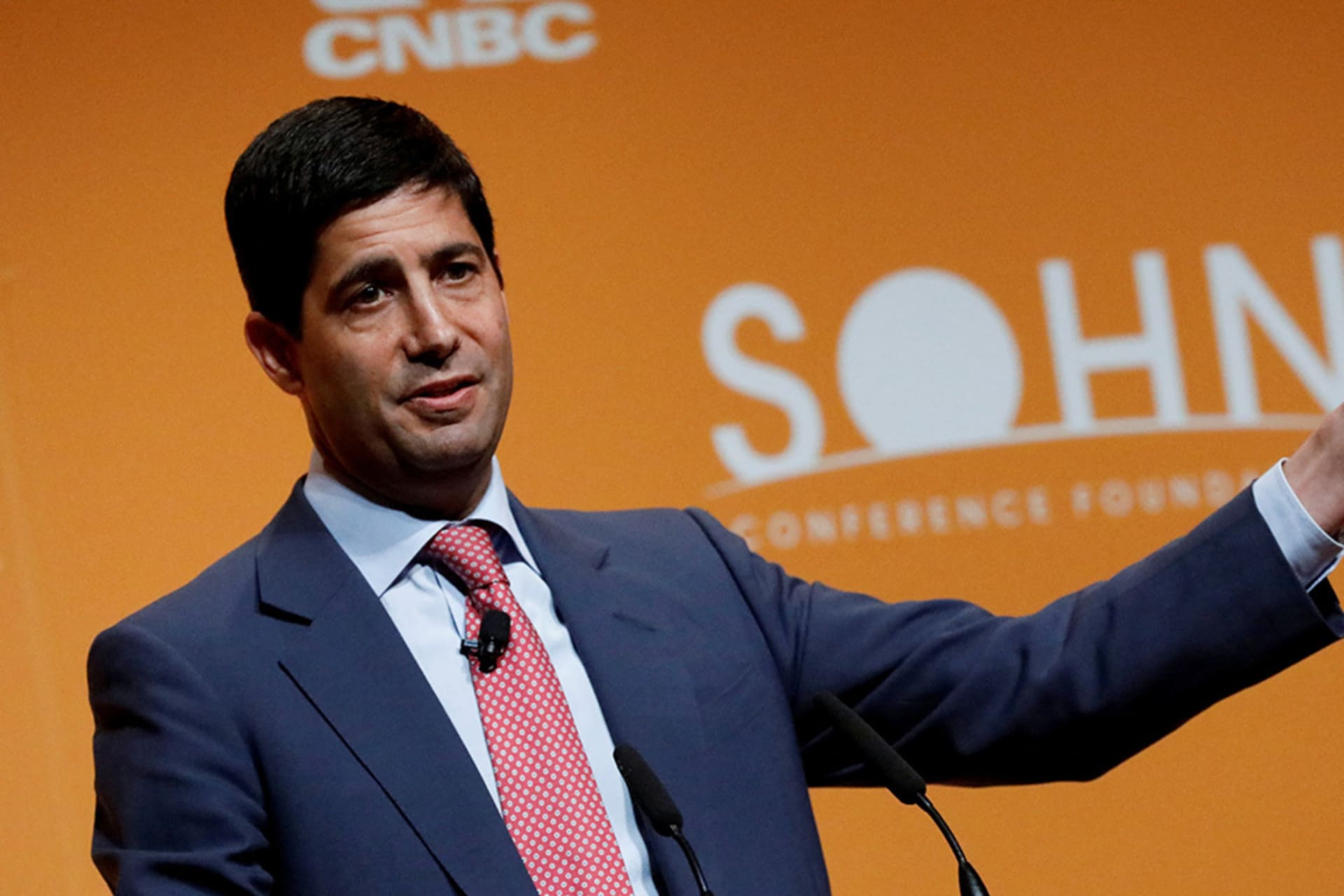
Trump believes he has found a successor who will align with his economic priorities in Warsh. As a Fed governor during Ben Bernanke’s tenure as chair, Warsh was the primary intermediary between the central bank and Wall Street during the 2008 global financial crisis. Whether the former Fed governor will push for interest rate cuts is uncertain, but the president reportedly nominated him for his ability to persuade and his support for lower rates. It appears Warsh has grown increasingly aligned with multiple elements of Trump’s view of the central bank, even arguing that tariffs won’t cause inflation to spike. He has called for “regime change” at the Fed, criticizing it for its refusal to cut rates, heavy reliance on data, and use of assets on balance sheets.
But Deutsche Bank analysts said in a December note [PDF] regarding Warsh’s potential nomination that they still “do not view him as structurally dovish. His views while he was a governor around the [2008 global financial crisis] at times skewed more hawkish than his colleagues, particularly on the balance sheet.”
Either way, if confirmed by the Senate, Warsh is unlikely to be as transformative as some expect and the president likely hopes.
Interest rate decisions are not made by the Fed chair alone. They are determined by the Federal Open Market Committee (FOMC), a twelve-member body that includes seven Fed governors and five regional Fed presidents. While the chair presides over the committee, he cannot dictate policy without securing the support of a majority of its members.
Economic realities will also constrain the range of policy options. With inflation still running above the Fed’s 2 percent target, aggressively cutting interest rates could worsen price pressures. Affordability and the cost of living remain top concerns for voters. With midterm elections approaching in November, a monetary policy that is too loose and keeps inflation elevated could prove politically damaging, risking voter backlash against the Republican-controlled Congress.
Perhaps most importantly, financial markets will react strongly to any signs that the Fed is compromising its independence or abandoning its data-driven approach. Trump has shown sensitivity to market turbulence before. When bond markets fell in response to his “Liberation Day” tariffs or after his Greenland threats, he ultimately reversed course. With borrowing costs already elevated and the United States running persistent budget deficits, a loss of trust and rising yields could trigger market volatility and fiscal headaches for the administration. It is hard to imagine Trump risking a financial crisis that undermines confidence in the U.S. financial system.
The easiest way for Warsh to reassure financial markets will be during his confirmation hearing. Likely sometime in the spring, where he can affirm his commitment to a data-driven Federal Reserve and sound monetary policy. Senate Democrats will press him on this point, as they will want to see how he intends to maintain the Fed’s independence and whether he will closely align with Trump’s economic priorities.
Critics, including Senator Elizabeth Warren (D-MA) of the Senate Banking Committee, have already raised concerns that Trump’s pick will undermine the central bank’s independence. But Democrats are not the only obstacle that Warsh faces to confirmation. Though many Republicans have indicated their support of Trump’s pick, Senator Thom Tillis (R-NC) said he intends to block the Senate Banking Committee’s recommendation of Warsh until an ongoing criminal probe of Powell is “fully” resolved. Tillis is referring to the Department of Justice investigation that is reportedly focused on the cost of the Fed’s renovation of its headquarters and Powell’s Congressional testimony regarding the matter. Many, including Powell and Tillis, believe the investigation came about because the Fed is unwilling to cut interest rates as quickly as Trump would like—and it poses a threat to the institution’s independence.
That independence, established in 1951, is seen as essential to preventing short-term political pressures from shaping monetary policy. If a new chair were overly responsive to the White House, the economic consequences could be catastrophic. The Fed’s mandate is to make decisions based on data and sustainable economic stability—not to lower rates for political gain.
These decisions are often unpopular but necessary. This was evident in the aftermath of the COVID-19 pandemic. With inflation running high, the Fed was forced to raise interest rates to more than 5 percent. In the 2024 presidential election, affordability and the state of the economy were top of mind for voters. While politically unpopular, the Fed’s decision ultimately paid off, and inflation eased from a peak of more than 8 percent in 2022. Without the Fed’s ability to make these unpopular but necessary decisions, the U.S. economy and households nationwide would suffer.
Ultimately, however, the structure of the FOMC, the state of the economy, and financial markets could prove to be the strongest constraint of all. Trump grew frustrated with his first appointment, and he is likely to encounter similar limits—even with a loyalist in the role. More plausible than a revolutionary Fed is a chair who communicates differently and echoes Trump’s views on the economy without implementing his most radical ideas. In the end, Trump may be satisfied simply knowing that his vision of an “A+++++” economy is validated by the Federal Reserve.
This work represents the views and opinions solely of the author. The Council on Foreign Relations is an independent, nonpartisan membership organization, think tank, and publisher, and takes no institutional positions on matters of policy.