Remember the Maine!
The explosion and sinking of a U.S. battleship in Havana harbor in 1898 propelled the United States toward war with Spain.
By experts and staff
- Published
 James M. LindsayCFR ExpertMary and David Boies Distinguished Senior Fellow in U.S. Foreign Policy
“Don’t Tread on Me.” “Fifty-four Forty or Fight!” “Damn the torpedoes! Full speed ahead!” “Nuts!” The history of U.S. foreign policy is full of pithy declarations that capture the country’s determination to act at pivotal moments. Today marks the anniversary of one such declaration: “Remember the Maine! To hell with Spain!”
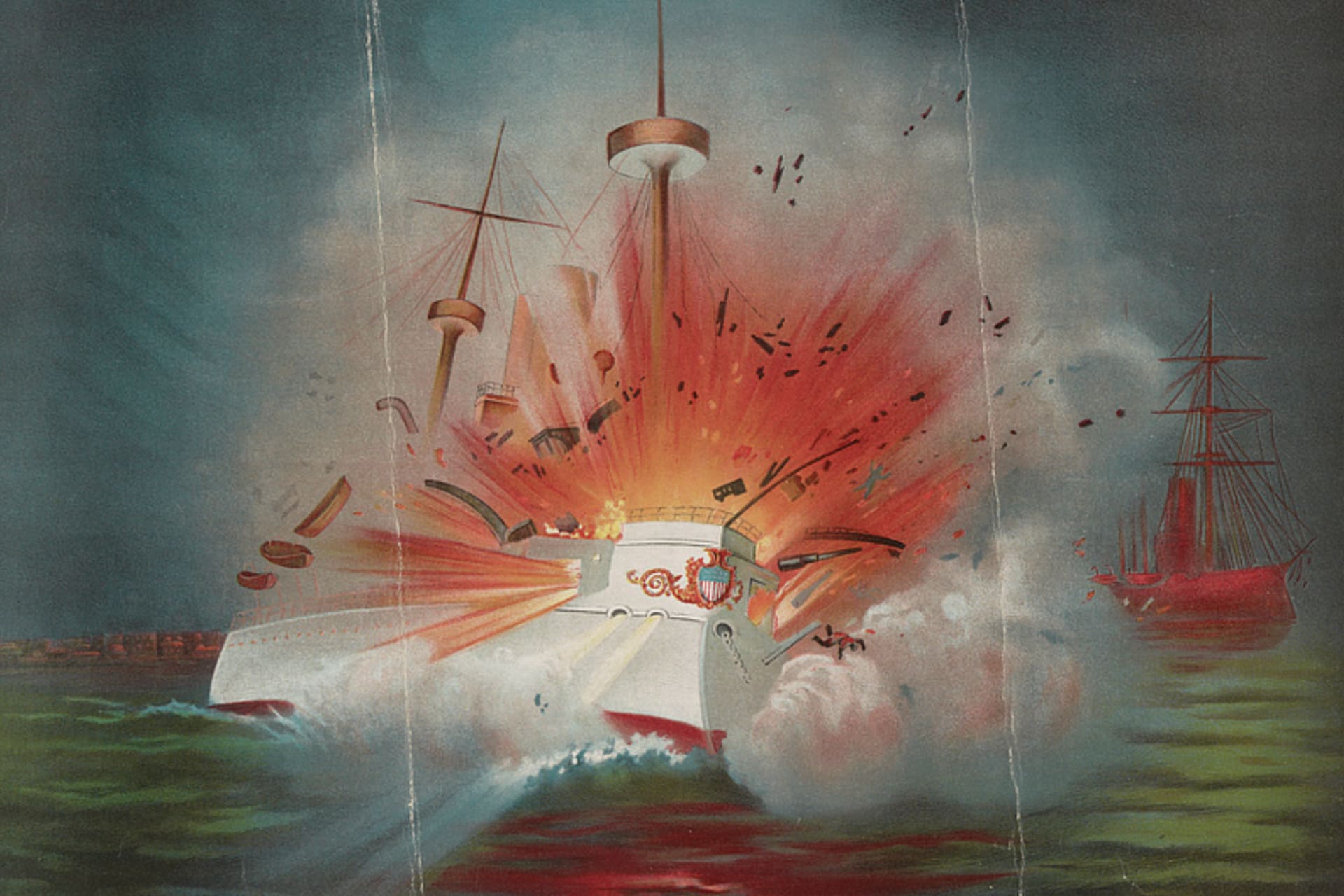
The 354 men aboard the battleship USS Maine were enjoying a quiet evening on February 15, 1898, as the ship lay at anchor in Havana harbor. They had been dispatched to Cuba less than a month earlier to protect U.S. interests as the Cuban revolution against Spanish rule gained strength. But at 9:40 p.m. everything changed. An explosion rocked the ship’s magazines, tore apart its forward sections, and sent the Maine to the bottom of the harbor. Two hundred and fifty-two U.S. sailors died immediately; another fourteen subsequently succumbed to their wounds.
What had happened? The U.S. Navy’s initial investigation concluded that a mine had caused the explosion. Who had laid it? The Navy could not say. The sensationalist American “yellow press,” however, had no doubt about who the culprit was: Spain. William Randolph Hearst’s New York Journal roared that “The Warship Maine Was Split In Two By An Enemy’s Infernal Machine.”
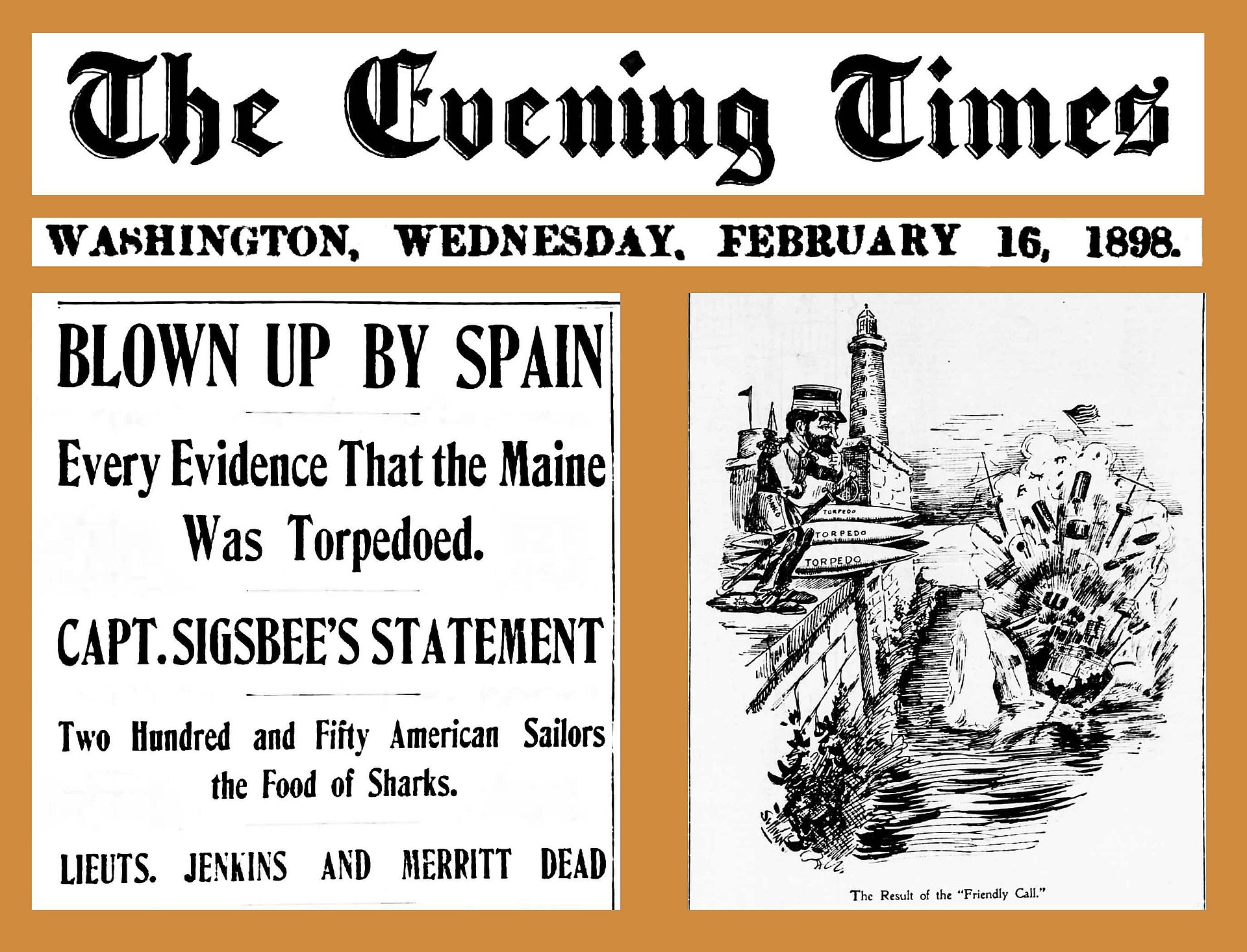
The sinking of the Maine came at a time of heightened tensions between Washington and Madrid. Some Americans had been calling for years for the United States to assert itself more aggressively in the Western Hemisphere. Theodore Roosevelt, one of the most prominent imperialist voices, wrote in 1895: “I should welcome almost any war, for I think this country needs one.” The yellow press had been regaling their readers for months with stories of Spanish atrocities in Cuba. Just days before the Maine sank, Hearst’s Journal published a confidential letter that Spain’s ambassador to the United States had written dismissing President William McKinley as “weak and a bidder for the admiration of the crowd.” Americans were furious at the disrespect shown to their president.
The conviction that Spain had sunk the Maine galvanized the American public. As a Journal headline put it, “The Whole Country Thrills With War Fever.” And the fever did not break. In late April, McKinley reluctantly asked Congress to declare war on Spain. Congress did. The Spanish American War began in May. By August, what future secretary of state John Hay famously dubbed a “splendid little war,” was over. The United States emerged with a protectorate over Cuba and control of Guam, the Philippines, and Puerto Rico. In a single century the United States had gone from infancy to world power.
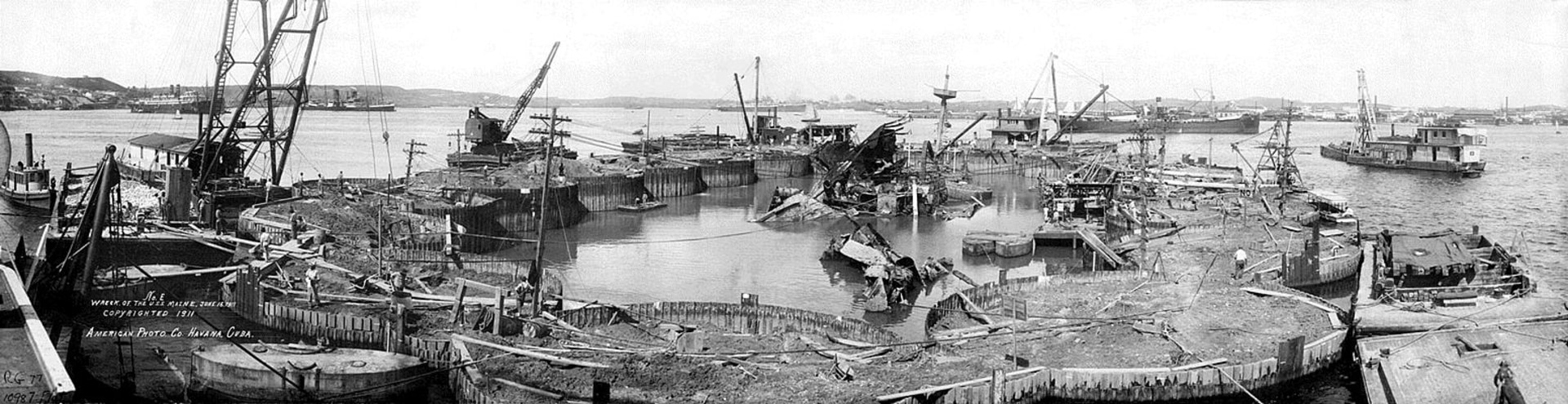
Although the sinking of the Maine stands as a critical event in the history of U.S. foreign policy, the cause of the explosion remains contested. The Army Corps of Engineers examined the wreckage in 1911 and reaffirmed the Navy’s original conclusion that a mine had destroyed the Maine. However, Admiral Hyman G. Rickover, the legendary father of the U.S. nuclear navy, launched a review in 1974 that concluded that a fire in the ship’s coal bunker most likely caused the explosion. A 1998 analysis commissioned by the National Geographic Society concluded that, although there were signs of an external mine, the evidence was inconclusive.
The cause of the Maine’s sinking may remain a matter of debate. But its consequences are not. It helped lead, as Senator Henry Cabot Lodge later wrote, to a war with results that “were many, startling, and of world-wide meaning.”
Remember the Maine!
The United States celebrates its 250th anniversary in 2026. To mark that milestone, I am resurfacing essays I have written over the years about major events in U.S. foreign policy. A version of this essay was published on February 15, 2012.
Oscar Berry assisted in the preparation of this post.