Will the Next World Food Program Chief Answer to Trump?
Odds are, a Trump pick could run the world’s largest aid agency. The stakes could not be higher.
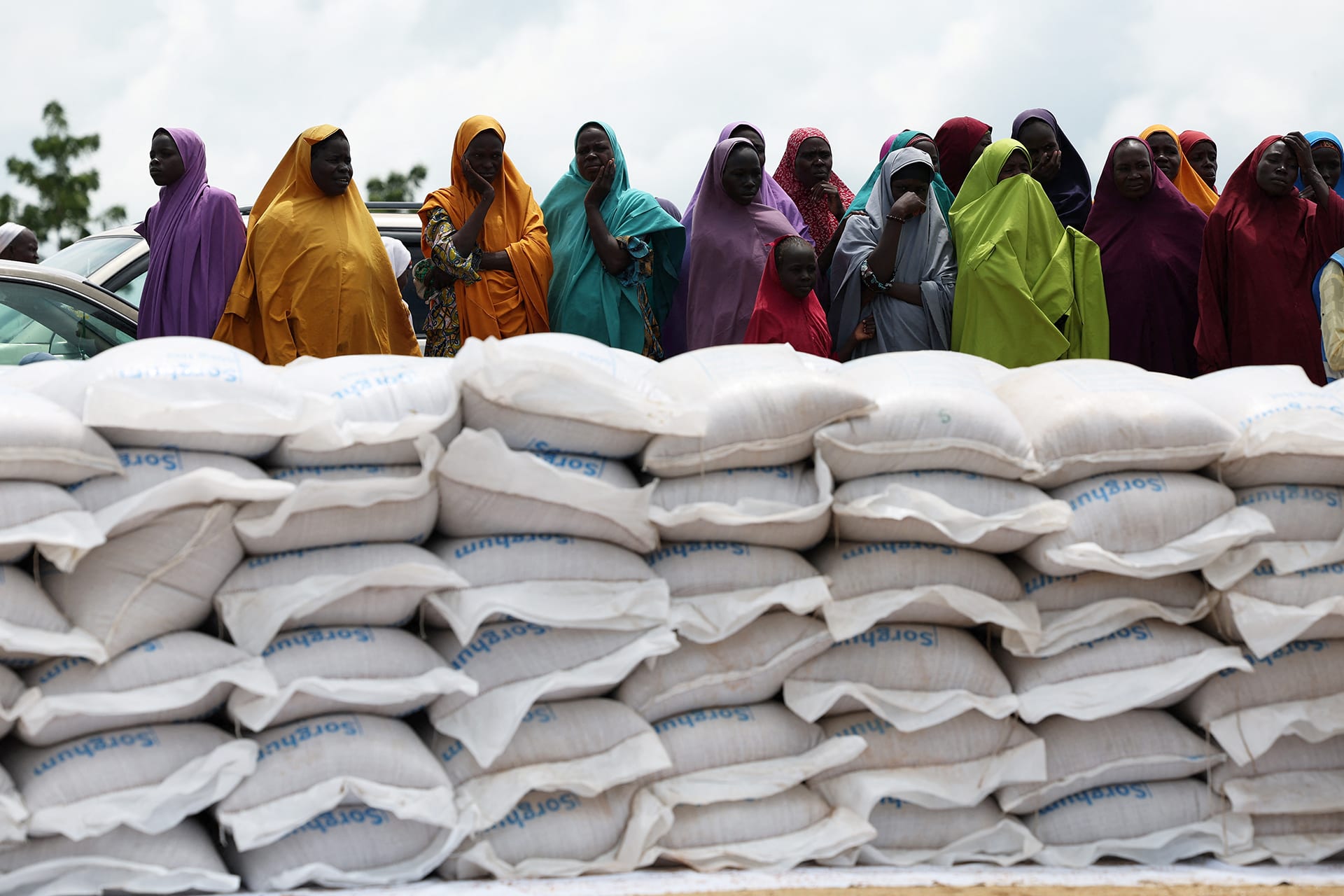

This story was originally published by The New Humanitarian.
Cindy McCain’s tenure running the World Food Program will end prematurely. The executive director announced on February 26 that she planned to resign for health reasons following a stroke in October. If past is prologue, the UN secretary-general will fill the vacancy with a U.S.-nominated candidate—empowering President Donald Trump to reshape the organization under his vision of humanitarian statecraft.
But, after a year of U.S. hostility to the United Nations and a funding retreat, will António Guterres actually honor that unwritten agreement? Either way, Trump holds the cards: He can dangle restored financing should a loyalist take the helm, or threaten to gut support if his candidate is blocked. Indeed, the recent U.S. withdrawal from the World Health Organization offers a preview of what happens when Trump doesn’t get his way.
Given the moment—famine spreading, and hunger surging—odds are that Guterres will again appoint an American to run the world’s largest aid organization, as one has since 1992. The more consequential question is whether Trump’s pick will rebuild WFP’s lifesaving mission, or continue dismantling an enterprise awarded the Nobel Peace Prize just six years ago.
A consideration that would have seemed far-fetched a few years ago must be taken seriously today: preserving the integrity of the WFP itself. A Trump appointee forcing WFP to procure exclusively from America, or to prioritize unprincipled aid at the direction of Washington, is not out of the question. The standoff between the U.S.-backed Gaza Humanitarian Foundation and the United Nations last year previews how the latter might look.
WFP is at a crossroads, and the stakes could not be higher—for the United Nations, for the humanitarian system it anchors, and for the millions who depend on both.
An organization on the ropes
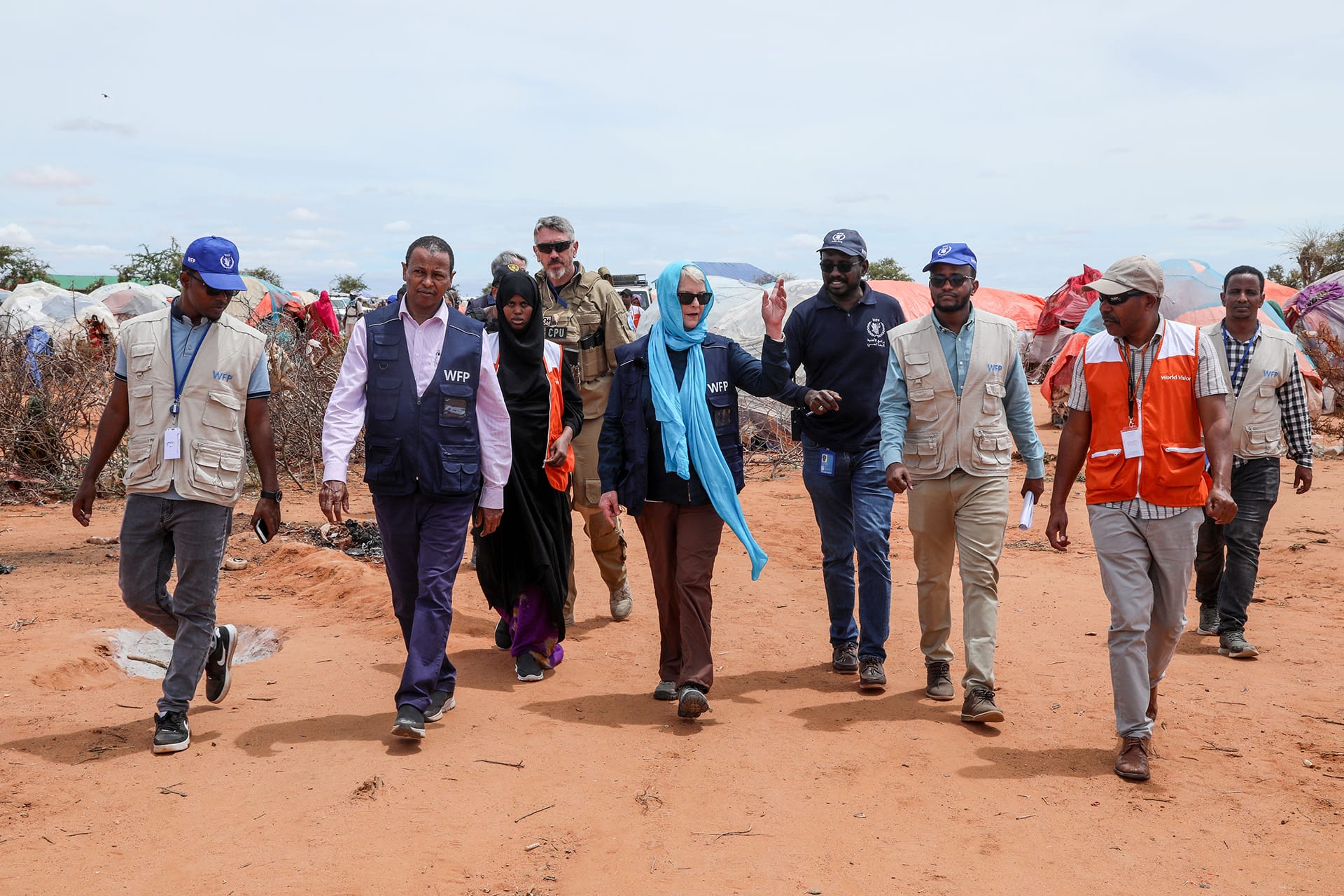
WFP’s future—and the Trump administration’s interest in shaping it—are more uncertain today than at any point in its nearly seventy-year history. U.S. funding collapsed by more than half last year, a $2.6-billion loss following the closure of the U.S. Agency for International Development (USAID). Nearly a third of WFP’s workforce, six thousand jobs, were eliminated, with further layoffs under review.
Emerging data reveals the human consequences of this overhaul. Afghanistan is experiencing its highest surge in malnutrition ever recorded. With U.S. humanitarian support fully terminated, three out of four acutely malnourished Afghan children are being turned away for treatment, WFP says—condemned to irreversible growth stunting, or death. WFP is also ringing the alarm of imminent disaster in Somalia after emergency food assistance dropped from reaching 2.2 million people one year ago to 600,000 today. In January, the State Department suspended its aid to Somalia following demolition of a WFP warehouse in Mogadishu—a decision reversed weeks later, but not before the damage was done.
As difficult as 2025 was for WFP, the future could prove worse. America’s military interventions in Venezuela and Iran are destabilizing actions that threaten to radiate new waves of humanitarian crises. Last week, President Trump contemplated a “friendly takeover of Cuba.” And while the prospect of intervention in Greenland de-escalated following Davos, the threat continues to loom.
As the humanitarian community braces for impact, a recently announced U.S. State Department policy change will challenge WFP in a different way. Breaking from decades of precedent, the United States plans to channel nearly all UN funding through a single entity, the United Nations’ humanitarian aid coordination arm, OCHA. If the Trump administration follows through, this means direct grants to organizations like WFP, UNICEF, and the UN refugee agency (UNHCR) would be gone.
Under a new Memorandum of Understanding with OCHA, the United States will fund countries the Trump administration deems to be in the national interest. It’s an unapologetic approach: Humanitarian aid is no longer billed as a needs-based charity, but an explicit lever of statecraft. Among those countries currently banned from receiving U.S. funding are Afghanistan and Yemen: nations seen to be hostile to American interests that also happen to be facing catastrophic food insecurity.
In offshoring grant-making to OCHA, the United States has dumped its biggest bilateral partner and toppled WFP’s perch at the apex of global humanitarian coordination. The efficiencies WFP once brought to the entire aid system—economies of scale, speed of response—will rely on a patchwork funding structure that forces it to work through a UN intermediary in each country before it can act.
And then there’s the dollars and cents of it all. The $2 billion the United States pledged to OCHA—designed to cover all humanitarian aid agencies—is less than what WFP alone received in 2025. To put a finer point on it: Last year, the United States allocated $200 million for WFP’s response in Sudan specifically. This year, the United States has allocated that same amount to Sudan, but to be shared across the entire humanitarian community—a financial squeeze compounded by the effect of consecutive years of famine.
One area of continuity amid the upheaval is the former USAID Food for Peace program, a key source of mostly in-kind commodities grown by U.S. farmers and long channeled through WFP. Now housed within the Department of Agriculture (USDA) with a healthy 2026 appropriation of $1.2 billion, it represents one of the few remaining threads of the U.S.-WFP relationship. Just last month, USDA announced a new $452 million agreement with WFP.
And yet, uncertainty still swirls around Food for Peace’s future at USDA, an agency lacking in-house expertise to manage the former USAID program and subject to the same political pressures as the State Department.
Getting back on the front foot
What steps can the Trump administration take if it’s serious about helping a crucial humanitarian agency regain its footing? In a word: stability—and the money needed to deliver it. A twenty-thousand-staff multinational cannot work without a predictable budget. Here, Trump and the U.S. Congress have power to deliver.
A first step: earmarking 20 percent of the recent congressional appropriation as a bilateral grant to WFP. This figure falls below the organization’s historic threshold, respecting the State Department’s reform agenda while retaining efficiencies built over decades.
This kind of funding underwrites what only WFP can do—and what the rest of the humanitarian system depends on. For example, its semi-annual global forecasting report—Hunger Hotspots—helps policymakers position resources before crises peak. The UN Humanitarian Air Service, which WFP has operated for decades, flies the United Nations and its partners where no one else will. The logistics cluster—the backbone of any humanitarian response—manages supplies and transport on behalf of the entire humanitarian system. The list can, and does, go on. All are struggling to survive absent predictable U.S. funding.
Then there is the crucial question of who leads WFP. Trump’s last pick, David Beasley in 2017, reminds us that a CV isn’t destiny. The former South Carolina governor had little humanitarian experience but charmed the international community—and Congress—with his down-home communication style. His legacy: leading the agency as it netted $55 billion in funding and a Nobel Peace Prize. The next executive director should share Beasley’s penchant for plain-spokenness and an ability to dominate the attention economy in service of the humanitarian community.
Rebuilding morale will be among the first tasks for whomever takes the helm. Among the rank-and-file, McCain’s handling of WFP’s Gaza response has been seen as tone deaf and demoralizing. Inside the Rome-based agency, years of reorganization and program cuts have separately taken a toll on staff. Given their willingness to lay their lives on the line in service of others, this group doesn’t scare easily—but after months in limbo, they need to know whether they have a future at WFP.
Will the next WFP chief answer to Washington, or to a principled humanitarian calling?
While past American nominees emerged from the same political reward system, all understood the imperative of putting the institution ahead of national politics. Whether the next appointee continues that tradition will determine whether WFP comes back and saves millions of lives—or walks away from a starving world.
The New Humanitarian puts quality, independent journalism at the service of the millions of people affected by humanitarian crises around the world. Find out more at www.thenewhumanitarian.org.