You Might Have Missed: Drone Sales, Twitter Wars, and Admiral McRaven
By experts and staff
- Published
- Micah ZenkoSenior Fellow
- Adam Entous and Julian E. Barnes, “U.S. Pursues Sale of Armed Drones,” The Wall Street Journal, December 15, 2011.
The Pentagon’s proposed sales have set off a behind-the-scenes debate between the administration and some members of Congress over whether the U.S. should speed the spread of a technology that will allow other countries to carry out military strikes by remote control.
- Barton Gellman, “William McRaven: The Admiral,” TIME Magazine, December 14, 2011.
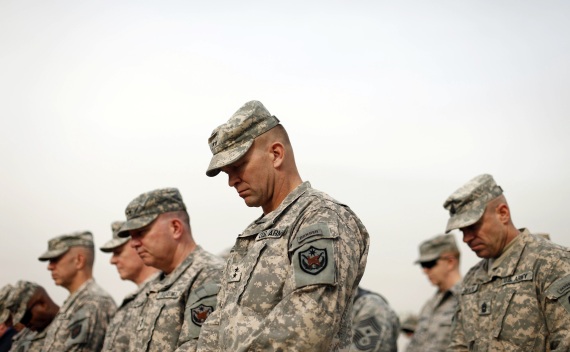
Does killing high-value targets make sense as a recipe to defeat al-Qaeda? McRaven says it is just one part of a broader offensive against America’s foes. “There is nobody in the U.S. government that thinks we can kill our way to victory, certainly not the special-operations guys,” he says, “but what happens is, by capturing and killing some of these high-value targets, we buy space and time for the rest of the government to work.”
- Iraq and Public Opinion: The Troops Come Home, Pew Research Center, December 14, 2011.
While 48% say the United States made the right decision to use military force in Iraq, nearly as many (46%) disagree. And the issue continues to be politically divisive: 72% of Republicans support the decision to use force compared with just 44% of independents and 37% of Democrats.
This is far different from the start of the war. In March 2003, 72% said it was the right decision while 20% said it was the wrong decision.
- Sari Horwitz, “Carrier IQ faces federal probe into allegations software tracks cellphone data,” Washington Post, December 14, 2011.
Federal investigators are probing allegations that Carrier IQ software found on about 150 million cellphones tracked user activity and sent the information to cellphone companies without informing consumers, according to government officials.
- Ana Campoy, “The Law’s New Eye in the Sky,” The Wall Street Journal, December 13, 2011.
Law-enforcement officials say the unmanned aircraft help avoid putting police in the line of fire, either by performing surveillance close to the ground, like a live officer, or by monitoring from high up, removing pilots from potential danger.
- David Smith, “Al-Shabaab in war of words with Kenyan army on Twitter,” The Guardian, December 13, 2011.
Al-Shabaab, which has links to al-Qaida, is fighting the weak, UN-backed Somali government and controls much of southern Somalia. It has run an increasingly sophisticated media operation in recent months, sending out press releases in well-written English with photos attached.
- Government Accountability Office, “Nuclear Nonproliferation: Action Needed to Address NNSA’s Program Management and Coordination Challenges,” December 2011.
Notably, DOD officials told us that they believed the NSC has played a negligible role in coordination of programs to counter nuclear smuggling. (47)
NNSA officials told us they believed that nuclear security is a dynamic, ongoing process that has to keep up with an evolving threat, and may never be finished. (71)